
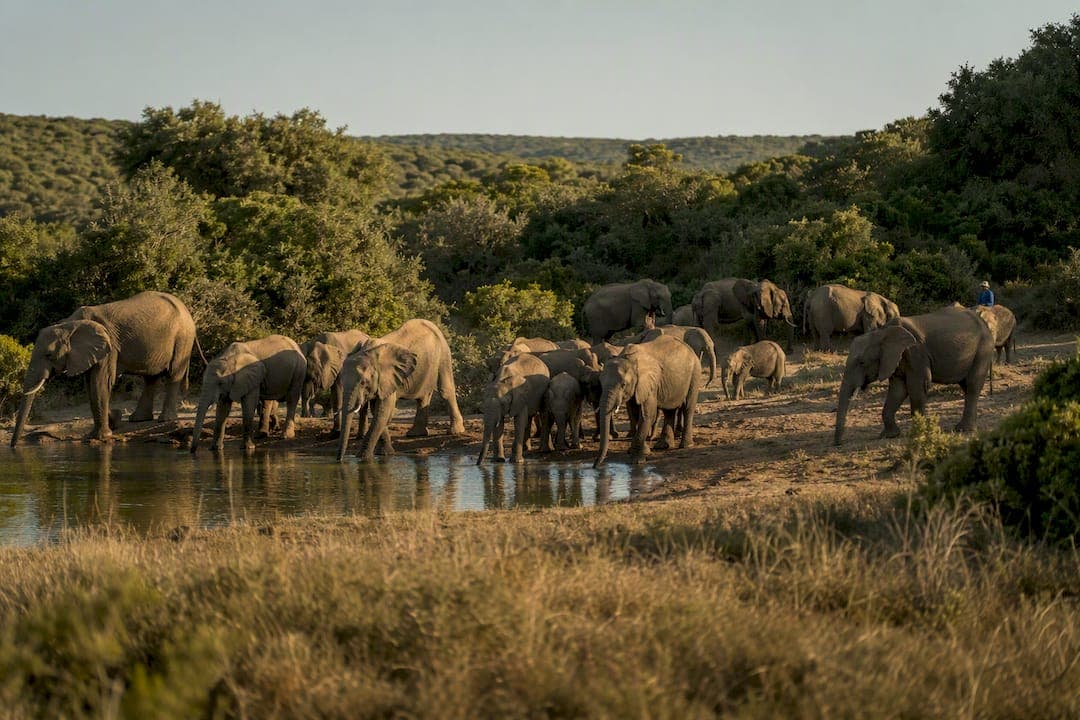
Addo Elephant National Park delivers close-up elephant herds and Big 5-capable game viewing in a compact, visitor-friendly reserve, and it rewards visitors who plan ahead. Pick guided game drives if you want expert tracking and improved chances of sightings, or self-drive if you value flexibility and a lower price. Either way, book through SANParks, confirm your slot 24 hours out, and consider a hop-on guide to sharpen your odds on your own vehicle.
TL;DR:
- Visiting during winter increases the likelihood of seeing elephants, as vegetation is sparse and animals concentrate around water sources.
- Guided game drives and hop-on guides generally outperform self-drive for spotting elusive species, especially for first-time visitors.
- Booking requires confirming your spot 24 hours in advance and arriving 30 minutes early, with limitations on group size and drive times.
- Addo is best explored in one or two days, with popular sites including Hapoor Dam, Domkrag Dam, and the coastal area near Woody Cape.
- Accommodation options inside the park include Addo Rest Camp for families and Spekboom Tented Camp for rustic stays, but restrictions apply to early morning and night drives.
Table of Contents
- What Wildlife Will You See at Addo?
- Guided Drives, Self-Drive, or a Hop-On Guide: Which Fits Your Trip?
- When Is the Best Time to Visit Addo?
- How Long Should You Spend at Addo?
- What Do Entrance Fees and Booking Rules Look Like?
- Where Should You Stay: Inside the Park or Nearby?
- Safety Tips and Rules for an Addo Safari
- Why Im-at Recommends Addo for First-Time Safari Travelers
- Book Your Addo Safari Through Im-at
- Where to Confirm Live Details Before You Go
- Sources
- FAQ
What Wildlife Will You See at Addo?
Addo built its reputation on elephants, and it delivers on that promise more reliably than almost anywhere else in Africa. Herds of 20 or more animals gather at watering holes throughout the day, often close enough to fill a camera frame without a zoom lens. The park also carries lion, buffalo, leopard, and rhino, giving it genuine Big 5 status, though leopard sightings stay rare given their nocturnal habits.
The numbers back up the variety on offer. SANParks records 91 mammal species and 418 bird species within the park's boundaries, a range that spans everything from flightless dung beetles (a local conservation icon) to Cape gannets along the coastal section.
A few spots consistently outperform the rest of the park for sightings:
- Hapoor Dam and Domkrag Dam — reliable elephant and buffalo gatherings, especially in the dry months.
- The underground hide near Main Camp — eye-level views of animals drinking, a favorite for photographers.
- The coastal section near Woody Cape — dune fields, seabirds, and a completely different landscape from the elephant-dominated interior.
- Zuurberg mountain section — cooler terrain with different vegetation and fewer crowds.
Spend a full day and you will likely see elephants at multiple sites, plus a reasonable shot at buffalo and one of the big cats.
Guided Drives, Self-Drive, or a Hop-On Guide: Which Fits Your Trip?
Addo gives you three real ways to experience the park, and each suits a different kind of traveler.
- Guided game drives. SANParks runs sunrise, morning, midday, afternoon, sunset, and night drives, each lasting about two hours. You need to check in at the game drive office 30 minutes before departure, and children under 6 are not permitted on these drives. A trained ranger drives an open vehicle, spots animals other visitors miss, and narrates behavior and ecology along the way.
- Self-drive. You control the pace entirely, stop as long as you like at any dam, and pay only the daily conservation fee rather than a drive fee. The tradeoff is obvious: you are working without a ranger's eye, and the network of internal gravel roads takes some getting used to on a first visit.
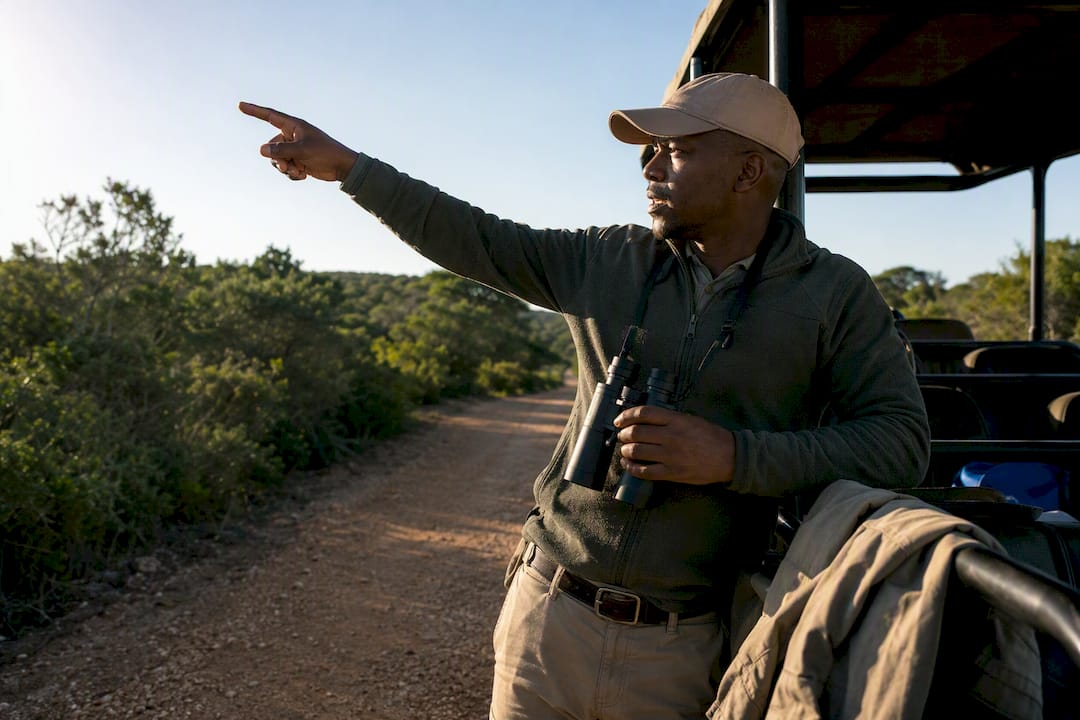
- Hop-on guides. These are local, community-trained guides who join you in your own vehicle rather than putting you in a shared truck. You keep your privacy and your air conditioning, and you get someone who knows exactly which dam had elephants an hour ago.
Pro Tip: If you're torn between self-drive and a guided option, split the difference. Self-drive in the morning when light and temperatures are best for photography, then book a hop-on guide for the afternoon when animal movement slows and local knowledge matters more.
Guided drives and hop-on guides both tend to outperform pure self-drive for spotting elusive species, since rangers and community guides know the daily movement patterns that a first-time visitor simply cannot.
When Is the Best Time to Visit Addo?
Addo splits its year into two seasons rather than four: summer runs from October 1 through March 31, and winter covers April 1 through September 30. Each has a distinct personality.
- Winter (dry season) thins out the vegetation, which concentrates animals around a smaller number of water sources. This is the easiest time to guarantee elephant sightings, since herds cannot hide behind thick bush.
- Summer (green season) brings lush growth, newborn calves, and peak birding, but animals scatter more widely and sightings take longer to develop.
- Departure times shift with daylight. Sunrise drives leave earlier in summer and later in winter, and night drives start later when the sun sets past 7:00 PM. Check the current schedule before locking in an itinerary, since a sunrise drive booked for 5:30 AM in December might depart closer to 6:30 AM in July.
Photographers chasing dramatic light generally prefer winter's clearer skies and open sightlines. Families traveling with young children often do better in the green season, when mild mornings make waiting at a hide less of a test of patience.
How Long Should You Spend at Addo?
Addo's compact size is one of its biggest advantages over larger reserves like Kruger. You do not need four or five days to feel like you have seen the park properly.
- Day trip. Arrive by mid-morning, drive the main loop past Hapoor and Domkrag dams, break for lunch at Main Camp, then add an afternoon or sunset drive before heading out. This works well as a day trip from Gqeberha (Port Elizabeth), which sits under an hour's drive from the main gate.
- Two-day visit. Take a sunrise guided drive on day one, rest through the heat of midday, then add either a hop-on guided afternoon drive or push out to the coastal section near Woody Cape for a change of scenery. Overnight at or near the park, then use the second morning for one more drive before departing.
- Garden Route integration. Addo sits close enough to the Garden Route that most multi-day itineraries fold it in as a two or three-night stop rather than a standalone trip. A packaged route like this 5-day Garden Route and Addo itinerary handles the transfers and accommodation logistics so you are not building the schedule from scratch.
A single day covers the highlights. Two days lets you catch both a dry-season sunrise and a quieter afternoon session, which noticeably improves your odds of a varied sighting list.
What Do Entrance Fees and Booking Rules Look Like?
SANParks charges a daily conservation fee at the main gate, and that figure changes periodically without much public notice, so check the current tariff on the official SANParks page before you travel rather than relying on an old blog post.
Hop-on guide pricing runs in bands tied to vehicle size. As an example, published rates are available for sedans, six-seaters, and mini-buses, though these figures are subject to change and should be confirmed directly with SANParks before booking.
Booking rules that catch first-timers off guard: you must confirm any guided game drive 24 hours before departure, and you need to check in at the game drive office 30 minutes before your slot. Miss either step and you can lose your spot entirely.
A few other rules worth building into your schedule:
- Payment and confirmation happen through SANParks directly or through your accommodation desk.
- Some camps, including Spekboom Tented Camp, restrict access to early morning, sunset, and night drives because of internal gate timing.
- Group sizes are capped per vehicle, so peak-season slots fill up faster than you might expect.
Where Should You Stay: Inside the Park or Nearby?
Addo Rest Camp is the obvious first choice for most visitors. It sits inside the park near Main Camp, puts you closest to the drive departure point, and runs family-friendly facilities including a pool, restaurant, and shop, so you are not driving in from outside before a 5:30 AM sunrise slot.
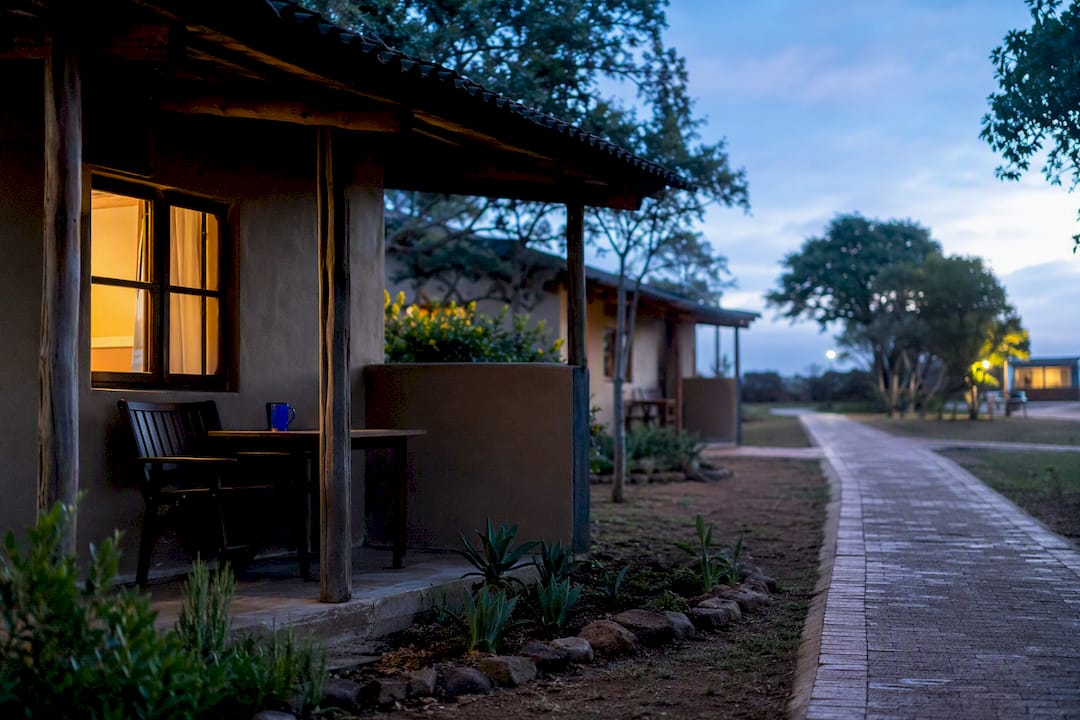
Spekboom Tented Camp offers a quieter, more rustic stay, but comes with a real limitation: its location behind internal gates means guests cannot join early morning, sunset, or night drives. If those drive times matter to you, this is not the camp to book.
Beyond the park boundary, private lodges scattered around Addo's perimeter tend to offer more luxury and their own game-viewing areas, at a higher price point than SANParks accommodation. For travelers combining Addo with the coast, a broader Garden Route tour can bundle Addo with stops further along the route, which suits anyone who does not want to manage separate bookings for each leg of the trip.
- Addo Rest Camp: closest to drives, best for families, book well ahead in peak season.
- Spekboom Tented Camp: quiet and rustic, but skip it if early or night drives are a priority.
- Private lodges nearby: higher cost, often more personalized service and private game areas.
Safety Tips and Rules for an Addo Safari
Addo runs on rules that exist for animal welfare and visitor safety, not bureaucracy for its own sake. Never feed the animals, no matter how close an elephant gets to your window. Stay inside your vehicle in game-viewing areas unless you are at a designated hide or picnic site, and keep windows up around elephant herds, since these are wild animals used to vehicles but not to human contact.
Booking discipline matters just as much as field behavior. Confirm your drive 24 hours ahead, arrive at least 30 minutes early, and know that SANParks generally does not offer refunds for missed or late check-ins.
- No feeding animals, ever, regardless of how tame they appear.
- Confirm bookings 24 hours in advance and check in 30 minutes before departure.
- Children under 6 are not permitted on guided game drives.
- Pack binoculars, a layer for early morning cold, and insect repellent for dusk drives.
Pro Tip: Bring a beanbag or small cushion to rest a camera lens on your car door. Addo's gravel roads produce more vibration than paved routes, and a stabilized lens makes the difference between a sharp elephant portrait and a blurry one.
Why Im-at Recommends Addo for First-Time Safari Travelers
Addo earns its spot on almost every South African itinerary because it delivers real Big 5 potential without the multi-day commitment larger reserves demand. Its closeness to Gqeberha makes it one of the easiest wildlife destinations in the country to reach on short notice, which is exactly why we list Addo-compatible activities on Im-at, so travelers can compare drive times and book without digging through separate operator sites. Still, always cross-check live schedules and tariffs on the official SANParks page before you lock in dates.
— Mikahil
Book Your Addo Safari Through Im-at
Using a practical alternative to juggling multiple booking pages can simplify planning an Addo trip. Instead of tracking down a hop-on guide's contact, a separate SANParks drive slot, and a hotel booking site, you can search, compare, and reserve activities from one place, saving the back-and-forth that usually eats up planning time.

Beyond Addo itself, Im-at lists broader wildlife and cultural experiences across South Africa, including day tours like the Lesedi Cultural Village day tour for travelers extending their trip beyond the park. If you are weighing a self-drive style outing elsewhere on your route, a flexible option like this half-day 4WD adventure shows how a shorter, guided format can work well when you are short on time. Search for Addo-area activities, compare departure windows against your own schedule, and reserve your spot directly, then double-check final tariffs and drive times on the official SANParks page before your trip.
Where to Confirm Live Details Before You Go
Tariffs, drive schedules, and booking rules change periodically, so treat this guide as your planning framework and verify specifics directly. The SANParks game drives page covers current departure times and booking procedure. The official Addo overview lists facilities and contact details, and Tripadvisor's Addo activities page shows current third-party tour options and visitor reviews.
Sources
- Game Drives – Addo Elephant National Park – SANParks
- THE 10 BEST Addo Elephant National Park Safaris (2026) - Tripadvisor
- Addo
FAQ
How Much Is the Entrance Fee at Addo Elephant Park?
SANParks charges a daily conservation fee at the main gate, and the exact amount is subject to change, so confirm the current rate on the official SANParks tariff page before you travel.
How Long Should I Spend in Addo?
A single day is enough to cover the main dams and take one guided or self-drive session, but two days lets you catch both a dry-season sunrise drive and a quieter afternoon outing for a fuller range of sightings.
Is Addo Elephant Park Worth It?
Yes. Addo delivers reliable, close-range elephant viewing plus genuine Big 5 potential in a park small enough to see properly in one or two days, which makes it one of the most efficient wildlife destinations near the Garden Route.
Is Addo a Big 5 Park?
Yes, Addo holds lion, elephant, buffalo, rhino, and leopard, though leopard sightings stay rare given the species' nocturnal, secretive habits.