
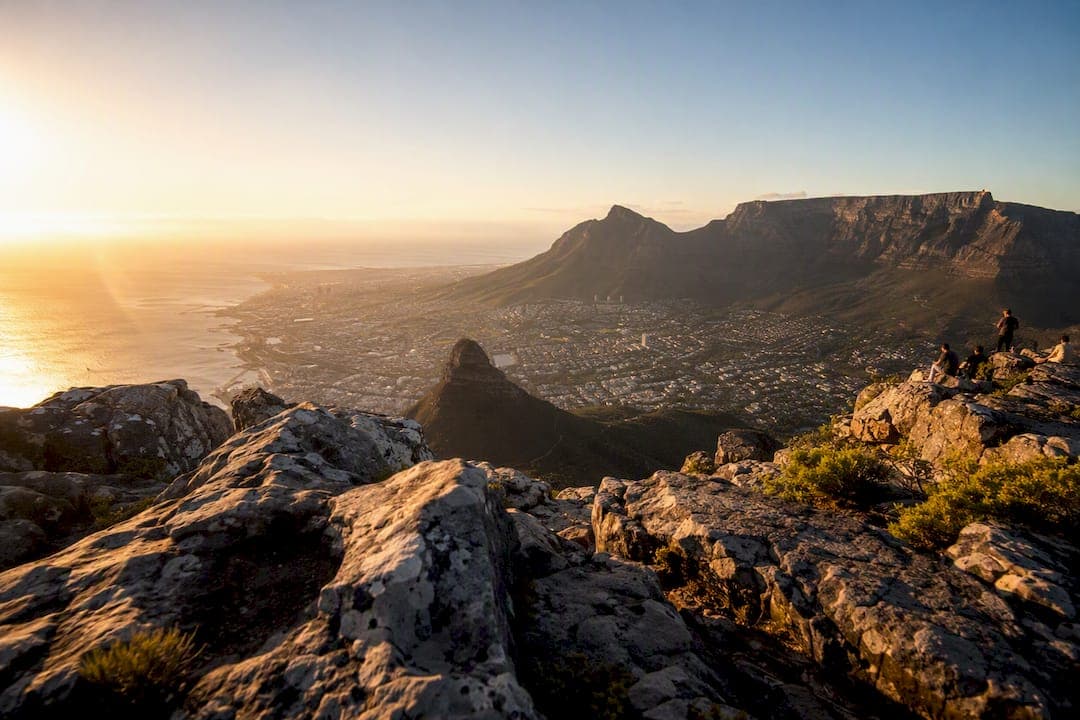
Table Mountain, Robben Island, Cape Point, Kirstenbosch, the Boulders Beach penguins, and one proper adventure activity: pick from that set and you've covered Cape Town's essential range in a way that satisfies families, culture-seekers, and adrenaline chasers alike. Everything else in this guide builds around that core. A first-timer with three days should treat those six as non-negotiable; a repeat visitor can swap in a Winelands day or a surf lesson at Muizenberg and still leave with a full picture of the city.
Here's the shortlist, matched to who each one suits:
- Table Mountain Cableway or a guided hike — the signature view, good for anyone reasonably fit; book the cableway online since wind closures happen and margin days help.
- Robben Island Museum — essential for history-minded travelers; ferries depart from the Nelson Mandela Gateway and the full experience runs several hours.
- Cape Point and the Flying Dutchman funicular — a half-day or full-day peninsula loop, great for road-trippers and photographers.
- Boulders Beach penguin colony — a guaranteed family win, best visited early morning.
- Kirstenbosch Botanical Garden — ideal for slow mornings, picnics, and anyone who wants a break from pavement.
- Bo-Kaap walking tour — for food and culture fans wanting Cape Malay history in ninety minutes.
- V&A Waterfront — shopping, boat trips, and the Two Oceans Aquarium, a rainy-day fallback that also works in sunshine.
- A wine estate day in Constantia or Stellenbosch — for travelers who want the Winelands without a long drive.
- One adventure activity — shark cage diving, paragliding off Lion's Head, or a surf lesson, depending on appetite for adrenaline.
Pro Tip: Robben Island and the Table Mountain Cableway are the two bookings that sell out fastest in peak season (December through February). Lock those in first, then build the rest of your days around them. If you'd rather skip the ticket-hunting entirely, Im-at bundles several of these into curated tours with fixed departure times and local guides.
Key Takeaways
Cape Town rewards travelers who book Robben Island and the Table Mountain Cableway early and pace mountain days against ocean days rather than cramming both into one outing.
| Point | Details |
|---|---|
| Book the big two first | Reserve Robben Island ferries and Table Mountain Cableway tickets weeks ahead in peak season (December to February). |
| Match hikes to fitness | Lion's Head suits most active adults; Skeleton Gorge and Platteklip Gorge demand more experience and stamina. |
| Budget a full day for the Peninsula | Cape Point, Boulders Beach, and Chapman's Peak together work best as a full day, not a rushed half-day. |
| Choose beaches by activity | Camps Bay for sunsets, Muizenberg for surf lessons, Blouberg for kitesurfing and mountain views. |
| Book through Im-at for convenience | Im-at bundles tours like the Kirstenbosch and Table Mountain tour and the Full Day Cape Tour with local guides and flexible rescheduling. |
Table of Contents
- Things to Do in Cape Town: Outdoors and Iconic Hikes
- Cape Peninsula Day Trips: Cape Point, Boulders Beach, and Chapman's Peak
- City Highlights: V&A Waterfront, Bo-Kaap, and the Castle of Good Hope
- Beaches and Ocean Activities: Clifton, Camps Bay, and Blouberg
- Cape Malay Food, Wine Country, and Local Markets
- Adventure and Wildlife: Shark Cage Diving, Whale Watching, and Paragliding
- Rainy Day and Family-Friendly Activities
- Finding What's On: Events, Markets, and Nightlife
- Planning Logistics: Tickets, Transport, Timing, and Budgets
- Local Expertise and the Booking Advantage of Im-at
- Local Art Galleries and Street Art
- Shopping Districts and Local Crafts
- Combining Mountain Days and Ocean Days
- Book Cape Town Activities Without the Ticket-Hunting Headache
- Where to Check Live Updates and Book Tickets
- Sources
Things to Do in Cape Town: Outdoors and Iconic Hikes
Cape Town's hiking scene is why so many visitors extend their trip by an extra day. The mountain isn't one trail. It's a network, and picking the wrong one for your fitness level ruins an otherwise great day.
Lion's Head is the crowd favorite for a reason: a climb lasting roughly an hour to two hours round trip with chain-assisted sections near the top, doable by most reasonably active adults, and it rewards you with 360 degree views of the city, Table Mountain, and the Atlantic. Locals hike it under a full moon, which is worth doing once if your schedule allows a night departure.
Table Mountain itself offers several approaches. Platteklip Gorge is the direct route up, roughly two to three hours of steady, unshaded climbing that suits fit beginners who want bragging rights without technical scrambling. Skeleton Gorge, accessed through Kirstenbosch, is prettier and shadier, threading through forest and streams, but it's steeper and better suited to hikers with some trail experience. Many people go up Skeleton Gorge and take the cable car down, which saves your knees and your afternoon.
Silvermine, on the other side of the mountain chain, is gentler terrain with reservoir walks and coastal views toward False Bay. It's a good pick if you're traveling with kids or want a shorter outing without the crowds that build up on Lion's Head and Platteklip.
A few things matter more than fitness level on any of these routes:
- Weather changes fast. The "tablecloth" cloud that rolls over the summit can drop visibility and temperature within twenty minutes.
- Start early. Afternoon southeaster winds make exposed ridgelines unpleasant and occasionally dangerous.
- Wear proper hiking shoes, not sneakers. The rock is loose in places and the sun is stronger than it feels.
- Carry more water than you think you need. There's no shade on most of the direct routes.
Pro Tip: If you don't want to navigate route-finding or worry about weather calls yourself, book a guide. Im-at's private hiking and trekking tour on Table Mountain pairs you with someone who reads the mountain daily and adjusts the route on the fly, which matters more than it sounds like it should.
Cape Peninsula Day Trips: Cape Point, Boulders Beach, and Chapman's Peak
The Cape Peninsula loop is the closest thing Cape Town has to a single day that captures everything: mountains, ocean, wildlife, and one of the most photographed coastal drives on the continent.
- Start at Cape Point early. The reserve sits inside Table Mountain National Park and gets busy by mid-morning with tour buses. The Flying Dutchman funicular saves you the uphill walk to the old lighthouse, and the newer lighthouse further along the ridge gets fewer visitors despite better views. Cape Point is one of the city's so-called "Big 6" attractions, and it earns that reputation on a clear day.
- Stop at Boulders Beach for the penguins. African penguins waddle along a boardwalk just meters from where you're standing, and the colony is at its most active in the cooler morning hours before the beach fills up. If Boulders feels too crowded, Stony Point near Betty's Bay offers a quieter, free alternative with a similar colony.
- Drive Chapman's Peak on the way back. The toll road hugs cliffs above the Atlantic and closes occasionally for rockfall risk or high wind, so check conditions before you commit to it as your return route. Parking at the viewpoints is limited on weekends, so a weekday drive gives you a better shot at stopping where you want.
Budget a full day for this loop if you want unhurried time at each stop, though a fit, early-starting traveler can compress it into a long half-day. Local guides suggest allocating at least a half-day and preferably a full day if you're combining Cape Point with Boulders and the coastal drive.
Pro Tip: Self-driving gives you flexibility, but parking and navigating unfamiliar roads eats into your day. Im-at's Full Day Cape Tour and its 2-day private Robben Island, Table Mountain and Cape Point tour handle the driving and timing, so you spend your energy on the views instead of the logistics.

City Highlights: V&A Waterfront, Bo-Kaap, and the Castle of Good Hope
Cape Town's urban core rewards a slower pace than the outdoor circuit. Plan a full day here if you want more than a rushed pass through the highlights.
The V&A Waterfront works for almost any traveler type. It's a working harbor with shopping, restaurants, the Two Oceans Aquarium, and boat trips ranging from short harbor cruises to sunset sails. Give it at least half a day if you want to browse the craft markets and catch a boat trip; a full day if you're also doing the aquarium with kids. Robben Island ferries depart from here too, at the Nelson Mandela Gateway, so it's worth planning your Waterfront time around your ferry slot rather than the other way around.
Bo-Kaap, the historic Cape Malay quarter on the slopes of Signal Hill, is best explored on foot. The candy-colored houses along Wale and Chiappini streets are an obvious photo stop, but the neighborhood's real value is its food and history. A guided walking tour typically runs 90 minutes to two hours and usually includes a stop for koesisters or a Cape Malay curry, along with context on the area's role in Cape Town's colonial and apartheid history that you won't get from just photographing the doors.
For deeper history, a few stops reward the detour:
- The Castle of Good Hope, South Africa's oldest surviving colonial building, gives a ground-level look at Dutch and British rule with military history exhibits.
- Iziko Museums across the city cover everything from natural history to South African art, and most can be seen in an hour or two each.
- The District Six Museum tells the story of forced removals under apartheid through personal objects and testimony, and it's one of the more moving stops in the city for anyone interested in recent history.
If you're building out a food-focused morning, the Oranjezicht City Farm Market near the Waterfront draws a loyal Saturday crowd for fresh produce, baked goods, and small-batch coffee.
Beaches and Ocean Activities: Clifton, Camps Bay, and Blouberg
Cape Town has a beach for every mood, and picking the right one matters more here than in most coastal cities because the microclimates shift block by block.
Clifton's four numbered beaches are sheltered from the southeaster and popular with a younger, social crowd, especially Fourth Beach. Camps Bay has the palm-lined promenade, restaurants, and sunset views, and it gets busy on warm weekends. Families tend to prefer Camps Bay's shallower stretches or Muizenberg on the False Bay side, where the water is warmer and the surf is gentler, making it the go-to spot for beginner surf lessons. Blouberg, north of the city, trades swimming conditions for the postcard view of Table Mountain across the bay, and its steady wind makes it one of the region's best kitesurfing spots.
Water temperature depends entirely on which coast you're on. The Atlantic side (Clifton, Camps Bay) stays cold year round, often uncomfortably so for casual swimmers. False Bay (Muizenberg, Fish Hoek) runs several degrees warmer, particularly from December through March.
- Rent surfboards, kayaks, or stand up paddleboards through operators based near the V&A Waterfront or directly at Muizenberg's surf shops.
- Kayak tours departing the Waterfront often combine paddling with seal or dolphin sightings along the harbor wall.
- Wetsuits are worth renting even in summer if you're swimming on the Atlantic side.
- Kitesurfing conditions at Blouberg peak during the windier summer months (November to March).
Pro Tip: If you only have time for one beach, pick based on what you actually want to do there. Camps Bay for sunset drinks, Muizenberg for a surf lesson, Clifton for a proper swim on a calm day.
Cape Malay Food, Wine Country, and Local Markets
Cape Town's food identity runs through three things: Cape Malay cuisine, the Winelands, and its markets, and you can experience all three without leaving a fairly tight radius of the city.
Cape Malay cooking traces back to enslaved people brought from Southeast Asia during Dutch colonial rule, and its influence shows up in dishes like bobotie, koesisters, and fragrant curries built on layered spice blends rather than heat. Bo-Kaap hosts several home-style cooking classes where you learn to make these dishes in someone's actual kitchen, which tends to be a more memorable afternoon than a restaurant meal alone.
For wine country, you have three main regions within reasonable driving distance:
- Constantia is the closest, roughly twenty minutes from the city center, home to some of the oldest wine estates in the Southern Hemisphere.
- Stellenbosch offers the widest range of tastings and the most walkable town center if you want to explore between cellar visits.
- Franschhoek leans into fine dining alongside its wine estates, and its wine tram lets you hop between several tasting rooms without worrying about a designated driver.
Most visitors choose between a self-drive day, a curated small-group tasting tour, or the Franschhoek wine tram, depending on how much structure they want.
Markets round out the picture. The Oranjezicht City Farm Market on weekends and the Neighbourgoods Market in Woodstock on Saturdays both draw serious food crowds, with everything from artisan cheese to Ethiopian coffee. If you want a broader sense of how food-focused travel planning works beyond Cape Town, Wild Foodz's guide to culinary experiences is a useful framework for building a trip around meals rather than sights.
Pro Tip: Book Winelands tastings ahead on weekends, especially at smaller Constantia estates that limit walk-in groups.
Adventure and Wildlife: Shark Cage Diving, Whale Watching, and Paragliding
Cape Town's adventure scene leans heavily on the ocean, and timing your visit right changes the experience entirely.
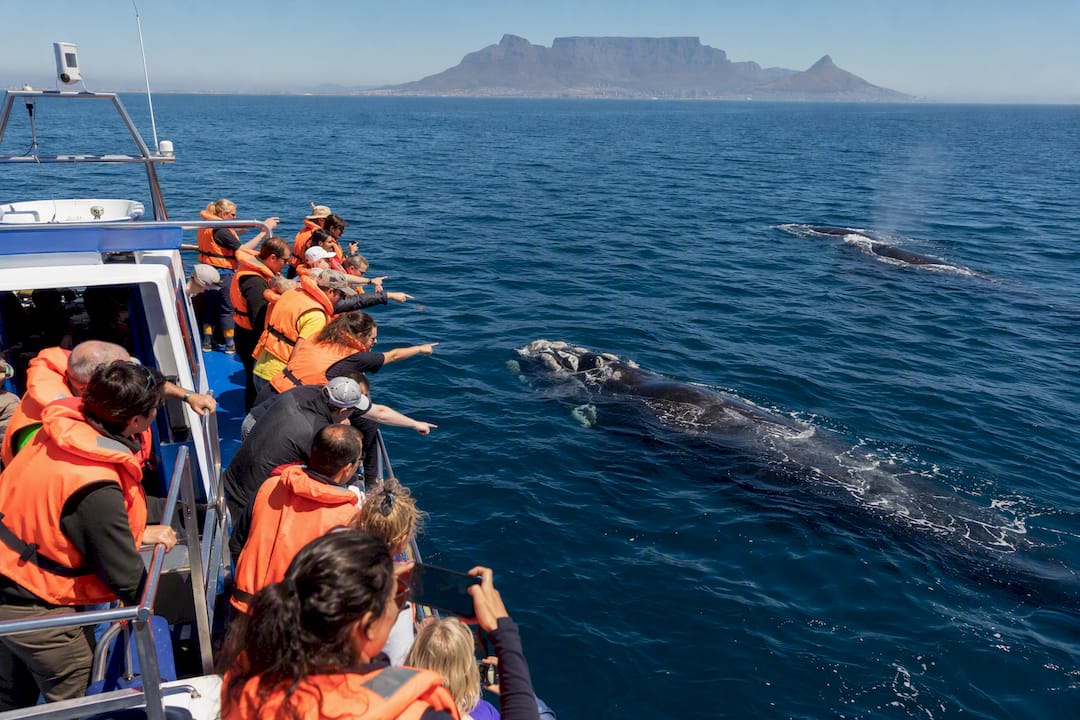
Whale watching peaks between June and November, when southern right whales migrate along the coast to calve in sheltered bays. Hermanus, about a 90 minute drive from Cape Town, is the best-known land-based whale watching spot in the world, and Gansbaai further along the coast serves as the departure point for most boat-based whale and shark trips. Both make for a comfortable day trip rather than an overnight.
Shark cage diving happens primarily in Gansbaai and False Bay, where operators take small groups out in cages to observe great white sharks (seasonally) in open water. It's not for everyone. Rough seas are common, seasickness is a real risk even for confident swimmers, and operators generally recommend it for people in reasonable health without heart conditions. Book with an operator that provides safety briefings and full wetsuit gear, and expect the boat trip itself to take up more of the day than the actual diving.
A one-day safari from Cape Town typically means a private game reserve a few hours' drive away, since the city itself isn't Big Five territory. These trips usually combine a game drive with lunch and run as a long day, departing early and returning after dark.
For something with less water and more air, paragliding off Lion's Head or Signal Hill gives you a tandem flight with an instructor, weather permitting, and it's one of the more accessible adrenaline activities in the city since no experience or fitness threshold applies beyond a reasonable body weight limit.
- Whale watching season: June through November, peaking in September and October.
- Shark cage diving: check operator safety certifications and expect early morning departures.
- Safari day trips: full-day commitment, usually ten to twelve hours door to door.
- Paragliding: weather-dependent, typically booked same-day or one day ahead based on wind conditions.
Rainy Day and Family-Friendly Activities
Cape Town's weather can turn without much warning, especially in winter (June through August), and having a backup plan saves a trip from feeling wasted.
- The Two Oceans Aquarium at the V&A Waterfront is the obvious first stop, with tanks representing both the cold Atlantic and warmer Indian Ocean ecosystems. Plan on two to three hours, longer if you're doing a behind-the-scenes tour or a diving experience with the ragged-tooth sharks.
- Iziko Museums offer several indoor options depending on interest. The South African Museum covers natural history and has a planetarium showing regular star shows, a solid pick for kids who need a break from walking.
- Local workshops fill the gap nicely on a wet afternoon. Cooking classes in Bo-Kaap, pottery studios, and craft markets housed in covered venues all keep the day moving without depending on clear skies.
Book aquarium tickets and workshop slots a day or two ahead during school holidays, when local families crowd these same spaces.
Finding What's On: Events, Markets, and Nightlife
Cape Town's weekend calendar rotates constantly, and the smartest way to plan your evenings is to check listings once you've landed rather than trying to lock everything in from home.
Time Out Cape Town publishes a weekly events roundup covering concerts, markets, theatre, and themed nights across the city's neighborhoods, and it's the fastest way to see what's actually happening during your specific dates rather than relying on a static list. The lineup changes enough week to week that a guide written even a month earlier can miss the best options.
A few recurring fixtures are worth checking regardless of when you visit:
- Woodstock's Neighbourgoods Market for Saturday food stalls and a young, creative crowd.
- Live music venues around Long Street and Bree Street, which shift lineups weekly but reliably have something on Friday and Saturday nights.
- Open-air cinema and sundowner events at various rooftop bars during summer months.
- Craft markets that pop up seasonally, particularly around December.
Costs vary widely. A night out on Long Street can run cheap by international standards, while ticketed concerts or festival-style events carry higher prices and tend to sell out closer to the date. If you see something you want to attend, book within a day or two of finding it rather than waiting, since popular shows and market stalls with limited capacity fill fast.
Planning Logistics: Tickets, Transport, Timing, and Budgets
Getting the sequencing right matters more in Cape Town than in most cities, because two of the biggest draws depend entirely on weather and availability.
Robben Island ferries should be booked as early as you can, ideally weeks ahead during December through February. Schedules shift seasonally and tours get cancelled in high wind, so build a flexible day into your itinerary in case you need to rebook. Table Mountain Cableway tickets bought online sometimes transfer to another day within the same week if wind closes the summit, but policies vary by season, so check the terms when you book.
For getting around, you have three real options. Self-driving gives you the most flexibility for beach-hopping and the Peninsula loop, but Cape Town traffic and unfamiliar mountain roads slow you down more than visitors expect. Ride-share apps work well for short city hops and are widely available. Guided tours cost more per day but remove the planning burden entirely, particularly useful for the Peninsula, where timing your stops around crowds and light actually matters.
A rough time budget: one day gets you Table Mountain and the city center; three days covers the Peninsula loop, Robben Island, and Kirstenbosch with room to breathe; seven days lets you add the Winelands, a whale watching day, and at least one rainy-day backup without rushing.
- Tipping runs around 10% at restaurants in South African Rand, and it's appreciated but not always automatically added.
- Keep small bills on hand for market stalls and informal vendors.
- Avoid walking alone after dark in unfamiliar areas, particularly around the city center and Long Street.
- Sunscreen and water matter more than most visitors expect. The UV index runs high even on overcast days.
Pro Tip: Build one buffer day into any Cape Town trip longer than four days. Wind and cloud cover cancel more plans here than rain does.
Local Expertise and the Booking Advantage of Im-at
Planning around weather windows and sold-out ferries is the single biggest headache in a Cape Town trip, and it's exactly where a local booking platform earns its keep.
Im-at lists several Cape Town tours built around the exact combinations covered in this guide. The Kirstenbosch and Table Mountain tour pairs the garden's slow, shaded walks with the mountain's big views in a single guided day. The 2-day private Robben Island, Table Mountain and Cape Point tour solves the exact scheduling problem this article flags: fitting history, the mountain, and the Peninsula loop into a trip without a wasted day. The Full Day Cape Tour covers the coastal drive end to end with a driver who already knows where Chapman's Peak parking fills up.
Booking through a single platform also means one payment system, one point of contact if plans shift because of weather, and local support if a ferry gets cancelled the morning of your trip.
Cape Town rewards visitors who plan around its weather rather than against it. The mountain and the ocean are only minutes apart, but availability windows for the big-ticket items close fast in peak season, and a consolidated booking approach removes most of that risk.
Local Art Galleries and Street Art
Cape Town's visual art scene extends well beyond its museums, and Woodstock has become the unofficial center of it. The neighborhood's warehouse walls carry some of the city's best street art, much of it commissioned through local mural projects that rotate periodically, so a wall you photograph this year might look completely different on a return visit.
The Zeitz Museum of Contemporary Art Africa (Zeitz MOCAA) at the Waterfront anchors the formal gallery scene, housed in a converted grain silo with rotating exhibitions from African and diaspora artists. It's a two to three hour visit if you take your time with the upper-floor galleries.
For a more street-level experience, several walking tours through Woodstock and the City Bowl focus specifically on public art and murals, often led by guides connected to the artists themselves. These tours run shorter than a full museum visit, typically 90 minutes to two hours, and work well paired with a coffee stop at one of Woodstock's converted-warehouse cafes.
Smaller commercial galleries cluster around Church Street in the City Bowl and along Bree Street, showing everything from established South African painters to emerging photographers. Weekday mornings tend to be quietest if you want unhurried time with gallery owners, many of whom are happy to talk through the work if you show genuine interest.
Shopping Districts and Local Crafts
Cape Town's shopping splits cleanly between polished retail and genuine craft markets, and knowing which you want saves time.
The V&A Waterfront covers conventional retail: international brands, local designer boutiques, and a craft market section selling beadwork, textiles, and carved wood pieces, much of it made by artisans from across Southern Africa. Prices here run higher than markets elsewhere in the city, reflecting the foot traffic and overhead.
For something closer to source, Greenmarket Square in the City Bowl has operated as an open-air market for decades, with stalls selling African textiles, jewelry, and leather goods. Bargaining is expected here, unlike at the Waterfront's fixed-price stores.
Bo-Kaap has a handful of small shops selling spice blends and Cape Malay cookbooks, a good stop if you took a cooking class and want to recreate dishes at home. The Neighbourgoods Market in Woodstock, while primarily food-focused, also hosts a rotating cast of local designers selling clothing, ceramics, and jewelry on Saturdays.
If you want a single souvenir that says Cape Town specifically, look for hand-painted ostrich eggs, Ndebele-pattern textiles, or wire and bead sculptures, all common across the city's markets but varying widely in quality and price depending on where you buy.
Combining Mountain Days and Ocean Days
The best rhythm for a Cape Town trip alternates mountain days with ocean days, rather than trying to do everything at once. Spend one day on Table Mountain or the Peninsula loop, chasing views and altitude, then follow it with a slower day at Camps Bay or Kirstenbosch, where the pace drops and the goal shifts from covering ground to actually resting. Local trip planners often point out that Cape Town's mountain and ocean experiences sit minutes apart geographically, which tempts visitors into overpacking each day rather than spacing the intensity out.
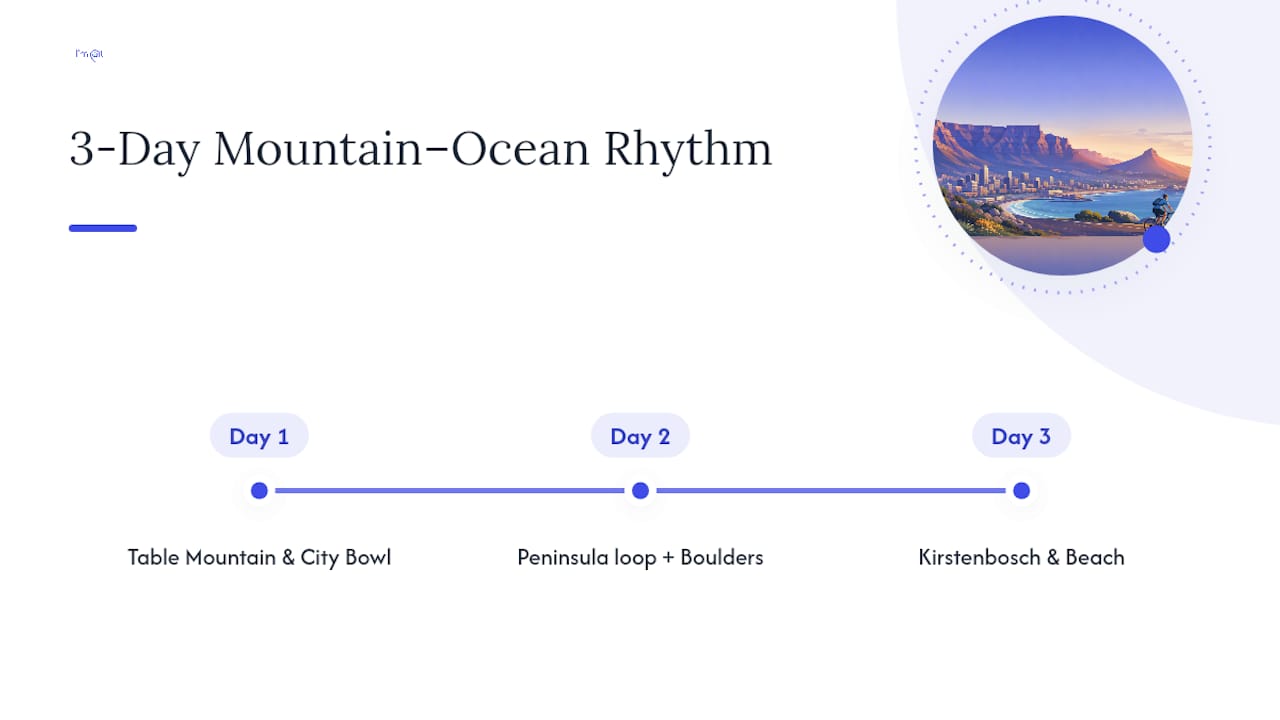
A workable three-day version looks like this: day one for Table Mountain and the City Bowl, day two for the full Peninsula loop including Cape Point and Boulders Beach, day three for Kirstenbosch and a slow afternoon at the beach. That order lets your legs recover between the two most physically demanding days.
Book Cape Town Activities Without the Ticket-Hunting Headache
Im-at works as the practical alternative to piecing together five separate bookings across five separate websites for a single Cape Town trip. Instead of chasing Robben Island ferry slots on one site, a Table Mountain guide on another, and a Peninsula driver through a third, you search, compare, and book through one marketplace, with local operators handling the actual experience.

The tours referenced throughout this guide, including the Kirstenbosch and Table Mountain tour and the 2-day private Robben Island, Table Mountain and Cape Point tour, are live on the platform now with secure payment and local support if weather forces a reschedule. If you're after something with a bit more edge, check out The Unholy Secrets for a different kind of Cape Town evening. Search your travel dates on Im-at now and see what's available before the popular slots fill up.
Where to Check Live Updates and Book Tickets
- SANBI's Kirstenbosch page for garden hours, events, and visitor facilities.
- Robben Island Museum's official site for ferry schedules and booking windows.
- Cape Point's official site for funicular hours and reserve access times.
- Time Out Cape Town for current weekend events and market listings.
Check these before finalizing dates, since opening times and ticket policies shift seasonally.
Sources
- Kirstenbosch Botanical Garden — SANBI
- Robben Island Museum — official site
- Cape Point — official site
- Out and about in Cape Town: Best things to do this weekend — Time Out Cape Town
- 42 best things to do in Cape Town (Travel Lemming)