
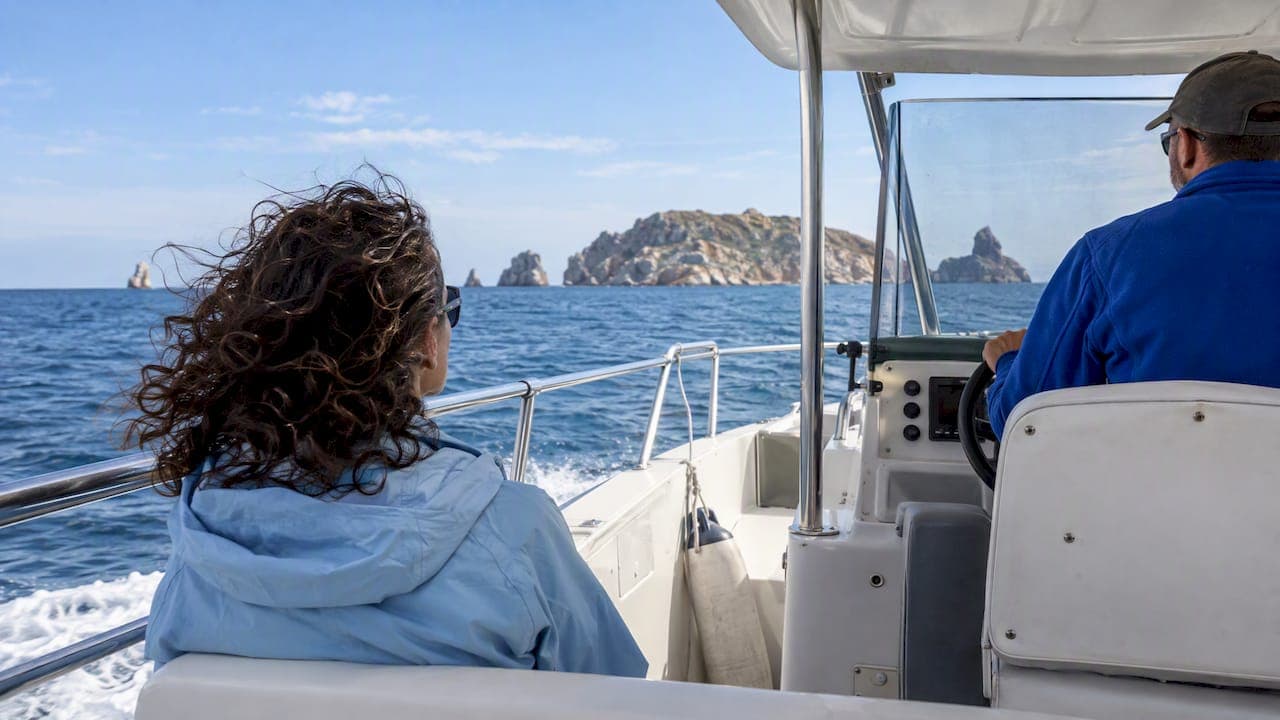
The fastest route to a great day on the water is a private charter for small groups, a catamaran day cruise with barbecue for families and friends, a guided snorkeling trip to the Medes Islands for nature lovers, or a short sightseeing cruise if you only have an hour or two. We recommend searching Im-at to compare these trip types by date, group size, and departure port, with most options running between one and eight hours.
TL;DR:
- Choose guides accredited by the park for Medes Islands trips, where boats must use designated mooring buoys and landing requires prior authorization.
- Weather cancellations usually bring a full refund or free rebooking, but private charters may have stricter deposit and refund terms than shared cruises.
- Smaller ports such as Tamariu and Calella de Palafrugell have limited public transit; regional buses serve Roses, L'Estartit, Lloret de Mar, and Tossa de Mar.
- Book a few days to a week ahead during July and August because popular departure times and private charters can fill quickly.
Table of Contents
- Shortlist: The Best Costa Brava Boat Trips to Consider Now
- At-a-Glance Comparison: Trip Types and What to Expect
- How to Choose the Right Costa Brava Boat Tour
- Types of Costa Brava Boat Tours and What to Expect on Each
- Park Rules and Safety That Affect Costa Brava Boat Itineraries
- Cancellation and Refund Policies and Conditions
- Transportation Options to Departure Ports
- Local Regulations or Permits Required for Boat Tours
- Typical Itinerary Examples for Different Tour Types
- Author's Perspective: Sample Itineraries and Booking Timing
- How Im-at Makes Booking Costa Brava Boat Tours Easier
- FAQ
- Sources
Shortlist: The Best Costa Brava Boat Trips to Consider Now
Costa Brava's coastline stretches across dozens of coves, protected marine areas, and small fishing ports, so the right boat trip depends less on which operator you pick and more on what kind of day you want. Here is how the main options stack up against each other, starting with the booking route that lets you compare all of them in one place.
- Search and book through Im-at marketplace listings. Filtering by trip type, date, and group size on Im-at is the quickest way to see private and shared Costa Brava boat tours side by side before committing to one.
- Private charters for small groups and special occasions. A private boat from Tamariu, Calella de Palafrugell, L'Estartit, or Roses puts you in control of the route and stops, which suits couples, families celebrating an event, or small groups who do not want to share the deck.
- Shared catamaran day cruises for groups and families. These trips typically run three to five hours and include a barbecue and drinks on board, giving the deck a social, communal feel that works well for larger parties who want a few swim stops without any planning.
- Medes Islands snorkel and eco trips for nature lovers. Operators running eco-snorkeling trips to the Medes Islands pair guided snorkeling sessions with park-accredited instructors, which matters given how tightly the marine reserve is managed.
- Short sightseeing or swim trips for limited time. A one to two hour cruise from Tossa de Mar, Lloret de Mar, or Blanes covers the coastal highlights without eating up a full day, which fits travelers squeezing a boat trip between other plans.
Private charters give you the most flexibility over timing and stops, while catamaran cruises trade some of that flexibility for a built-in social atmosphere and food service. Medes Islands trips stand apart because they operate inside a marine reserve, so the instructor's accreditation and the trip's adherence to park rules matter as much as the itinerary itself. Short sightseeing cruises are the easiest to slot into a packed schedule, particularly from the busier resort towns along the southern Costa Brava.
At-a-Glance Comparison: Trip Types and What to Expect
Before booking, it helps to see the main trip categories side by side rather than comparing individual operators one at a time. The table below groups the options by what they offer rather than by brand name, since several providers run similar formats out of different ports.
A few practical notes sit behind these rows:
- Medes Islands trips operate inside a nature reserve where anchoring is restricted to designated buoys and landing on the islands is prohibited without prior authorization, so itineraries there are built around those constraints rather than free-form stops.
- Durations for shared catamaran cruises typically extend several hours to allow for the barbecue service and multiple swim stops to run smoothly for a full boatload of guests.
- Glass-bottom boats trade speed and distance for comfort, which makes them a practical pick for travelers who want to see the coastline without a long day of sun and movement.
- Short sightseeing cruises from Tossa de Mar or Lloret de Mar tend to combine coastal viewing with brief stops rather than extended beach time, since the format is built for a quick outing.
How to Choose the Right Costa Brava Boat Tour
Picking the right trip comes down to matching a handful of practical factors to your group rather than hunting for the single best-rated operator. Work through this checklist before you book:
- Decide on privacy versus group size. A private charter gives you the whole boat; a shared catamaran or sightseeing cruise splits the deck with other travelers, which usually means a lower price per person.
- Match the trip to your group's activity level. Sailing and powerboat snorkel trips suit active travelers, while a glass-bottom or short sightseeing cruise suits anyone who wants to relax or has mobility limits.
- Check accessibility for children, older travelers, or anyone with mobility needs. Catamarans tend to offer the most stable, step-free platform; smaller sailboats require more agility to board and move around.
- Review what is included. Confirm whether snorkel gear, food, drinks, or a guide are part of the price, since inclusions vary widely between a bare-boat charter and a full-service day cruise.
- Read the cancellation policy before you pay. Weather cancellations are common on open-water trips, so a clear refund policy protects your plans if conditions change.
When you contact a provider directly, ask a few targeted questions: do they moor at a dock or anchor offshore, is snorkel equipment provided or rented separately, are they accredited to operate inside Montgrí, Medes Islands, or Cap de Creus natural parks, what does the safety briefing cover, which languages does the crew speak, and does the trip carry passenger insurance. Providers accredited by the relevant park authority, recent and specific reviews, and a written refund policy are the three clearest signals that an operator runs a trip the way it describes.
Pro Tip: Ask whether the snorkeling stop happens inside the Medes Islands reserve itself or in open water nearby, since reserve access typically requires an accredited guide and a fixed mooring point.
Types of Costa Brava Boat Tours and What to Expect on Each
Each trip format delivers a different kind of day on the water, and knowing the differences ahead of time avoids a mismatch between expectations and reality.
- Sailing trips depend on wind and weather, which means a calm morning can turn into a brisker afternoon sail; many operators also offer basic sailing lessons alongside the standard swim and snorkel stops.
- Powerboat and private charters move faster between coves, which translates into more swim stops in a shorter window, making this format a practical choice for families who want quick access to several beaches.
- Catamaran day cruises lean social: the wider, more stable deck supports a barbecue, drinks service, and music, and the format suits groups who want the day organized for them rather than planned stop by stop.
- Eco-snorkel and Medes Islands trips are guided and rule-bound. Instructors are typically accredited to work inside the marine reserve, snorkeling sessions run in guided groups, and boats use designated mooring buoys rather than anchoring freely.
- Glass-bottom and short coastal sightseeing trips trade distance and activity for comfort, which makes them a solid fit for travelers with limited time, young children, or reduced mobility.
Park Rules and Safety That Affect Costa Brava Boat Itineraries
Several stretches of the Costa Brava coastline sit inside protected natural parks, and those protections directly shape what an itinerary can include. In the Cap de Creus Natural Park, boats are limited to 5 knots within 300 meters of the coast and 3 knots within 50 meters, with further speed caps set out in the park's master plan.

In the Medes Islands Marine Reserve, boats must anchor only on designated buoys, and landing on the islands without prior authorization is prohibited. This single rule, confirmed in the park's regulation of uses, explains why guided snorkel trips in this area follow fixed mooring points instead of free anchoring: the reserve's seagrass beds grow slowly and are easily damaged by anchors and chains dragging across the seabed.

Because these rules are enforced by park authorities rather than individual operators, booking with a provider accredited by Montgrí, Medes Islands, or Cap de Creus natural parks gives you a practical way to confirm the trip will run within the rules. When in doubt, the park websites themselves publish the current master plans and are worth a quick check before departure.
Cancellation and Refund Policies and Conditions
Boat trips are more weather-sensitive than most land-based tours, so cancellation terms deserve a close read before you book. Most operators and marketplace listings allow free cancellation up to a set window before departure, commonly 24 to 48 hours, with reduced or no refund closer to the sail date.
Weather-related cancellations, decided by the operator or skipper rather than the customer, typically come with a full refund or a free rebooking, since the trip simply cannot run safely. It is worth confirming in writing whether a weather call is made the night before or the morning of departure, since that affects how much notice you get to adjust your day. On a marketplace like Im-at, checking the specific listing's cancellation terms before paying is a quick step that avoids surprises if conditions change.
Group bookings and private charters sometimes carry stricter terms than shared cruises, since the operator is holding the entire boat for you rather than a handful of seats. If you are booking a private charter for a specific date tied to an event, such as a celebration, confirm the refund window and any deposit terms directly with the provider rather than assuming they match a standard shared-trip policy.
Transportation Options to Departure Ports
Getting to the right port matters as much as choosing the right trip, since Costa Brava's boat departures are spread across small towns rather than one central hub. Renting a car gives the most flexibility for reaching smaller ports like Tamariu or Calella de Palafrugell, which are not always well served by public transit, particularly outside peak summer schedules.
Regional bus routes connect the larger towns, including L'Estartit, Roses, Lloret de Mar, and Tossa de Mar, making these ports more practical if you are relying on public transportation. Taxis and private transfers fill the gap for smaller villages, and many accommodations in the area can arrange a transfer directly to the dock, which is worth asking about when you book your stay.
If your itinerary includes multiple boat trips from different ports, it is worth grouping them by region: Tamariu and Calella de Palafrugell sit close together on the central coast, while L'Estartit and Roses serve the northern trips toward the Medes Islands and Cap de Creus. Planning your base accordingly cuts down on transit time between your accommodation and the dock.
Local Regulations or Permits Required for Boat Tours
Commercial boat operators running trips inside Costa Brava's natural parks need specific authorization from the park authority to operate there, which is separate from the standard maritime licenses required to run any passenger boat in Spanish waters. This is why accreditation comes up repeatedly when comparing providers: a boat without the right permit cannot legally bring passengers into protected zones like the Medes Islands reserve or parts of Cap de Creus.
For travelers, the practical regulation to know about is the usage rule rather than the permit itself: anchoring, speed limits, and landing restrictions inside these parks apply to every boat on the water, whether it is a small private charter or a large shared cruise. Operators accredited to work inside Montgrí, Medes Islands, or Cap de Creus natural parks are expected to brief passengers on these rules before the trip starts, which is also a reasonable way to judge whether a provider takes the regulations seriously.
Outside the protected areas, boat tours operate under general Spanish maritime safety rules covering passenger capacity, life jackets, and licensed skippers, which apply across the Costa Brava regardless of destination.
Typical Itinerary Examples for Different Tour Types
A half-day trip, typically three to four hours, usually covers one main destination with a couple of stops: a catamaran cruise from Roses might include a scenic run along the coast, an anchor point for swimming, and the onboard barbecue, wrapping up before the early evening.
A full-day charter or Medes Islands excursion, often six to eight hours, allows for more ground: a morning departure from L'Estartit, a guided snorkeling session inside the marine reserve, a lunch stop in a quieter cove, and an afternoon return with time for a second swim stop if conditions allow.
Short sightseeing cruises, running one to two hours, are built around a single loop, such as the stretch between Tossa de Mar and Lloret de Mar, with the boat pointing out coastal landmarks rather than stopping to swim. These shorter trips suit travelers combining a boat ride with other plans the same day, while full-day options suit anyone treating the boat trip as the day's main activity.
Author's Perspective: Sample Itineraries and Booking Timing
A traveler shortlist is only useful once it turns into a plan, so here are two concrete starting points along with timing advice worth following.
- Half-day family plan: Depart from Roses or L'Estartit in the late morning for a three to four hour catamaran cruise with a swim stop and onboard barbecue, timed to finish before the afternoon heat peaks.
- Full-day nature plan: Depart from L'Estartit early in the morning for a Medes Islands snorkel and sailing trip, since mornings tend to bring calmer water for guided snorkeling before conditions shift later in the day.
Booking in shoulder season, May, June, or September, tends to mean fewer crowds on the water and more flexibility on departure times compared with the peak weeks of July and August. Whatever trip you pick, pack a snorkel mask if you plan to swim, reef-safe sunscreen to protect the marine environment, a hat, and a towel, since most boats provide the vessel but not the gear.
— Mikahil
How Im-at Makes Booking Costa Brava Boat Tours Easier
Comparing private charters, catamaran cruises, and snorkel trips across several operator websites eats up time we would rather see you spend on the water. On Im-at, filtering by trip type, date, and group size pulls up private and shared Costa Brava boat listings side by side, so you can compare options in minutes instead of checking each provider separately.

Our marketplace lists a range of formats you can filter directly:
- Private charters for small groups and special occasions.
- Snorkeling excursions, similar in format to listings like our half-day snorkeling excursion.
- Day cruises and shared boat trips you can browse alongside private options like our private boat cruise listing.
For travelers planning a private-boat day anywhere on the Mediterranean, general best practices for booking a private boat are a useful reference alongside the Costa Brava specifics above. Start your search on the Im-at marketplace and book the trip type that matches your group before the dates you want fill up.
FAQ
What Are Some Hidden Gems to Visit in the Costa Brava?
Smaller departure ports like Tamariu and Calella de Palafrugell give access to quieter coves that larger marinas often skip, since boats leaving from these towns spend less time in transit and more time anchored along the scenic coastline. Trips into the Cap de Creus area also reach coastline that is harder to access by road, which keeps it less crowded than the main resort beaches.
How Many Days in Costa Brava Is Enough?
This depends on your goals, but allowing at least one full day specifically for a boat trip, separate from time spent on land exploring towns and beaches, lets you fit in either a full-day Medes Islands excursion or a half-day catamaran cruise without rushing. Travelers combining a boat trip with general sightseeing often find a few extra days useful to cover both comfortably.
What Is the Best Month to Visit Costa Brava for Boat Tours?
Shoulder season months like May, June, and September tend to bring fewer crowds and more flexible booking availability than the peak weeks of July and August. Morning and early-afternoon departures in summer usually offer calmer water, which matters most for snorkeling and swim-focused trips.
What Are Some Good Excursions to Do in the Costa Brava?
A guided eco-snorkeling trip to the Medes Islands, run with park-accredited instructors, is a strong pick for travelers interested in marine life and the protected reef environment. A shared catamaran day cruise with onboard barbecue is a solid alternative for groups who want a social, low-effort day on the water.
Do I Need to Book a Costa Brava Boat Tour in Advance?
Booking a few days to a week ahead is a reasonable guideline during peak summer months, since popular departure times and private charters can fill up quickly. Checking availability directly through a marketplace listing on Im-at shows current open dates and lets you confirm the cancellation terms before you pay.
Sources
- Regulation of uses — Montgrí, Medes Islands and Baix Ter Nature Reserve (ENG_2021)
- Eco-snorkeling to the Medes Islands | Costa Brava Girona Pyrenees