
Hot air ballooning is not risk-free, but serious injury is uncommon when operators follow standard safety practices. The CDC's crash epidemiology study and a peer-reviewed JAMA analysis both point to the same pattern: most incidents cluster around landing, wind, and obstacles, not mid-air catastrophe. Regulators like South Africa's SACAA license pilots specifically to manage those risks, and passengers who vet their operator and follow the preflight briefing cut their own exposure substantially.
TL;DR:
- Most balloon crashes occur during landing, with 81% happening at that stage and wind or obstacles being key contributing factors.
- Operator licensing, verified maintenance, and clear safety policies significantly reduce the risk of accidents and serious injuries.
- Passengers can manage their safety by asking about pilot credentials, insurance, weather policies, and safety procedures before booking.
- During landing, proper body positioning and waiting for crew signals are crucial for preventing injuries, especially in rough conditions.
- Risk is predictable and manageable when pilots follow proper procedures, avoid marginal landing sites, and ensure good communication and safety checks.
Table of Contents
- Understanding Hot Air Balloon Safety: Why Incidents Happen
- Hot Air Balloon Safety Checklist for Passengers
- Hot Air Balloon Regulations: Licensing and Airworthiness
- Hot Air Balloon Accident Statistics: What the Numbers Tell Us
- What to Ask a Hot Air Balloon Operator Before You Book
- What to Do If Your Balloon Flight Has an Emergency
- Im-at's Perspective on Booking Safer Balloon Experiences
- Compare Balloon Ride Safety Details Before You Book on Im-at
- Sources
- FAQ
Understanding Hot Air Balloon Safety: Why Incidents Happen
Ballooning has a strange safety profile compared to other aviation. The flight itself, drifting a few thousand feet up with no engine noise, is usually the calmest part of the trip. The danger concentrates in a narrow window most passengers never think about: touchdown.
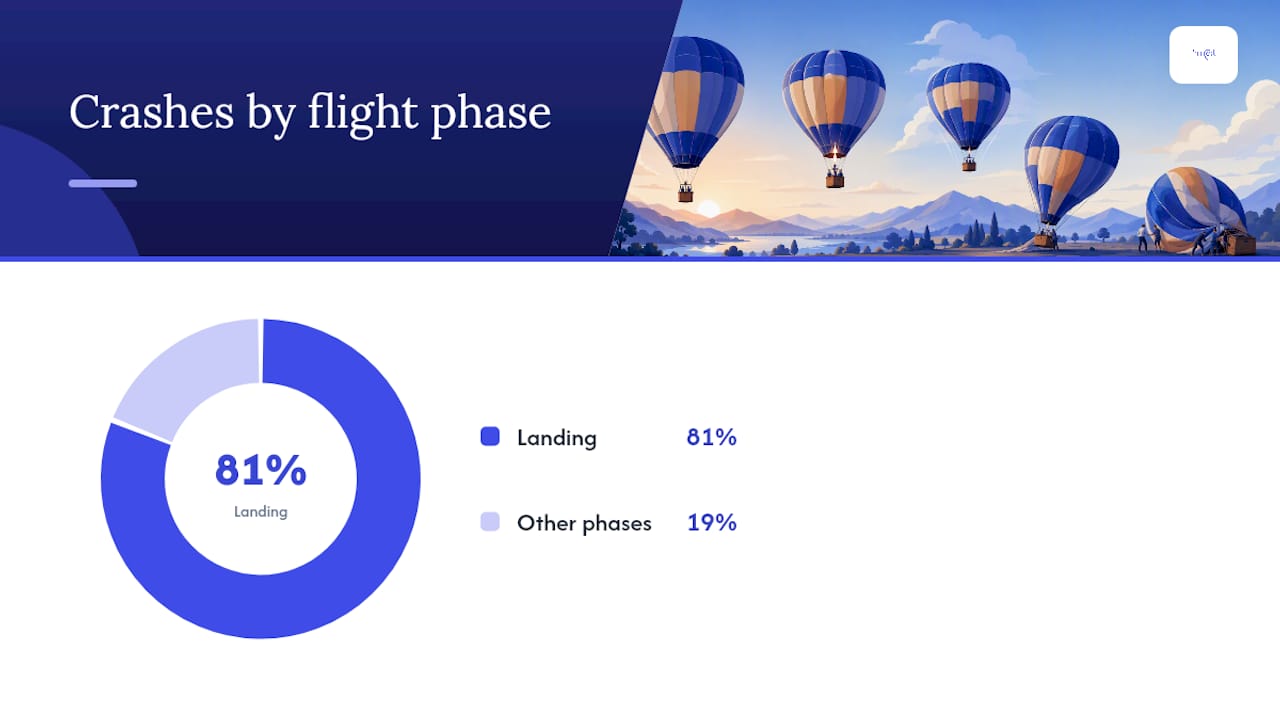
In the CDC's review of U.S. paid-tour crashes from 2000 to 2011, 81% of crashes happened during landing. A balloon has no brakes and no reverse thrust. Once a pilot commits to a landing site, gusts can shove the basket sideways into terrain, fences, or trees faster than anyone inside can react.
Fixed-object collisions, power lines especially, are where the outcomes turn serious. They contributed to half of all serious injuries in the CDC dataset and were involved in all five fatalities recorded over that eleven-year span. That is a small number of incidents against a large volume of flights, but it tells you exactly where the real hazard sits.
A few conditions tend to combine to produce the worst outcomes:
- Rising or gusting wind during the final descent, which limits a pilot's ability to steer toward open ground
- Landing zones near power lines, tree lines, fences, or buildings, where there is little margin for drift
- Delayed decision-making, when a pilot presses ahead with a marginal landing site instead of aborting and repositioning
- Poor fuel management or equipment issues that force an unplanned landing in a worse spot than intended
None of this means ballooning is dangerous in the way a first-time flyer might picture. It means the risk is concentrated, predictable, and largely manageable by a competent pilot who reads the wind correctly and picks a clean landing site early rather than late.
Hot Air Balloon Safety Checklist for Passengers
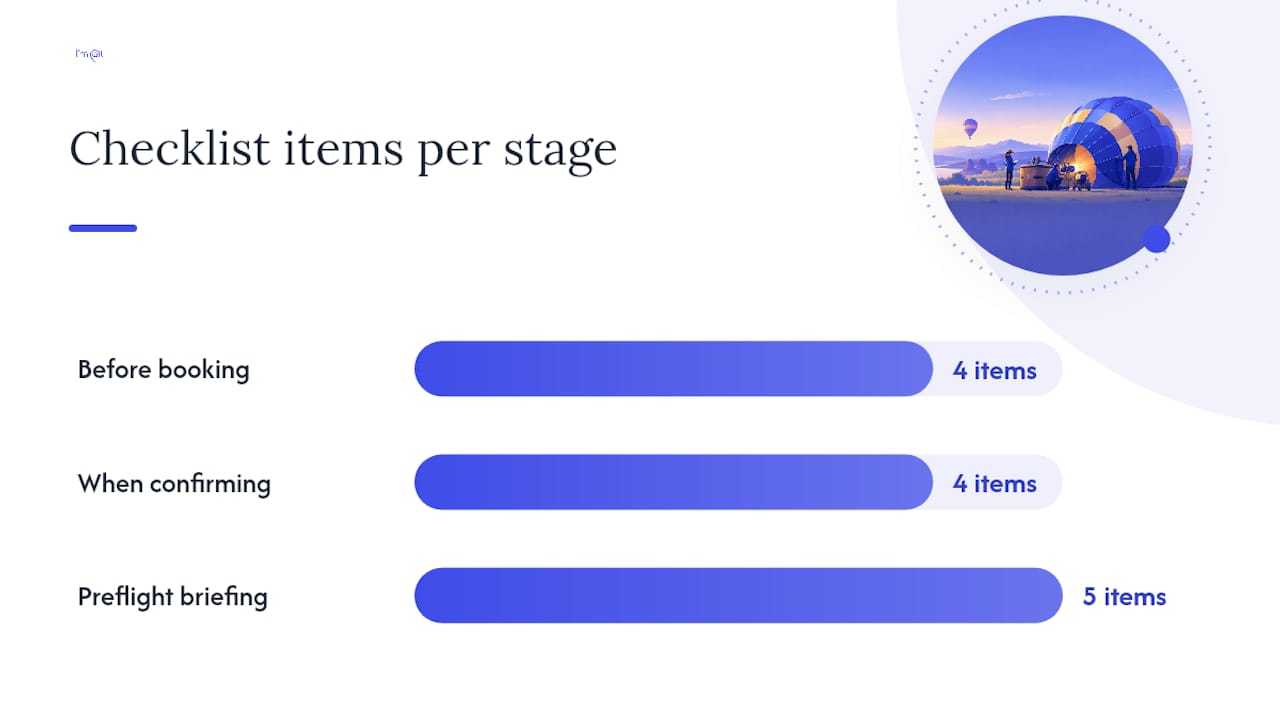
You have more control over your risk than you might assume, and most of it happens before you ever climb into the basket. Treat this as a three-stage checklist: before you book, when you confirm, and during the briefing.
- Before booking, ask whether the pilot holds a current, valid license and whether the operator carries passenger liability insurance. Ask when the balloon last had a maintenance inspection and what the cancellation policy is for high-wind mornings.
- When you confirm your spot, find out the weight limit for the basket, whether there are mobility restrictions for boarding, what to wear (closed shoes, no loose scarves), and whether any protective gear is provided.
- During the preflight briefing, listen for specific landing instructions, the brace position the crew wants you to use, where to stand in the basket, and the operator's rules on alcohol and smoking before flight. A well-run briefing also covers what to do if the flight has to end somewhere other than the planned site.
Transport Canada's passenger guide uses this same structure: a flight overview, positioning instructions, and clear safety precautions delivered before takeoff, not improvised mid-flight.
Pro Tip: If a briefing feels rushed or the crew skips the landing procedure entirely, that is your cue to ask questions before liftoff, not after you're airborne.
Hot Air Balloon Regulations: Licensing and Airworthiness
Regulatory oversight is the part of ballooning passengers never see, and it is doing more work than most people realize. Civil aviation authorities set the rules for who can fly paying passengers and how often a balloon has to be inspected.
Free-balloon pilot licenses typically require a documented mix of ground instruction, supervised flight hours, and a written and practical exam before a candidate can carry passengers commercially. SACAA's licensing framework lays out these requirements, and licenses generally need periodic renewal or validation to stay current, not a one-time credential.
Airworthiness works the same way. Balloons, burners, and baskets go through scheduled inspections, and operators need approvals tied to those inspection records. SACAA's general aviation pages outline what that oversight covers for recreational and commercial balloon operations.
A few documents worth asking about directly:
- The pilot's current license number and its validity date
- The operator's air service or activity certificate, if the jurisdiction requires one
- Recent airworthiness inspection records for the specific balloon you'll fly in
- Proof of passenger liability insurance
Regulatory frameworks differ by country, so a license valid in one jurisdiction may not carry weight elsewhere. Ask for documentation that is valid where you're actually flying.
Hot Air Balloon Accident Statistics: What the Numbers Tell Us
Over an eleven-year period, U.S. paid-tour operations recorded multiple crashes involving several hundred occupants, with a range of minor injuries, serious injuries, and a small number of fatalities. Landing was involved in the overwhelming majority of those events.
By the numbers: 81% of paid-tour balloon crashes occurred during landing. Wind was cited as a factor in 78% of incidents, and fixed-object collisions were tied to every fatality in the dataset, according to the CDC's crash epidemiology report.
The JAMA analysis reaches a similar conclusion from a different angle, identifying pilot decision-making, object strikes (particularly power lines), and hard ground contact as the strongest predictors of severe injury or death. Common injury types include lower-extremity fractures from hard landings and head injuries from ejection or impact, though rates vary between studies depending on how each one defines a "crash" and who gets counted.
That last point matters. Researchers caution against boiling any of this down into a single "one-in-X" odds figure, because these datasets don't track total flight hours or total passengers carried across the industry. Without that exposure denominator, a raw crash count tells you where the risk lives but not your personal probability of encountering it.
What to Ask a Hot Air Balloon Operator Before You Book
Operators that run a tight safety program tend to share the same habits: they set firm weather minimums, they don't fly when winds exceed a defined threshold, and they walk through a preflight checklist every single time, not just on days that feel risky. Ground crews stay in radio contact throughout the flight and are trained to help manage the landing, not just chase the balloon across a field afterward.
When you're comparing operators, a short list of direct questions tends to surface the answer fast:
- How many flight hours does the pilot have, and how recent is their license validation?
- Has the operator had any reportable incidents, and how were they handled?
- What's the maintenance schedule for this specific balloon and burner?
- Do you carry passenger insurance, and can I see proof?
- What's your wind and weather policy, and who makes the go/no-go call?
Watch for red flags along the way. Evasive answers about licensing, pressure to fly in marginal weather because a group already paid, or vague responses about maintenance records are all signs to book elsewhere. A pilot confident in their program answers these questions without hesitation.
What to Do If Your Balloon Flight Has an Emergency
Most passenger injuries happen in the final seconds of landing, which means your body position in that moment matters more than almost anything else you do on the flight.
- When the pilot calls for landing position, bend your knees, hold the basket's rim or handles firmly, and keep your weight low and centered.
- If the basket drags or tips after touchdown, stay down, keep holding on, and wait for the crew's signal before attempting to climb out.
- Exit only once the balloon has fully stopped moving and the crew confirms it's safe, then move away from the burner and any deflating envelope fabric.
- If anyone is injured, get medical attention promptly and ask the operator how to file an incident report with the relevant civil aviation authority.
Pro Tip: The brace position feels awkward for about ten seconds. Skipping it to grab a photo during the final descent is exactly when ankle and wrist injuries happen.
Im-at's Perspective on Booking Safer Balloon Experiences
Various platforms list activities, including hot air balloon rides, from providers around the world, and safety information is part of what makes a listing worth trusting. Providers who list clear policies on cancellations, weather rules, and what's included tend to be the ones running tighter operations on the ground, too.
Reading a listing critically is its own skill. Look for the same details this guide covers: licensing mentions, weather cancellation terms, and what happens if a flight gets rescheduled. Providers who are transparent about those specifics in writing are usually just as transparent when you ask them directly.
— Mikahil
Compare Balloon Ride Safety Details Before You Book on Im-at
Some search and booking tools help travelers avoid uncertainty by allowing comparison of listed policies, inclusions, and cancellation terms side by side before committing to a booking.

A listing for a hot air balloon experience in Stellenbosch or a Dubai balloon ride paired with a desert safari shows you what's included, what the provider promises, and how flexible the booking is if weather forces a reschedule. Run the checklist from this guide against whatever provider you're considering, license mentions, weather policy, cancellation terms, before you hand over payment. If you're planning a longer trip around the flight, a partner like Dragonfly Retreat also lists group stays worth pairing with an early-morning balloon launch. Start comparing available balloon experiences and other activities now at Im-at.
Sources
- Hot-Air Balloon Tours: Crash Epidemiology in the United States, 2000–2011
- Factors Associated With Fatalities and Injuries From Hot-Air Balloon Crashes | JAMA
FAQ
What Are the Odds of a Hot Air Balloon Accident?
Researchers avoid quoting a single odds figure because crash datasets lack a reliable exposure denominator, meaning nobody tracks total passenger hours across the industry. What's clear from the CDC's data is that serious injuries and fatalities are rare relative to the number of crashes recorded, and landing is where nearly all of the risk concentrates.
Can a Five-Year-Old Go on a Hot Air Balloon Ride?
Most operators set a minimum age or height requirement rather than allowing very young children, since basket rims can be too tall for a small child to brace against safely during landing. Check the specific operator's policy before booking, since age and weight limits vary by provider and basket design.
Who Should Not Go on a Hot Air Balloon Ride?
People with significant mobility limitations, certain heart or spinal conditions, or difficulty standing for the flight duration should talk to their doctor and the operator before booking, since landings require standing in a brace position. Pregnant travelers are also commonly advised against ballooning by most operators due to the impact risk during landing.
What's Safer, a Helicopter or a Hot Air Balloon?
Both carry different risk profiles rather than one being categorically safer. Helicopter risk tends to concentrate around mechanical failure and low-altitude maneuvering, while balloon risk concentrates almost entirely around landing conditions and wind, according to the JAMA analysis of contributing crash factors.