

If you're comparing Peek alternatives, the shortlist splits into two camps: global marketplaces that hand you built-in demand, and standalone booking software that gives you more pricing control. Im-at is a strong marketplace-native pick for providers who want visibility without a monthly bill,, while dedicated booking engines suit operators who already generate their own traffic and just need a reservation backend.
Two numbers explain why this decision matters more than it used to. Online travel agencies and marketplaces grew their share of tours-and-activities bookings from 24% in 2019 to roughly one in three bookings by 2024. Yet only about 20% of in-destination tours and activities are purchased online at all, meaning most of the category still hasn't moved to digital booking. That gap is exactly where a marketplace listing earns its keep.
Here's how to move fast depending on which side of the transaction you're on:
- Providers: List an experience on a marketplace like Im-at first (free listings, no upfront cost), then evaluate a booking engine once volume justifies the monthly fee.
- Travelers: Search a marketplace directly instead of relying on generic search results, since marketplaces aggregate availability across many operators in one place.
- Hybrid operators: Run a marketplace listing and a booking engine in parallel rather than choosing one exclusively.
Pro Tip: Don't wait until you've maxed out direct bookings to try a marketplace. Providers who list early capture demand from travelers who never would have found their website through a search engine.
Key Takeaways
The strongest Peek alternative depends on whether you need built-in traveler demand (a marketplace like Im-at) or full pricing control (dedicated booking software).
| Point | Details |
|---|---|
| Match platform type to volume | Low-volume or seasonal providers usually save money on commission-only marketplaces. |
| Prioritize real-time sync | Choose a platform with API or channel manager support to avoid double bookings across channels. |
| Run a fee calculation first | Compare commission cost against subscription cost at your actual annual booking count before committing. |
| List a test experience | Providers should publish one experience on a marketplace to gauge traveler demand before switching fully. |
| Im-at fits free, fast listing | Travelers can search Im-at for nearby experiences, and providers can list at no upfront cost with payout after booking. |
Table of Contents
- Marketplace Exposure vs Booking Software Control: A Quick Comparison
- How Do Alternatives to Peek Differ on the Features That Matter?
- What Do Commission, Subscription, and Hybrid Pricing Actually Cost?
- How Should You Choose the Right Peek Alternative?
- How to Switch From Peek or List on Multiple Platforms
- Why Im-at Is a Strong Alternative to Peek
- Try Im-at: A Free Way to List and Get Found
- Sources
Marketplace Exposure vs Booking Software Control: A Quick Comparison
The core trade-off is distribution versus ownership. A marketplace puts your listing in front of travelers already browsing for things to do nearby; a booking platform puts you in charge of pricing, branding, and the guest relationship, but you have to bring your own traffic.
| Category | Distribution Reach | Pricing Model | Inventory Control |
|---|---|---|---|
| Marketplace | High (built-in traveler demand) | Commission per booking, often free to list | Shared calendar, marketplace manages sync |
| Booking platform | Low to none (you drive your own traffic) | Monthly subscription, sometimes plus per-booking fee | Full control, self-managed |
| Hybrid (booking software with channel connections) | Medium (via API links to marketplaces) | Subscription plus channel fees | Control with synced availability across channels |
Marketplace pros: free listing, instant access to travelers actively searching, no tech setup. Marketplace cons: commission cuts into margin, less control over how your listing is presented.
Booking platform pros: full pricing and branding control, predictable monthly cost at scale. Booking platform cons: you're responsible for all marketing, and the subscription is a fixed cost even in slow months.
A solo guide running two tours a week gets more value from a marketplace's free exposure. A high-volume day-tour operator running 15 departures a day, with an established following and its own booking traffic, often does better paying a flat subscription and keeping commissions out of the equation entirely.
How Do Alternatives to Peek Differ on the Features That Matter?
Most comparisons stop at "marketplace or software" and miss the features that actually decide whether you get double-booked or lose a sale. Break it into six clusters: distribution, pricing, real-time sync, booking flow, custom-experience support, and payout terms.
Distribution and demand. This is the single biggest differentiator. A platform's ability to put your listing in front of new travelers, rather than just processing bookings from people who already found you, is what separates a marketplace from a pure booking tool.
Real-time inventory sync. API connectivity and multi-channel distribution are now baseline requirements for any platform serious about preventing overbooking. If a tool can't sync your calendar across every channel it feeds, you will eventually double-book a slot, and that's the fastest way to burn a five-star review.
Booking flow and UX. Instant-book platforms convert better than request-to-book ones, especially on mobile, where a traveler deciding what to do that afternoon won't wait 24 hours for a confirmation email.
Tailor-made versus scheduled support. Fixed-departure day tours need simple calendar-based booking. Bespoke, custom-itinerary experiences need a platform that supports quote requests and negotiated pricing, not a rigid buy-now button.
Payment and payout terms. Check settlement timing before you sign up. Some platforms hold funds until after the experience date; others release payment on booking.
Onboarding complexity. A platform that takes two weeks of back-and-forth to get your first listing live is costing you bookings every day it's not published.
Nearly 40% of operators worldwide still don't use any reservation system, which tells you the industry's tech adoption is still catching up. That's an opportunity: providers who get real-time sync right now are ahead of a huge share of their competition.

Pro Tip: If you list on more than one platform, treat your channel manager or API connection as non-negotiable. Manual calendar updates across three or four sites is how double bookings happen, and it usually happens on your busiest weekend.
What Do Commission, Subscription, and Hybrid Pricing Actually Cost?
Peek alternatives fall into four pricing shapes, and the math changes dramatically depending on your booking volume.
- Commission-only marketplace. No upfront cost, no monthly bill. The platform takes a percentage of each completed booking, typically in the mid-teens to low-twenties depending on the marketplace.
- Monthly subscription booking engine. A flat fee regardless of volume, ranging from roughly $29 to $299 a month for SME-focused tools, up to custom enterprise pricing for larger operations.
- Hybrid model. A lower monthly subscription plus a small per-booking fee, aimed at operators who want some cost predictability without a large flat bill.
- Payment processing fees. Nearly every model layers a card processing fee on top, usually a small percentage plus a fixed amount per transaction.
Here's how that plays out at 1,000 bookings a year, assuming an average booking value of $60 ($60,000 in annual revenue):
The pattern is simple. Day-tour and high-volume operators often do better on flat subscription pricing once their booking count is high enough that a percentage commission would cost more than a fixed fee. Low-volume or seasonal operators usually come out ahead paying commission only, since there's no bill during the off-season.
Pro Tip: Fees are worth paying when they buy you distribution you couldn't get on your own. A red flag is a platform charging subscription-level fees while delivering marketplace-level traffic, or the reverse: a high commission with no real audience behind it.
How Should You Choose the Right Peek Alternative?
Start with your volume profile before you look at a single feature list. The right platform for a two-tour-a-week guide looks nothing like the right platform for a 20-departure-a-day operation.
Rank these criteria in order of importance for your business:
- Booking volume and seasonality
- Need for real-time, multi-channel inventory sync
- Type of experience (fixed schedule versus bespoke/custom)
- Existing marketing reach and traffic
- Price sensitivity relative to commission cost
- Onboarding time and support quality
During any platform demo, ask these questions directly:
- Is there an API or channel manager available, and does it connect to Google Things To Do or similar channels?
- What's the realistic marketplace exposure? Ask for traffic or booking-volume estimates, not just feature lists.
- When do payouts land relative to the experience date?
- How does the platform handle cancellations, no-shows, and weather-related rescheduling?
- Does it support liability waivers or insurance documentation at checkout?
Watch for these red flags before you commit:
- Opaque or shifting fee structures that aren't disclosed upfront
- No API or channel manager, meaning you'll be updating calendars by hand
- No provider dashboard for tracking bookings and revenue
- Payout delays longer than two to three weeks after the booking date
How to Switch From Peek or List on Multiple Platforms
You don't have to choose one platform and abandon the rest overnight. Most operators run a new platform in parallel with Peek during a transition window, then decide what to keep.
- Export your inventory. Pull every listing, price, description, and photo from your current system into a spreadsheet or export file.
- Audit your assets. Check photo quality, descriptions, and pricing rules before you republish anywhere new.
- Create the new listing. Rebuild your experience on the alternative platform, matching cancellation policy and pricing exactly to avoid guest confusion.
- Connect inventory sync. Set up an API or channel manager connection if the platform supports one, so calendars update automatically across every channel.
- Run test bookings. Book a test slot yourself to confirm confirmation emails, payment processing, and calendar blocking all work correctly.
- Go live and monitor. Publish the listing, then check daily for the first two weeks to catch sync issues before they become double bookings.
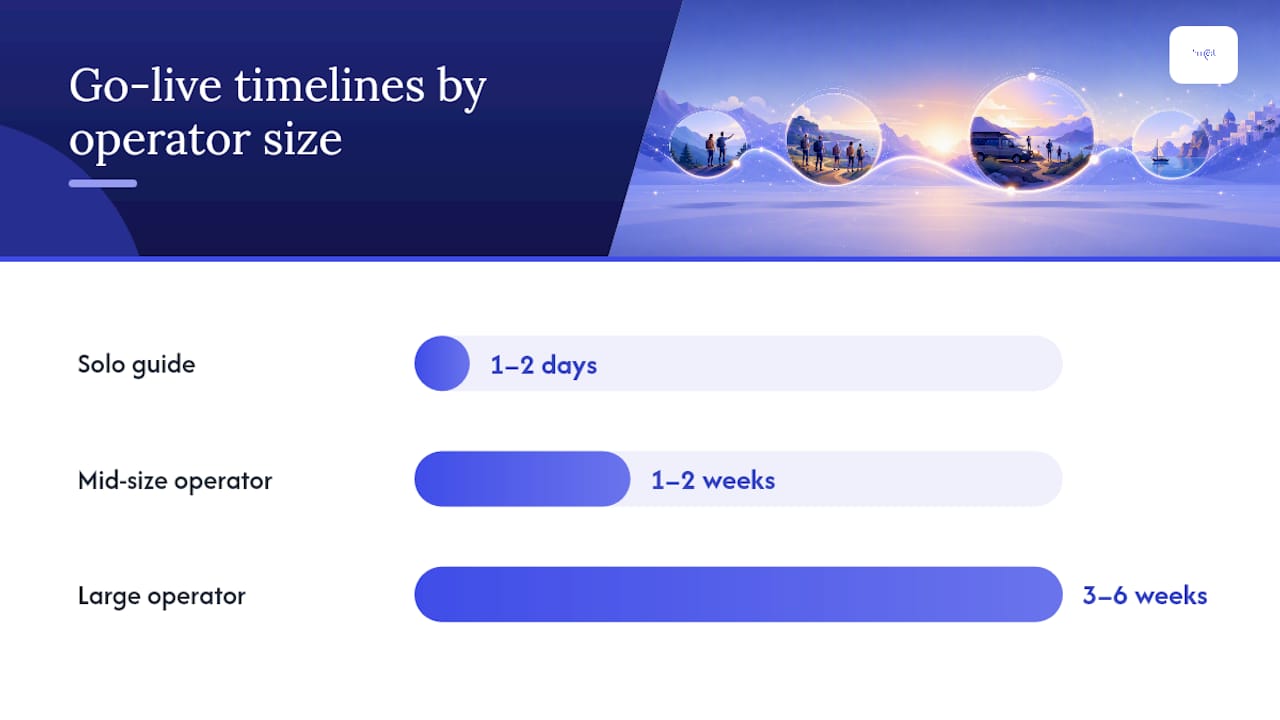
Timelines vary by operator size. A solo guide can typically get a marketplace listing live within a day or two. A mid-size operator juggling multiple tour types and integrations should budget one to two weeks for asset creation and testing. Larger operations connecting a full API or channel manager setup often need three to six weeks, most of it spent on integration testing rather than listing creation itself.
Before you start, gather your service descriptions, high-resolution photos, pricing rules, cancellation policy, and any required insurance or waiver documentation. Having these ready before onboarding begins is what separates a two-day listing process from a two-week one.
Why Im-at Is a Strong Alternative to Peek
A small city-tour operator with three weekly departures and no dedicated marketing budget listed their walking tour on a marketplace platform and picked up bookings from travelers who'd never heard of the business before searching for things to do nearby. That's the pattern marketplaces are built for: demand you didn't have to generate yourself.
Listing on Im-at works like this:
- Prepare your listing. Gather photos, a description, pricing, and your cancellation policy.
- Submit for free. There's no cost to list an experience, whether it's a guided tour, a safari, a workshop, or a cultural excursion.
- Go live quickly. Most listings are reviewed and published within a short window, not weeks.
- Get paid after bookings. Payouts follow completed bookings through the platform's payment processing.
Pro Tip: If you're testing whether a marketplace is worth your time, list your best-reviewed or most photogenic experience first. Strong visuals convert better on any browse-and-book platform.
Providers can see how a listing looks in practice on pages like the Lesedi Cultural Village day tour, and travelers browsing for something similar can start there too.
How This Guide Compared Peek Alternatives
This comparison drew on industry market research covering booking software adoption, operator surveys on technology gaps, and public pricing pages for SME and enterprise tools. The evaluation criteria stayed consistent throughout: distribution reach, real-time sync capability, fee structure, and how quickly a provider can get a listing live.
Nearly two in five operators worldwide still operate without any reservation system, and the tours-and-activities technology landscape remains fragmented across over three hundred different booking systems are in active use. That fragmentation is exactly why a clear comparison framework matters more than chasing the newest tool on the market.
As the publisher, Im-at operates a marketplace in this exact category and recommends itself as a strong option for providers seeking free, low-friction listing. That bias is disclosed here rather than hidden behind neutral-sounding language.
A Publisher's Note on Building for This Market
We built Im-at because too many good experiences, from small-operator safaris to niche cultural workshops, stay invisible simply because the provider running them doesn't have a marketing budget or the time to manage a complicated booking system. Our commitment is straightforward: make listing free and fast for providers, and make discovery simple for travelers looking for something worth doing. If you're a provider weighing your options, reach out through the platform for onboarding support or a walkthrough of how listings work.
Try Im-at: A Free Way to List and Get Found
Im-at gives providers free listings and built-in traveler demand, without the monthly subscription bill that booking software charges regardless of how many bookings come through. That's the practical difference for a small operator: no fixed cost while you find out whether marketplace traffic converts for your specific experience.
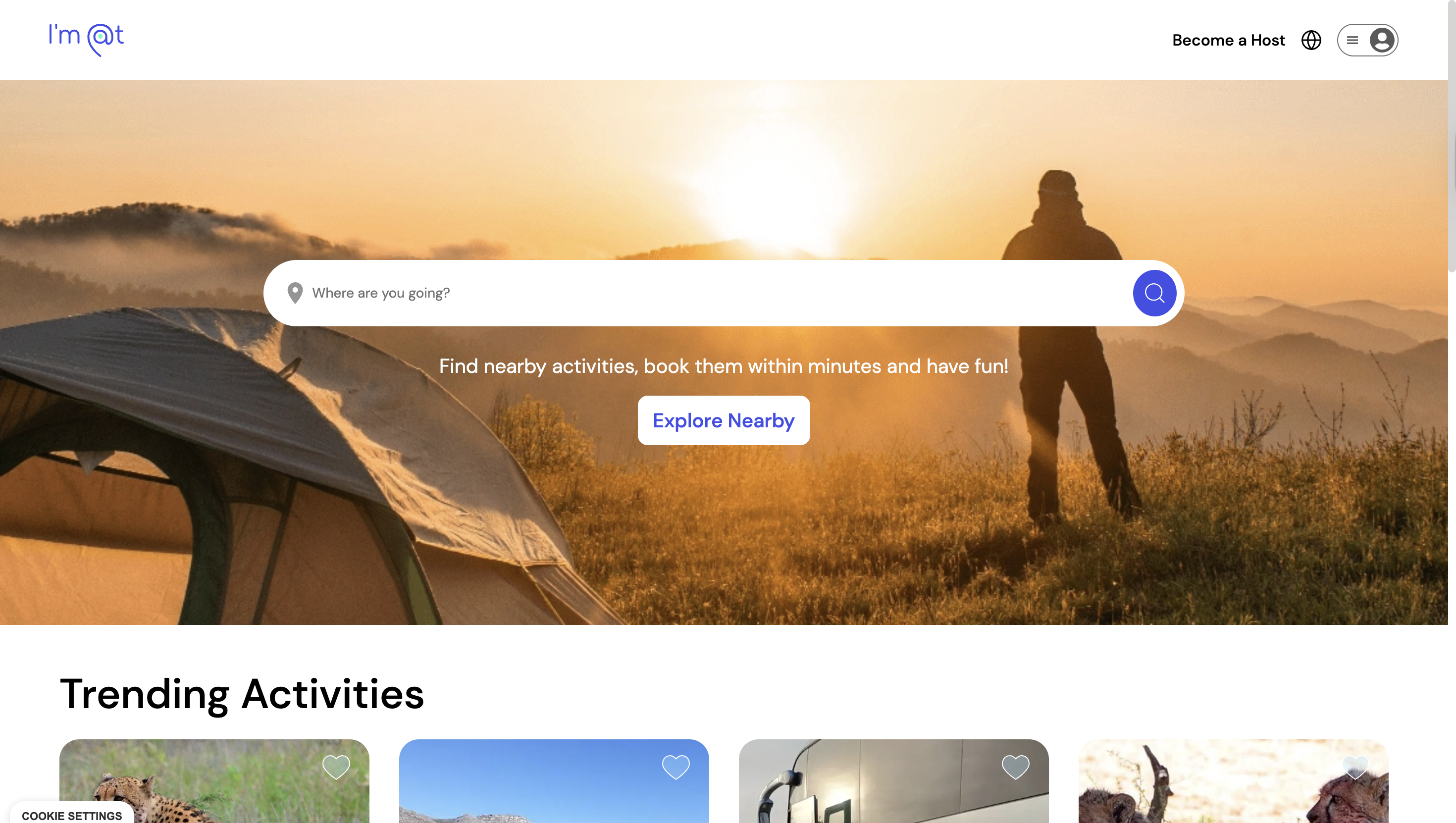
If you run tours, safaris, cultural excursions, or day trips, you can list your experience on Im-at at no upfront cost and start showing up for travelers already searching for things to do. Providers who want more visibility can also look into paid Boosts, which give a listing featured placement without changing the free base listing option. Start by checking out an example listing like the Lesedi Cultural Village day tour to see the format, then submit your own experience to get it live.
Sources
- Taxonomy and market dynamics of tours-and-activities MSPs (Journal article)
- The State of Experiences — Arival / Lion Ventures (operator landscape summary)
- Tour operator software: how to choose + best, compared (AtlasPerk guide)