
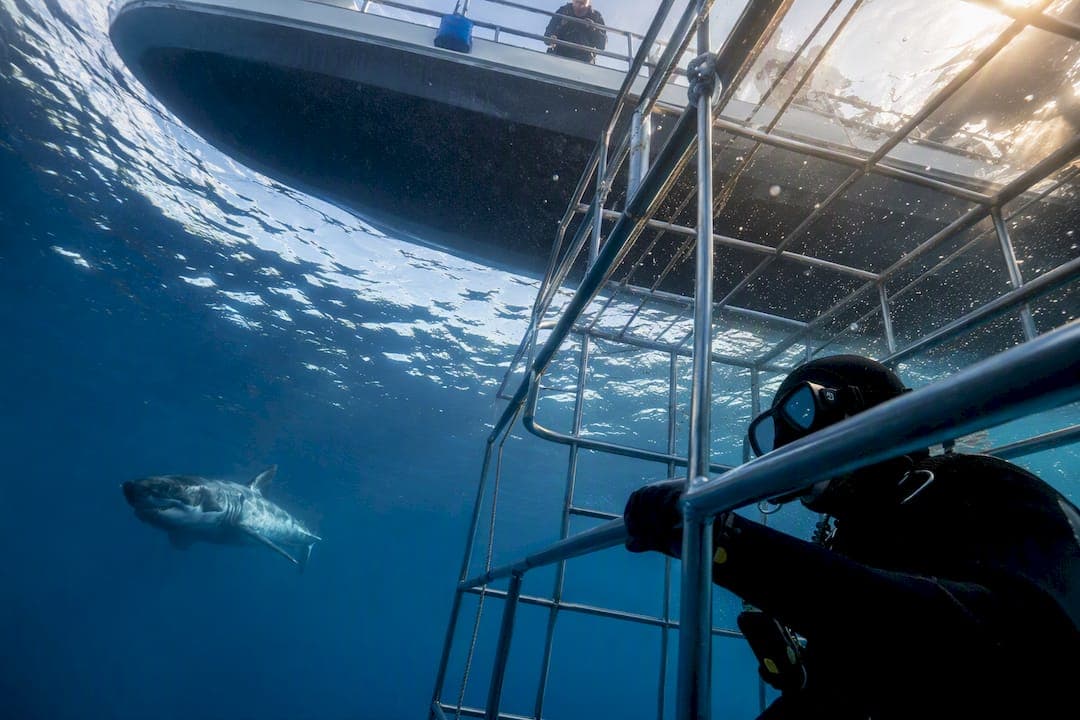
Shark cage diving is available year round at three main South African hotspots: Gansbaai, Mossel Bay, and False Bay near Cape Town. Gansbaai sees the most consistent great white activity, Mossel Bay works well if you're already on the Garden Route, and Cape Town suits travelers who want a private trip with minimal transfer time. Before you book anywhere, check the operator's safety credentials or look at curated listings on Im-at.
TL;DR:
- Gansbaai offers the highest shark sighting frequency and is best for dedicated trips, especially during peak seasons with good sea conditions.
- Mossel Bay is ideal for those already on the Garden Route and benefits from shorter boat rides and similar shark attraction sites.
- Cape Town and False Bay have the shortest transfer times and mostly private charters, but weather and wind can frequently disrupt trips.
- Booking private trips provides more control over timing and photo opportunities, often at higher costs, with prices typically ranging from a few thousand rand for shared tours.
- Confirm operator licensing, cage safety standards, and cancellation policies in writing before paying, as trip risks are managed but not eliminated.
Table of Contents
- Where in South Africa Can You Cage Dive With Sharks?
- What Actually Happens on a Shark Cage Diving Trip?
- How Safe Is Shark Cage Diving, Really?
- What Should You Ask Before You Book, and What Does It Cost?
- What Im-at's Listings Show About Booking Shark Trips in South Africa
- What Happens If You Need to Cancel?
- Does Cage Diving Harm Sharks or Local Marine Life?
- Why the "Just Book the Cheapest Trip" Advice Is Backwards
- Ready to Book Your Shark Cage Diving Trip?
- Where to Read More Before You Go
Where in South Africa Can You Cage Dive With Sharks?
Three regions dominate the shark cage diving scene, and each one fits a different kind of traveler.
Gansbaai built its reputation as the country's most reliable great white territory, largely because of the seal colony on nearby Dyer Island, which draws sharks close to shore for much of the year. Most operators run day trips departing directly from Gansbaai harbor, and plenty of Cape Town–based companies bundle the drive into the package. If sighting odds matter more to you than convenience, this is your region.
Mossel Bay sits about four hours east of Cape Town along the Garden Route, making it a natural stop if you're already road-tripping that route rather than making a dedicated trip. Seal Island here plays a similar role to Dyer Island, and the shorter boat ride to the site is a genuine advantage on rougher days. Im-at's guide to shark diving in Mossel Bay covers how operators there structure trips around the Garden Route itinerary.
False Bay and Cape Town offer the shortest travel window of the three, which matters if you're short on days. Trips here lean toward private charters more than the shared group boats common in Gansbaai.
- Gansbaai: highest sighting frequency, best for dedicated shark trips
- Mossel Bay: easiest to combine with a Garden Route drive
- Cape Town/False Bay: shortest transfer, strongest for private departures
Sea conditions and shark activity both shift with the seasons along the Cape coast, so visibility and comfort on the water vary depending on when you travel, not just where.
What Actually Happens on a Shark Cage Diving Trip?
A typical day runs longer than most first-timers expect, and the cage time itself is a small fraction of it.
- Early pickup from your hotel or a meeting point, often before sunrise
- Transfer to the harbor and a safety briefing covering cage procedure, signals, and emergency steps
- Boat ride out to the shark zone, usually a few tens of minutes depending on the region
- Rotating groups enter the cage in short intervals while the boat anchors and crew chums the water to attract sharks
- Return transfer, often with breakfast or a light meal included
Total trip length runs several hours, but the actual time submerged in the cage per person is usually brief across a few rotations. Most operators set a minimum age around preteens and ask guests to disclose heart conditions, recent surgeries, or pregnancy, since motion and cold water exposure aren't advisable in those cases.
Pro Tip: Take an over-the-counter seasickness tablet the night before, not the morning of. Boats often anchor and rock for hours near the shark zone, and by the time nausea hits, it's too late for most remedies to kick in.
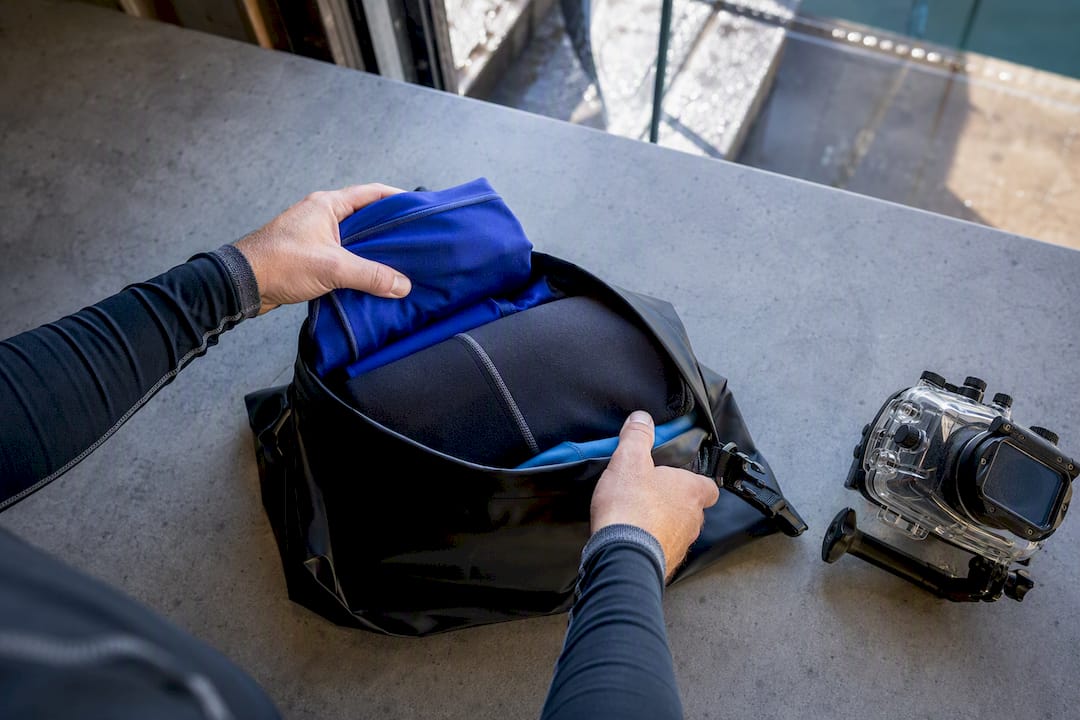
Bring a rash vest or wetsuit liner if you run cold, and a waterproof housing for your phone or camera. Salt spray finds everything.
How Safe Is Shark Cage Diving, Really?
Cage diving carries genuine risk reduction built into its design, but no operator can honestly call it risk-free.
The cages themselves matter more than most guests realize. Look for galvanized steel bars spaced close enough to prevent any body part from extending through, secure top and side locks, and flotation that keeps the cage stable at the surface where guests breathe through a snorkel rather than scuba gear. A cage with wide bar spacing or visible rust is a red flag worth asking about before you pay a deposit.
Reputable operators run through a few consistent practices:
- A pre-boarding safety brief covering hand signals, cage entry and exit procedure, and what to do if a shark makes contact with the cage
- Onboard first aid kits and at least one crew member trained in emergency response
- Skippers who monitor shark behavior and adjust chumming or cage positioning accordingly
- Clear disclosure of who cannot dive: certain medical conditions, pregnancy, and young children
South Africa's shark cage diving industry operates under national marine tourism permitting, and legitimate operators should be able to name their permit status without hesitation. If a company can't answer a direct question about licensing, that's worth treating as a warning sign.
The honest framing is that cages substantially lower the odds of injury by keeping divers separated from the shark, but incidents involving cage damage or shark contact with the bars, while rare, have happened over the industry's history. Treat "100% safe" claims from any operator with skepticism. The realistic goal is minimized risk through solid equipment and trained crew, not zero risk.
What Should You Ask Before You Book, and What Does It Cost?
Price and value both hinge on a handful of questions most travelers forget to ask until they're already on the boat.
Before paying, confirm the group size and whether the trip is shared or private, whether hotel transfers are included, and what happens if too few people book and the operator cancels the departure. Ask if photos or video footage come standard or cost extra, and get the cancellation and weather policy in writing.
- Shared day trips: generally cost a few thousand rand per person, including transfers from nearby towns
- Private charters: significantly higher, depending on group size and boat exclusivity
- Add-ons: professional photo or video packages typically run as a separate fee on top of the base trip
Private trips cost more, but they cut waiting time, give you control over departure timing, and generally produce better photo opportunities since you're not sharing cage rotations with strangers. Booking through a marketplace like Im-at lets you compare shared and private options side by side, including a private departure from Cape Town to Gansbaai, rather than calling around to individual operators one at a time. Winter months tend to bring better visibility in Gansbaai, while wind patterns can shut down trips with little warning in either season.
What Im-at's Listings Show About Booking Shark Trips in South Africa
Im-at functions as a search and booking layer across South Africa's activity operators rather than running trips itself, which means the listings reflect what's actually available on the ground.
The platform's private Cape Town to Gansbaai tour bundles transfer logistics into one booking, and its Mossel Bay shark diving guide walks through how that region's trips fit into a broader Garden Route stop. For travelers who want more than a single day out, the three-day Cape package combining shark cage diving with wine tasting and Cape Peninsula touring shows how the platform stitches adjacent activities into one itinerary instead of leaving you to book each piece separately.
Aggregating transfer options, private departures, and bundled multi-day packages in one place saves the back-and-forth of contacting operators individually, particularly for travelers piecing together a Cape itinerary on a tight schedule.
The same approach extends beyond shark diving. Im-at also lists multi-country wildlife itineraries covering South Africa, Botswana, and Zimbabwe, which gives a sense of how the platform handles longer, multi-stop travel planning rather than single bookings alone.
What Happens If You Need to Cancel?
Cancellation terms vary more between operators than almost any other detail, so read this section of the fine print before your credit card gets charged.
Weather is the biggest wildcard in this industry. Wind and swell can shut down a launch with only a few hours' notice, and most reputable operators build a no-questions-asked reschedule or refund into their policy specifically for weather cancellations they initiate. That's different from a cancellation you initiate.
For guest-initiated cancellations, expect tiered terms: full refund if you cancel a week or more out, partial refund or credit inside 48 to 72 hours, and often no refund for same-day cancellations or no-shows. Some operators also reserve the right to cancel a shared trip if too few people book, in which case you should get a full refund or a shift to another date, not a partial credit.
Before booking, get the cancellation window and refund percentage in writing, not verbally from a call center. Ask specifically what happens on a weather cancellation versus a personal one, since operators sometimes blur that distinction to their advantage. Booking through a platform that displays these terms upfront, rather than burying them in a confirmation email after payment, saves an argument later. If a deposit is nonrefundable under any circumstance, that's worth knowing before you commit, not after a storm rolls in on trip day.
Does Cage Diving Harm Sharks or Local Marine Life?
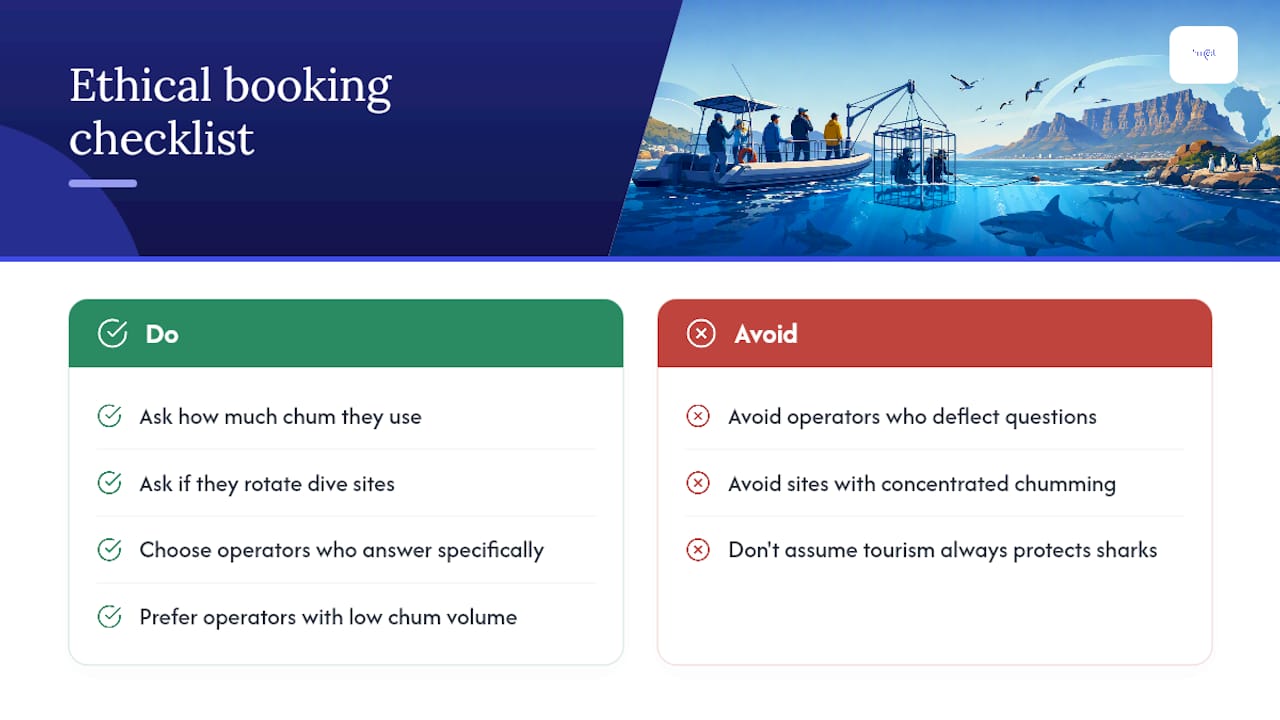
The ethical debate around shark cage diving centers on chumming, one practice that draws real scrutiny from marine biologists and conservationists alike.
Operators use bait and chum slicks to draw sharks toward the boat, and critics argue this conditions sharks to associate boats with food, potentially altering natural hunting behavior over time. Supporters counter that the volumes used are small relative to a great white's actual diet and that the economic value of live sharks to coastal tourism gives local communities a direct incentive to protect the species rather than fish it.
That economic argument carries real weight in South Africa specifically. Gansbaai's shark tourism industry employs boat crews, marine biologists, and hospitality staff whose livelihoods depend on healthy shark populations returning season after season. That's a meaningfully different incentive structure than a fishery, where a caught shark has value once, not repeatedly.
The more measurable ethical concern is trip frequency and cumulative chumming volume at any one site. Some marine researchers have raised the question of whether repeated exposure at popular dive spots pushes sharks to spend unusual amounts of time near boats rather than following normal migratory and feeding patterns. If you want to book with a lighter footprint, ask an operator directly how much chum they use per trip and whether they rotate dive sites to avoid concentrating pressure in one location. A company that can answer specifically, rather than deflecting, is usually one that has actually thought about the question.
Why the "Just Book the Cheapest Trip" Advice Is Backwards
Most advice on this topic treats shark cage diving like a commodity: compare a few prices, pick the lowest one, and go. That's the wrong starting filter for a trip where the meaningful differences sit in cage quality, crew training, and cancellation honesty, none of which show up in a price comparison alone.
The bigger blind spot is treating location choice as secondary to price. Where you dive determines your sighting odds, your travel time, and how exposed you are to weather cancellations, and that decision should come before you start comparing operator rates within a region. Someone who picks Gansbaai for the sightings but ignores winter wind patterns will be far more disappointed than someone who paid slightly more for a private Cape Town departure with flexible rescheduling.
If there's one thing worth prioritizing above all else, it's asking permit and safety questions before you ask about price. A company that answers licensing and cage-spec questions clearly and quickly is telling you something real about how it operates, and that matters more than a few hundred rand saved on a shared boat.
— Mikahil
Ready to Book Your Shark Cage Diving Trip?
This platform is an alternative to cold-calling half a dozen tour operators and comparing quotes by phone. Search once, see private and shared departures side by side, and book the one that fits your schedule and budget without the back-and-forth.
The platform's private Gansbaai tour from Cape Town covers transfers in one price, and if you want more out of your trip than a single morning on the water, the multi-day Cape package pairs cage diving with wine tasting and Cape Peninsula sightseeing. For travelers planning a longer overland route, Im-at's tailor-made 4x4 tours build in coastal activities alongside inland stops. Search your dates on Im-at, check the listed cancellation terms before you pay, and confirm your booking directly through the platform.
Where to Read More Before You Go
A few starting points if you want to dig deeper before locking in dates:
- Aussie Loop's snorkeling and diving guide for general water-activity planning inspiration