
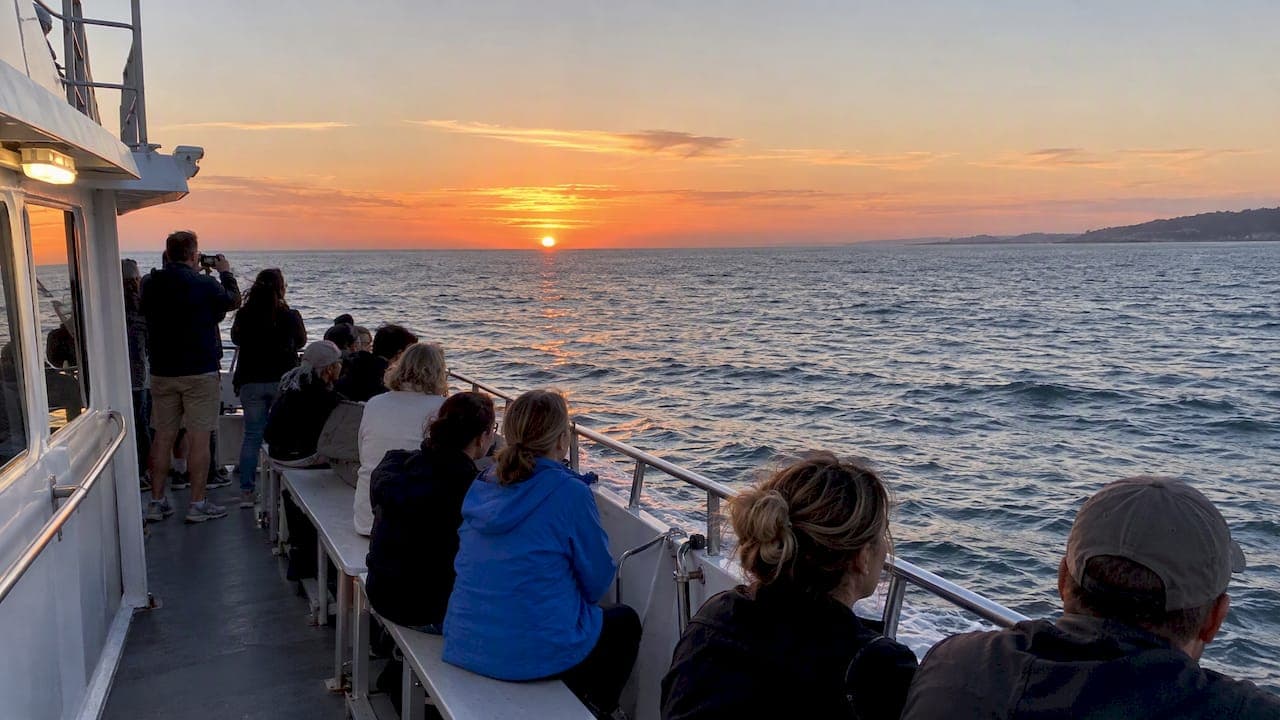
A sunset cruise is a 90 to 120 minute scenic evening boat trip: pick a public ticket for a casual, social outing or a private charter for a celebration. Expect music, drinks, and sometimes wildlife viewing or a sandbar stop along the way. Before you book, check the local sunset time and the operator's actual departure time, since the two rarely match exactly.
TL;DR:
- Most sunset cruises last between 90 and 120 minutes, with route length varying based on boat type and local harbor layout.
- Weather cancellations are at the captain's discretion and may result in delays, shortened trips, or credits rather than refunds.
- Wildlife sightings are unpredictable; booking for the scenery is recommended, as dolphins or seabirds are never guaranteed.
- Arrive 30 to 45 minutes early for check-in, parking, and boarding, especially when low tides slow access routes.
- Dress in breathable layers with non-slip shoes, and bring a light jacket, sunscreen, and motion-sickness remedies for comfort and safety.
Table of Contents
- Quick facts and the main types of sunset cruises
- What to expect once you're on board
- How to choose the right cruise for your plans
- What to bring and what to wear
- Booking logistics and what happens if the weather turns
- How Im-at helps you find and book a sunset cruise
- A short word on timing from experience
- Book your sunset cruise through Im-at
- FAQ
- Sources
Quick facts and the main types of sunset cruises
Most sunset cruises run 90 to 120 minutes, long enough to clear the harbor, reach open water, and watch the sky change color without rushing back. The boat type shapes the experience more than most people expect.
- Yachts and catamarans offer smoother stability and more deck space, good for photos and larger groups.
- Schooners lean into a classic, slower-paced sailing feel with less engine noise.
- Pontoons are common for smaller harbors and tend to run shorter, more casual trips.
Ticket style matters just as much as the boat. A public or group cruise costs less and suits solo travelers or couples who want atmosphere without commitment. Small-group tours sit between public and private, trading some cost for more personal space. Private charters run on a flexible schedule and route but carry a higher price, which makes sense for anniversaries, proposals, or groups who want the boat to themselves. Themed cruises (wine and cocktail tastings, narrated history trips, dolphin-watching runs) add value but narrow the experience, so check the listing for what is actually included before assuming it covers drinks or narration.
What to expect once you're on board
Routes typically start in protected harbor waters before heading toward open water or a horizon-facing point, and the exact path depends on the harbor's layout and local boating rules. Some trips detour toward known wildlife areas, but sightings of dolphins or seabirds are a bonus, never a guarantee, so booking a cruise specifically for wildlife carries some risk of disappointment.
What you'll typically find on board:
- Restrooms on larger boats, though smaller pontoons may not have one.
- Covered or shaded seating on some vessels, open-air only on others.
- Food and beverage service ranging from a cash bar to included snacks, depending on the operator.
- Posted age limits and Coast Guard-approved life jackets available for every passenger.
Families should check accessibility notes directly on the listing: boarding ramps, seating for small children, and whether infants are permitted at all vary widely between operators.
How to choose the right cruise for your plans
Start with five criteria: group size, budget, the atmosphere you want (lively versus quiet), anyone's mobility needs, and whether specific sights (dolphins, a lighthouse, a particular skyline) matter to you. Rank each option against those five before comparing prices.
Before booking, confirm these details directly with the operator:
- Departure time versus actual local sunset time, since they're rarely identical.
- Boarding logistics, including where to park and how early to arrive.
- Restroom availability if the trip runs close to two hours.
- Cancellation and weather policy, including what triggers a refund versus a credit.
- Whether drinks, snacks, or narration are included or sold separately.
A private charter makes sense when you need control over timing, guest list, or route. A public cruise makes more sense when budget matters more than privacy, or when you'd enjoy meeting other travelers. For a fast decision between three options, score each one from 1 to 5 on price, included amenities, and schedule flexibility, then pick the highest total. The highest score rarely has the lowest price, and that's fine.
Pro Tip: Call or message the operator directly if the listing doesn't state the exact departure time relative to sunset. A 15-minute difference changes what you'll actually see.
What to bring and what to wear
Temperatures drop noticeably once the sun is down, even in warm climates, so a light layer you can add after sunset makes a real difference in comfort. Cotton and linen breathe well during the warm departure, and a packable jacket or wrap covers the cooler ride back.
- Non-slip, flat shoes matter more than style: wet decks and narrow gangways punish sandals and heels alike.
- Polarized sunglasses cut glare off the water and improve sunset photos.
- SPF 30+ sunscreen, reapplied before boarding, protects skin even on a short trip.
- A phone charger, a waterproof pouch, and a small towel round out a practical kit.
Pro Tip: Pack a lightweight sun layer you can remove once the breeze picks up. It's the easiest fix for the hot-boarding, cold-return problem.
A noticeable temperature drop after twilight is common enough that guests and operators both flag it as the single most overlooked packing detail. Bring motion-sickness remedies if you're prone to seasickness, since open water can feel different from a calm harbor.

Booking logistics and what happens if the weather turns
Plan to arrive 30 to 45 minutes before departure. That window covers parking, check-in, waiver signing, and boarding, and low tides can steepen gangways enough to slow things down further for anyone with mobility concerns.
Weather decisions rest with the captain, not the passenger. Common outcomes include a delayed departure, a shortened route, or a full cancellation, and most operators offer a refund or a credit toward a future trip rather than a straight cash return. Partly cloudy skies don't automatically cancel a cruise: overcast conditions often produce dramatic color rather than a washed-out sky, so don't assume a cloudy forecast means a canceled trip.
- Confirm the exact meeting point, since marinas often have multiple docks.
- Ask about restroom access and accessibility before you book, not after.
- If you need to reschedule last minute, contact the operator directly rather than rebooking elsewhere first.
How Im-at helps you find and book a sunset cruise
Some travel booking platforms let you search by city or harbor, compare duration, boat type, and amenities side by side, and book online once you've settled on a trip. That's useful when you're planning for a group, weighing a private charter against a public ticket, or comparing cancellation policies across a few operators before committing. Instead of checking multiple operator sites, you can filter once and book directly through a listing that fits your plan.
A short word on timing from experience
The best seat on most sunset cruises isn't the one closest to the bow, it's the one facing west with nothing blocking the horizon. Ask about seating when you book, especially on a private charter where you're paying for the view anyway. Small detail, big difference.
— Mikahil
Book your sunset cruise through Im-at
Search by city or harbor on a booking platform, filter by duration, boat type, and amenities, then compare cancellation policies before you commit. This process can take a few minutes and puts the decision in your hands instead of across multiple browser tabs.

Double-check the operator's departure time against local sunset and read the weather policy before you lock in a date. When you're ready, book directly on Im-at and get the confirmation in your inbox the same day.
FAQ
How long does a typical sunset cruise last?
Most sunset cruises run 90 to 120 minutes, enough time to reach open water and watch the full color change. Exact length depends on the operator and the route.
What should I wear on a sunset cruise?
Dress in breathable layers like cotton or linen, and pack a light jacket for after sunset when temperatures drop. Non-slip flat shoes are strongly recommended for wet or moving decks.
Will I definitely see dolphins or wildlife?
No, wildlife sightings on sunset cruises are possible but never guaranteed, even on trips that route near known habitats. Book for the scenery and treat any sighting as a bonus.
What happens if bad weather cancels my cruise?
The captain makes the final call on safety, and outcomes usually include a delay, a shortened trip, or a cancellation with a refund or credit. Partly cloudy skies rarely cause a cancellation since overcast conditions can still produce a dramatic sunset.
How early should I arrive before departure?
Plan to arrive 30 to 45 minutes early to cover parking, check-in, and boarding. Low tide can slow boarding further, so build in extra time if mobility is a concern.