

TL;DR:
- Im-at is the top recommended alternative to ATA.tours, offering direct booking and global activity options. It provides verified suppliers, payment protection, and customer support in a user-friendly platform. Other options include metasearch aggregators for price comparison and AI-driven services for bespoke multi-day trips.
For U.S. travelers searching for ATA.tours alternatives, Im-at is the top recommended pick. It combines a broad global activities catalog with direct booking, payment protection, and built-in customer support — all in one place. Search, compare, and book on Im-at in minutes.
Two other platform types are worth knowing:
Metasearch/aggregator platforms (best for price comparison):
- Search dozens of booking sites simultaneously to surface the lowest headline price
- Show inclusions and reviews side by side across partners
- Redirect you to a partner site to complete payment — buyer protection depends on that partner
AI-powered custom-itinerary services (best for bespoke trips):
- Build multi-day, multi-stop itineraries in minutes using concierge-style automation
- Match you with vetted local operators based on your preferences
- Trade self-serve control for speed; less suited to quick single-activity bookings
Table of Contents
- What are the best ATA.tours alternatives right now?
- Platform profiles: which type fits your trip?
- How do you choose the right tour booking platform?
- Practical tips to save money and avoid booking mistakes
- Why Im-at stands out as an ATA.tours alternative
- What do user reviews say about these platforms?
- How does customer support compare across platforms?
- Key Takeaways
- The platform type most travelers overlook
- Book your next experience directly on Im-at
- Sources and selection methodology
What are the best ATA.tours alternatives right now?
| Dimension | Im-at | Metasearch aggregator | AI concierge | Large OTA marketplace | Local-operator marketplace |
|---|---|---|---|---|---|
| Best use-case | Discovery + direct booking | Price comparison | Bespoke multi-day trips | Last-minute + reviews | Niche/hyper-local experiences |
| Inventory breadth | High (global) | High (aggregated) | Medium (curated) | High (global) | Low–Medium (regional) |
| Pricing model | Commission; transparent total | Varies by partner | Custom quote or flat fee | Commission; markups vary | Direct operator pricing |
| Cancellation flexibility | Supplier-set; shown at checkout | Partner-site policy governs | Service-dependent | Varies widely | Operator-dependent |
| Booking flow | Direct booking | Redirect to partner | Guided/concierge | Direct booking | Direct or redirect |
| Trust signals | Verified supplier badges, reviews | Aggregated ratings | Vetted operators | User reviews, volume | Operator reputation |
| Mobile UX | Mobile-friendly web app | Varies | Varies | Strong native apps | Basic |
| Unique features | Safaris, cultural tours, day trips | Price alerts, multi-site scan | AI itinerary drafting | Private tours, small-group filters | Accessibility, local expertise |
| US availability | Yes | Yes | Yes | Yes | Varies |

Legend: Direct booking = payment processed on the platform itself. Redirect = platform sends you to a partner site to pay. Inventory breadth reflects the number of bookable experiences, not the number of partner links.
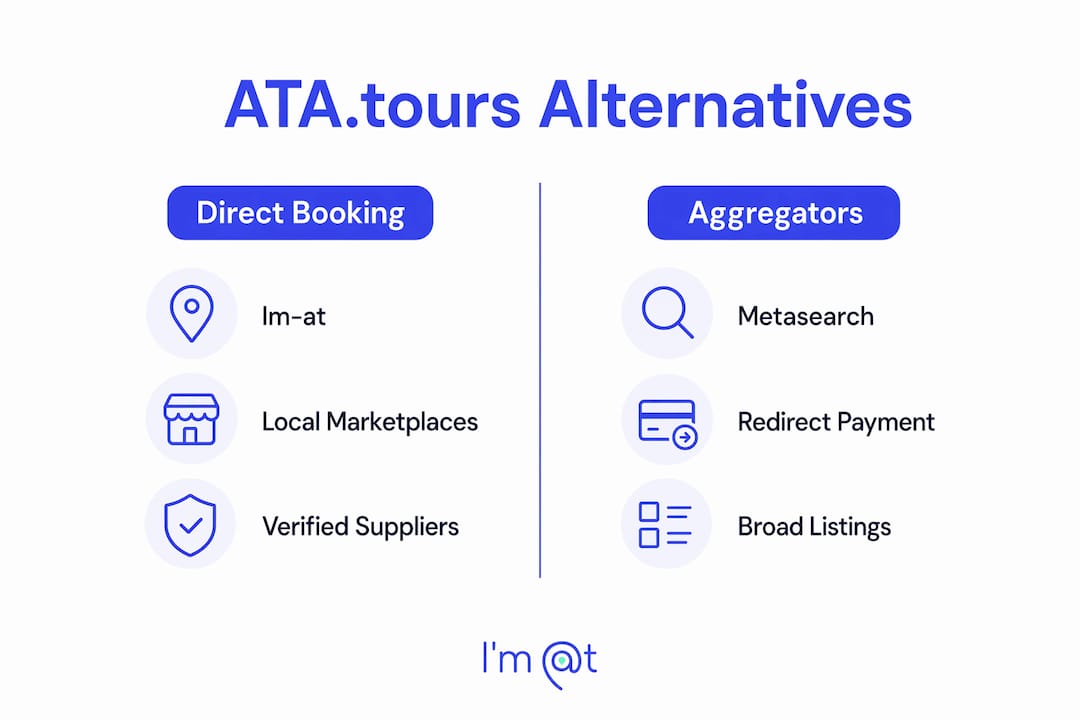
A travel activity marketplace differs from an aggregator: a marketplace hosts listings and processes payments, while an aggregator collects offers from other sites and hands off the transaction.
Platform profiles: which type fits your trip?
Im-at
Im-at functions as both a search engine and a booking portal. You browse guided tours, safaris, city excursions, cultural experiences, and outdoor adventures, then pay directly on the platform. Verified supplier badges and integrated support make it a reliable choice for travelers who want one place to handle everything.
- Pros: Direct booking with payment protection; broad global catalog including adventure and cultural experiences; mobile-friendly
- Con: Newer platform, so some niche destinations have thinner inventory than legacy OTAs
- US availability: Full
Metasearch/aggregator platforms
Tools like TourScanner search dozens of partner sites at once and market over one million curated tours and activities. You see prices, inclusions, and reviews side by side — then click through to a partner site to pay. That redirect matters: refunds and support are handled by the booking partner, not the aggregator itself.
- Pros: Fast price comparison across many suppliers; good for flexible travelers
- Con: No direct booking; buyer protection depends entirely on the partner you land on
- Booking flow note: Always save the partner site's confirmation and contact details
AI-powered custom-itinerary services
Platforms like CustomizeYourTour use AI concierge workflows to cut manual planning from hours to minutes by automating itinerary drafting and supplier matching. They shine for complex, multi-stop trips where you want a curated plan fast.
- Pros: Speed and personalization for bespoke trips; vetted local operators
- Con: Less control over individual activity selection; not ideal for a single quick booking
- Best for: Travelers planning a 5-day itinerary across multiple cities
Large OTA/experiences marketplaces
Platforms in this category (Viator, GetYourGuide, Klook, Airbnb Experiences) carry massive inventory and strong user-review ecosystems. Last-minute availability and private-tour filters are genuine strengths. Mobile apps are typically polished. The trade-off: pricing markups and cancellation policies vary significantly by supplier, so reading the fine print is non-negotiable.
- Pros: Huge selection; strong review volume; solid mobile apps
- Con: Inconsistent cancellation terms; some suppliers inflate prices to cover platform fees
Local-operator marketplaces
These platforms connect you directly with small, regional guides. Peek is one example in the US market, focused on local activity operators. You often get better pricing and insider knowledge, but customer support is thinner and inventory is geographically limited.
- Pros: Authentic local experiences; direct operator relationship
- Con: Limited geographic coverage; support quality varies by operator
How do you choose the right tour booking platform?
Work through these questions before you commit:
- Do you want to pay on the platform itself, or are you comfortable being redirected to a partner site?
- Is price the top priority, or do you value verified reviews and buyer protection more?
- How flexible is your schedule? Strict cancellation windows matter more for non-refundable bookings.
- Do you need a single activity or a full multi-day itinerary?
- Is local, niche expertise worth trading off against broader inventory?
- Does the platform offer phone or chat support during US business hours?
- Do you need accessibility filters, small-group options, or private-tour availability?
Before booking, ask: Who processes my payment? Who handles refunds if the tour is canceled? Is the supplier's contact information listed?
Red flags to watch:
- Cancellation terms buried in fine print or absent entirely
- No phone number or live chat for customer support
- Supplier contact details missing from the booking confirmation
- Prices that differ dramatically from other platforms with no explanation of what's included
Practical tips to save money and avoid booking mistakes
Pro Tip: Always compare the total out-the-door price, not just the headline rate. Platform fees, taxes, and gratuities can add a substantial amount to what looked like the cheapest option.
Knowing how aggregators work helps you use them without getting burned. Here's what actually matters:
- Compare inclusions, not just price. Two listings for the "same" city tour can differ by hotel pickup, lunch, or entrance fees. Check what each price actually covers before clicking Book.
- Verify the cancellation window. Free-cancellation windows that offer some advance notice are common on many platforms; anything shorter deserves a second look, especially for non-refundable rates.
- Confirm who issues your booking confirmation. On aggregator platforms, the confirmation comes from the partner site, not the aggregator. Save that email and note the partner's support contact.
- Use price alerts on aggregator tools when your travel dates are flexible — prices shift, and a few days' difference can change the total meaningfully.
- Favor platforms with secure payment and US-accessible support for any booking over $100. A travel comparison guide recommends verifying supplier reviews via multiple sources, not just the platform's own rating.
Mini example: A half-day kayaking tour in San Diego might show $89 on one aggregator and $104 on a direct marketplace. The $89 price excludes equipment rental and redirects to a partner with a no-refund policy. The $104 includes gear and offers free cancellation up to 24 hours out. Total cost and terms, not the headline number, decide the better deal.
Final booking checklist: Screenshot your confirmation, note the supplier's local phone number, and confirm meeting-point details 24–48 hours before the activity.
Why Im-at stands out as an ATA.tours alternative
Im-at offers a direct-booking marketplace model that removes the redirect problem entirely. Here's what you get:
- Broad activities catalog: guided tours, safaris, city excursions, workshops, cultural trips, and outdoor adventures across global destinations
- Direct booking with payment processed on the platform
- Payment protection and verified supplier badges
- Mobile-friendly interface built for quick planning
- Integrated customer support accessible to US travelers
- Provider listings that include full contact details and cancellation terms upfront
Compared to ATA.tours, Im-at operates as a full marketplace rather than an agency model, so you see multiple suppliers and price points for the same destination. Booking flow is self-serve and transparent; support is available through the platform rather than through a single operator.
Three steps to book on Im-at:
- Search your destination or activity type at im-at.com
- Compare offers by price, inclusions, reviews, and cancellation terms
- Confirm your booking and save the confirmation with supplier contact details
Questions? Im-at's support section is accessible directly from the booking confirmation page.
What do user reviews say about these platforms?
Review quality varies significantly across platform types. Large OTA marketplaces carry the highest review volume, which makes it easier to spot patterns — a guide with 400 reviews averaging 4.6 stars tells you something a listing with 12 reviews cannot. The downside is that high volume can mask recent quality drops if the platform doesn't surface recency-weighted ratings.
Im-at uses verified supplier badges to signal that a provider has been vetted, which adds a layer of trust beyond raw star counts. Aggregator platforms typically link to partner ratings rather than hosting their own, so the review methodology differs by partner. For any platform, checking reviews across multiple sources rather than relying on a single platform's score gives a more accurate picture.
Local-operator marketplaces often have thinner review counts, but the reviews tend to be more detailed and specific to the experience.
How does customer support compare across platforms?
Support quality is where platform types diverge most sharply. Large OTA marketplaces generally offer 24/7 chat and email, with phone support available for higher-value bookings. Response times are typically faster because they have dedicated support teams.
Aggregators are the weakest link here. Because they redirect you to a partner for payment, post-booking support runs through that partner, not the aggregator. If the partner's support is slow or hard to reach, the aggregator can't intervene. The metasearch model means dispute resolution lives with whoever processed your payment.
Im-at provides integrated support accessible through the platform, which keeps the support relationship in one place rather than splitting it between an aggregator and a third-party partner. AI concierge services typically offer dedicated support during the planning phase but may hand off to local operators for day-of issues.
Key Takeaways
Im-at is the strongest direct-booking alternative to ATA.tours for US travelers who want verified suppliers, payment protection, and support in one place.
| Point | Details |
|---|---|
| Im-at is the top pick | Direct booking, verified suppliers, and integrated US-accessible support make it the most complete alternative. |
| Use aggregators for price hunting | Tools like TourScanner scan over one million listings but redirect to partners for payment — save partner receipts. |
| AI concierge for complex trips | AI itinerary services cut planning time dramatically but suit multi-day bespoke trips, not quick single bookings. |
| Always check total price and cancellation | Platform fees and refund windows can flip the apparent best deal; compare out-the-door cost, not headline rates. |
| Im-at booking is three steps | Search, compare offers, confirm — with supplier contact details visible before you pay. |
The platform type most travelers overlook
Most travelers default to the biggest name they recognize, which usually means a large OTA. That works fine for a popular city tour with thousands of reviews. But for anything off the beaten path — a small-group safari, a cultural workshop, a day trip that isn't on every tourist itinerary — the big platforms often surface the same handful of heavily marketed operators while burying the better ones.
The smarter move is to start with a direct-booking marketplace for discovery and use an aggregator only to sanity-check the price. If you're planning something genuinely complex, an AI concierge service can save real hours. But for most US travelers booking a single experience or a short trip, a marketplace like Im-at gives you the combination of breadth, transparency, and support that neither aggregators nor single-operator sites can match.
Book your next experience directly on Im-at
Every listing on Im-at comes with verified supplier details, transparent cancellation terms, and direct payment — no redirects, no mystery partners handling your refund.
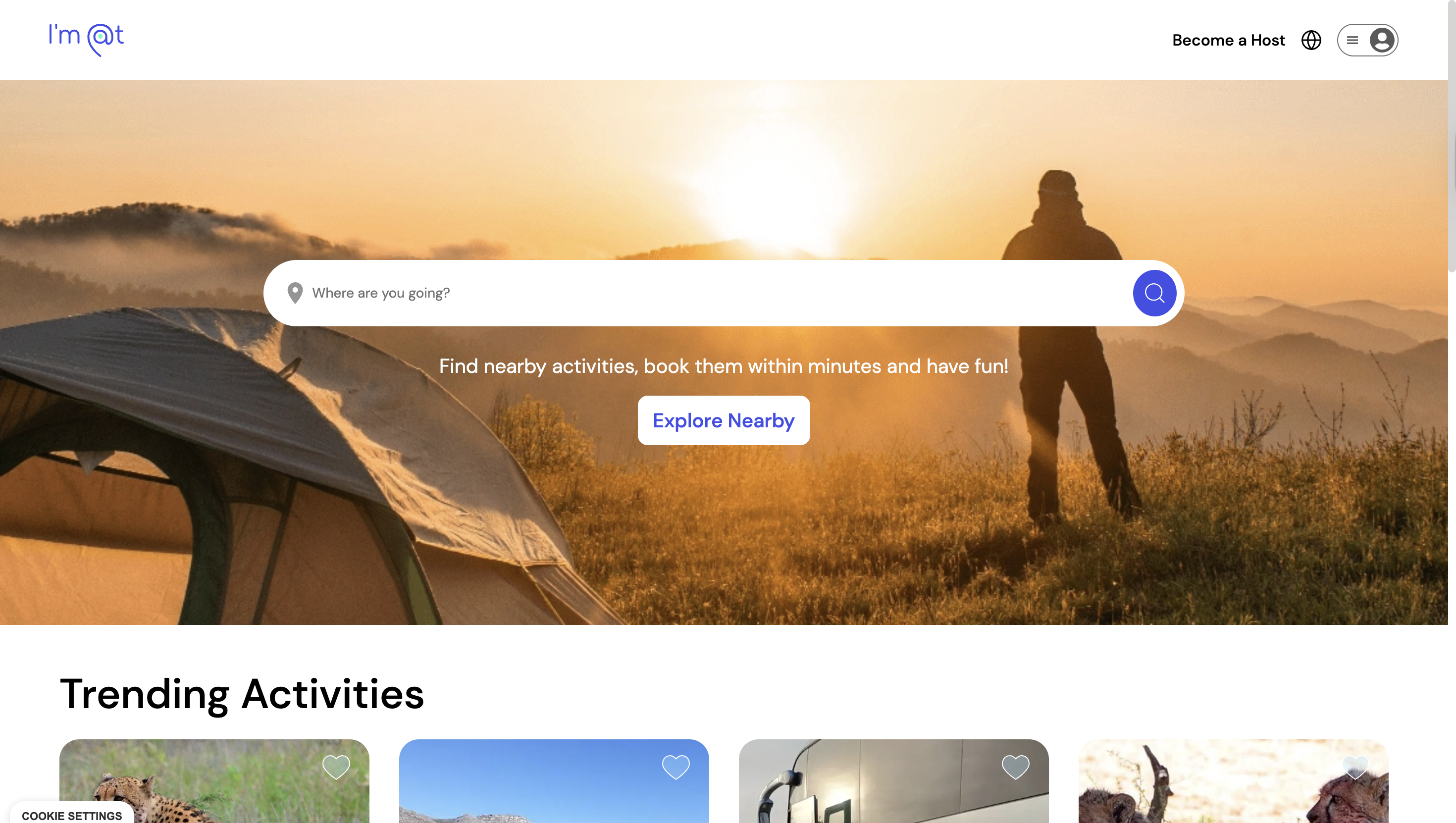
Start with something like the Cape Town 3-Day Attraction to see how the platform presents multi-day experiences, or browse The Unholy Secrets for a taste of unique local events. Head to im-at.com to search your destination and book with confidence.
Sources and selection methodology
Alternatives were evaluated on five criteria: inventory breadth, booking flow (direct vs. redirect), cancellation policy transparency, US availability, and trust signals (verified reviews, supplier badges). Research was conducted in June 2026.
- TourScanner — metasearch aggregator covering over one million tours and activities
- CustomizeYourTour — AI-powered custom itinerary and concierge service
- TourTeller — comparison platform explaining redirect booking flows and price discrepancies
- SiteMinder: What is a metasearch engine? — industry explanation of aggregator mechanics and buyer protection
- GorillaFare: How a Travel Aggregator Saves You Time and Money — practical aggregator comparison tactics
- GorillaGuides: How to use travel comparison sites — best practices for validating reviews and trust signals
- SiteLike: Sites similar to at-tours.com — community-driven alternatives list, filtered for recency and active inventory