
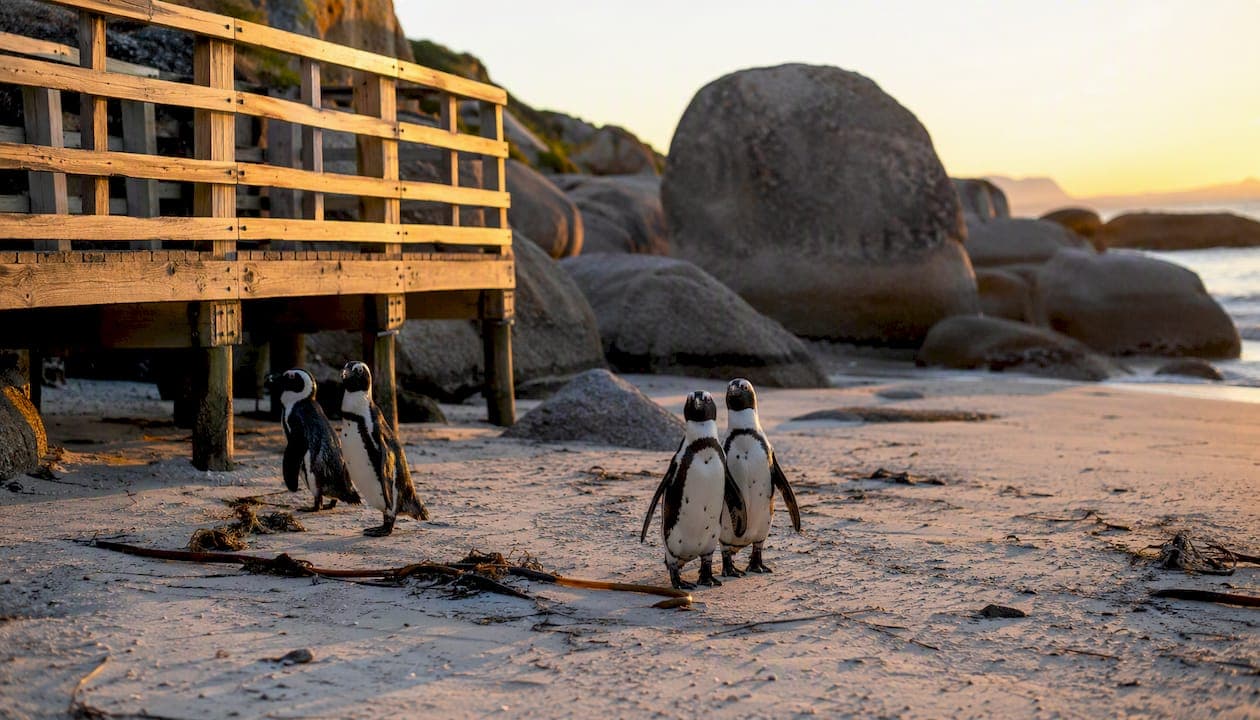
Boulders Beach is worth every kilometer of the drive from Cape Town. You'll stand on a boardwalk just meters from a thriving colony of wild, endangered African penguins in a protected cove inside Table Mountain National Park — no zoo enclosure, no staged encounter. For families, wildlife lovers, and first-time visitors to the Cape Peninsula, this is one of the most rewarding stops on the entire route.
Here's what you need to know before you go:
- Entry fee: A SANParks conservation fee applies daily. Recent reported rates for non-resident adults run approximately R170–R215, though fees change — always verify current rates on SANParks before you travel.
- Boardwalks only: Stay on the designated boardwalks at all times. They protect active nesting areas and keep both penguins and visitors safe.
- Location: Kleintuin Road, Simon's Town, about 40 km south of Cape Town city center.
- Busiest period: December through January. Arrive at opening to beat the queues and secure parking.
- Bring: Sunscreen, water, quiet shoes, and your ID plus payment method for the entry fee.
Key Takeaways
Boulders Beach offers reliably close, protected viewing of endangered African penguins inside Table Mountain National Park, with the best experience going to visitors who arrive early and follow SANParks boardwalk rules.
| Point | Details |
|---|---|
| Entry fee | Non-resident adults pay approximately R170–R215; verify current rates on SANParks before travel. |
| Boardwalk rules | Stay on boardwalks at all times — they protect nesting areas and keep penguins and visitors safe. |
| Best timing | August–November for breeding behavior and chicks; arrive at opening to avoid crowds and parking issues. |
| Conservation behavior | No feeding, touching, or chasing penguins; carry out all litter; report injured birds to rangers. |
| Book via Im-at | Im-at's guided Boulders Beach tours handle transfers and entry logistics, removing parking stress entirely. |
Table of Contents
- What are the Boulders Beach penguins and why does this colony matter?
- How to plan your visit: hours, fees, access, and facilities
- What to expect on the boardwalks: viewing, rules, and safety
- When is the best time to see penguins at Boulders Beach?
- Why conservation matters here and how you can help
- What else can you do near Boulders Beach?
- Why Boulders Beach deserves a place on every Cape Peninsula itinerary
- Book your Boulders Beach penguin experience through Im-at
- Sources
What are the Boulders Beach penguins and why does this colony matter?
The birds you'll see here are African penguins (Spheniscus demersus), a species classified as endangered. They're the only penguin species that breeds on the African continent, and their global population has dropped sharply over the past century due to commercial fishing pressure, habitat loss, and reduced fish stocks in False Bay and surrounding waters.
The colony at Boulders Beach established itself in the early 1980s when just two breeding pairs settled in the sheltered cove. Numbers grew steadily for decades, making it one of the most studied land-based colonies in southern Africa.
The site sits within Table Mountain National Park and is managed by SANParks, which means conservation rules carry real weight here. The boardwalks aren't a design flourish — they were built specifically to keep foot traffic off nesting areas while still giving visitors genuinely close views of the birds.
Why does this matter to you as a visitor? Because the colony's health is directly tied to decisions made about fishing regulation in the region. Restrictions on commercial pelagic fishing in False Bay affect how much food the penguins can find close to shore. When you pay the conservation fee and follow the site rules, you're contributing to the funding and management that keeps this colony viable.
Key facts about the colony:
- Species: African penguin (Spheniscus demersus), IUCN-listed as endangered
- Colony origin: early 1980s, two founding breeding pairs
- Management: SANParks within Table Mountain National Park
- Boardwalks: a deliberate conservation measure, not just visitor infrastructure
- Penguins are present year-round, though behavior varies by season
How to plan your visit: hours, fees, access, and facilities
Getting there
Boulders Beach sits on Kleintuin Road in Simon's Town, roughly 40 km south of Cape Town. By car, take the M3 south toward Muizenberg, then follow the coastal road (M4) through Fish Hoek and into Simon's Town. The entrance is well-signposted. SANParks provides detailed driving directions for visitors approaching from different routes.
By public transport, the Simon's Town train line runs from Cape Town's central station and stops at Simon's Town station, about 3 km from the beach. From there, a short taxi or rideshare covers the remaining distance.
Hours and entry fees
The site typically opens at 7:00 AM and closes at 7:30 PM in summer (October through March), with slightly reduced hours in winter. These times can shift, so check the official SANParks Table Mountain National Park page for current notices before you travel.
The conservation fee for non-resident adults has recently been reported in the range of R170–R215. Children and South African residents pay lower rates. Fees are paid at the SANParks pay point on arrival. Card payments are generally accepted, but carrying cash as a backup is sensible.
Facilities and accessibility
- Parking: Limited, especially December through February. The colony sits in a residential neighborhood, and peak-summer queues for parking can form before 9:00 AM. Arriving at opening is the most reliable way to get a spot.
- Toilets: Available at the visitor center near the entrance.
- Visitor center: Staffed with rangers who can answer questions and assist if you spot an injured bird.
- Swimming: Two designated swimming beaches (Boulders Beach and Seaforth Beach) allow swimming in the cove alongside penguins. Check conditions on the day.
- Wheelchair and stroller access: The main boardwalk sections are paved and accessible. Some areas involve uneven sand or steps — the visitor center can advise on the most accessible route for your group.
Pro Tip: Arrive at opening time, particularly in December and January. Parking fills fast, the light is better for photos, and the penguins are more active before the midday heat.
What to expect on the boardwalks: viewing, rules, and safety
Cape Town Tourism describes the boardwalks as purpose-built for close viewing while keeping the penguins safe — and that description holds up. You'll walk elevated wooden paths just a few meters above the beach, with penguins nesting, waddling, and occasionally arguing directly below. The proximity is striking. Some birds will be close enough that you could reach out — which is exactly why you shouldn't.
What to do:
- Stay on the boardwalks at all times, even when a penguin wanders onto the path
- Keep voices low, especially near nesting areas
- Secure food and bags — kelp gulls are aggressive and will raid open bags
- Follow ranger instructions without question; they know the colony's current state
- Report any injured or distressed birds to the visitor center immediately
What not to do:
- No feeding penguins, ever — human food disrupts their diet and behavior
- No touching or attempting to pick up birds
- No chasing or cornering penguins for photos
- No alcohol or smoking within the park
- No kayaks or vessels in the cove
Safety note: African penguins have sharp, strong beaks and will bite if they feel cornered or threatened. This isn't rare — it happens most often when visitors lean over boardwalk railings for close-up selfies. Supervise children closely and keep a respectful distance even when a bird approaches you.
Pro Tip: If a penguin walks toward you on the boardwalk, stand still and let it pass. Chasing or retreating quickly startles the bird and can trigger a defensive response.
When is the best time to see penguins at Boulders Beach?
Penguins are present year-round, which means there's no bad time to visit. But timing your trip well makes a real difference in what you'll see.
By season:
- August through November is widely recommended for active colony behavior. Breeding season brings nesting pairs, eggs, and — from around October — chicks. Trusted travel guides consistently flag this window as the most rewarding for wildlife viewing and photography.
- June and July are quieter for tourists, the light is often softer, and the penguins are still active. A good choice for photographers who want fewer crowds.
- December through January brings the most visitors and the warmest weather. The beach is lively, but parking is a genuine challenge and the site can feel crowded by mid-morning.
By time of day:
- Early morning (opening until about 9:00 AM) gives you the best light, cooler temperatures, and penguins that are active before heading out to fish.
- Late afternoon (after 4:00 PM) is another good window as birds return from feeding.
- Midday can actually be quieter for penguin-watching — many birds are out at sea — but the beach itself is at its busiest with swimmers.
Tide note: The beach is tidal, and high tide reduces the sandy areas where penguins rest and visitors can stand. Check a tide chart before your visit if you want maximum beach space for swimming or ground-level penguin watching.
Why conservation matters here and how you can help
Boulders Beach sits within the Table Mountain National Park Marine Protected Area, which gives the surrounding waters legal protection from certain fishing and boating activities. That protection matters directly to the penguins, whose food supply depends on healthy fish populations close to shore. Commercial fishing pressure on pelagic species in False Bay has historically reduced the birds' access to sardines and anchovies — their primary food sources.
On-site actions that genuinely help:
- Follow every boardwalk rule — it's the single most effective thing visitors can do
- Carry out all litter; plastic in the cove is a direct threat to marine wildlife
- Don't feed or touch the birds, even if they approach you
- Report injured birds to rangers or the visitor center rather than attempting to handle them yourself
Beyond the visit:
- Choose tour operators who follow SANParks guidelines and practice low-impact wildlife tourism
- Support credible local conservation programs that work with African penguin populations
- Favor accommodation providers who operate with environmental awareness near sensitive coastal areas — resources like this guide to responsible holiday home choices can help you identify what to look for
The conservation fee you pay at the gate funds SANParks management of the site, including ranger presence, boardwalk maintenance, and wildlife monitoring. It's a small amount relative to what it protects.
What else can you do near Boulders Beach?
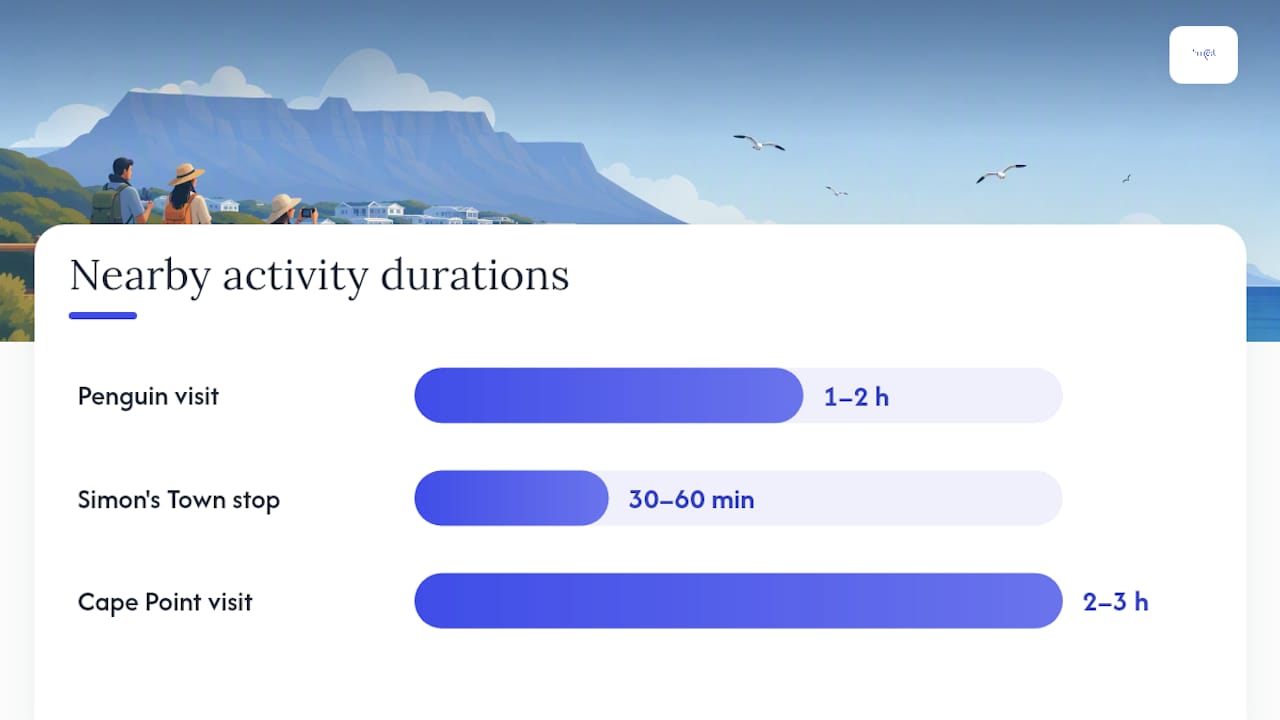
A focused penguin visit takes about 1–2 hours. That leaves plenty of time to build a half-day or full-day itinerary around the Cape Peninsula.
Nearby highlights:
- Simon's Town village: 3 km from the beach, with cafes, the South African Naval Museum, and a pleasant harbor. Worth 30–60 minutes before or after your penguin visit.
- Cape Point and Cape of Good Hope: About 20 km from Boulders, these are the dramatic southern tip of the Cape Peninsula. Allow 2–3 hours. The drive along the coastal road is one of the most scenic in South Africa.
- Cape Peninsula scenic drive: The route between Simon's Town and Cape Point passes through the Cape of Good Hope Nature Reserve with baboons, ostriches, and sweeping ocean views.
- Robben Island: Departures run from the V&A Waterfront in Cape Town, not from Simon's Town. If you're planning a Cape Town, Nelson Mandela Gateway, and Cape Peninsula penguin tour, combining Robben Island with a Cape Peninsula day makes for a full and rewarding itinerary — just plan for an early start.
Sample timing:
- Half-day: Arrive at Boulders at opening (7:00 AM), spend 1.5 hours with the penguins, walk Simon's Town for an hour, done by midday.
- Full day: Boulders in the morning, drive to Cape Point via the scenic coastal road, lunch at the Two Oceans Restaurant, return via Chapman's Peak. Back in Cape Town by early evening.
If you're driving, allow extra time for parking at both Boulders and Cape Point in peak season. Guided tours handle all of that for you — and often include SANParks entry logistics as part of the package.
Why Boulders Beach deserves a place on every Cape Peninsula itinerary
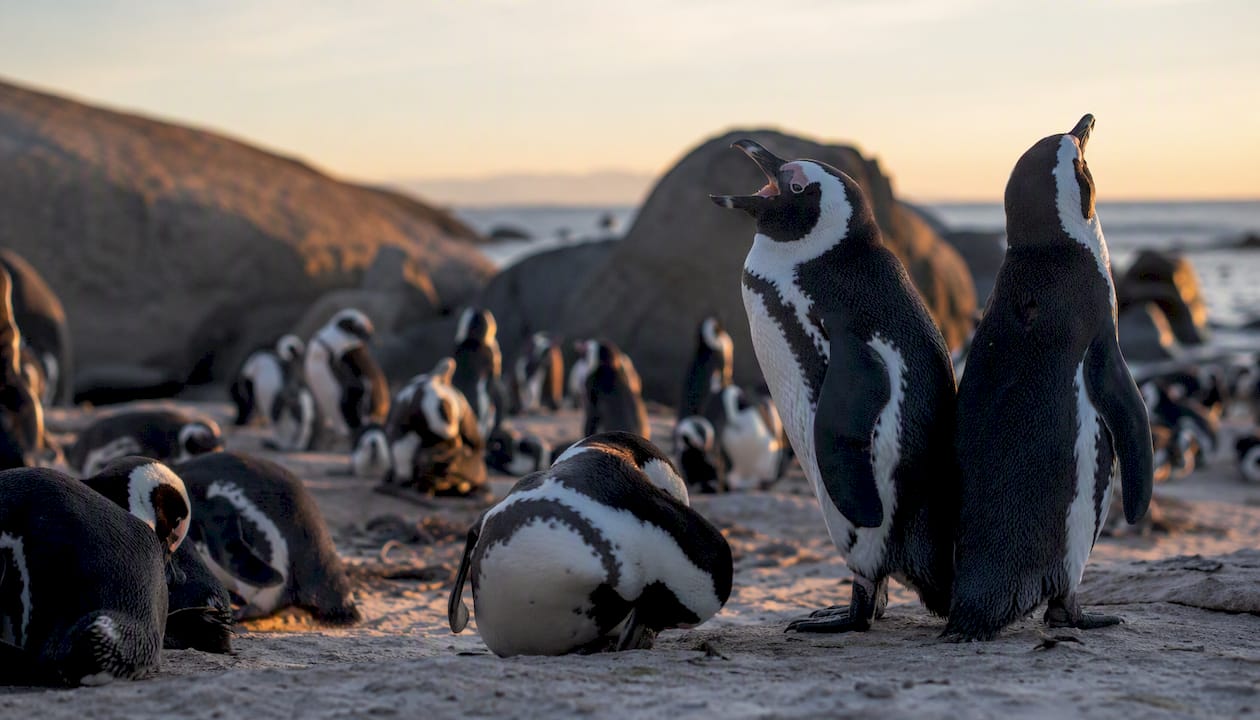
Most wildlife encounters in South Africa require long drives, early starts, and a fair amount of luck. Boulders Beach is the exception. You're guaranteed to see penguins — hundreds of them — in a setting that's genuinely wild, not manufactured. The boardwalks put you close enough to hear the birds calling and watch them interact, without any of the ethical compromises that come with captive wildlife experiences.
The one thing most visitors underestimate is how much the timing of arrival matters. Not the season — the hour. The difference between arriving at 7:00 AM and arriving at 10:00 AM in December is the difference between a calm, uncrowded experience with good light and a hot, packed boardwalk with a parking nightmare attached. Get there early. It's the single most useful piece of advice for this site, and it costs nothing.
Book your Boulders Beach penguin experience through Im-at
Parking stress and entry logistics are the two things that most often derail a Boulders Beach visit. Im-at solves both. The Boulders Beach Penguin Colony Tour on Im-at connects you with guided experiences that handle transfers, entry, and timing — so you arrive at the right hour without circling residential streets for a parking spot.
For travelers who want more of the Cape Peninsula in a single day, Im-at also lists a full Cape Peninsula tour combining Boulders Beach, Cape Point, and the scenic coastal drive. Every operator on the platform is expected to follow SANParks rules and practice responsible wildlife tourism. Understanding how digital reservations work before you book helps you compare options and confirm what's included. Browse available dates and book your spot on Im-at now — no guesswork, no parking queue.
Sources
Before you travel, check these sources for the most current fees, hours, and visitor notices:
- Boulders Penguin Colony – Table Mountain National Park
- Boulders Beach Penguins Cape Town: The Complete Visitor's Guide (2026) - Love South Africa
- Boulders Beach - Wikipedia
- Your guide to Boulders Beach - Cape Town Tourism