
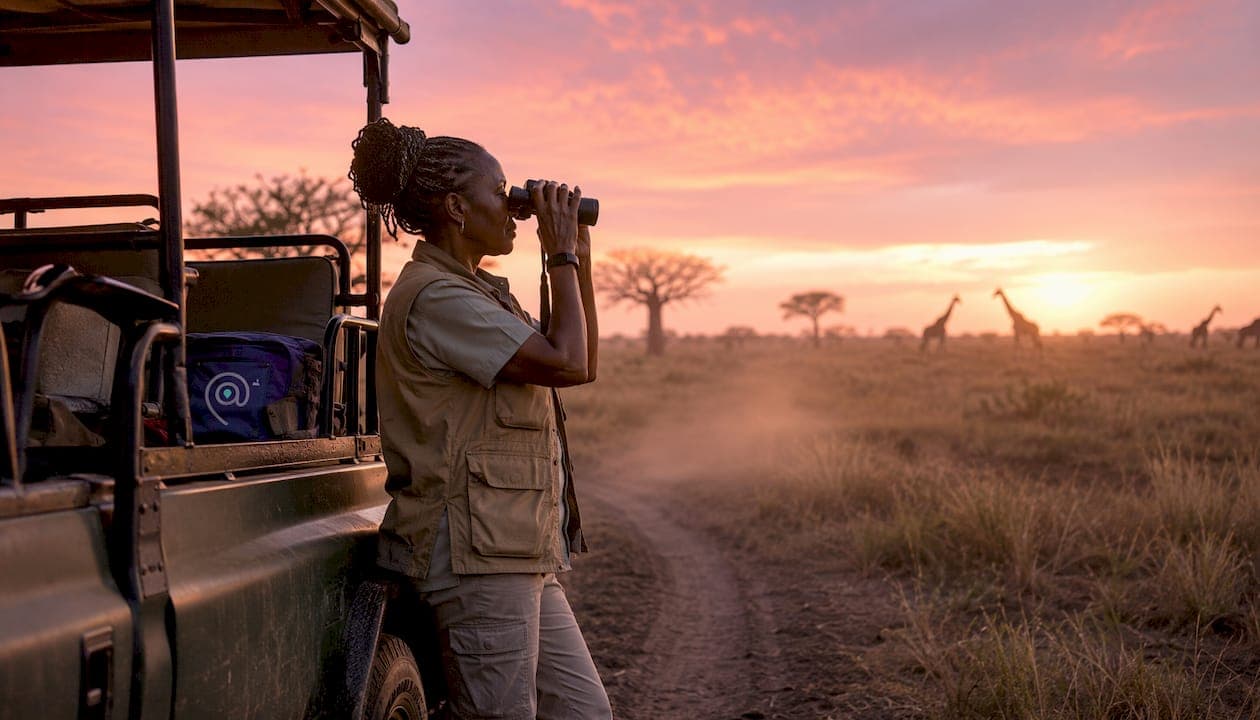
What every first-time safari traveler needs to know right now
Your first African safari will almost certainly be the most visually overwhelming experience of your life. Getting it right comes down to a handful of decisions made weeks before you board the plane. Here is the short version:
- Pack neutral earth tones (khaki, olive, tan) and avoid white, bright colors, blue, and black, which can attract tsetse flies and alarm wildlife
- Use soft-sided luggage only. Bush flights typically cap bags at around 15kg per person, including carry-on and camera gear
- Start health prep at least 3 months out. Vaccinations, malaria prophylaxis, and travel insurance with medical evacuation coverage all take time to arrange
- Go during the dry season for the best wildlife visibility. In East Africa, that generally means june through october
- Choose your reserve type carefully. Private and community conservancies offer fewer vehicles and quieter sightings than busy national parks
- Bring binoculars. A 10x42 pair is the single most underrated item on any packing list
- Follow your guide's instructions without exception. On game drives and walking safaris, the rules exist because the animals are unpredictable
The sections below break each of these down in full.
1. Safari safety guidelines you should not skip
Wildlife safety on safari is not about fear; understanding Red River Gorge's unique wildlife encounter can offer a helpful perspective on respecting natural habitats. It is about understanding that you are a guest in a wild ecosystem, and behaving accordingly.
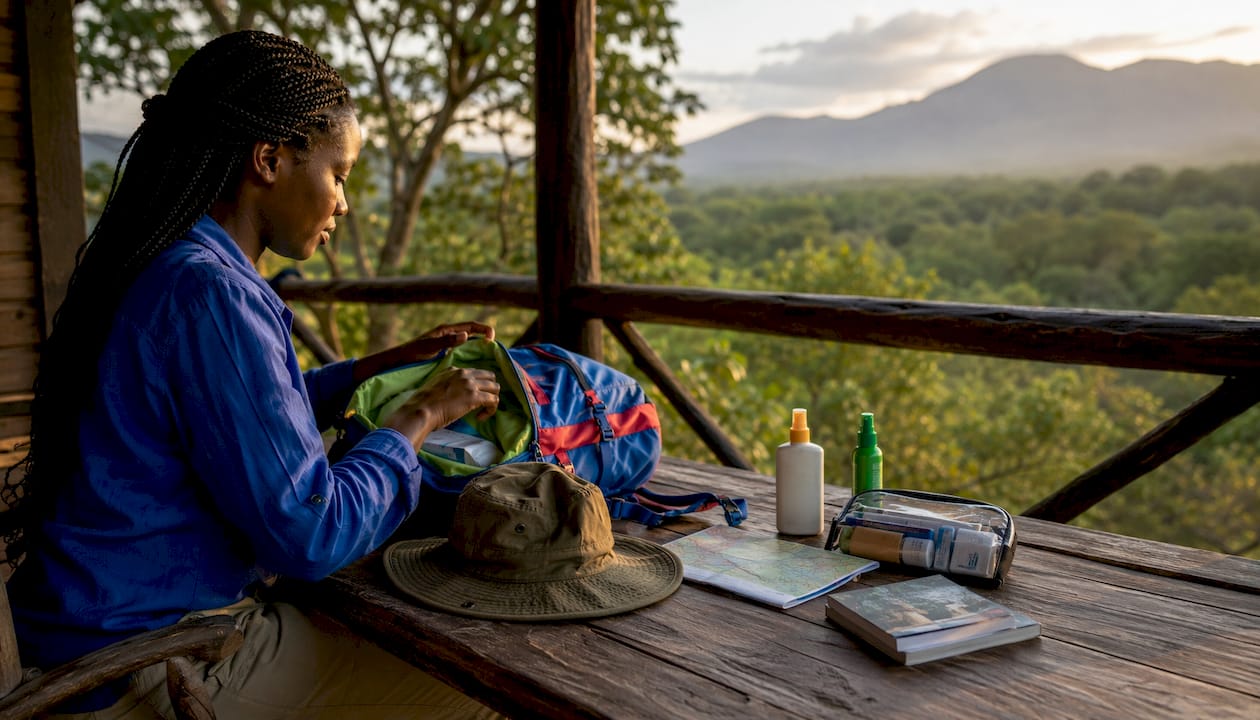
On game drives and walking safaris, your guide's word is final. Never stand up in the vehicle, never dangle arms over the side, and never make sudden loud noises near animals. Guides read animal body language constantly; if they say stay still, stay still. Walking safaris add another layer of alertness since you are on foot in open terrain, and guides carry rifles as a last resort, not a first response.
Health preparation should start 3+ months ahead of departure. Malaria prophylaxis, yellow fever vaccination, and other destination-specific shots require time to schedule and take effect. Specialist travel vaccination clinics are often faster than a general practitioner. Pack more personal medication than you think you need, and keep it in your carry-on bag, not your checked luggage.
- Get travel insurance that explicitly covers remote medical evacuation
- Carry a basic first-aid kit with rehydration salts, antihistamines, and antiseptic
- Drink only filtered, bottled, or treated water. Most camps provide a water station and replenish bottles in your tent or room
- Share your itinerary with someone at home, including camp contact details
- Save the local emergency number and your country's embassy contact before you land
Cultural respect is part of safety too. Ask before photographing local people, dress modestly when visiting villages, and tip appropriately. In most safari destinations, US dollars are widely accepted for tips. South Africa is the main exception, where the South African rand is standard.
2. What to pack for safari: the practical list
Safari packing is a discipline. You are fitting function, comfort, and protection into a bag that weighs no more than what a small aircraft can carry.
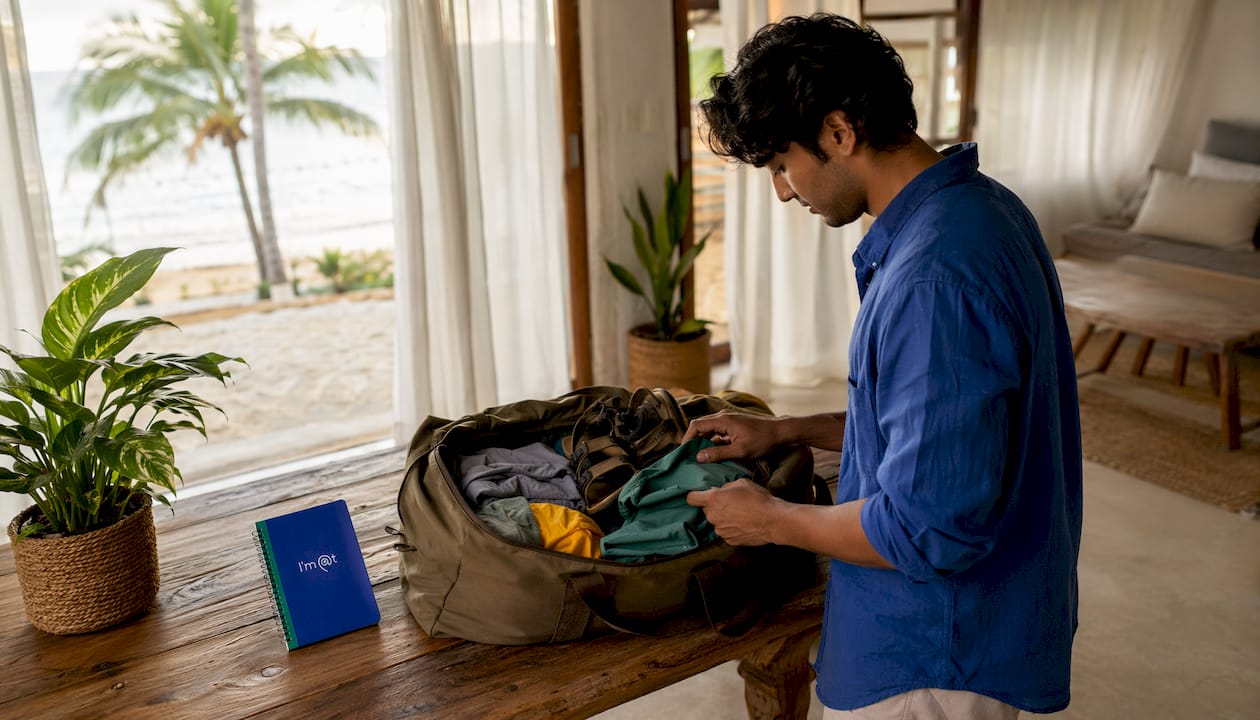
Luggage first. Choose a soft-sided duffel or holdall with no rigid frame. Hard-shell suitcases and wheeled trolleys cannot be squeezed into bush aircraft cargo holds. If your itinerary includes fly-in legs, the 15kg total limit covers hold luggage and hand luggage combined, so every item has to earn its place.
Clothing essentials:
- 3 neutral-colored safari shirts (long sleeves preferred for sun and insect protection)
- 2 pairs of safari trousers or zip-off cargo pants in khaki or olive
- 1 warm fleece or lightweight jacket for cold pre-dawn starts
- 1 wide-brimmed sun hat and 1 warm beanie
- 2 pairs of safari socks
- 1 pair of sturdy closed-toe walking shoes or boots
- Long sleeves, trousers, and socks for evening wear around camp to guard against mosquito bites
Accessories and gear:
- Binoculars, ideally 10x42 specification. Guides carry a pair, but you will want your own for extended sightings
- Camera with a telephoto lens of 200mm or more, plus a dust cover
- Insect repellent with at least 30% DEET, two bottles
- Sunscreen, sunglasses, and a buff or scarf for dust and wind
- LED torch with at least 200 lumens for navigating camp at night
- Travel adapter and spare batteries
- Hard copies of tickets, insurance documents, and your itinerary
Many camps provide laundry service, so a capsule wardrobe of five to six days of clothing is genuinely enough. The one exception: ladies' underwear is typically hand-washed for cultural reasons, so pack a small amount of laundry powder.
Pro Tip: Pack small denominations of US dollars, specifically $1, $5, $10, and $20 bills, for tips and incidentals. ATMs exist in major cities but are rare near bush camps.
3. Why clothing color and layering matter more than you think
Most first-timers pack what looks good in photos. Experienced safari travelers pack what works in the field, and the difference shows up fast.
Color choice is functional, not aesthetic. Neutral earth tones like khaki, tan, olive, and beige help you blend into the environment without startling animals. White and bright colors stand out against the bush and can make wildlife skittish. Blue and black are a specific problem because tsetse flies are attracted to dark and blue tones. Camouflage is worth avoiding too since it is associated with the military in several African countries and can create unnecessary complications at checkpoints.
Layering is the practical solution to one of safari's most predictable surprises. Temperatures before dawn can drop sharply, even in warm months, then climb quickly once the sun rises. Experts describe this as dressing like an onion: start with a moisture-wicking base layer, add a fleece or light jacket for the early drive, and peel back as the day heats up. By midday you may be down to a single shirt.
- Base layer: lightweight, moisture-wicking fabric
- Mid layer: thin fleece or cashmere hoodie
- Outer layer: windproof, water-resistant jacket that rolls into a ball
Pro Tip: Zip-off cargo trousers that convert to shorts are one of the most practical items you can pack. They handle the full temperature swing of a single game drive without requiring a wardrobe change.
High-altitude safari environments, such as gorilla tracking in Rwanda or Uganda at up to 9,000 feet, demand even more layering. Rain can arrive without warning, UV exposure is intense, and the terrain requires waterproof hiking boots with real grip. The savannah wardrobe and the mountain forest wardrobe are genuinely different kits.
4. When and where to go on safari
Timing your trip around wildlife behavior rather than school holidays or flight prices is the single best planning decision you can make.
The dry season delivers the best wildlife viewing across most of sub-Saharan Africa. Vegetation thins out, animals cluster around water sources, and tracks are passable. In East Africa, june through october is the prime window. The Great Wildebeest Migration in the Serengeti and Masai Mara peaks between july and september, when hundreds of thousands of animals cross the Mara River. Southern Africa's dry season runs roughly may through october, covering Botswana's Okavango Delta, South Africa's Kruger National Park, and Zimbabwe's Hwange.
Destination highlights worth knowing:
- Kenya and Tanzania: The Masai Mara and Serengeti are the most famous safari circuits on earth, best for big cats and the Migration. Tanzania also offers Ngorongoro Crater, one of the densest concentrations of wildlife anywhere
- South Africa: Kruger National Park is the most accessible African safari for first-timers, with good infrastructure and malaria-free options in private reserves like Madikwe. A luxury Kruger tour typically combines game drives with guided bush walks
- Botswana and Zimbabwe: Higher-end, lower-volume destinations. The Okavango Delta and Chobe National Park offer water-based safaris alongside traditional game drives. A multi-country wildlife adventure covering South Africa, Botswana, and Zimbabwe gives you a cross-section of ecosystems in a single trip
- Rwanda and Uganda: Gorilla trekking permits are the draw here, and they sell out months in advance
National parks vs. private conservancies is a choice that shapes your entire experience. Private and community conservancies typically have fewer vehicles at any sighting, which means quieter, longer encounters with animals. National parks are more affordable but can feel crowded at peak season, especially around high-profile sightings like lion kills.
5. Safari accommodation options explained
Where you sleep on safari affects everything from how close you are to wildlife to what time you can head out in the morning.
Campsites are the most basic option. Public campsites inside national parks put you directly in the ecosystem, sometimes with animals wandering through at night. They require self-sufficiency and are best suited to experienced travelers comfortable with minimal facilities.
Tented camps are the most common mid-range choice. These range from simple canvas structures with shared bathrooms to fully furnished tents with en-suite facilities, proper beds, and electricity. The canvas walls mean you hear everything outside, which is part of the appeal.
Lodges offer more permanent structures, usually with better amenities, pools, and reliable power. They suit travelers who want comfort alongside wildlife access. Many lodges sit on the boundaries of national parks or inside private reserves, giving them flexibility on game drive timing and off-road driving.
Luxury private reserves charge significantly more, and there is a specific reason for that. The cost of maintaining a quiet, exclusive wildlife environment is a 24/7 operation covering anti-poaching patrols, habitat management, and strict vehicle limits. You are paying for the silence as much as the service. A 4-night stay in Madikwe and Pilanesberg is a good example of what a private reserve experience looks like in South Africa.
Eco-friendly and community-based lodges are worth seeking out if conservation matters to you. These operations often employ local staff, fund community projects, and operate with minimal environmental footprint. Ask operators directly how their revenue benefits the surrounding community before booking.
6. Game drives, walking safaris, and other activities
The game drive is the core of almost every safari itinerary, but it is far from the only way to experience the bush.
Game drives typically start before dawn to catch predators active in the cool morning hours. Most camps run two drives per day: one at first light and one in the late afternoon, with a midday break back at camp. Open 4x4 vehicles are standard across East and Southern Africa. The elevated, open design gives unobstructed sightlines and allows guides to spot animals at distance. Partially enclosed vehicles are used in some areas with higher rainfall.
Walking safaris change the experience entirely. On foot, you notice things a vehicle obscures: tracks, dung, insects, bird calls. Guides explain the ecosystem at ground level, and the pace forces you to slow down and observe. These are typically offered as a morning activity and are not available in all parks.
Night drives are permitted in private reserves but banned in most national parks. They open up a completely different cast of characters: civets, genets, porcupines, and hunting leopards. If your camp offers them, go.
Cultural excursions to nearby villages or community projects add meaningful context to the wildlife experience. Visiting a Maasai village in Kenya or a local market in Zimbabwe gives you a sense of the human landscape that surrounds the parks. The Lesedi Cultural Village near Johannesburg is a well-regarded option for travelers combining safari with South African cultural immersion.
For responsible wildlife viewing, keep noise low, never encourage animals to approach the vehicle with food, and let your guide determine how close to get. The animals' behavior always takes priority over the perfect photograph.
7. How to choose a safari operator or guide
The operator you book with determines more about your trip than any single destination choice. A mediocre guide in a great park will deliver a forgettable experience. An exceptional guide in a less famous reserve will show you things you did not know existed.
Start with accreditation. Look for operators affiliated with recognized bodies such as the African Travel and Tourism Association (ATTA) or the Safari Operators Association of Kenya (SOAK). Membership does not guarantee quality, but it signals a baseline commitment to industry standards and ethical practices.
Ask about land ownership and vehicle policy. An operator running in a private conservancy can go off-road, follow animals at close range, and limit the number of vehicles at any sighting. One operating in a national park is bound by park rules, which often restrict off-road driving and vehicle numbers. Understanding this distinction before you book sets accurate expectations.
Guide experience is the most important variable. Ask how long guides have been working in the specific ecosystem you are visiting. Local guides who grew up near the reserve read animal behavior and landscape in ways that visiting guides simply cannot replicate. Ask whether your guide is a certified field guide and at what level.
Check what is included. Some operators quote a per-night rate that covers all meals, game drives, and park fees. Others add these as extras. A lower headline price can become significantly more expensive once park entry, conservation levies, and activity fees are added. Get a full cost breakdown in writing before committing.
Read recent reviews carefully. Look for specific mentions of guide knowledge, vehicle condition, and how the operator handled problems. Generic praise tells you little. A review that describes how a guide tracked a leopard for two hours and explained every behavioral cue tells you a great deal.
8. Navigating safari permits and regulations
Permits are not an afterthought. For some of the most sought-after safari experiences, they are the bottleneck that determines whether you go at all.
Gorilla trekking permits in Rwanda and Uganda are the most competitive in Africa. Rwanda's Volcanoes National Park charges $1,500 per person per trek, and permits sell out months in advance. Uganda's Bwindi Impenetrable Forest offers permits at a lower price point, but availability is still limited. Book these before you book flights.
Park entry fees vary widely by country and park. Kenya's Masai Mara charges non-residents a daily conservation fee that differs between the national reserve and the surrounding private conservancies. Tanzania's Serengeti and Ngorongoro Crater each carry their own fee structures. South Africa's Kruger National Park uses a daily conservation fee system managed through SANParks. Check each park's official website for current rates since fees change regularly.
Photography and drone regulations catch many first-timers off guard. Drones are banned in most national parks and require special permits in others. Even where permitted, launching a drone near wildlife is widely considered irresponsible and is prohibited by most reputable operators. Commercial photography permits are separate from standard entry and require advance application.
Visa requirements depend on your passport and destination. Many African countries offer visa on arrival for American passport holders, but some require advance applications. Check requirements at least two months before departure. Your passport needs at least two blank pages and must not expire within six months of your return date.
Conservation levies are increasingly common across private conservancies in Botswana, Kenya, and Zimbabwe. These fees fund anti-poaching operations and community programs. They are usually non-negotiable and added to your accommodation bill. Factor them into your budget from the start.
Plan your safari with Im-at
Im-at makes it straightforward to find and book safari experiences across Southern and East Africa, from a full-day Pilanesberg game drive out of Johannesburg to a Cape Town overnight safari at Sanbona Big Five Reserve. Browse the full catalog at im-at.com to compare itineraries, check availability, and lock in your dates in minutes.
Key Takeaways
A successful first safari comes down to preparation: the right gear, the right timing, and the right operator make the difference between a trip that exceeds expectations and one that falls short.
| Point | Details |
|---|---|
| Pack neutral earth tones | Khaki, olive, and tan help you blend in and avoid attracting tsetse flies drawn to blue and black. |
| Respect the 15kg luggage limit | Bush flights cap total baggage at around 15kg per person; use a soft-sided duffel, not a hard-shell case. |
| Start health prep 3+ months out | Vaccinations, malaria prophylaxis, and medical evacuation insurance all require lead time to arrange. |
| Choose your reserve type deliberately | Private conservancies offer fewer vehicles and quieter wildlife encounters than national parks. |
| Book gorilla permits before flights | Rwanda and Uganda trekking permits sell out months ahead and should be secured before anything else. |