

TL;DR:
- Digital travel guides provide real-time updates, AI personalization, and offline navigation over printed guides.
- They enhance safety and convenience with GPS tracking, emergency alerts, and direct booking features.
- Combining digital tools with local expertise and leaving room for spontaneity creates memorable travel experiences.
Travel apps reached 810 million users in 2023, generating $629 billion in revenue, and that number keeps climbing. If you are still relying on a dog-eared printed guidebook to plan your adventures, you are leaving a massive amount of value on the table. Digital travel guides have quietly become the most powerful tool in a modern traveler's kit, offering real-time data, AI-driven recommendations, and offline navigation that no paper map can match. This guide breaks down exactly what these tools are, which features matter most, why millions of travelers trust them, and how to pick the right one for your next big trip.
Table of Contents
- What are digital travel guides?
- Key features powering the new era of adventure
- Why travelers rely on digital guides: adoption, trust, and impact
- How to choose and maximize a digital travel guide for your trip
- Rethinking adventure: what most digital travel guides still miss
- Experience your own adventure with expert-curated digital guides
- Frequently asked questions
Key Takeaways
| Point | Details |
|---|---|
| Digital guides defined | Apps and platforms help travelers discover, plan, and book unique experiences with AI and real-time data. |
| Essential app features | Offline maps, GPS, and AI-driven recommendations are must-haves for safety and adventure. |
| Adoption is surging | Empirical data shows travelers trust digital guides for safe, personalized adventures. |
| Choose wisely | Prioritize privacy, offline access, and community reviews for the best digital guide experience. |
What are digital travel guides?
Now that we have set the stage, let's define exactly what digital travel guides are and how they have become such game changers.
A digital travel guide is any app, platform, or online tool that helps you discover, plan, and navigate travel experiences. Unlike traditional printed guidebooks, which go stale the moment they are published, digital guides update in real time. They pull in live data on weather, crowd levels, trail conditions, and local events. The result is a planning experience that actually reflects the world as it is right now, not as it was two years ago when the book went to print.
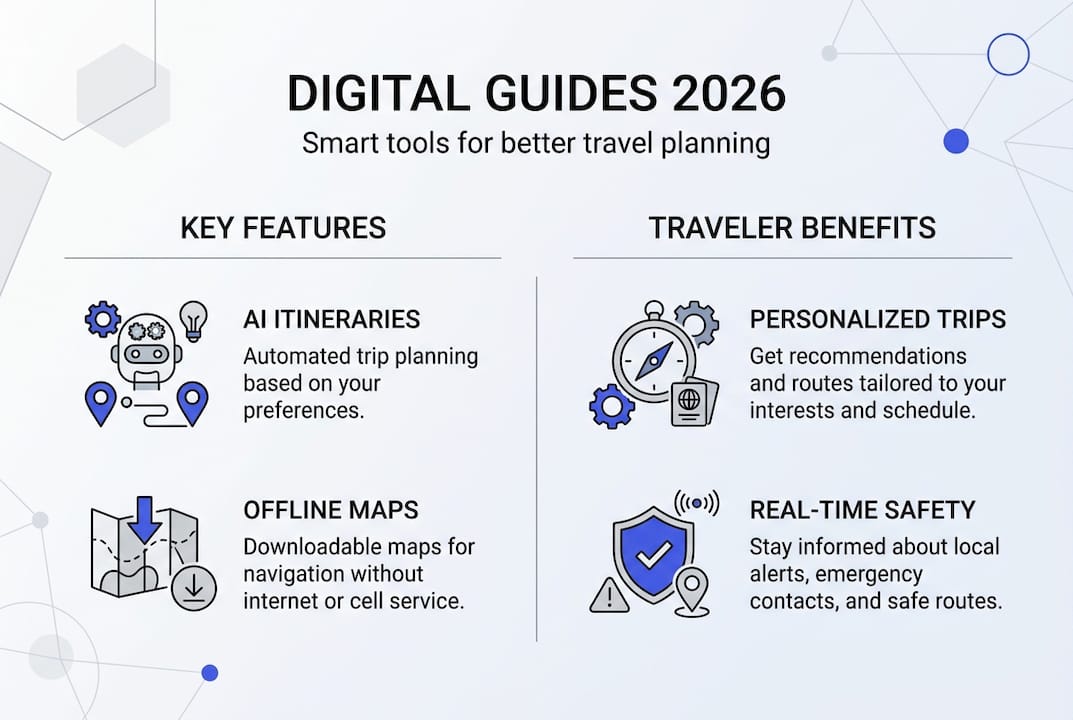
Digital guides come in several distinct forms. Mobile apps like AllTrails and Komoot focus on outdoor and trail-based travel discovery. AI-powered platforms generate personalized itineraries based on your preferences, travel history, and budget. Curated trail systems map specific regions with community-contributed data. Integrated booking tools combine discovery with direct reservations, so you go from inspiration to confirmed booking in minutes. As noted in research on adventure tourism technology, apps like AllTrails and Komoot enable tech-savvy travelers to discover, plan, and navigate unique outdoor experiences in ways that were simply impossible a decade ago.
Here is a quick look at how digital and traditional guides stack up:
| Feature | Traditional guidebook | Digital travel guide |
|---|---|---|
| Update frequency | Every 2 to 5 years | Real time |
| Personalization | None | AI-driven |
| Offline access | Always available | App-dependent |
| Booking integration | None | Built in |
| Community reviews | None | Thousands of users |
| Safety features | None | GPS, emergency alerts |
| Cost | $15 to $35 per book | Free to low monthly fee |
The major use cases for adventure travelers are broad. Digital guides help you:
- Scout trails, campsites, and activity zones before you arrive
- Book guided tours, safaris, and cultural experiences directly from your phone
- Navigate remote terrain with offline maps when cell service drops
- Get crowd and weather alerts so you can adjust plans on the fly
- Connect with local guides and read verified community reviews
The shift from paper to digital is not just about convenience. It is about having a smarter, more responsive travel partner in your pocket.
Key features powering the new era of adventure
With the fundamentals defined, let's break down the core features that make digital travel guides the go-to tool for modern explorers.
The most transformative feature is AI-powered itinerary customization. Modern platforms analyze your travel style, preferred activity intensity, and past trip data to generate tailored day plans. Beyond static suggestions, they deliver real-time recommendations based on weather, crowd levels, and even wearable device data, so your plan adapts as conditions change. That kind of dynamic responsiveness is something no printed guide can offer.

Offline maps are equally critical, especially for adventure travelers heading into remote areas. Leading apps let you download entire regions to your device before you leave Wi-Fi range. Pair that with GPS integration and you have a safety net that works even in the most isolated terrain. Some platforms also sync with smartwatches and fitness trackers, giving you navigation and health monitoring in one seamless loop.
Community-driven reviews add another layer of trust. When thousands of verified users rate a trail, tour, or guide service, you get a much clearer picture than any editorial team could provide. Chatbot-based booking features round out the experience, letting you reserve unique experiences without ever leaving the app.
Here is a quick comparison of top adventure apps by key function:
| App | Offline maps | AI itinerary | Booking | Wearable sync | Community reviews |
|---|---|---|---|---|---|
| AllTrails | Yes | No | Limited | Yes | Yes |
| Komoot | Yes | Partial | No | Yes | Yes |
| Google Maps | Yes | No | Yes | No | Yes |
| Im-at | No | Yes | Yes | No | Yes |
Using a digital guide to plan a weekend adventure is straightforward when you follow these steps:
- Download your preferred app and set up a profile with your activity preferences and fitness level.
- Search for your destination and filter by activity type, difficulty, and duration.
- Download offline maps for the region before you leave home.
- Review community ratings and recent trail or tour updates.
- Book your chosen experience directly through the app's integrated booking tool.
- Enable GPS tracking and share your itinerary with a trusted contact for safety.
Pro Tip: When testing any new travel app, always check that offline map downloads work on your specific device before your trip. Also review the app's privacy policy to understand how your location data is stored and shared. AI-powered planning tools are only as good as the data they protect, and authentic experiences start with platforms you can actually trust. The Komoot app is a strong benchmark for offline reliability.
Why travelers rely on digital guides: adoption, trust, and impact
Next, let's move from features to real-world usage and see why so many travelers are making digital guides standard equipment.
The numbers tell a compelling story. The adventure travel market hit $366 billion in 2023, with 55% of global travelers participating in adventure activities that year. That is not a niche hobby. That is a mainstream movement, and digital guides are at the center of it.
Safety is one of the biggest drivers of adoption. Research shows that 80% of adventure travelers feel safer using GPS and emergency apps, while 60% believe AI actively improves their travel experiences. Those are not small margins. They reflect a fundamental shift in how people relate to technology in the field.
"The integration of AI and wearable technology is not just making travel more convenient. It is making it measurably safer and more personalized for every type of adventurer."
Personalization is the second major driver. Travelers no longer want generic itineraries. They want curated experiences that match their pace, interests, and risk tolerance. AI-powered guides deliver exactly that, learning from your choices and refining suggestions over time. The more you use them, the smarter they get.
Convenience ties everything together. Being able to discover, plan, and book local experiences from a single platform removes the friction that used to make adventure travel feel overwhelming.
Here are the top reasons digital guides have become the tool of choice:
- Real-time safety alerts and emergency GPS features
- AI personalization that improves with every trip
- Offline access for remote and off-grid adventures
- Integrated booking that cuts out the middleman
- Community reviews that surface hidden gems
- Wearable device integration for health and navigation tracking
- Instant updates on trail closures, weather, and crowd levels
The combination of safety, personalization, and convenience is why digital guides are no longer optional for serious adventure travelers. They are essential.
How to choose and maximize a digital travel guide for your trip
Understanding why travelers flock to digital guides, let's shift to how you can select the right one and put it to work for your next adventure.
Start by defining your travel style before you download anything. Are you a solo hiker who needs detailed trail data? A group traveler looking for cultural tours and group bookings? A weekend warrior who wants quick, curated day trips? Your answer shapes which app will actually serve you well. Downloading five apps and hoping one works is a waste of time and storage.
Once you know your style, vet each app against these steps:
- Test offline map downloads in your home Wi-Fi environment before relying on them in the field.
- Read the privacy policy and check what location and personal data the app collects and shares.
- Scan community reviews for recency. A guide with reviews from three years ago is not much better than a printed book.
- Confirm that booking features cover your destination and activity type.
- Check for AI-driven personalization. Apps that learn from your behavior will save you planning time on every future trip.
Post-pandemic, adventure tech adoption has grown rapidly, and experts consistently recommend prioritizing offline capability and strong privacy controls as your baseline requirements.
Pro Tip: Before committing to a paid subscription, use the free tier of any app for at least one local day trip. This reveals real-world performance gaps that screenshots and app store ratings never show you.
Avoid these common mistakes when picking a guide app:
- Choosing based on brand recognition alone without testing offline features
- Ignoring privacy settings and defaulting to full data sharing
- Overlooking apps that specialize in your specific activity type
- Skipping the community review section and relying only on editorial picks
- Failing to sync the app with your wearable device before departure
For immersive experiences that go beyond standard tourism, look for platforms that also support booking unique adventures with vetted local guides. That combination of digital planning and human expertise is where the real magic happens.
Rethinking adventure: what most digital travel guides still miss
Before wrapping up, here is a candid perspective that challenges the one-size-fits-all digital mindset.
Digital guides are remarkable tools, but they share a quiet flaw: they optimize for efficiency. The best trail, the most reviewed restaurant, the highest-rated tour. That logic is useful, but it quietly squeezes out the unexpected. Some of the most memorable travel moments happen precisely because something did not go according to plan.
We have seen this pattern repeatedly. Travelers who plan every hour with an app often return with perfectly executed trips that feel oddly flat. The ones who use digital tools to handle the logistics but leave deliberate gaps in their schedule come back with stories. Real ones.
The role of tour guides and local knowledge still fills a gap that no algorithm has solved. A local guide knows which unmarked trail leads to a viewpoint that never made it into any app. That kind of knowledge lives in people, not databases.
The smartest approach treats digital guides as a foundation, not a ceiling. Use them to handle safety, navigation, and booking. Then leave room for the unplanned. That balance between tech-enabled structure and on-the-ground flexibility is what separates a good trip from an unforgettable one.
Experience your own adventure with expert-curated digital guides
Ready to put digital travel guides into action? Here is how our curated experiences can inspire your next adventure.
At Im-at, we bridge the gap between digital inspiration and real-world adventure. Whether you are drawn to the dramatic landscapes of a Cape Town private helicopter tour or the relaxed beauty of a Douro Valley wine and river cruise, our platform connects you with expertly vetted experiences in minutes.
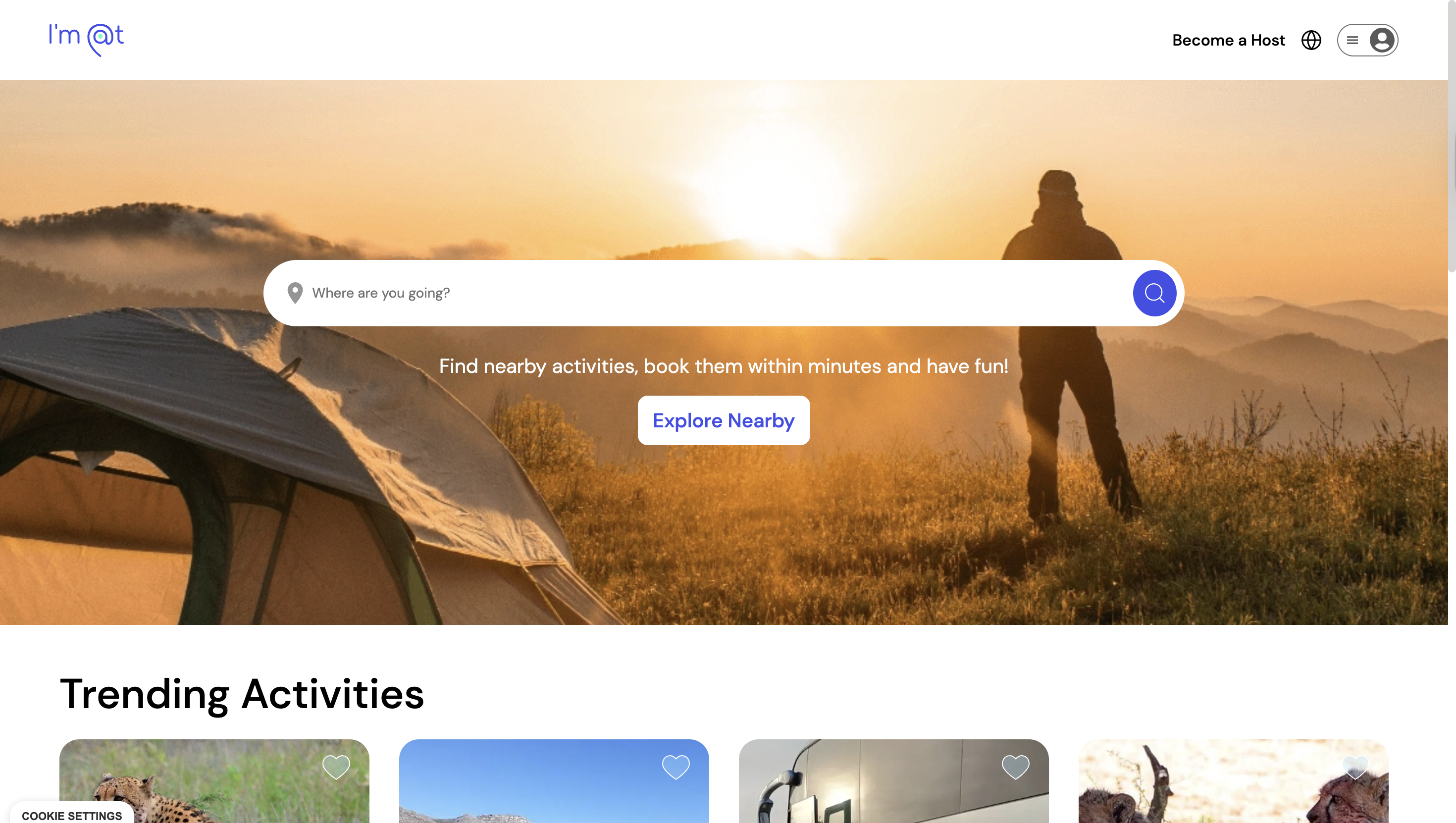
You do not need to spend hours cross-referencing apps and reviews. Im-at brings discovery and booking together in one place, so you can move from idea to confirmed adventure fast. Browse our full catalog of activities, guided tours, and cultural experiences, and find the trip that matches your travel style right now.
Frequently asked questions
What are the main benefits of using digital travel guides over traditional ones?
Digital travel guides offer instant updates, AI personalization, offline maps, and real-time booking, making them far more flexible than printed guidebooks. Unlike static books, they enable discovery and navigation with community reviews and live data.
How do digital travel guides improve traveler safety?
Apps provide GPS tracking, emergency alerts, and wearable device integration, and 80% of adventure travelers report feeling safer because of them. These features are especially valuable in remote or off-grid environments.
Do I need internet access at all times to use these apps?
No. Most leading travel apps include offline maps for remote areas that you can download before your trip, so navigation works even without cell service.
Which features should I prioritize when choosing a digital travel guide?
Focus on offline capabilities, privacy controls, verified community reviews, and AI-powered itinerary tools. Experts recommend prioritizing offline access and data privacy as your non-negotiable baseline requirements.