
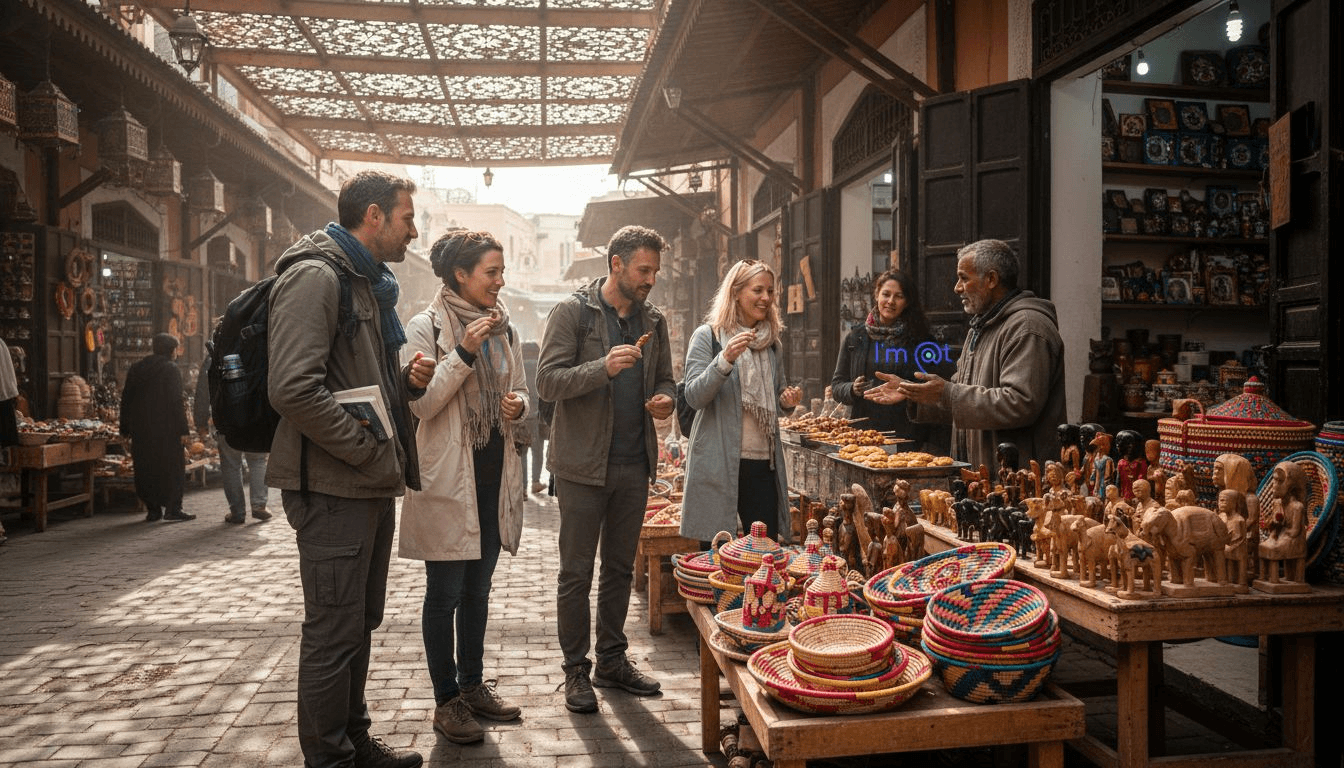
You land in a vibrant city, eager to experience authentic culture, but instead find yourself on a bus tour snapping photos of staged performances. Many travelers crave genuine cultural connections but struggle to move beyond superficial encounters. This guide equips you with practical strategies to access truly immersive experiences that transform how you engage with cultures worldwide, creating memories that resonate long after you return home.
Table of Contents
- Understanding the challenge: why authentic cultural experiences matter
- Preparing for your cultural experience: what you need to know and choose
- Engaging deeply: how to actively participate in cultural experiences
- Evaluating and enriching your cultural adventures after participation
- Discover authentic cultural tours with I'm @t
- Frequently asked questions
Key takeaways
| Point | Details |
|---|---|
| Immersion transforms travel | Immersive tourism experiences allow visitors to connect deeply and create lasting memories. |
| Local voices matter most | Personal stories from community members deepen your insight, knowledge, and engagement with a place. |
| Authenticity drives satisfaction | Authenticity played a wide role in tourist experiences and repeat business for destinations. |
| Preparation enhances respect | Researching cultural etiquette and choosing sustainable tours safeguards traditions and community development. |
| Active participation creates bonds | Engaging in rituals, crafts, and storytelling sessions forms strong emotional connections with cultures. |
Understanding the challenge: why authentic cultural experiences matter
Tourism creates a paradox. Travelers seek genuine cultural encounters, yet many experiences are carefully orchestrated performances designed for quick consumption. This phenomenon, called staged authenticity, places visitors in controlled environments that mimic tradition without delivering real connection. You watch dancers in colorful costumes, purchase mass-produced souvenirs, and leave with photos but no deeper understanding.
Authentic encounters work differently. They engage all your senses and create space for spontaneous interaction. You smell spices as a local chef explains family recipes passed down generations. You feel clay taking shape under your hands as an artisan guides your efforts. These immersive travel activities foster emotional bonds that persist long after your trip ends.
When cultural experiences allow for genuine exchange, both visitors and hosts benefit from mutual understanding and respect.
The stakes extend beyond personal satisfaction. Commodification threatens to erase cultural uniqueness. When communities reshape traditions solely for tourist consumption, essential meanings get lost. Sacred ceremonies become photo opportunities. Traditional crafts get simplified for mass production. The very elements that made a culture distinctive gradually disappear.
Research confirms what seasoned travelers intuitively understand. Cross-cultural encounters enhance the sense of authenticity and contribute to business growth for destinations. Tourists who experience genuine cultural engagement express higher satisfaction and choose to return. They become advocates who share their experiences with others, creating positive cycles that benefit local communities.
Consider these markers of authentic experiences:
- Local people lead the interaction and control how their culture is shared
- Activities happen in genuine community spaces, not artificial tourist zones
- You participate actively rather than observe passively
- Interactions allow for questions, conversation, and spontaneous moments
- Economic benefits flow directly to community members
Authenticity matters because it protects cultural heritage while creating meaningful connections. When you prioritize genuine encounters, you contribute to sustainable tourism that respects and preserves traditions for future generations.
Preparing for your cultural experience: what you need to know and choose
Successful cultural immersion begins before you board your flight. Research transforms you from a passive observer into an informed participant. Start by exploring your destination's cultural heritage, including historical context and current community initiatives. Understanding basic social structures, religious practices, and historical events helps you appreciate what you'll encounter.
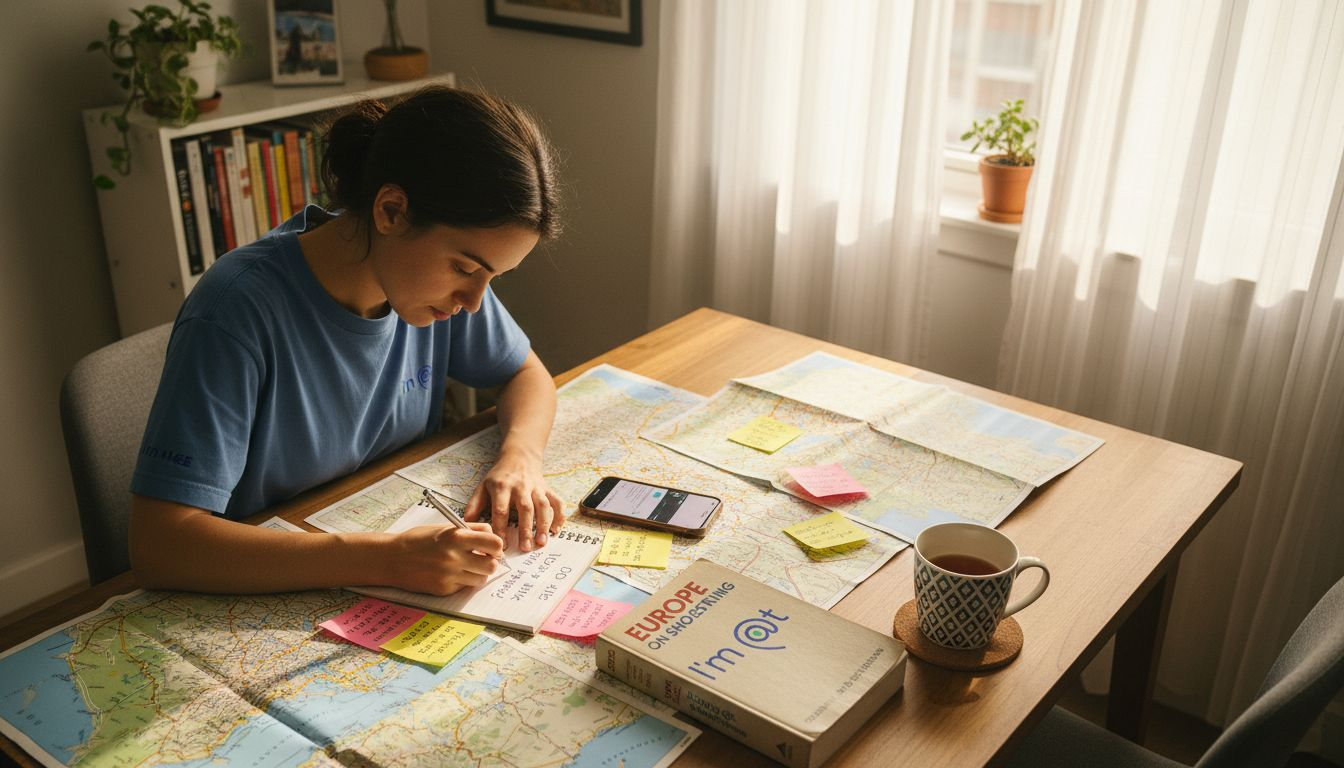
Choosing the right experience determines your entire journey. Prioritize tours and activities where local leadership and sustainability take center stage. Look for operators who employ community members, compensate them fairly, and reinvest profits locally. These organizations often provide the most authentic encounters because they're designed by people who live the culture daily.
Follow these preparation steps:
- Learn basic phrases in the local language, especially greetings and expressions of gratitude
- Research cultural etiquette around dress, photography, and sacred spaces
- Identify community tourism guide initiatives that prioritize local benefit
- Read firsthand accounts from travelers who've had genuine cultural exchanges
- Prepare questions that invite personal stories rather than yes/no answers
- Pack appropriately for cultural activities, including modest clothing when required
Pro Tip: Contact tour operators directly and ask how they involve local communities. Genuine operators enthusiastically explain their community partnerships and cultural protocols.
Authenticity requires intentional selection. Experiences featuring personal stories from locals deepen your insight and create meaningful connections. A pottery workshop taught by a master artisan who shares family history carries more value than a factory demonstration designed for volume processing.
Avoid tourism that commodifies or exploits culture. Red flags include experiences that promise "untouched tribes," offer photos with people in exchange for money without their enthusiastic consent, or rush you through sacred spaces. When sustainable tourism safeguards traditions and supports community development, everyone benefits.
Your attitude shapes your experience. Approach cultural encounters with humility, curiosity, and respect. Recognize that you're a guest being welcomed into someone else's world. This mindset opens doors to authentic connections that transform how you see both the culture and yourself.
Engaging deeply: how to actively participate in cultural experiences
Active participation separates memorable cultural encounters from forgettable tourist stops. When you engage fully, you create space for genuine connection and learning. This means stepping beyond your comfort zone while maintaining deep respect for local customs and protocols.
Follow these engagement practices:
- Participate fully in offered activities, whether crafting, cooking, or dancing
- Ask questions that invite storytelling: "How did you learn this skill?" or "What does this tradition mean to your family?"
- Listen attentively without interrupting, allowing conversations to unfold naturally
- Observe before participating, noting how locals engage with the activity
- Request permission before photographing people or sacred objects
- Share your own experiences when invited, creating reciprocal cultural exchange
- Follow local protocols around food, dress, and behavior without questioning their validity
Pro Tip: Put your phone away for the first hour of any cultural experience. You'll notice subtle details and nonverbal communication that cameras miss, and locals will perceive your genuine interest.
Personal stories ensure visitors form strong emotional connections with places and people. When a weaver explains how her grandmother taught her traditional patterns during childhood, you're receiving cultural knowledge that no guidebook contains. These moments create understanding that transcends language barriers.
The economic impact of authentic cultural tourism continues growing. Indigenous tourism contributes $6 billion annually to Canada's GDP by 2030 and attracts one in three travelers. This demonstrates that demand for genuine experiences benefits communities financially when managed respectfully.
| Activity Type | Immersion Level | Engagement Tips |
|---|---|---|
| Storytelling sessions | High | Ask follow-up questions, share parallel stories from your culture |
| Craft workshops | Very High | Practice techniques, learn cultural significance of designs |
| Traditional ceremonies | Medium to High | Observe protocols strictly, participate only when invited |
| Cooking classes | Very High | Discuss ingredient sources, family recipe variations |
| Music and dance | High | Learn basic steps, understand rhythms' cultural meanings |
| Historical tours | Medium | Connect past events to present community life |
Experiences like tailor-made 4x4 tours or the Lesedi cultural village tour demonstrate how specialized operators create opportunities for deep engagement. These aren't rushed stops on a circuit but carefully designed encounters that prioritize quality over quantity.
Respectful documentation matters. When recording experiences, consider the impact of your actions. Avoid photographing people without consent or during sacred moments. Some cultures believe cameras capture spiritual elements or consider photography disrespectful in certain contexts. Always ask first and accept no graciously.
Your body language communicates volumes. Make eye contact when culturally appropriate, adopt open postures, and mirror the energy level of your hosts. If everyone speaks quietly in a sacred space, match that tone. When celebrations become boisterous, join the energy. This adaptive approach shows respect and facilitates connection.
Evaluating and enriching your cultural adventures after participation
Your cultural experience doesn't end when you leave. Reflection transforms encounters into lasting learning and helps you become a more thoughtful traveler. Take time to journal about what surprised you, challenged your assumptions, or changed your perspective. These insights deepen your understanding and inform future travel decisions.
Supporting local communities extends beyond your visit. Purchase authentic crafts directly from artisans rather than middlemen who extract profit. These purchases preserve traditional skills and provide sustainable income. Research shows tourism commercialisation affects intangible cultural heritage positively and negatively, depending on implementation.
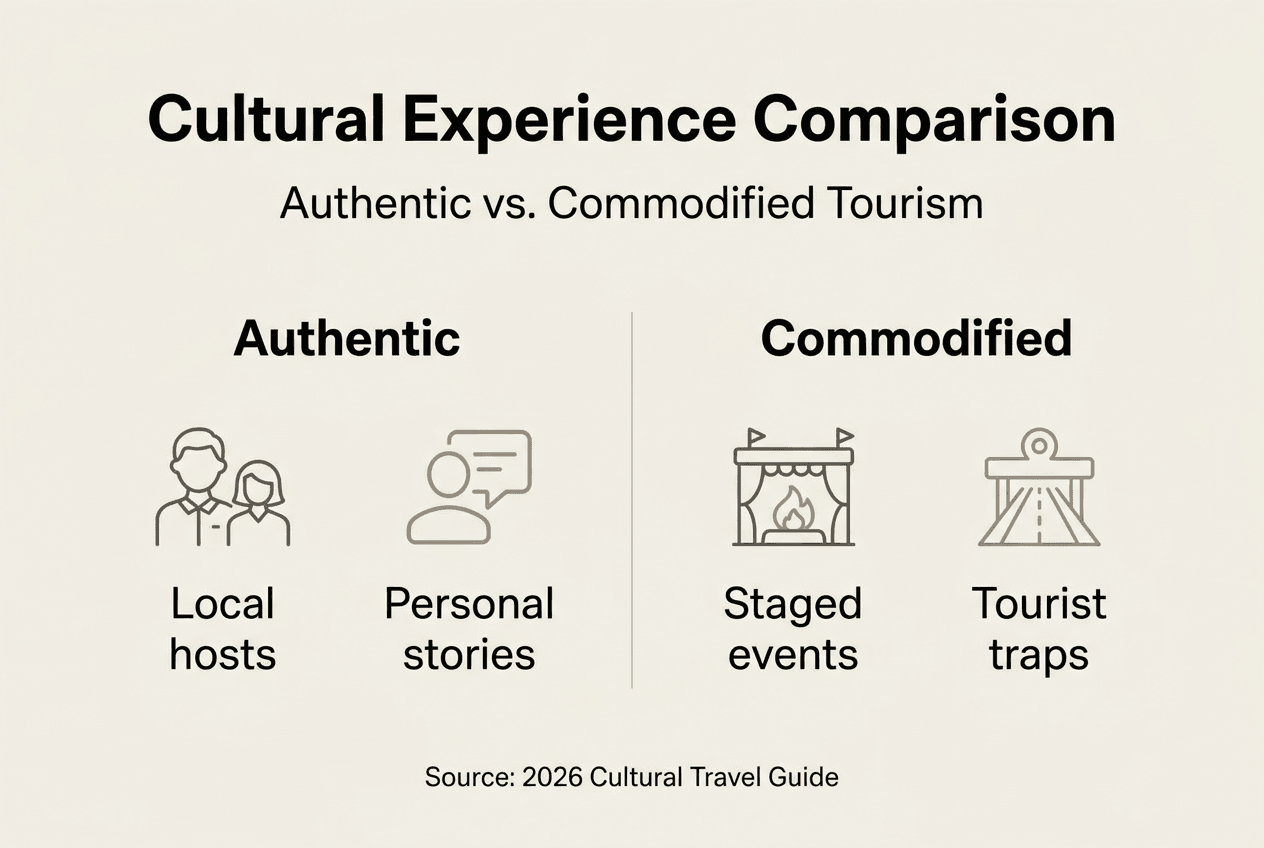
Distinguishing genuine from commodified experiences protects both your wallet and cultural integrity:
| Genuine Experience | Fake/Commodified Experience |
|---|---|
| Led by community members who share personal stories | Operated by outside companies with hired performers |
| Happens in authentic community spaces | Takes place in purpose-built tourist facilities |
| Allows flexible timing and spontaneous interaction | Follows rigid schedules with scripted performances |
| Crafts show individual variation and imperfections | Products are mass-produced with identical features |
| Prices reflect fair compensation for time and skill | Prices are inflated or suspiciously cheap |
| Photography restrictions respect cultural protocols | Unlimited photo opportunities without context |
Continue learning after returning home. Follow social media accounts of artisans you met. Read books by authors from the cultures you experienced. Support organizations working to preserve cultural heritage. This ongoing engagement demonstrates that your interest extends beyond vacation entertainment.
Share your experiences thoughtfully. Avoid reducing complex cultures to exotic spectacles in social media posts. Instead, highlight what you learned and how the experience changed your perspective. Recommend ethical tour operators and explain why authentic encounters matter. Your advocacy can guide others toward respectful cultural tourism.
Apply insights from your travels to daily life. Cultural immersion often reveals universal human experiences expressed through different traditions. You might adopt new perspectives on community, family, or craftsmanship. These lasting changes represent the deepest value of authentic cultural exchange.
Consider these reflection questions:
- What assumptions did this experience challenge?
- How did locals perceive their own cultural practices differently than I expected?
- What can I do to support this community from home?
- How will this experience influence my future travel choices?
- What parallels exist between this culture and my own?
For future adventures, use resources like this exploring new destinations guide to maintain high standards for cultural immersion. Each authentic encounter builds your capacity for cross-cultural understanding and makes you a more effective advocate for sustainable tourism.
Discover authentic cultural tours with I'm @t
Finding truly immersive cultural experiences requires more than internet searches. I'm @t curates authentic tours worldwide that prioritize meaningful local interactions and cultural respect. Whether you seek traditional craft workshops, indigenous community visits, or adventure activities with cultural components, the platform connects you with operators committed to genuine experiences.
Options span from tailor-made 4x4 tours exploring remote communities to intimate private Porto city tours revealing local perspectives. Each experience is vetted to ensure community benefit and authentic engagement. You'll participate in activities designed by locals who share their culture on their terms.
I'm @t simplifies planning while maintaining quality. Browse by destination or activity type, read detailed descriptions of what makes each experience unique, and book directly through the platform. This streamlined process lets you focus on preparing mentally and emotionally for transformative cultural encounters.
Frequently asked questions
What makes a cultural experience truly authentic?
Authenticity emerges when local people control how their culture is shared and benefit economically from tourism. Genuine experiences happen in real community spaces, allow spontaneous interaction, and prioritize education over entertainment. You know it's authentic when locals share personal stories and invite you to participate rather than perform for you.
How can I prepare respectfully for cultural experiences?
Research cultural etiquette, learn basic language phrases, and understand historical context before arriving. Choose tour operators who employ community members and reinvest locally. Pack appropriate clothing for cultural protocols and prepare open-ended questions that invite storytelling. Most importantly, approach with humility and genuine curiosity about people's lives.
What are effective ways to support local communities sustainably?
Purchase crafts directly from artisans, choose locally owned accommodations and restaurants, and select tours operated by community members. Respect cultural protocols around photography and sacred spaces. Continue supporting communities after your visit by following their social media, recommending ethical operators, and advocating for sustainable tourism practices.
How can I avoid fake or commodified cultural experiences?
Look for experiences led by locals in authentic community spaces with flexible timing. Avoid tours promising "untouched tribes" or offering staged performances on rigid schedules. Research operators' community partnerships and fair compensation practices. Genuine crafts show individual variation, while mass-produced items appear identical. Trust your instincts when something feels performative rather than authentic.
Why does cultural immersion matter for travel satisfaction?
Deep cultural engagement creates emotional connections and lasting memories that superficial tourism cannot match. Authentic experiences challenge assumptions, broaden perspectives, and foster cross-cultural understanding. Research confirms that travelers who experience genuine cultural encounters express higher satisfaction and become repeat visitors who advocate for destinations.
Recommended
- Guide to exploring new destinations for unique experiences
- What is community tourism? A 2026 guide for travelers
- Tailor-Made 4×4 Tours
- Types of travel activities for unforgettable trips
- Israeli Culture in Mitzvah Tours: 85% Say It Enriches Identity
- Exclusive sailing experience: luxury Mediterranean guide