
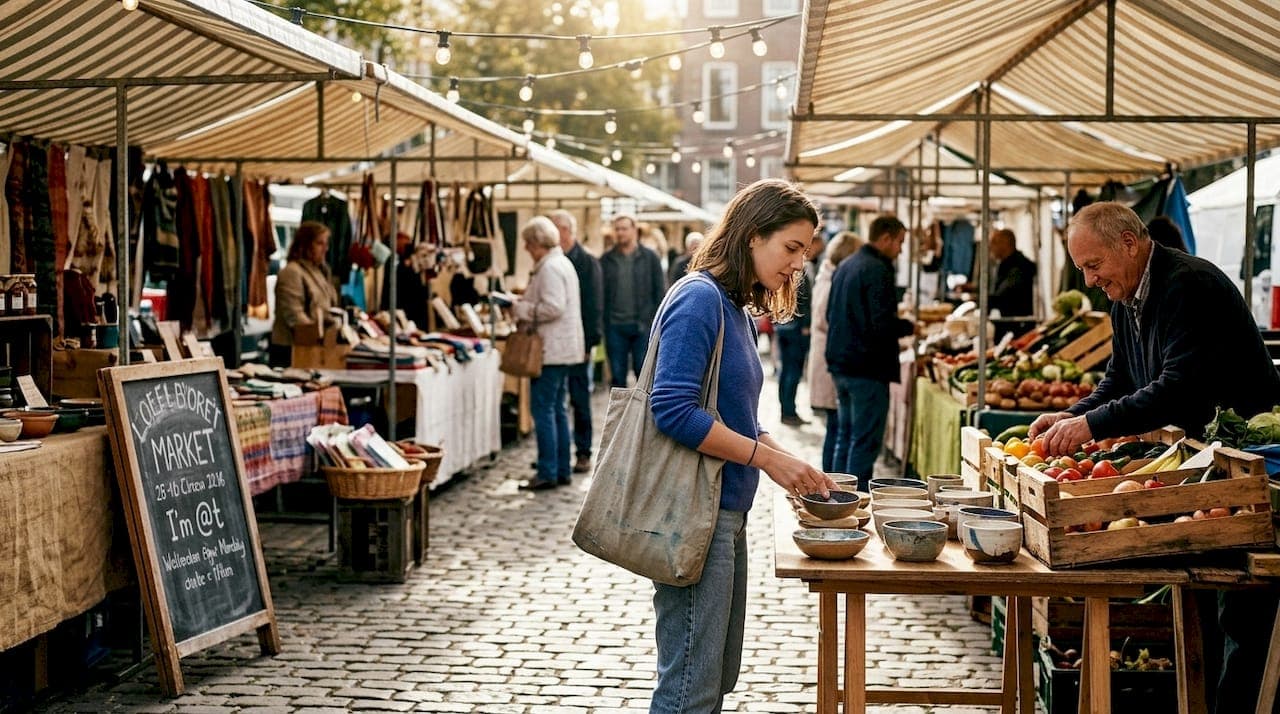
A seismic shift is reshaping how people travel. According to a Hilton 2025 report, 73% of global travelers now prioritize authentic, local experiences over traditional sightseeing. That's not a niche trend. It's a fundamental rethinking of what travel is for. People aren't just collecting passport stamps anymore. They want to feel something real, connect with actual communities, and return home genuinely changed. This article unpacks why that craving exists, what kinds of authenticity travelers seek, how it shapes emotional memory, and how you can design trips that deliver the depth you're looking for.
Table of Contents
- The roots of authenticity: Why do travelers crave the real?
- Types of authenticity: Objective vs. existential travel encounters
- Emotional impact: How authenticity shapes memories and loyalty
- The paradox of authenticity: Overtourism, dilution, and finding balance
- How to design your journey for authenticity
- Why most guides miss the true heart of authentic travel
- Ready to discover your own authentic adventure?
- Frequently asked questions
Key Takeaways
| Point | Details |
|---|---|
| Authentic travel is rising | Most travelers now prioritize real local experiences over traditional sightseeing for deeper cultural understanding. |
| Two types of authenticity | Objective and existential authenticity both enrich journeys—through genuine sites or personal, immersive encounters. |
| Emotional bonds boost loyalty | Strong connections formed via authentic travel lead to nostalgia, solidarity, and greater likelihood of return visits. |
| Balance matters | Rising demand can unintentionally harm local cultures, so responsible travel and conscious choices are crucial. |
| Plan for meaning | Seek out community-led, hands-on activities to ensure your next journey is both authentic and respectful. |
The roots of authenticity: Why do travelers crave the real?
With authenticity at the heart of modern travel trends, let's dive into what motivates travelers to prioritize real, meaningful experiences.
The desire for authentic travel isn't new, but it has never been louder. Modern travelers are pushing back against curated, sanitized tourism. They want to sit at a local family's table, hear stories that don't appear in guidebooks, and feel the pulse of a place rather than observe it from behind a camera lens. These are the authentic travel rewards that no hotel lobby can replicate.
Research confirms this emotional pull. Authenticity drives place attachment, emotional bonds, and long-term loyalty to destinations. Two concepts matter here. Object authenticity refers to the genuine physical nature of a place or artifact, think a centuries-old market or a traditional craft passed down through generations. Existential authenticity is more personal. It's the feeling of being your truest self during an experience, fully present and emotionally engaged.
What fuels these motivations? Travelers cite a range of emotional drivers:
- Rest and restoration: Escaping routine by immersing in a slower, more grounded way of life
- Reconnection: Rebuilding bonds with family, friends, or even oneself through shared cultural moments
- Nostalgia: Seeking traditions that feel timeless and rooted in something larger than modern life
- Personal values: Choosing experiences that align with beliefs around community, sustainability, and respect
"The most memorable journeys aren't built on what you saw. They're built on what you felt and who you met along the way."
This is why experiential travel has exploded as a category. Travelers aren't just booking trips. They're investing in memories, personal growth, and a deeper understanding of the world.
Types of authenticity: Objective vs. existential travel encounters
Now that we understand the core motivations, it's vital to distinguish between the key kinds of authenticity travelers seek.
Not all authentic experiences feel the same, and that's actually a good thing. Understanding the two main types helps you seek out the right mix for your own travel style.
Authenticity in travel breaks down into objective and existential forms. Objective authenticity focuses on the physical genuineness of a place, object, or practice. Existential authenticity is about personal engagement and transformation. Both lead to stronger place identity and deeper loyalty to a destination.
| Type | Definition | Examples |
|---|---|---|
| Objective | Genuine, historically or culturally real | Ancient ruins, traditional crafts, regional cuisine |
| Existential | Personal transformation through engagement | Volunteering, immersive workshops, language learning |
Objective authenticity is what you find when you visit a local activity that has existed for generations, a spice market in Marrakech, a rice terracing village in the Philippines, or a weaving cooperative in Guatemala. These places carry real cultural weight.

Existential authenticity is what happens inside you. It's the shift that occurs when you spend a morning learning to make pasta from a grandmother in Bologna, or when you join a community reforestation project in Costa Rica. The meaningful journeys trend shows travelers increasingly want both types working together.
Pro Tip: Don't choose between objective and existential. The most powerful trips layer both. Visit the historic site and take the workshop with a local artisan. That combination creates memories that last decades.
Emotional impact: How authenticity shapes memories and loyalty
Understanding the forms of authenticity leads us to how these experiences impact travelers emotionally and make journeys truly unforgettable.
Authentic travel doesn't just feel good in the moment. It rewires how you remember a destination and whether you ever want to leave. Perceived authenticity evokes nostalgia, emotional solidarity with local residents, and significantly boosts the intention to revisit, especially in rural tourism contexts.
The numbers back this up clearly. 83% of travelers say local immersion directly influences their destination choice, and 76% return to a place specifically because of the emotional connection they formed there.
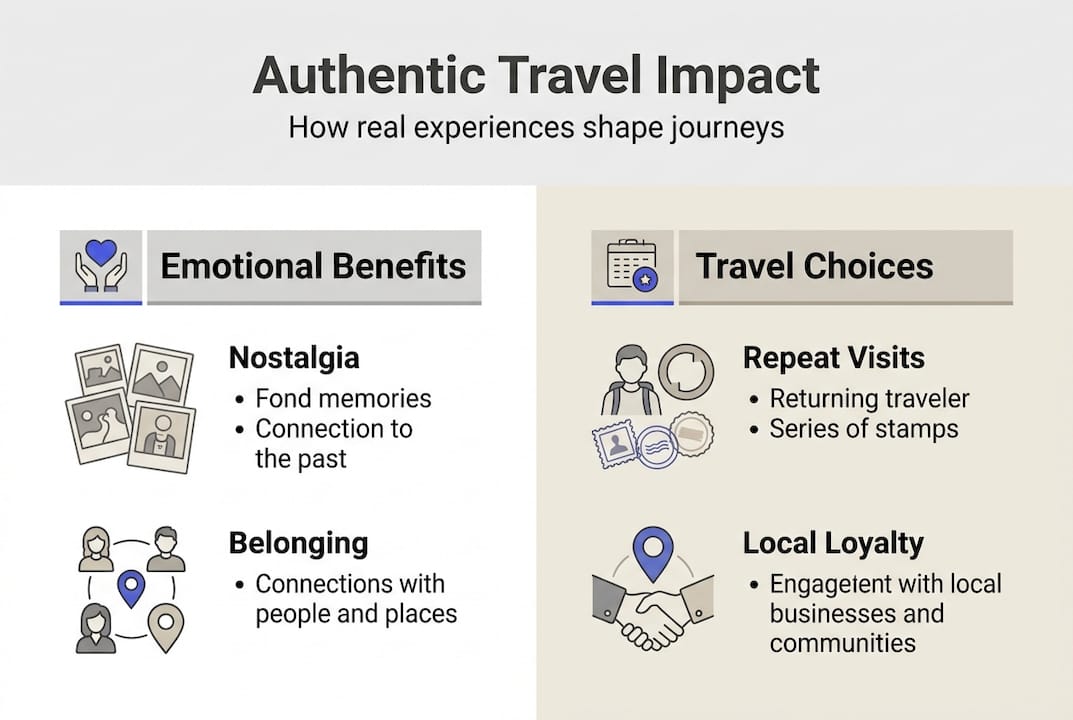
| Emotional outcome | % of travelers affected | Behavioral result |
|---|---|---|
| Nostalgia for local culture | High | Repeat visits, storytelling |
| Solidarity with residents | Moderate to high | Community spending, advocacy |
| Place attachment | Very high | Loyalty, destination recommendation |
Here's what makes this fascinating. Authentic experiences outlast any souvenir you could buy. A handwoven textile might sit in a drawer, but the memory of watching it being made, talking to the weaver, learning what the patterns mean, stays vivid for years. That emotional residue is what exploring nearby activities and immersive local encounters actually produce.
The leisure travel market is responding to this. Travelers are increasingly willing to spend more on experiences that promise emotional depth over material novelty. That's a shift in values, not just spending habits.
- Authentic encounters create stronger neural memory encoding
- Emotional solidarity with locals increases positive word-of-mouth
- Nostalgia tied to a destination drives return visits more than any marketing campaign
The paradox of authenticity: Overtourism, dilution, and finding balance
Yet the pursuit of authenticity isn't always straightforward. Let's address the paradox that shapes many destinations today.
Here's the uncomfortable irony. The more travelers seek authentic experiences, the more they risk destroying the very thing they came for. Overtourism creates a paradox where the demand for genuine culture actually homogenizes places, dilutes traditions, and triggers backlash from residents who feel their home has become a performance.
Venice now charges day-trippers an entry fee. Residents of Barcelona have protested with signs asking tourists to go home. Machu Picchu enforces strict visitor caps. These aren't isolated cases. They're symptoms of a system where overtourism consequences ripple through local economies, housing markets, and cultural integrity.
"When a village has to perform its own culture for visitors, it stops living it."
So how do you pursue authenticity without contributing to its erosion? Here's a practical approach:
- Choose lesser-known destinations: Skip the top-ten lists and research secondary cities or rural regions with equally rich culture and far fewer crowds
- Travel in the off-season: You'll find more genuine interactions when locals aren't overwhelmed by visitor volume
- Diversify your activities: Mix sustainable immersive experiences with quieter, community-based encounters
- Support community tourism initiatives: Spend your money with local families, cooperatives, and guides who reinvest in their communities
- Ask before photographing: Respect local norms around privacy and sacred spaces
Pro Tip: Before booking any experience, ask one question: does this activity benefit the local community directly? If the answer is unclear, dig deeper or find an alternative.
How to design your journey for authenticity
Armed with an understanding of authenticity's value and pitfalls, here's how you can craft deeper, more meaningful journeys.
Planning an authentic trip requires more intentionality than booking a standard vacation, but it doesn't have to be complicated. The key is shifting your research approach and your mindset before you even pack a bag.
Travelers driven by "whycations" are seeking experiences that reflect their personal values and emotional needs. Notably, 70% of families specifically look for local traditions when choosing a destination. That means the demand for meaningful travel is broad, not just a preference of solo adventurers or cultural purists.
Here's how to build authenticity into your trip from the start:
- Research community-based operators: Look for tours run by local families or social enterprises, not just resellers
- Learn a few words of the local language: Even basic greetings signal respect and open doors that stay closed for most tourists
- Eat where locals eat: Street food stalls, neighborhood markets, and family-run restaurants over hotel dining rooms
- Attend real events: Local festivals, religious ceremonies (where visitors are welcome), and neighborhood markets reveal daily life in ways museums can't
- Slow down: Spend more time in fewer places rather than rushing through a checklist of sites
When you uncover unique experiences through local networks rather than mass-market platforms, you're far more likely to find something genuinely memorable. The best experiences often aren't advertised loudly. They're discovered through curiosity and conversation.
Why most guides miss the true heart of authentic travel
Beyond the practical, let's challenge what most "authenticity" advice gets wrong. Here's a candid perspective for deeper journeys.
Most articles about authentic travel hand you a checklist. Eat street food. Hire a local guide. Skip the chain hotels. That's fine advice, but it misses something deeper. Authentic travel isn't a set of activities. It's a posture.
The travelers who come back genuinely transformed aren't the ones who ticked the most "local" boxes. They're the ones who showed up with humility, curiosity, and a willingness to be uncomfortable. They sat with confusion when they didn't understand a custom. They asked questions without expecting answers that fit their existing worldview.
The real problem with most authenticity advice is that it still centers the traveler. "How do I get the most authentic experience?" is subtly the wrong question. The better question is: "How do I show up as a respectful, curious guest in someone else's home?"
That shift changes everything. It means slowing down enough to notice what's actually happening around you. It means following the immersive travel guide principles not as a formula, but as a genuine orientation toward openness. Authentic journeys shape travelers as much as destinations. The places you visit leave marks on you, but only if you let them.
Ready to discover your own authentic adventure?
If you're inspired to seek out truly authentic moments, here's how you can turn intention into reality.
Finding genuine, community-rooted experiences used to require weeks of research. Im-at makes it simple. The platform connects you with local guides, cultural tours, and immersive adventures across dozens of destinations, so you spend less time searching and more time experiencing.

Whether you're drawn to a tailor-made adventure tour built around your interests, an immersive Cape Town cultural experience covering townships, the Cape Peninsula, and wine tasting, or an off-the-beaten-path Terceira Island hiking and caving adventure, Im-at has options that go far beyond standard tourism. Browse the catalog, find something that genuinely excites you, and book your next meaningful trip in minutes.
Frequently asked questions
What makes an experience truly authentic when traveling?
An experience is authentic when it reflects genuine local culture, involves direct interaction with residents, and provides personal engagement beyond typical tourist activities. Research confirms that both object and existential authenticity strengthen place attachment and emotional bonds.
How do I avoid inauthentic or staged experiences during my trips?
Seek local guides, attend real community events, and prioritize recommendations from residents or independent sources rather than mass-market tours. Travelers on "whycations" consistently find more meaningful experiences by aligning activities with personal values rather than popularity.
Why do authentic experiences enhance emotional connection to a place?
Authentic experiences foster nostalgia, solidarity, and strong emotional bonds, increasing the desire to revisit and deepening attachment. Perceived authenticity has been directly linked to higher revisit intention, especially in rural and cultural tourism settings.
Can the demand for authenticity negatively impact local communities?
Yes, excessive demand can lead to overtourism, cultural dilution, and local backlash unless managed sustainably. The authenticity paradox shows that when too many travelers chase the same "real" experience, they collectively erode it.
What are examples of authentic activities I can try on my next trip?
Joining a family dinner, participating in local festivals, taking a regional cooking class, or supporting community tourism projects all qualify. With 73% of travelers now seeking local immersion, these experiences are increasingly available and well-supported worldwide.