
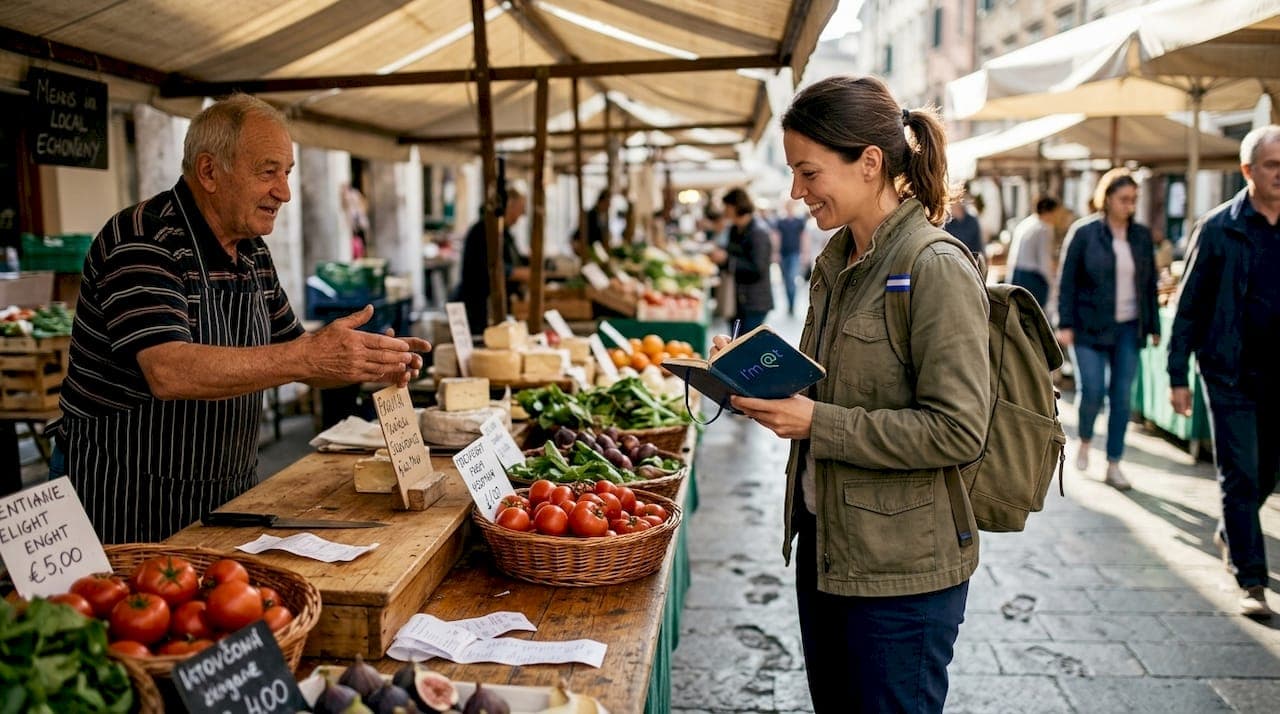
Most travelers come home with photos. A few come home changed. The difference usually comes down to whether they watched a place or actually stepped inside it. Cultural experiences engage travelers beyond sightseeing, fostering deeper connections with a local community's traditions and people. Yet many travelers still aren't sure what qualifies as a "real" cultural experience versus a tourist trap dressed up in local costume. This article breaks down exactly what cultural experiences are, why they matter, and how you can design your own.
Table of Contents
- Defining a cultural experience
- Why cultural experiences matter for travelers
- The mechanics: What makes an experience truly cultural?
- Iconic examples of cultural experiences worldwide
- Challenges: Pitfalls, authenticity traps, and common misconceptions
- Cultural experiences vs. traditional sightseeing and luxury travel
- How to plan your own cultural experience
- Ready to immerse yourself? Discover curated cultural journeys
- Frequently asked questions
Key Takeaways
| Point | Details |
|---|---|
| Immersion over observation | True cultural experiences require active participation and engagement, not just sightseeing. |
| Benefits beyond travel | Cultural experiences foster empathy, global awareness, and cross-cultural understanding. |
| Plan intentionally | Deep research, local guidance, and ethical choices make cultural experiences more meaningful. |
| Beware authenticity traps | Avoid commercialized, rushed activities to ensure your experience remains genuine and worthwhile. |
Defining a cultural experience
A cultural experience is not a museum visit where you read labels in silence. It is active participation in local traditions, values, and people's lives, going far beyond simple sightseeing. The key word is participation. You are not an observer. You are a temporary member of a community.
Core elements that make something a genuine cultural experience include:
- Traditions and rituals: Joining a tea ceremony, attending a harvest festival, or participating in a religious observance
- Crafts and skills: Learning pottery, weaving, cooking, or music from a local artisan
- Storytelling: Listening to oral histories, folklore, or community narratives from elders or guides
- Human connection: Spending real time with local people, not just service workers
- Language: Even learning five words in the local language signals respect and opens doors
"The traveler who participates, however imperfectly, always leaves with more than the one who only watches."
This is what separates cultural immersion from mainstream tourism. A bus tour of ancient ruins is interesting. Helping a family prepare a traditional meal in their home using those same ancient recipes is transformative. If you want to master immersive cultural experiences, the shift from passive to active is the single most important step. A solid cultural immersion guide can help you prepare before you even book your flight.
Why cultural experiences matter for travelers
Here is a number worth pausing on: cultural tourism accounts for 40% of global tourism revenues and plays a significant role in shaping global understanding. That is not a niche interest. That is nearly half the entire travel industry driven by people who want more than a beach chair.
The benefits go well beyond personal enrichment:
- Empathy and emotional intelligence: Spending time inside another culture forces you to question your own assumptions. Research consistently links cross-cultural exposure to higher empathy scores.
- Global awareness: You stop seeing world events as abstract headlines when you have shared a meal with people living through them.
- Heritage preservation: When travelers pay for authentic local experiences, they fund the continuation of traditions that might otherwise disappear.
- Economic development: Money spent on local guides, artisans, and family-run guesthouses stays in the community far longer than resort fees.
"Authentic travel is not about escaping your life. It is about expanding it."
Post-pandemic travel has shifted hard toward authenticity. Travelers increasingly want to feel something real, not just see something impressive. Travel discovery is now less about ticking landmarks off a list and more about collecting moments that genuinely reshape how you see the world. The experiential travel trend shows no sign of slowing down.
The mechanics: What makes an experience truly cultural?
Not every activity labeled "cultural" actually delivers. So what are the active ingredients that make an encounter authentic and transformative?
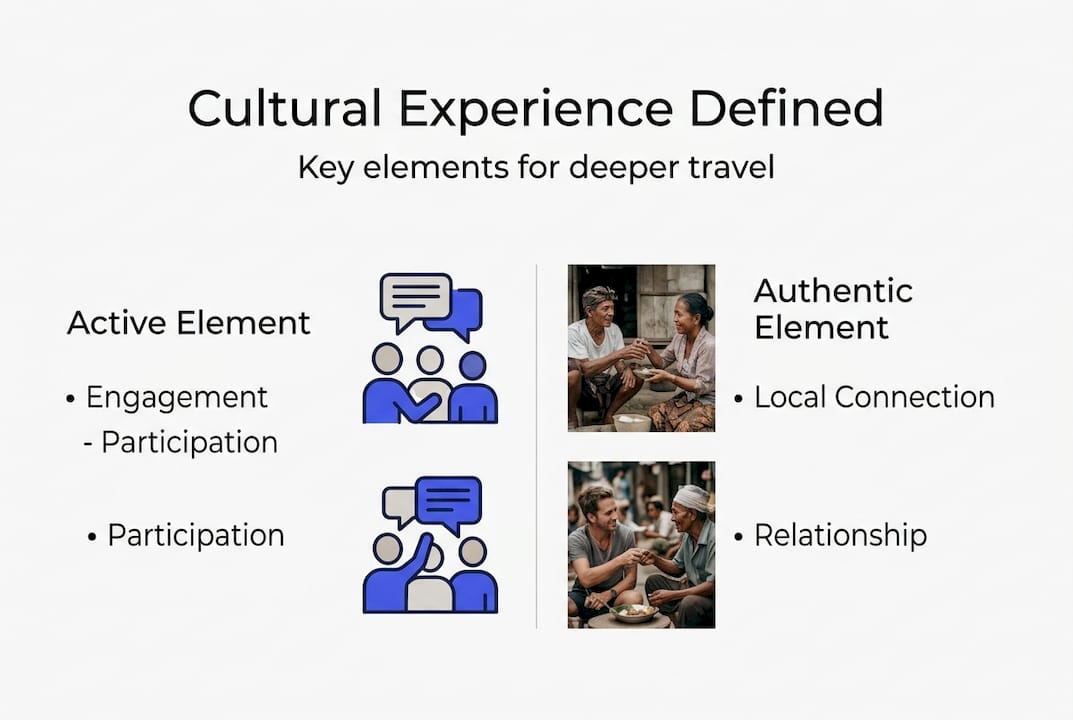
Authenticity arises from active participation, multisensory engagement, and genuine relationship-building with locals. Break that down practically and you get a clear checklist.
Steps for planning a genuinely cultural experience:
- Research before you arrive: Learn the basics of local history, religion, and social customs. Even a few hours of reading changes how you interpret what you see.
- Learn the etiquette: What is considered rude? What gestures carry meaning? Knowing this prevents accidental offense and signals respect.
- Choose local-led activities: A guide from the community brings context that no outsider can replicate.
- Stay longer than feels comfortable: Real connections take time. Two nights in a village is a visit. Two weeks is the beginning of understanding.
- Engage all your senses: Eat the food, touch the textiles, listen to the music, smell the markets. Multisensory memory is far stronger than visual memory alone.
Pro Tip: Book your examples of cultural tours through local operators rather than international aggregators. The guide's income stays local, the experience is more personal, and you often access places that mass-market tours never reach.
| Feature | Immersive cultural experience | Passive sightseeing |
|---|---|---|
| Engagement level | Active participation | Observation only |
| Connection with locals | Direct and personal | Minimal or none |
| Memory retention | High (multisensory) | Lower (visual only) |
| Community benefit | Direct economic impact | Often indirect |
| Emotional impact | Transformative | Informational |
Iconic examples of cultural experiences worldwide
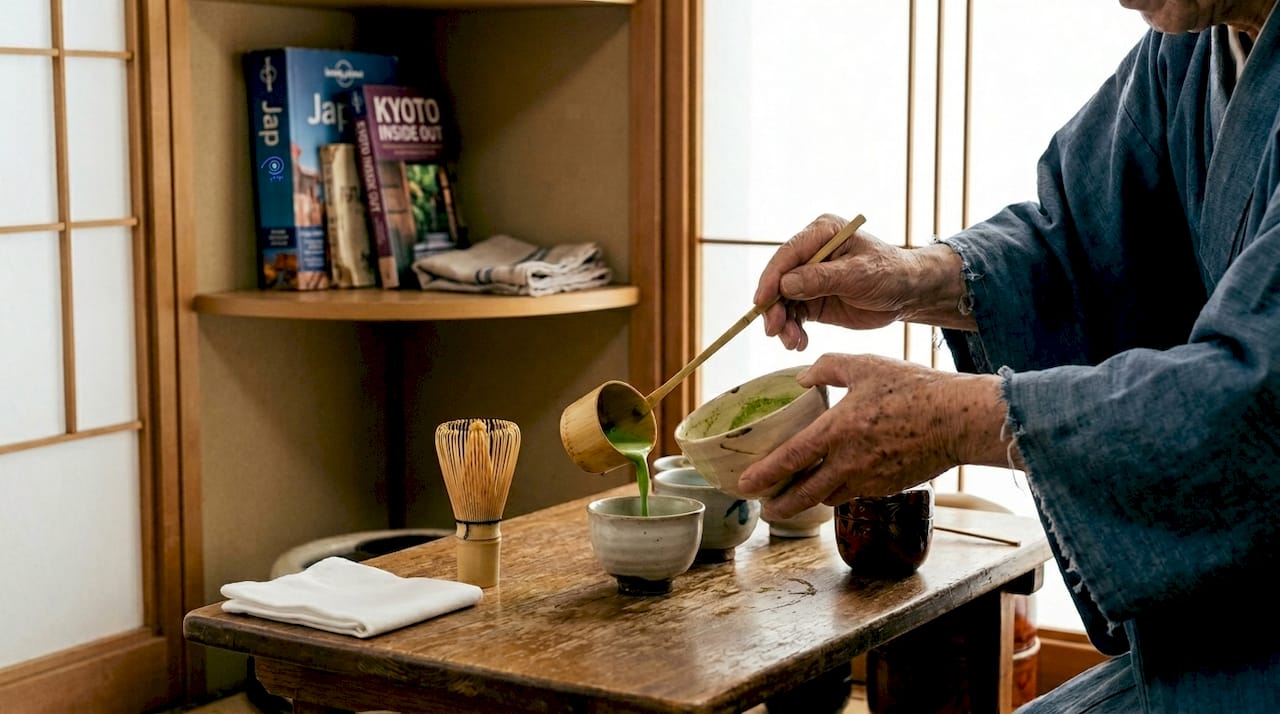
Theory is useful. Real examples are better. Cultural experiences range from tea ceremonies in Japan to Carnival in Brazil, with homestays and food tours ranking among the most popular globally.
| Region | Experience type | Example |
|---|---|---|
| East Asia | Ritual and ceremony | Tea ceremony in Kyoto, Japan |
| Latin America | Festival and celebration | Day of the Dead in Oaxaca, Mexico |
| North Africa | Craft and artisan | Pottery workshop in Fez, Morocco |
| South America | Textile and tradition | Weaving class in Cusco, Peru |
| Southeast Asia | Festival and water | Songkran (Thai New Year) in Chiang Mai |
| Sub-Saharan Africa | Community and village | Homestay in a Maasai village, Kenya |
| Europe | Food and history | Market and cooking tour in Bologna, Italy |
Beyond the table, a few categories deserve special attention:
- Street food tours: These are one of the fastest ways to understand a culture's history, migration patterns, and daily rhythms. Every dish tells a story.
- Language immersion programs: Even a weekend course in a local language rewires how you interact with a place.
- Homestays: Staying with a local family removes the hotel buffer entirely. You eat what they eat, sleep when they sleep, and see the city through their eyes.
- Festival participation: Showing up for a festival as a participant rather than a spectator changes everything. Wear the colors, learn the dances, ask questions.
For a broader catalog of unforgettable travel activities across different regions, the variety available today is genuinely staggering. Use local immersion tips to prepare for specific destinations before you go.
Challenges: Pitfalls, authenticity traps, and common misconceptions
Not every experience marketed as "cultural" deserves the label. Short stays and etiquette breaches limit immersion, and overtourism combined with social media trends can actively decrease authenticity in popular destinations.
Common pitfalls to watch for:
- Staged performances: Some "traditional" shows exist purely for tourists and bear little resemblance to actual local practice.
- Tick-the-box mentality: Rushing through ten countries in two weeks means you collect passport stamps, not understanding.
- Etiquette mistakes: Photographing sacred ceremonies without permission, dressing inappropriately at religious sites, or bargaining aggressively in cultures where it is considered rude.
- Overtourism damage: Flooding a small village with visitors can destroy the very authenticity you came to find.
- Voluntourism traps: Some volunteer programs prioritize the traveler's feel-good experience over genuine community benefit.
"The most meaningful cultural exchange happens when both sides feel respected, not when one side performs for the other."
Pro Tip: Before visiting any community, spend 30 minutes researching local taboos. What topics are off-limits? What physical gestures carry negative meaning? This small investment prevents big mistakes. Check out authentic cultural immersion resources for destination-specific guidance.
Experts generally recommend at least 2 to 3 weeks for meaningful immersion. Shorter trips can still be valuable, but they tend to produce surface-level impressions rather than genuine understanding. Understanding community tourism fundamentals helps you identify which operators genuinely benefit local communities. For inspiration on going deeper, explore unique travel ideas that prioritize connection over convenience.
Cultural experiences vs. traditional sightseeing and luxury travel
Immersive travel emphasizes human connection and learning, while traditional luxury travel focuses on amenities and comfort. Neither is wrong. But they deliver fundamentally different outcomes.
| Dimension | Cultural immersion | Traditional/luxury travel |
|---|---|---|
| Primary goal | Connection and understanding | Relaxation and comfort |
| Accommodation | Homestays, local guesthouses | Hotels, resorts |
| Food | Local markets, family kitchens | Restaurants, room service |
| Guides | Community members | Professional tour operators |
| Pace | Slow, flexible | Scheduled, efficient |
| Outcome | Perspective shift | Rest and recreation |
Key distinctions worth remembering:
- Luxury travel is not the enemy of cultural experience. A high-end resort that employs local staff, sources food locally, and offers community-based excursions can deliver both.
- Mass tourism, however, often dilutes authenticity by scaling experiences beyond what a community can sustain naturally.
- The most powerful trips tend to blend both: comfort at night, genuine community engagement during the day.
For a deeper look at the full spectrum of options, the experiential travel guide covers how to balance adventure, culture, and comfort across different travel styles.
How to plan your own cultural experience
Planning a culturally rich trip is less complicated than it sounds. Local-led activities, ethical voluntourism, and digital tools all enhance cultural immersion while minimizing harm to host communities.
Here is a practical framework:
- Choose a focus: Food, crafts, festivals, language, or community life. Narrowing your focus makes research easier and experiences deeper.
- Research the destination's cultural calendar: Plan around festivals, harvest seasons, or community events rather than just weather.
- Book local: Use platforms that connect you directly with community guides and local operators.
- Learn basic phrases: Even broken attempts at the local language are received warmly almost everywhere.
- Build in unstructured time: Some of the best cultural moments happen when you wander without a plan.
- Reflect and document: Keep a journal. Processing what you experience helps you absorb it more fully.
- Give back intentionally: Buy directly from artisans, tip guides generously, and choose accommodations that reinvest in the community.
Pro Tip: Flexibility and humility are your most valuable travel tools. Arriving with curiosity rather than expectations opens doors that no booking platform can unlock. Working with adventure travel companies that specialize in cultural programming can also fast-track your access to experiences that are hard to find independently.
Ready to immerse yourself? Discover curated cultural journeys
Reading about cultural experiences is one thing. Living them is another. Im-at makes it easy to move from inspiration to action, connecting you with curated, local-led activities that deliver genuine immersion rather than tourist theater.

Whether you want to explore the food markets and medieval streets of Bologna with a local guide or spend three days discovering townships, the Cape Peninsula, and wine country on a Cape Town cultural immersion, the platform puts vetted, community-connected experiences at your fingertips. Every listing on im-at.com is designed to help you connect with a place on its own terms, not yours. Browse the full catalog and find your next meaningful journey today.
Frequently asked questions
What are the main elements of a cultural experience?
Active participation, multisensory engagement, and authentic relationship-building with locals are the three core elements. Observation alone does not qualify.
How can I ensure my cultural experience is authentic?
Local-led activities and pre-travel research significantly improve authenticity. Choose small-group formats, stay longer than a day or two, and learn local customs before you arrive.
Are short trips enough for deep cultural immersion?
Experts recommend at least 2 to 3 weeks for meaningful immersion. Shorter trips can still be valuable but tend to produce surface impressions rather than lasting understanding.
What pitfalls should I avoid when seeking cultural experiences?
Commercialization and etiquette breaches are the two biggest traps. Avoid staged performances, rushed itineraries, and any experience that treats local people as props rather than hosts.