
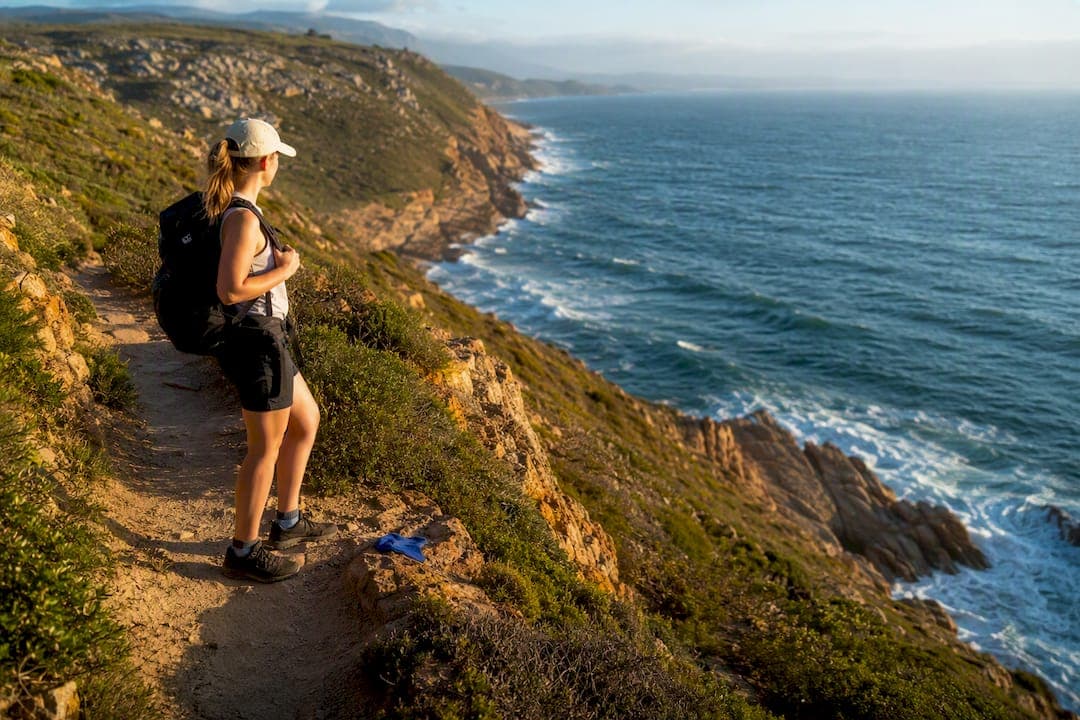
For most day hikers based in Plettenberg Bay, the Witsand Circuit is the best fit on the Robberg hike: roughly 5.5 kilometers, about two hours, moderate effort with dune walking and beach access. The one rule that overrides everything else is tide and weather timing, since sections of the shoreline become impassable at high tide and cliff paths turn dangerous in wind or mist.
TL;DR:
- The Witsand Circuit is ideal for most day hikers, offering a moderate two-hour walk with dune and beach sections, but tide and weather conditions must be checked beforehand.
- All three circuits start at the same point, allowing hikers to adapt their route based on time, energy, and terrain difficulty, with the Point Circuit requiring more technical scrambling.
- High tide can flood shoreline sections along Witsand and Point routes, making timing and tide charts crucial for safety and access, especially on the longer and more challenging loops.
- The reserve charges an entrance fee, has limited facilities, and requires hikers to carry sufficient water, proper footwear, and sun protection for safe and enjoyable routes.
- Starting early in the morning and checking official park updates helps avoid crowds, ensure tides are favorable, and maximize safety on exposed cliffs and technical sections.
Table of Contents
- Robberg Nature Reserve Trails: Which Circuit Fits You?
- What Each Robberg Circuit Actually Feels Like
- How Do You Get to Robberg and What Does It Cost?
- Is the Robberg Hike Safe? Tides, Weather, and Cliffs
- Wildlife on the Robberg Peninsula: What to Expect
- What Should You Pack for the Robberg Hike?
- When Is the Best Time to Hike Robberg?
- Where to Stay and Eat Near Robberg and Plettenberg Bay
- Why This Guide Focuses on Doing Robberg Right
- Book a Guided Robberg Experience Through Im-at
- Verify the Details Before You Go
- Sources
- FAQ
Robberg Nature Reserve Trails: Which Circuit Fits You?
Robberg Peninsula, managed by CapeNature, offers three marked circuits that all begin at the Interpretive Centre parking area and share overlapping sections near the start. Picking the right one comes down to how much time you have and how much scrambling you're willing to do.
- The Gap (Gap Circuit): about 2.1 to 2.2 kilometers, roughly 45 minutes, rated easy. Good for families, casual walkers, or anyone short on time who still wants coastal views.
- Witsand Circuit: around 5.5 to 5.6 kilometers, about 2 hours, rated moderate. Sandy dune sections mixed with rocky stretches and a beach return option.
- Point Circuit: roughly 9.2 kilometers, about 4 hours, rated challenging. Involves rock scrambling and boulder hopping on the way out to the tip of the peninsula.
Because all three routes share the first stretch, you don't have to commit to a distance before you set out. Plenty of hikers start toward the Point and quietly downgrade to the Witsand turnoff once they feel the sun or the terrain. Fit, experienced hikers who want the full Robberg Peninsula walking route should budget the whole morning for the Point Circuit; everyone else does fine with Gap or Witsand.
What Each Robberg Circuit Actually Feels Like
Numbers on a map don't tell you where your knees start complaining or where the view actually earns the climb. Here's what each circuit involves on the ground.
-
Gap Circuit (2.1 to 2.2 km, about 45 minutes). This is the reserve's highlight reel condensed into under an hour. The path climbs gently to a cliff viewpoint overlooking the narrow chasm that gives the circuit its name, then loops back. Footing is stable gravel and rock, suitable for sneakers rather than technical hiking boots. It's the right call if you're short on time, traveling with young kids, or just want the postcard view without committing to a full morning.
-
Witsand Circuit (5.5 to 5.6 km, about 2 hours). Past the Gap viewpoint, the trail drops into open dune country. White sand gives way underfoot in places, which slows your pace but also gives your legs a break from rock. You can either loop back inland or drop down to the beach for a longer, flatter return along the shoreline. This is where most day visitors get their best mix of scenery and effort. According to recent trail guides, the scenery shifts fast here: cliff vista one minute, soft dune walking the next, rocky shoreline scrambling not far after that.
-
Point Circuit (about 9.2 km, roughly 4 hours). The back half of this route is where Robberg stops being a walk and starts being a hike. Expect sustained rock scrambling and boulder hopping along exposed sections near the tip of the peninsula, the kind of terrain that strains knees and ankles even on a good day. CapeNature's own visitor guidance enforces cut-off timing on parts of this route, and local guides recommend starting no later than mid-morning so you're well clear of the technical sections before 2:00 PM. Avoid this stretch entirely after rain, when wet rock turns the scrambling sections genuinely dangerous.
The main decision point sits at the Witsand junction: continue toward the Point for the full loop, or drop to the beach and walk back along the sand. The Fountain Shack, a small stone structure roughly at the midpoint of the peninsula, marks a useful landmark and a sensible turnaround if you're running behind schedule.
Pro Tip: Start the Point Circuit before 9:00 AM in summer. You want to be past the boulder sections and heading back well before the afternoon heat and wind pick up.
How Do You Get to Robberg and What Does It Cost?
Getting there from central Plettenberg Bay is straightforward: follow Piesang Valley Road toward the coast, turn onto Robberg Road, and continue to the reserve gate. Parking is at the Interpretive Centre, right where all three circuits begin.
- Gate hours shift seasonally, with longer hours in summer and earlier closing in winter. Check current times before you go, and arrive early on weekends and school holidays since parking fills quickly.
- A conservation fee is charged at the entrance, collected by CapeNature, and card payments are accepted alongside cash.
- Toilets and a small picnic area exist only at the entrance near the Interpretive Centre. Once you're on the trail, there's nothing.
- There is no drinking water anywhere on the peninsula. Whatever you carry in is what you have for the whole hike.
Is the Robberg Hike Safe? Tides, Weather, and Cliffs
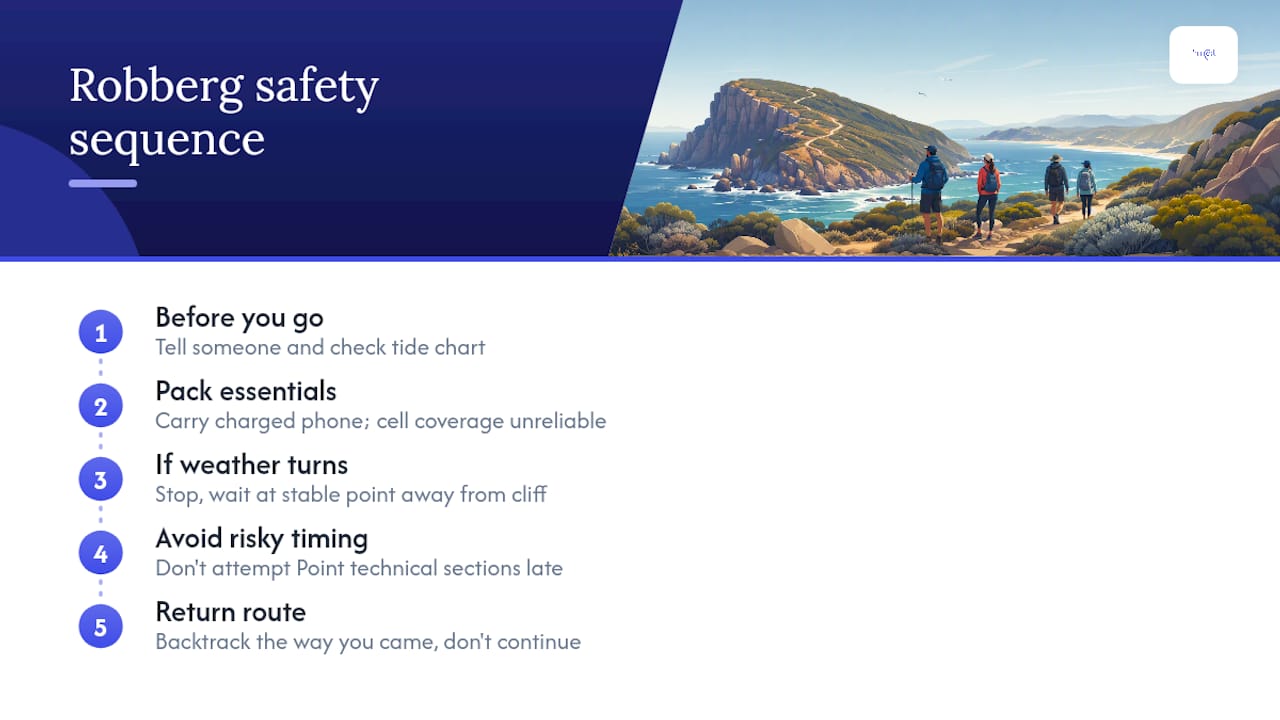
Tide timing matters more on Robberg than on almost any other Garden Route trail. Certain shoreline sections along the Witsand and Point routes flood completely at high tide, so check a tide chart before you commit to a beach return.
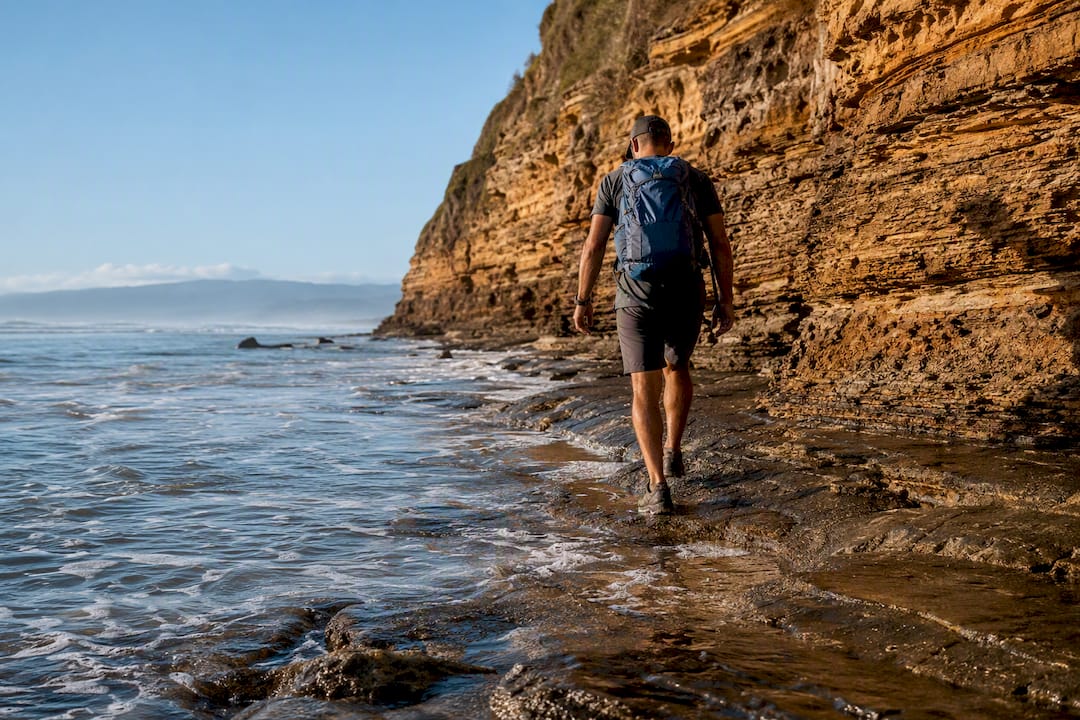
CapeNature's visitor safety information warns specifically about freak waves and strong currents along exposed rock, and it enforces a practical cut off: hikers should not be attempting the Point's technical sections late in the day. Mist can roll in fast on this exposed peninsula, and wind gusts on the cliff edges are strong enough to affect your footing.
If weather turns while you're out, the safe move is to stop, wait at a stable point away from the cliff edge, and backtrack the way you came rather than pushing forward. Cell coverage on the far side of the peninsula is unreliable, so tell someone your planned route and expected return time before you set out, and carry a fully charged phone regardless.
Wildlife on the Robberg Peninsula: What to Expect
Robberg supports one of the region's larger Cape fur seal colonies, visible from several viewpoints along the Point Circuit. Keep a respectful distance rather than approaching, since local guides note these are wild animals in an active breeding area, not a tourist attraction built for close contact.
- Whales and dolphins are visible offshore seasonally, particularly from the higher cliff viewpoints.
- Follow Leave No Trace basics: pack out everything you bring in, and stay on marked paths to protect the dune vegetation.
- Dogs are not permitted anywhere in the reserve.
- The surrounding waters form a Marine Protected Area, and rock or surf fishing requires the correct permit from the relevant fisheries authority.
Pro Tip: Bring binoculars if you're visiting between June and November. Whale sightings from the Point viewpoints are common enough that a lot of hikers miss them just by not scanning the horizon.
What Should You Pack for the Robberg Hike?
What you carry should match the circuit you're attempting, but a few items are non-negotiable regardless of which loop you choose.
- Water: 1.5 to 2 liters per person minimum, since none exists on the trail.
- Footwear: sturdy hiking shoes or boots, especially for Witsand or Point, where loose rock and sand make sneakers risky.
- Sun protection: a hat and sunscreen, since much of the peninsula is fully exposed with no shade.
- Useful extras: trekking poles for the scrambling sections, a small first-aid kit, a power bank, and a snack bar for the longer routes.
Moderate effort on Robberg means dune walking and gentle climbs. Challenging means sustained scrambling that stresses ankles and knees, particularly on the Point Circuit's second half. If you've never done rock scrambling before, start with Witsand and decide from there whether the Point looks realistic for your fitness level.
When Is the Best Time to Hike Robberg?
Summer, from November through March, brings clearer skies and warmer water if you want to combine the hike with a swim at Witsand's beach. Winter and spring, roughly June through November, are the better window for whale sightings from the cliff paths.
Whatever the season, start early. Beating the heat matters, but beating the tide and turnaround windows matters more, especially on the Point Circuit. For photography, the cliff viewpoints on the Gap and Point routes give the best panoramas, and the approach to the Fountain Shack offers a good mid-hike composition. Weekends and public holidays mean a full parking lot by mid-morning, so arriving at gate-opening time isn't just about light, it's about finding a spot at all.
Where to Stay and Eat Near Robberg and Plettenberg Bay
Plettenberg Bay itself sits a short drive from the Robberg gate, and most visitors base themselves in town rather than near the reserve directly. Accommodation options range from beachfront guesthouses to self-catering apartments within a few minutes of Robberg Road, making an early trailhead start realistic even without your own transport arranged in advance. If you're weighing options, general guidance on choosing the right holiday accommodation applies just as well here as anywhere else on the Garden Route.
Food options cluster around Plettenberg Bay's central strip and the Central Beach area, with everything from casual seafood spots to cafes suited to a quick pre-hike breakfast. Since there's no food or water sold inside the reserve, stock up in town before you drive out, ideally the night before if you're planning an early start.
Transportation to Robberg without a rental car usually means a short taxi ride or arranged shuttle from your accommodation, since there's no public transit route to the gate. If you'd rather not deal with logistics at all, private transfers and guided day trips covering Plettenberg Bay and the wider Garden Route are worth considering, particularly if Robberg is one stop among several on your itinerary.
Why This Guide Focuses on Doing Robberg Right
Im-at covers Robberg as part of its broader Garden Route content because it's one of the few hikes in the region where the difference between a great day and a genuinely dangerous one comes down to timing and preparation, not luck. Getting the tide window and the route choice right matters more here than on most coastal trails.
Beyond information, Im-at helps travelers find guided hiking options and complementary activities around Plettenberg Bay, so a Robberg morning can fit into a longer, well-planned Garden Route trip.
— Mikahil
Book a Guided Robberg Experience Through Im-at
Im-at works as an alternative to piecing together your own Garden Route logistics for the Robberg hike: instead of separately researching guides, arranging transport, and booking your next stop, you search and book it all in one place. If a self-guided walk on the Gap Circuit feels manageable but the full Point Circuit makes you want local knowledge on the boulder sections, a guided hike removes the guesswork on timing, tides, and turnaround points.

Beyond Robberg itself, the travel platform lists private transfers between Plettenberg Bay and other Garden Route stops, plus multi-activity day tours if you want to pair the hike with other experiences nearby. Options like the 4-day Garden Route private tour from Cape Town or the shorter 3-day Garden Route private tour show the range of guided itineraries that include time around Plettenberg Bay. Check current availability on Im-at and see what's bookable for your travel dates before you finalize your Robberg day plan.
Verify the Details Before You Go
For current rules and gate times, check CapeNature's Robberg page and its official visitor PDF directly.
Sources
- Robberg Nature Reserve
- Robberg Nature Reserve Hike Guide 2026: Trails, Tips & What to Expect
- Robberg Nature Reserve: Trails and marine encounters (Plettenberg Bay local guide)
FAQ
How long does it take to hike Robberg?
It depends on the circuit: about 45 minutes for the Gap Circuit, roughly 2 hours for the Witsand Circuit, and around 4 hours for the full Point Circuit.
How much does it cost to hike to Robberg Nature Reserve?
CapeNature charges a conservation fee at the entrance gate, with card payments accepted alongside cash; check the official reserve page for current pricing.
Is there a hiking trail called the Robberg hiking trail in Plettenberg Bay?
Yes, Robberg Nature Reserve near Plettenberg Bay offers three marked circuits, the Gap, Witsand, and Point, all starting from the Interpretive Centre parking area.
What are some good hikes around Plettenberg Bay?
Robberg's three circuits cover most fitness levels on their own, and travelers looking to extend their trip often pair the hike with wider Garden Route activities bookable through Im-at.
Which Robberg circuit should a first-time visitor choose?
The Witsand Circuit is the best starting point for most visitors, balancing scenic dune and cliff walking with a manageable two-hour time commitment.