

TL;DR:
- Tour operators design and manage comprehensive travel experiences, handling logistics, negotiations, and crisis support. They differ from travel agents by creating products, while agents sell and personalize them; both roles collaborate for optimal travel planning. Using a skilled operator offers benefits like exclusive perks, expert guidance, and real-time assistance, especially for complex or group trips.
Most people assume tour operators simply sell travel packages the way a store sells products off a shelf. The reality is far more complex. The role of tour operators spans everything from negotiating hotel contracts and designing multi-day itineraries to managing real-time emergencies when flights get canceled mid-trip. The global travel agency services industry was valued at $464.91 billion in 2025, reflecting just how much travelers rely on expert planning. This article breaks down exactly what tour operators do, why they matter, and how to get the most out of working with one.
Table of Contents
- Key takeaways
- The role of tour operators explained
- Tour operators vs. travel agents
- Why using a tour operator benefits you
- How tour operators are adapting to digital change
- How to choose the right tour operator
- My perspective on why operators still matter
- Explore tours worth booking through Im-at
- FAQ
Key takeaways
| Point | Details |
|---|---|
| Tour operators are architects | They design and build travel packages by bundling accommodations, transport, and activities. |
| Seven core functions | Operators handle travel info, itinerary prep, logistics, costing, ticketing, accommodation, and crisis management. |
| Different from travel agents | Operators create the product; agents sell and personalize it for individual travelers. |
| Benefits go beyond convenience | Operators secure exclusive rates, perks, and real-time advocacy during disruptions. |
| Tech has limits | AI handles simple bookings well but falls short on complex, high-value travel needs. |
The role of tour operators explained
At their core, tour operators are the builders behind every organized travel experience you take. They are not simply middlemen passing your money to hotels and airlines. They are the ones bundling accommodations, transport, and activities into a cohesive package, negotiating directly with service providers to deliver value you could not replicate on your own.
The duties of travel agencies and operators are often confused, but tour operators carry a much heavier operational load. According to industry breakdowns, seven primary functions define what tour operators do:
- Expert travel information: Providing destination-specific knowledge, visa requirements, health advisories, and cultural briefings.
- Itinerary preparation: Designing day-by-day travel programs that balance activities, rest, and logistics.
- Travel logistics management: Coordinating transport connections, transfers, and timing across multiple service providers.
- Tour planning and costing: Setting package prices that reflect negotiated rates, margins, and traveler value.
- Ticketing: Handling reservations for flights, trains, entry passes, and event access.
- Accommodation arrangements: Securing hotel blocks or unique lodging that fits the tour's character and budget.
- Crisis management: Supporting travelers during flight cancellations, political unrest, health emergencies, or natural disasters.
That last point deserves more attention than it typically gets. Crisis management has evolved from a minor afterthought to a core tour operator responsibility. When a volcanic eruption grounds flights across Europe or a sudden political protest closes a key border crossing, the operator's network and knowledge become your lifeline.
Pro Tip: Before booking any tour, ask the operator specifically how they handle emergency evacuations or trip disruptions. Their answer will tell you a lot about how seriously they take their responsibility to you.
Tour operators vs. travel agents
People use these terms interchangeably, but they describe fundamentally different roles. Think of it this way. Tour operators are architects who design and build the product. Travel agents are advisors who help you choose and purchase it.
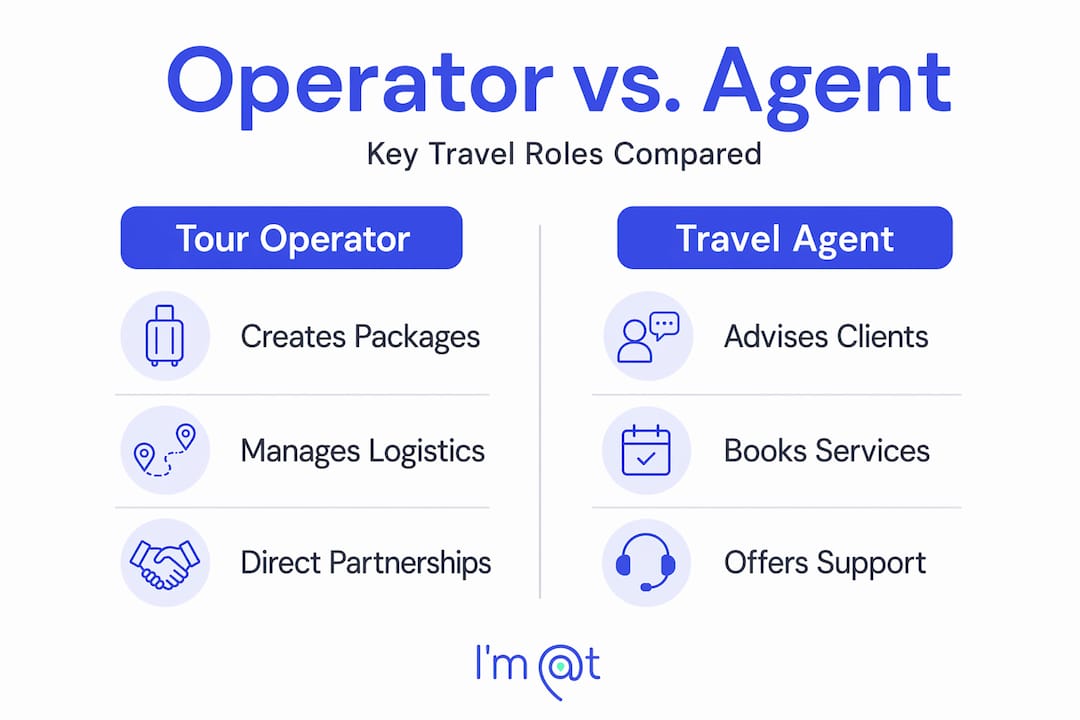
| Aspect | Tour operator | Travel agent |
|---|---|---|
| Primary role | Creates and packages travel products | Sells and personalizes products to clients |
| Relationship with providers | Negotiates directly with hotels, airlines, guides | Books through operators or GDS systems |
| Customer interaction | Often minimal or indirect | Direct, relationship-driven |
| Expertise focus | Logistics, costing, product design | Customer matching, preference management |
| Responsibility | Package quality and delivery | Advisor guidance and booking accuracy |
The best travel experiences happen when operators and agencies collaborate effectively. The operator handles the complex operational backbone. The agent translates that product into something that fits your preferences, budget, and travel style. Both roles matter. Neither fully replaces the other.
Technology has transformed how both parties work. Operators now use sophisticated booking and packaging software to manage multi-layered itineraries across dozens of vendors. You can explore how technology reshapes planning to understand how digital tools have made operator coordination faster and more accurate. But software does not replace the judgment and relationships that experienced operators bring to the table.
Pro Tip: If you book through a travel agent, ask whether they work with a dedicated tour operator on the back end. Understanding who is actually managing your logistics gives you a clearer picture of accountability.

Why using a tour operator benefits you
The benefits of tour operators go well beyond not having to plan everything yourself. Here is what you actually gain when a skilled operator is managing your trip.
"Travel advisors provide personalized service, access to exclusive perks, and act as advocates during travel disruptions, enhancing traveler peace of mind and experience." — TravelPulse research on travel advisors
That advocacy piece matters more than most travelers realize. When your flight is canceled and 400 people are scrambling at the gate, your operator has account managers with the airline, pre-negotiated rebooking protocols, and a team watching your itinerary in real time. You are not just another ticket number.
The concrete benefits include:
- Negotiated rates and perks: Operators book hotel rooms and tour slots in volume, passing savings or upgrades down to you. Think resort credits, early check-in, or complimentary excursions that individual bookers never see.
- Curated expertise: A good operator specializing in East African safaris knows which camps flood in March and which guides have tracked the same leopard family for ten years. That knowledge shapes your entire experience.
- Time savings: Planning a 14-day trip across multiple countries with local transport, cultural experiences, and dietary restrictions can take weeks of research. An operator handles that in hours.
- Real-time problem solving: When something goes wrong, and at some point it will, you have a professional who can pivot without panic. For organized luxury Table Mountain trips, for example, operators manage permits, guide assignments, and weather contingencies so you can focus on the experience itself.
The importance of travel planners becomes especially clear for group travel. Coordinating 20 people across flights, meals, accommodation, and activities is logistically brutal without professional management. An operator makes it look effortless because they have done it hundreds of times.
How tour operators are adapting to digital change
The rise of booking platforms and AI tools has changed how tour operators work, but it has not made them obsolete. If anything, digital transformation has clarified exactly where human expertise matters most.
- AI handles standardized bookings well. Booking a single-city hotel or a direct flight is something algorithms do faster and often cheaper than any human. Operators know this and have shifted focus accordingly.
- Complex trips still need human judgment. AI struggles with high-value trips involving multiple destinations, niche experiences, and crisis contingencies. The variables are too numerous and the stakes too high for automated systems alone.
- Premiumization is the strategic direction. The real value of human advisors is shifting toward curation, emotional intelligence, and security. Operators who focus on niche and high-value travel are growing fastest.
- Data augments rather than replaces. Smart operators use AI-powered tools to track pricing, predict demand, and personalize itineraries. The technology makes them faster, not redundant.
- Experiential travel is accelerating demand. Travelers want immersive, memorable experiences, not just transport and beds. Designing those experiences requires creativity and local relationships that no app can replicate.
The industry is growing at 7.6% annually, which suggests travelers are actively choosing expert-guided experiences over purely self-directed booking. That is a meaningful signal.
How to choose the right tour operator
Knowing the importance of travel planners is one thing. Picking the right one is another. Here is what to look for before you commit.
- Check their specialty. A general operator and a safari-specific operator are not the same thing. Choose one whose expertise directly matches your destination and travel style.
- Review their crisis protocols. Ask what happens if a core activity is canceled due to weather or safety concerns. A prepared operator has a clear answer.
- Understand package inclusions. Know exactly what is covered: meals, entrance fees, tips, internal transport. Unexpected costs erode value quickly.
- Look for licensed and insured operators. Reputable operators carry professional liability coverage and hold relevant tourism licenses in their operating regions.
- Read reviews with context. A one-star review about a rainy day says less than a consistent pattern of complaints about miscommunication or hidden fees.
- Ask about flexibility. Can you customize the itinerary? Are there options to upgrade accommodations or add experiences? Operators who offer personalized adjustments demonstrate confidence in their product.
For a deeper look at matching yourself with the right experience, the step-by-step tour selection guide from Im-at walks through the decision process in practical detail.
Pro Tip: Ask your operator directly: "What is the one thing that most commonly goes wrong on this tour, and how do you handle it?" Honest operators will have a real answer. That transparency is worth more than any promotional brochure.
My perspective on why operators still matter
I have spent years watching the travel industry wrestle with the question of whether technology would make tour operators irrelevant. My honest take is that question misunderstands what tour operators actually do.
What I have seen is that the travelers who use skilled operators consistently report richer, less stressful experiences than those who build everything themselves. Not because they are lazy, but because operators have access and relationships that even the most prepared solo traveler cannot replicate. I have watched operators pull strings to get a private sunset access at a site that is normally closed to public tours. That does not happen through an app.
The industry's shift toward experiential travel curation has actually strengthened the case for operators. Travelers want meaning, not just movement. They want to feel something at each stop. Designing that kind of experience requires human empathy and cultural knowledge that AI tools are simply not built to deliver.
What frustrates me about how people discuss this topic is the assumption that operators are a premium luxury for high-budget travelers. That misses the point entirely. A well-chosen operator saves you money, time, and stress regardless of your budget, because they have negotiated the rates, mapped the logistics, and done the research you would have spent weeks doing yourself.
The future belongs to operators who combine deep local knowledge with smart use of technology. Not one or the other.
— Mikahil
Explore tours worth booking through Im-at
Im-at connects you with expert-led tours and experiences designed by operators who know their destinations inside out. Whether you are planning a multi-day adventure or a focused day trip, the platform makes it easy to find, compare, and book tours that reflect genuine quality.
If you want a practical example of what skilled operators deliver, look at the Cape Town 3-day package on Im-at, which bundles a township tour, Cape Peninsula excursion, and wine tasting into a single cohesive experience. Or explore the Douro Valley wine tour, a small-group experience combining river cruising, local cuisine, and vineyard visits. For something more active, the Table Mountain hiking experience puts you in the hands of guides who know every trail condition. Browse the full Im-at catalog to find an experience that fits your style.
FAQ
What is the primary role of tour operators?
Tour operators design, package, and manage travel experiences by bundling accommodations, transport, activities, and logistics into cohesive tours. Their role extends to crisis management and real-time support during travel disruptions.
How do tour operators differ from travel agents?
Tour operators create and manage travel products directly with service providers, while travel agents advise clients and sell those products. Operators focus on logistics and product design; agents focus on customer relationships and booking.
What are the key benefits of using a tour operator?
Working with a tour operator gives you access to negotiated rates, exclusive perks, expert curation, and professional crisis support. These benefits are particularly significant for complex, multi-destination, or group travel.
Can AI replace tour operators?
AI handles straightforward bookings efficiently but falls short on complex, high-value itineraries requiring human judgment, local expertise, and real-time problem solving. Human-led operators remain essential for premium and experiential travel.
What should I ask before booking with a tour operator?
Ask about their specialty, crisis protocols, package inclusions, licensing, and flexibility to customize your itinerary. A reliable operator will answer these questions directly and with confidence.