

TL;DR:
- Proper research and planning ensure a genuine travel experience rather than just ticking boxes.
- Matching tour type and operator reputation to your needs guarantees satisfaction and safety.
- Booking in advance and verifying credentials maximize trip quality and protection.
Imagine booking a "top-rated" city tour only to spend three hours on a bus with a microphone-wielding guide reciting facts you could have googled. No real access, no local flavor, just a checked box. It happens more than you'd think, and the fix isn't luck. It's preparation. Selecting the right tour means defining your style, researching operators, checking credentials like USTOA membership for financial protection, and verifying what's actually included before you pay. This guide walks you through every step so your next tour feels like a genuine adventure, not a missed opportunity.
Table of Contents
- Clarify your travel goals and group needs
- Compare tour styles and operators
- Evaluate reviews, inclusions, and safety credentials
- Make your booking: Timing, tools, and what to expect
- Why the real value of guided tours is still underrated
- Explore tailor-made tours and unique journeys with us
- Frequently asked questions
Key Takeaways
| Point | Details |
|---|---|
| Define priorities | Clarify your travel style, group needs, and desired activities before comparing tours. |
| Research operators | Use trusted platforms and reviews to compare tour styles, inclusions, and provider reputation. |
| Check credentials | Verify safety certifications and clear refund policies to avoid scams and ensure value. |
| Book smart | Secure your booking early using top tools and take advantage of AI for custom planning. |
| Consider hybrid travel | Combine guided tours with freestyle exploration for a richer, more flexible experience. |
Clarify your travel goals and group needs
Before you search a single platform or browse any operator's catalog, you need to get honest about what kind of traveler you are. This is the step most people skip, and it's exactly why they end up on tours that don't fit.
Start with your travel style. Are you chasing adrenaline through jungle treks and white-water rapids? Do you prefer slow mornings at local markets and long lunches with wine? Are you traveling with kids who need scheduled bathroom breaks, or with seniors who need manageable walking distances? Your answers shape everything.
Here are the core factors to define before searching:
- Travel style: Adventure, cultural immersion, leisure, food-focused, or wellness
- Group size and composition: Solo, couple, family with children, group of friends, or seniors
- Pace preference: Packed itineraries vs. flexible days with breathing room
- Accessibility needs: Mobility aids, dietary restrictions, or language support
- Budget range: Per-day spending limits and what you're willing to pay for quality
- Special interests: History, photography, wildlife, culinary arts, or spiritual experiences
First-timers and solo travelers typically prefer guided tours for the logistics and built-in safety net. Families need kid-friendly pacing. Seniors benefit most from accessible options. And anyone venturing into remote terrain should only consider operators with certified guides.
Understanding whether group tours or solo travel suits your personality is just as important as your destination choice. Some travelers thrive in the social energy of a group. Others need independence to feel truly free. Neither is wrong, but mistaking one for the other will ruin a trip.
Pro Tip: Write down your top three must-haves and two absolute dealbreakers before researching. It keeps you focused and prevents impulse bookings that look great on screen but feel wrong in person.
Knowing the role of tour guides also shifts your expectations. A great guide isn't just a walking Wikipedia. They open doors, handle problems quietly in the background, and create experiences you couldn't engineer alone.
Compare tour styles and operators
Once you know what you need, the next job is matching those needs to the right tour format and operator. Not all tours are built the same.
Escorted group tours include a tour director who stays with you throughout the trip. Everything is planned. They're ideal for first-timers who want zero logistical stress. Small-group tours (usually under 16 people) offer more intimacy and local access. Private tours give you full control over pace and focus. Self-guided tours provide a route and materials, but you move independently.
Here's a quick comparison to guide your decision:
| Tour type | Group size | Flexibility | Best for |
|---|---|---|---|
| Escorted group | 20-50 | Low | First-timers, seniors |
| Small-group | Under 16 | Medium | Culture seekers, solos |
| Private | 1-8 | High | Families, luxury travelers |
| Self-guided | Individual | Very high | Independent, experienced |
For booking platforms, leading options include Viator and GetYourGuide for day experiences and activities, and Intrepid Travel and G Adventures for multi-day small-group adventures. For culturally immersive or locally led options, WithLocals and TravelLocal are worth exploring. If you're looking for private and local-led tour options, Good Housekeeping's 2026 travel awards highlight standout services worth considering.
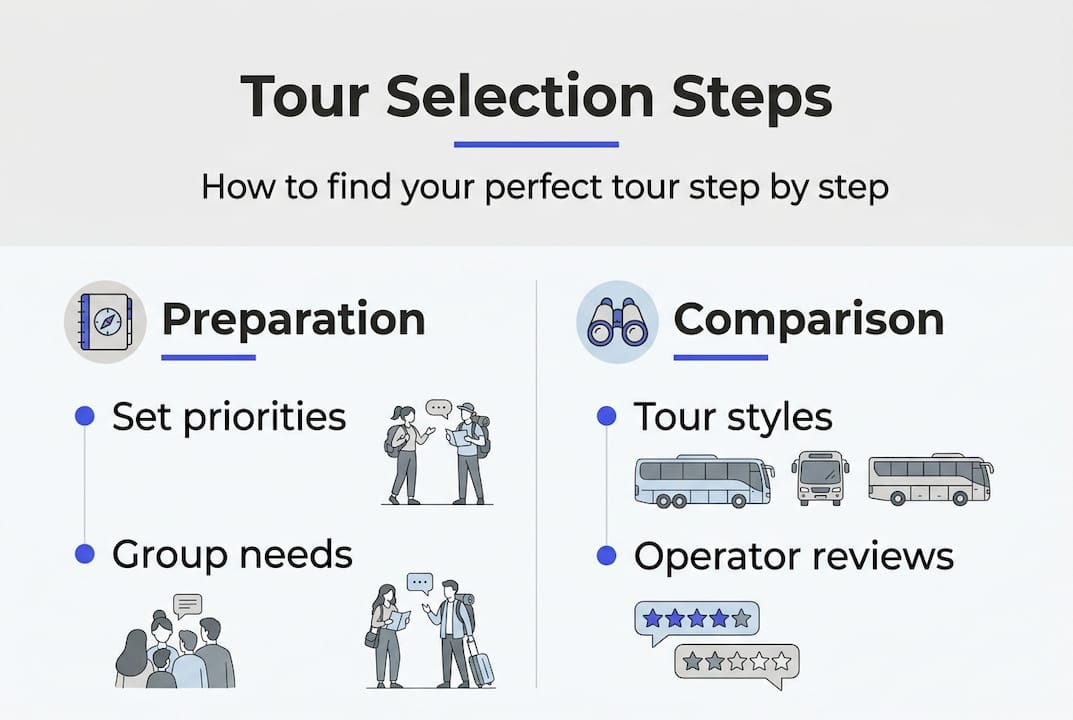
When evaluating operators, reputation matters enormously. Top-rated operators like Artisans of Leisure scored 99.44 in Travel + Leisure's World's Best Awards 2025, while Rick Steves continues to dominate European itineraries for independent-minded group travelers. These scores reflect real traveler satisfaction.
Small-group tours consistently outperform larger ones for authentic travel rewards. Operators who offer local excursions with central accommodations and two or more nights in each location tend to deliver deeper, more memorable experiences. Staying longer in one place beats rushed multi-city sprints nearly every time.
Here's how to rank operators systematically:
- Check their average review score across multiple platforms
- Look for industry awards and recognition in the past two years
- Confirm group size limits and whether guides are local or international
- Read the fine print on what's actually included vs. optional add-ons
- Contact their support team with a question before booking to test responsiveness
Evaluate reviews, inclusions, and safety credentials
You've narrowed down your tour type and shortlisted operators. Now verify that what they promise is real.

Start with reviews on TripAdvisor and Google. Don't just read the five-star highlights. Read the three-star reviews. They tend to be the most honest, pointing out genuine gaps without being unfair. Look for patterns. If five different travelers mention the guide was disengaged or the included lunch was disappointing, believe them.
Here's what a solid tour package should cover:
| Inclusion | What to look for |
|---|---|
| Transportation | Airport transfers, in-country travel included or clearly priced |
| Accommodation | Star rating, location, and whether single supplements apply |
| Meals | Which meals are included and if dietary needs are accommodated |
| Admissions | Entry fees for attractions listed or billed separately |
| Guide | Local vs. international, certified vs. general |
| Insurance | Whether travel or cancellation insurance is bundled |
For safety credentials, USTOA membership provides up to $1M in financial protection per traveler. This matters most for high-cost multi-day tours. For adventure travel, look for guides with Wilderness First Responder (WFR) certification.
Red flags to watch for before paying:
- No verifiable physical address or local contact
- Vague or missing refund and cancellation policy
- No license number or operator registration
- Reviews that all look suspiciously similar or are posted within days of each other
- Pressure tactics urging you to book immediately before prices "expire"
Pro Tip: Search the operator's name plus "complaints" or "scam" in your browser before booking. You'll often surface issues that don't appear on curated review platforms.
Checking refund and license transparency is especially important for international bookings where consumer protection laws vary widely. Avoid any operator who can't provide a written cancellation policy upfront.
Once credentials check out, confirm your seamless adventure booking expectations align with what the platform offers. Understanding the travel discovery process early saves frustration later.
Remember: A well-credentialed operator with slightly higher prices almost always delivers better value than a cheap unknown with no verifiable track record.
Make your booking: Timing, tools, and what to expect
With your ideal tour selected and verified, it's time to lock it in. Timing your booking smartly can save you real money and guarantee the experience you want.
For popular destinations and peak travel seasons, book 2 to 6 months in advance. Last-minute availability exists, but for bucket-list experiences like a Douro Valley wine cruise or a Serengeti safari, spots fill fast and prices climb as departure nears.
Here's a step-by-step booking process:
- Compare the price on the operator's direct site against Viator or GetYourGuide
- Check if direct booking offers perks like flexible cancellation or priority access
- Read the full terms before entering payment details
- Screenshot or save your booking confirmation and any pre-trip materials
- Set a calendar reminder to review the operator's pre-departure checklist
AI is playing a growing role in how travelers plan and book. AI tools boost planning productivity by 57% and are now used by 80% of tour planners. USTOA's latest survey shows 68% of operators reported increased sales in 2025, with 78% expecting further growth into 2026. These numbers signal a fast-evolving market with more options and smarter tools than ever before.
Pro Tip: Use AI trip planning tools to generate an itinerary draft, then match it against real operator offerings. It's one of the fastest ways to spot gaps between what you imagined and what's actually bookable.
After booking, expect a confirmation email with a reference number, joining instructions, and usually a pre-departure guide. Review your guide to booking essentials so you arrive prepared and confident. Know the meeting point, what to pack, and who to contact if something changes.
Why the real value of guided tours is still underrated
Here's a take you won't hear often: the biggest argument for guided tours isn't convenience. It's access.
Experienced independent travelers assume they can replicate everything a good guide offers by researching hard enough. They're wrong. A local guide who grew up near the Maasai Mara or spent twenty years leading treks in the Andes doesn't just know the route. They know which family will welcome you into their home, which trail gets the best light at sunrise, and which "tourist shortcut" is actually a safety risk.
That kind of knowledge isn't on TripAdvisor. It's not in any travel blog. It lives in relationships and experience that take years to build.
The guided tour debate often frames things as guided vs. independent. But the smartest travelers blend both. Use guided tours for complex destinations, language barriers, or highly specialized interests (like wildlife tracking or culinary deep-dives). Go independent when you want full pace control and already know the terrain.
The social element is also underrated. Travelers consistently form lasting friendships on group tours. Shared experiences under slightly challenging conditions, like a rainy hiking day or a delayed ferry, create bonds that solo highlight reels never do.
Locals who shape your experience are the real currency of great travel. Guided tours are often the only reliable way to reach them.
Explore tailor-made tours and unique journeys with us
Ready to put this guide into action? At Im-at, we connect you with tours that already meet the standards described here: verified operators, clear inclusions, and experiences designed for real travelers.
From rugged off-road escapes to culturally rich river journeys, our catalog covers every travel style. Check out our tailor-made 4x4 tours for adventure-seekers who want expert-led backcountry access, or explore the beautiful Douro Valley small-group tour for wine tasting, scenic lunches, and river cruising through one of Europe's most dramatic landscapes. Browse our full catalog at Im-at.com and find experiences worth every planning minute.
Frequently asked questions
What is the best website to find tours worldwide?
Viator and GetYourGuide are the top platforms, each offering over 400,000 vetted activities and tours globally, covering everything from day trips to multi-week adventures.
What safety credentials should I check for a tour operator?
Look for USTOA membership, which provides up to $1 million in financial protection per traveler, along with local guide certifications and a clear, written cancellation policy.
How early should I book a guided tour?
Book 2 to 6 months ahead for popular destinations or peak travel seasons to secure your preferred dates and the best available rates.
Can solo travelers and families find suitable guided tours?
Absolutely. Tours exist for solos, families, and seniors, each designed with appropriate pacing, safety features, and group dynamics to match different traveler profiles.