
TL;DR:
- Most travelers prefer immersive cultural experiences that benefit local communities over iconic landmarks. Locals play a vital role in creating authentic travel by sharing their knowledge, controlling tourism activities, and ensuring equitable economic benefits. Supporting genuine local-led experiences involves research, ethical vetting, respectful participation, and community involvement.
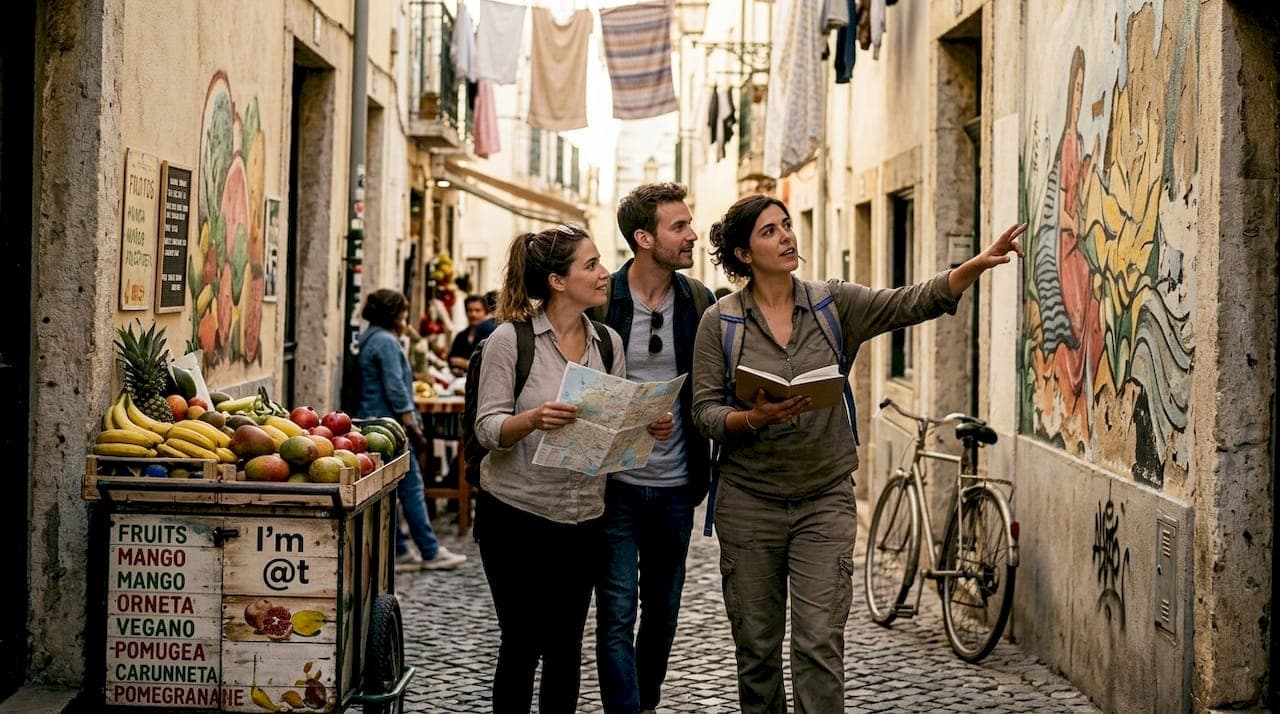
Most travelers picture iconic landmarks when they plan a trip, but the data tells a completely different story. 75% of travelers seek cultural experiences, and 69% want their spending to directly benefit local people. That gap between expectation and reality is where the most memorable journeys actually live. The sights are just a backdrop. What makes a trip stick in your memory, years later, is almost always a person: the fisherman who taught you to cast a net, the grandmother who handed you a recipe, the guide who showed you a neighborhood no map lists. Locals are not a bonus feature of travel. They are the whole point.
Table of Contents
- Why local involvement is vital for authentic travel
- Economic and social impacts when locals lead
- How to identify and support ethical, local activities
- Travelers and locals: Practical tips for deeper connections
- Going beyond the checklist: A perspective on local-driven travel
- Ready to experience local-driven travel?
- Frequently asked questions
Key Takeaways
| Point | Details |
|---|---|
| Locals enrich travel | Local hosts and guides create deeper, more meaningful travel experiences. |
| Support community benefit | Choosing local-led activities can directly improve resident incomes and quality of life. |
| Ethics matter | Not all 'local experiences' are equal—seek ones with real community involvement. |
| Collaboration unlocks value | Travelers and locals both shape authentic journeys through shared effort and respect. |
Why local involvement is vital for authentic travel
Authentic travel is a phrase that gets thrown around a lot, but it has a precise meaning. It refers to engaging deeply with a place's culture, people, and rhythms rather than simply observing them from a distance. Think of the difference between watching a traditional dance performance staged for tourists versus learning the steps from someone who grew up dancing at family celebrations. One is a show. The other is a connection.
What makes locals so central to this? Simple: they hold the knowledge, the context, and the lived experience that no travel brochure can replicate. A local guide does not just point at a building and recite its age. They tell you who built it, why the community fought to preserve it, and what it means to people today. That layered storytelling is what defines a cultural experience worth having.
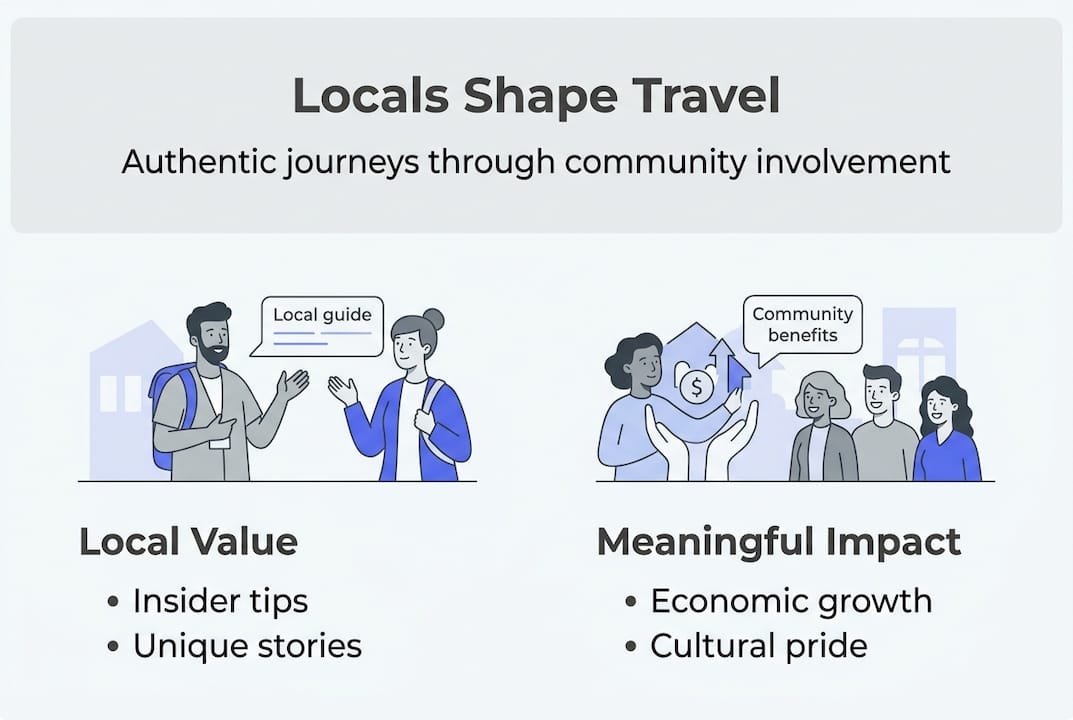
The numbers back this up strongly. Small local businesses make up 80% of all tourism enterprises globally. That means the overwhelming majority of the industry is built on local knowledge, local labor, and local investment. When you book a tour with a neighborhood operator instead of a global chain, you are not just getting a better story. You are participating in an economic system that actually works for the community you are visiting.
Travelers who are craving authentic experiences are also increasingly aware of this dynamic. They want to know their money is doing something useful. They want to leave a place better than they found it, not just with a full camera roll.
Here is what authentic, local-led travel typically looks like in practice:
- Cooking classes run by home cooks, not hotel chefs
- Neighborhood walks led by residents who grew up on those streets
- Craft workshops where artisans teach their actual trade, not a simplified version
- Farm visits where you work alongside the family, not just observe
- Storytelling evenings where elders share oral histories in their own language
None of these require a massive budget. They require intentionality and a willingness to show up as a learner rather than a spectator.
Economic and social impacts when locals lead
The impact of local-led tourism goes well beyond a good story to tell at dinner. It reshapes entire economies. NPS visitor spending generated 340,100 jobs and $18.8 billion in labor income in a single year. That scale of impact is only possible when spending flows into local businesses, not out of the destination.
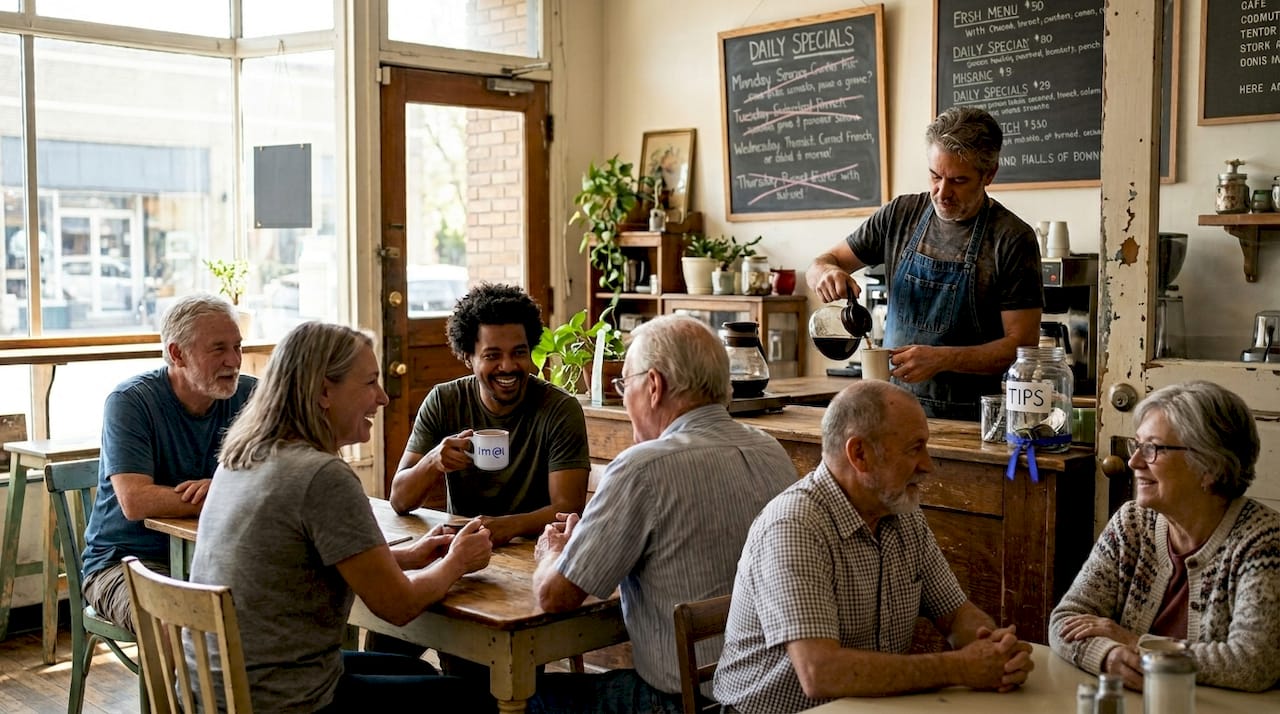
Community-based tourism (CBT) takes this further. When communities design and lead their own tourism offerings, the income improvements are measurable and quality of life rises alongside them. Schools get funded. Infrastructure improves. Young people find reasons to stay rather than migrate to cities for work.
| Impact area | Local-led tourism | Outside-operator tourism |
|---|---|---|
| Income retention | High (stays in community) | Low (profits leave) |
| Job quality | Skilled, meaningful | Often low-wage, seasonal |
| Cultural preservation | Strong | Weak or performative |
| Environmental care | Community-driven | Often neglected |
| Visitor satisfaction | High (authentic) | Variable |
"When communities control tourism, they protect what matters most: their culture, their land, and their future."
But this is not a perfect picture. Tourism without proper management creates real problems. Overtourism strains housing markets and pushes residents out of their own neighborhoods. Cultural traditions get simplified into performances that bear little resemblance to the original. The very authenticity travelers seek gets eroded by the volume of people seeking it.
The social benefits of local involvement depend heavily on who controls the process. Here is what needs to happen for tourism to genuinely lift communities:
- Revenue must stay local, not funnel to outside investors
- Communities must have decision-making power over what gets offered and how
- Cultural boundaries must be respected and set by locals, not tourists
- Environmental limits must be built into every activity design
Pro Tip: Before booking any tour, ask the operator directly: "What percentage of revenue stays in this community?" A legitimate local operator will answer without hesitation.
Explore the community tourism guide for a deeper breakdown of how these models work in different regions.
How to identify and support ethical, local activities
Not every tour labeled "authentic" actually is. This is one of the most important things to understand before you spend money on an experience. Not all authentic-labeled experiences are ethical or community-led, and travelers need to actively vet tours for genuine community or cooperative involvement.
So how do you tell the difference? Start with these green flags:
- The guide or host is from the community, not hired from outside it
- The activity reflects real daily life, not a staged version of it
- Profits are transparently shared with the community or reinvested locally
- The experience has limits: group sizes, visit frequencies, restricted areas
- Local participants are paid fairly and have input on how the experience runs
And here are the red flags that should make you pause:
- Vague claims like "locally inspired" with no specifics
- No information about who owns or operates the business
- Performances that feel rehearsed and disconnected from real cultural practice
- Prices that seem suspiciously low (someone in the chain is being underpaid)
- No mention of environmental or community impact policies
| Green flag | Red flag |
|---|---|
| Host is a community member | Host is an outside contractor |
| Clear revenue-sharing policy | No transparency on profits |
| Activity has capacity limits | Unlimited group sizes |
| Cultural context is explained | Culture is treated as entertainment |
For locals designing experiences, the same principles apply in reverse. Build activities around what your community genuinely values and is proud to share. Set boundaries around what is sacred or private. Partner with travelers who come with curiosity, not entitlement. Learn to master immersive cultural experiences by studying what other successful community-led operators have done.
Pro Tip: If you are a local host, create a short written guide for visitors that explains the cultural context of your activity before it begins. This sets expectations, deepens respect, and dramatically improves reviews.
Understanding the benefits of local experiences from both sides of the exchange makes every interaction richer.
Travelers and locals: Practical tips for deeper connections
Knowing the theory is one thing. Putting it into practice requires specific steps, and both travelers and locals have a role to play. Locals are best positioned to enable sustainable travel, but they must balance economic, cultural, and ecological priorities carefully.
For travelers, here is a practical starting sequence:
- Research before you arrive. Look for community-based operators, cooperatives, or locally owned businesses in your destination. Read reviews that mention specific names and stories, not just star ratings.
- Learn a few words in the local language. Even basic greetings signal respect and open doors that English alone cannot.
- Eat where locals eat. Skip the tourist-district restaurants and ask your accommodation host where they go for a meal.
- Book directly when possible. Direct bookings keep more money with the operator and let you ask questions before committing.
- Follow the host's lead. In any cultural setting, wait to be invited before photographing, touching, or participating.
For locals looking to offer experiences, consider these approaches:
- Start small and test your activity with trusted visitors before scaling
- Build a story around what makes your community genuinely unique
- Set clear expectations in writing: what visitors will see, do, and respect
- Connect with other local operators to share resources and referrals
- Use platforms that center local voices and support ethical listing practices
Exploring the types of local activities that global travelers respond to most can help locals design offerings with real appeal.
The mutual understanding that grows from these exchanges is not just good for business. It changes how both sides see the world. Travelers return home with more nuance. Locals gain confidence in the value of what they have built. That cycle, when it works, is one of the most powerful things travel can do.
Pro Tip: After any local experience, leave a detailed written review that names the host and describes what made it meaningful. This is one of the most valuable things a traveler can give a small operator.
Going beyond the checklist: A perspective on local-driven travel
Here is something most travel content will not say directly: the word "local" is becoming a marketing label, and that is a problem. Brands slap it on everything from hotel breakfast buffets to mass-market bus tours. The result is that travelers feel they are getting authenticity while the community sees almost none of the benefit.
True local-driven travel is not a product you buy. It is a posture you adopt. It requires showing up with humility, accepting that you will not understand everything, and resisting the urge to turn every moment into content for social media. The most meaningful exchanges happen when you put the phone down.
For locals, the challenge is equally real. Commercializing your culture to meet tourist expectations can quietly erode the very things that make it worth sharing. The communities that navigate this best are the ones that set firm terms early, decide what is shareable and what is sacred, and refuse to compromise on the latter regardless of the revenue opportunity.
Richer nearby experiences often come from this kind of intentional design, not from chasing the biggest audience. The checklist gets you started. The mindset is what makes it last.
Ready to experience local-driven travel?
Reading about authentic travel is one thing. Actually booking it is where the transformation begins.
On IM-AT, you can find local-led experiences that are built around genuine community involvement and responsible tourism. Explore a Cape Town township and wine tour that takes you deep into neighborhoods most visitors never see, or try hiking and caving in Terceira with guides who know every trail personally. If you are a local with an experience worth sharing, IM-AT also makes it easy to list your activity and connect with travelers who are actively looking for exactly what you offer. The platform is built to support both sides of this exchange.
Frequently asked questions
What makes an experience truly local and authentic?
A truly local experience is led or hosted by community members who share their own culture, knowledge, and daily life. Locals must control the process for travel to be genuinely authentic and sustainable.
How can I tell if a tour benefits local communities?
Look for transparency about ownership, direct community involvement, and verifiable evidence of local revenue sharing. CBT initiatives improve incomes most reliably when managed and led by the community itself.
Are there risks to increasing local involvement in tourism?
Yes. Without proper governance, tourism can erode traditions and reduce resident quality of life through overtourism and commercialization. Unmanaged tourism risks cultural erosion and requires active community oversight to prevent.
How can locals start offering experiences to travelers?
Locals can start by designing activities around what their community genuinely values and partnering with platforms that center local voices. Balancing economic, cultural, and ecological priorities from the start leads to more sustainable and rewarding outcomes for everyone involved.