
Choosing between a group tour and solo travel can feel overwhelming. Both options promise incredible experiences, yet they deliver them in vastly different ways. Group tours offer built-in social connections and streamlined logistics, while solo travel grants you complete freedom to craft your own adventure. Understanding the core differences helps you align your choice with your personality, budget, and travel goals. This guide breaks down the benefits and challenges of each approach, empowering you to make a confident decision that transforms your next journey into exactly what you need.
Table of Contents
- Key Takeaways
- Understanding group tours: benefits and considerations
- Exploring solo travel: freedom with responsibility
- Group tours versus solo travel: key differences and decision factors
- Making the most of your travel choice: tips for group tours and solo travel
- Explore your perfect trip with I'm @t
- FAQ
Key Takeaways
| Point | Details |
|---|---|
| Group tour benefits | Group tours provide built in social connections and streamlined logistics, reducing planning time but limiting flexibility. |
| Solo travel benefits | Solo travel offers freedom and personal growth but requires more planning and risk management. |
| Decision criteria | Your choice depends on travel style, goals, budget, and comfort with independence. |
| Group size considerations | Smaller groups of eight to twelve tend to allow for more personalized attention and bonding, while larger groups may feel impersonal but offer more diverse perspectives. |
Understanding group tours: benefits and considerations
Group tours are organized travel experiences where participants share an itinerary, transportation, and often accommodations. Adventure travel companies design these experiences to simplify logistics while maximizing cultural immersion. A professional guide typically leads the group, providing local insights and handling unexpected challenges.
The advantages of group tours extend beyond convenience. You instantly gain travel companions, reducing loneliness and creating shared memories. Safety improves through collective awareness, particularly valuable in unfamiliar destinations. Cost sharing often makes upscale experiences more affordable, from tailor-made 4x4 tours to cultural workshops. Fixed schedules eliminate decision fatigue, letting you focus on enjoying each moment rather than planning the next one.
However, group tours come with trade-offs. Your flexibility diminishes significantly since the itinerary is predetermined. If you discover a hidden gem or want extra time at a particular site, adjusting plans proves difficult. Personality clashes can emerge within groups, affecting your enjoyment. Some travelers find the pace too rushed or too slow for their preferences. The structured nature means less opportunity for spontaneous exploration or quiet reflection.
Pro Tip: Before booking a group tour, research the typical group size and demographic. Smaller groups of 8 to 12 people generally allow for more personalized attention and easier bonding, while larger groups may feel impersonal but offer more diverse perspectives.
Group tours excel for travelers who value social interaction and prefer letting experts handle types of travel activities while they relax. They work particularly well for first-time visitors to challenging destinations or anyone seeking a balance between adventure and comfort. The key is matching the tour style with your expectations, ensuring the group dynamic enhances rather than restricts your experience.
Exploring solo travel: freedom with responsibility
Solo travel means planning and executing your journey independently, without relying on a preset group or organized itinerary. This approach appeals to those seeking complete autonomy over every decision, from wake-up times to restaurant choices. Exploring new destinations becomes deeply personal when you set your own pace and priorities.
The benefits of solo travel are transformative. You enjoy absolute freedom to change plans on a whim, extending stays in places that captivate you or skipping attractions that don't resonate. Personal growth accelerates as you navigate challenges independently, building confidence and problem-solving skills. Cultural immersion deepens because locals often engage more readily with solo travelers than with groups. You control your budget completely, splurging on experiences that matter to you while economizing elsewhere.

Challenges accompany this freedom. Safety concerns intensify when traveling alone, requiring heightened awareness and careful research about local conditions. Loneliness can surface during meals or evenings, particularly in destinations where language barriers exist. Costs per person often rise since you cannot split accommodation or transportation expenses. The planning burden falls entirely on you, demanding significant time investment in researching routes, booking accommodations, and understanding local customs.
Pro Tip: Embrace solo travel as an opportunity for immersive cultural experiences by staying in locally owned guesthouses and attending community events. Always share your itinerary with someone back home and maintain emergency contacts accessible both digitally and on paper.
Solo travel rewards those comfortable with uncertainty and eager for self-discovery. It suits experienced travelers familiar with navigating foreign environments and those who recharge through solitude. Proper preparation transforms potential vulnerabilities into manageable aspects of an enriching journey. Research local safety conditions, learn basic phrases in the local language, and identify reliable transportation options before departure. This groundwork ensures your independence enhances rather than complicates your adventure.
Group tours versus solo travel: key differences and decision factors
Comparing group tours and solo travel requires examining multiple dimensions that shape your overall experience. Group tours generally reduce upfront planning time while solo travel offers unmatched flexibility, but the ideal choice depends on your specific priorities and circumstances.
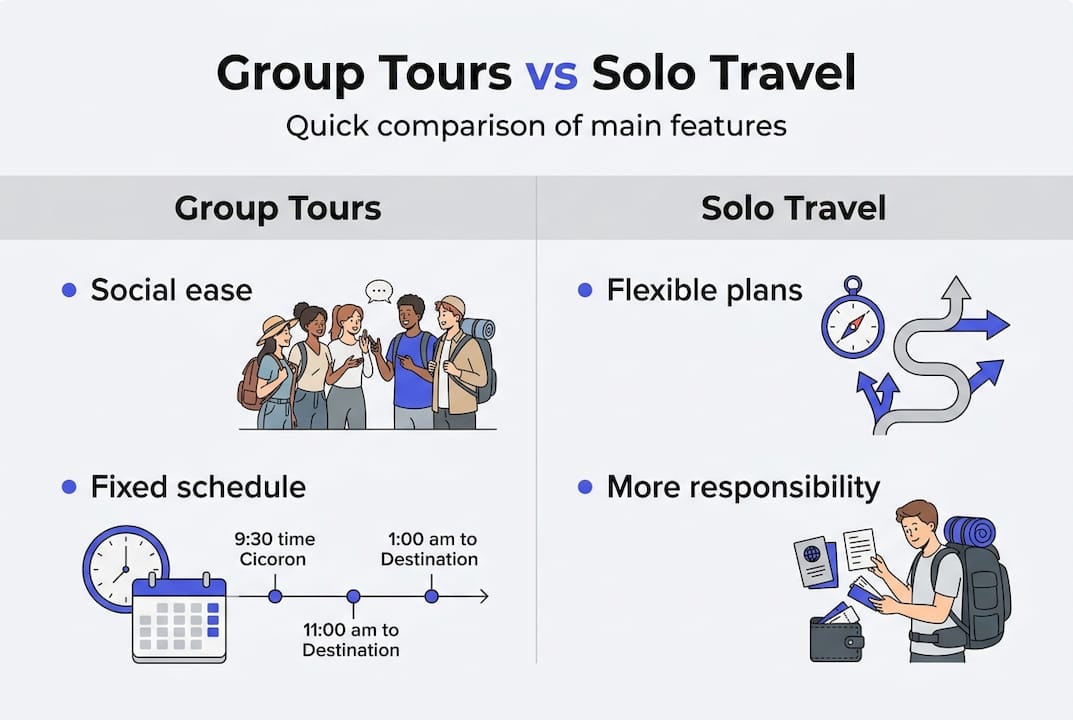
| Factor | Group Tours | Solo Travel |
|---|---|---|
| Planning time | Minimal, handled by operators | Extensive research required |
| Daily flexibility | Low, fixed schedule | High, change plans anytime |
| Social opportunities | Guaranteed group interaction | Variable, depends on effort |
| Cost predictability | All-inclusive pricing | Variable, requires budgeting |
| Cultural depth | Guided insights, surface level | Potential for deeper immersion |
| Comfort level | Structured support system | Self-reliance required |
| Spontaneity | Limited to free time slots | Unlimited, plan as you go |
To decide which option suits you best, work through this assessment:
-
Evaluate your social needs honestly. Do you energize through group interaction or prefer solitude for reflection? Group tours guarantee companionship, while solo travel offers selective socializing.
-
Consider your planning tolerance. Are you excited by researching every detail or overwhelmed by too many choices? Your answer reveals whether you'll thrive with solo travel's demands or prefer delegating logistics.
-
Assess your budget flexibility. Can you absorb higher per-person costs for independence, or do shared expenses make travel more accessible? Group discounts often offset the premium for organized tours.
-
Examine your destination familiarity. First-time visitors to complex regions benefit from guided expertise, while experienced travelers may find groups restrictive in familiar territories.
-
Identify your primary travel goal. Seeking adventure and personal challenge? Solo travel delivers. Wanting stress-free relaxation with built-in friends? Group tours excel.
-
Gauge your comfort with uncertainty. Solo travel requires adapting to unexpected situations independently, while group tours provide immediate support when plans change.
Your responses create a profile pointing toward the better fit. Many travelers discover they prefer different approaches for different trips. A solo adventure through well-traveled Europe might appeal to the same person who chooses a group tour for a challenging trek in remote mountains. The decision isn't permanent or defining, it's simply matching the right tool to your current needs and destination.
Some travelers blend both approaches by booking hostatourist alternatives that offer flexible group experiences or joining day tours while traveling solo. This hybrid model provides structure when desired while preserving overall independence.
Making the most of your travel choice: tips for group tours and solo travel
Maximizing your chosen travel style requires intentional preparation and the right mindset. Whether you select group tours or solo adventures, these strategies enhance safety, enjoyment, and cultural connection.
For successful group tours, arrive with realistic expectations about pace and group dynamics. Introduce yourself to fellow travelers early, building rapport that enriches shared experiences. Respect the schedule while advocating for your needs when appropriate. Pack light since group tours often involve frequent moves between locations. Bring a positive attitude toward compromise, recognizing that diverse preferences within the group require flexibility from everyone.
For rewarding solo travel, invest time in thorough destination research before departure. Learn about local customs, appropriate dress codes, and cultural sensitivities that help you blend in respectfully. Establish a communication routine with loved ones back home, checking in regularly without becoming tethered to your phone. Stay in accommodations with strong reviews from solo travelers, indicating a welcoming environment. Trust your instincts about situations and people, leaving any scenario that feels uncomfortable.
Pro Tip: Carry both digital and physical copies of essential documents including your passport, travel insurance, emergency contacts, and accommodation confirmations. Store digital versions in secure cloud storage accessible offline, and keep physical copies separate from originals.
Both travel styles benefit from cultural sensitivity and openness. Engage respectfully with locals, asking permission before photographing people or sacred sites. Support local businesses rather than international chains when possible, contributing directly to community economies. Community tourism guide principles emphasize meaningful interaction that benefits both travelers and host communities.
"Authentic travel experiences emerge when we approach destinations with curiosity and respect, recognizing that we are guests in someone else's home. Whether traveling solo or in groups, our responsibility remains the same: to leave places better than we found them while growing through genuine cultural exchange."
Maintain flexibility even within structured group tours by researching optional activities during free time. Solo travelers should balance planning with spontaneity, leaving room for unexpected opportunities. Pack versatile clothing suitable for multiple contexts, reducing luggage while expanding options. Prioritize experiences over possessions, investing in memories rather than souvenirs.
Safety protocols apply universally. Avoid displaying expensive jewelry or electronics conspicuously. Keep valuables secured in hotel safes when possible. Research common scams in your destination and remain alert without becoming paranoid. Register with your embassy when traveling to regions with political instability. Purchase comprehensive travel insurance covering medical emergencies and evacuation if needed.
Stay hydrated and well-rested, recognizing that travel fatigue impairs judgment. Learn basic first aid and carry a small medical kit with essentials like pain relievers, bandages, and any prescription medications. Respect your physical limits, declining activities that exceed your fitness level regardless of group pressure or personal ambition.
Explore your perfect trip with I'm @t
Whether you lean toward group camaraderie or solo freedom, finding the right travel experience matters. I'm @t connects you with diverse options matching your preferences and comfort level. Our platform features everything from tailor-made 4x4 tours perfect for small groups seeking adventure to Victoria Falls private guided tours ideal for solo travelers wanting expert guidance without large crowds.
Explore curated experiences designed for various travel styles, from cultural immersion to outdoor adventures. Our booking platform simplifies comparing options, reading authentic reviews, and securing activities that align with your vision. Solo travelers appreciate the flexibility to book individual spots on group activities, while groups benefit from customizable private tours. Visit I'm @t to discover your next adventure and transform travel planning from overwhelming to exciting.
FAQ
Is solo travel safer than group tours?
Safety depends more on destination choice, personal preparedness, and situational awareness than travel style alone. Group tours provide safety through numbers and professional guides familiar with local conditions, reducing risks for inexperienced travelers. Solo travelers maintain safety by researching thoroughly, avoiding high-risk areas, staying alert, and trusting instincts when situations feel wrong. Both approaches can be equally safe with appropriate precautions.
How do costs compare between group tours and solo travel?
Group tours typically reduce per-person costs through shared transportation, accommodation, and bulk booking discounts negotiated by operators. Solo travel often costs more per day since you absorb full prices for rooms and private transfers without splitting expenses. However, solo travelers control their budget completely, choosing economical hostels or splurging on luxury when desired. Total trip cost depends heavily on destination, travel style, and personal spending habits rather than group versus solo format alone.
Can solo travelers join group tours midway?
Some tour operators allow midway joining if space exists and logistics permit, but policies vary significantly by company and tour type. Multi-day tours with pre-booked accommodations and transportation rarely accept midway participants due to coordination complexity. Day tours or flexible itineraries more commonly accommodate last-minute joiners. Contact operators directly well in advance to discuss options, understanding that seamless integration requires advance planning rather than spontaneous arrival.
What are the best destinations for group tours and solo travel?
Group tours excel in destinations with rich cultural programming, challenging terrain, or complex logistics like safaris, historical circuits, or mountain treks where expert guidance adds significant value. Solo travel suits places with excellent public transportation, widespread English proficiency, and established tourist infrastructure like much of Europe, Southeast Asia, or New Zealand. Your comfort level with independence and destination-specific safety conditions matter more than blanket recommendations. Research current conditions and match destinations to your experience level regardless of travel style chosen.