
TL;DR:
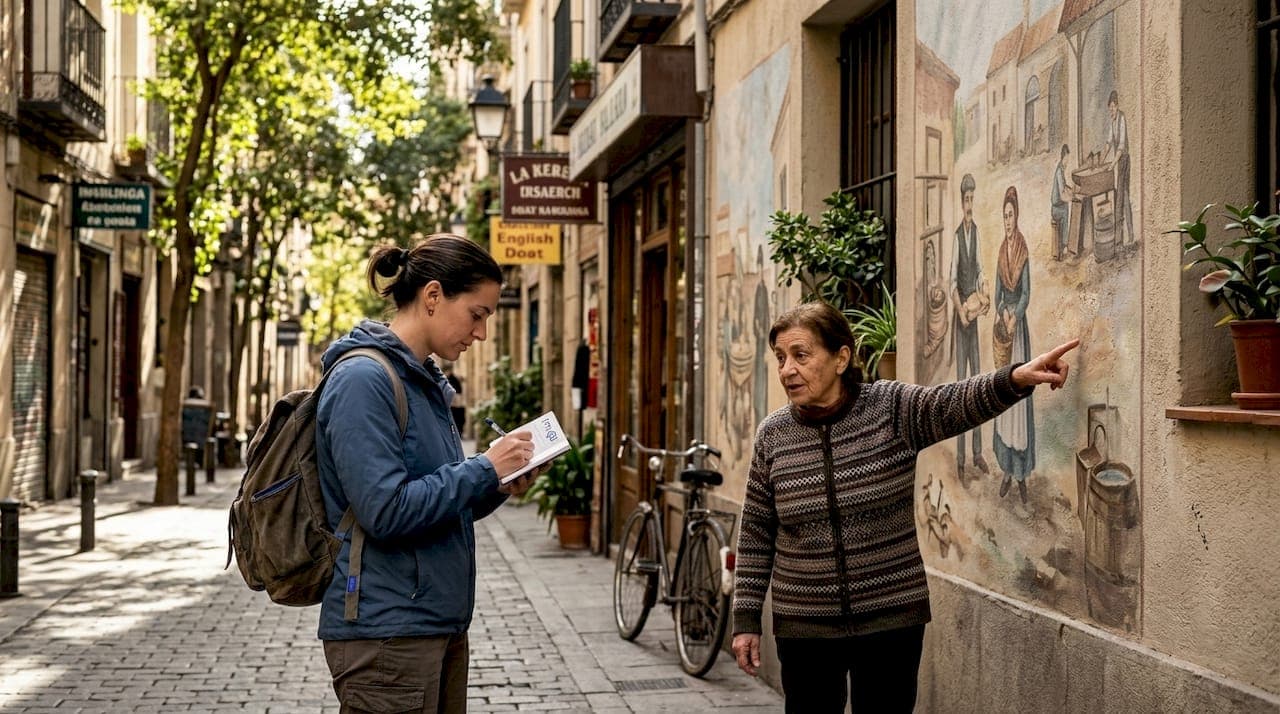
- Authentic local excursions are led by community members, focusing on genuine traditions and interactions.
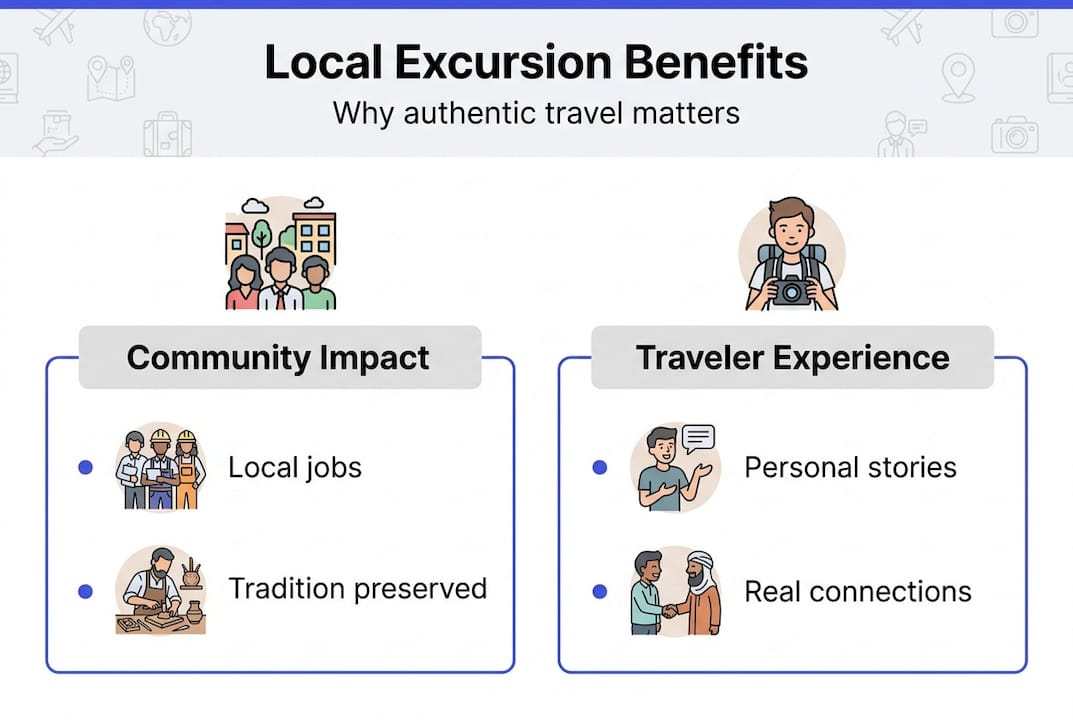
- Choosing community-led tours benefits local economies and provides deeper cultural connections.
- Travelers should verify local partnerships, guide backgrounds, and community impact before booking.
A striking 83% of travelers now prioritize local cultural experiences when choosing a destination. Yet most people still confuse a genuine local excursion with a standard tourist bus tour that stops at the same three landmarks every day. These are not the same thing. Real local excursions connect you with communities, traditions, and stories that no guidebook captures. This guide breaks down what truly defines a local excursion, why they deliver outsized value for both you and the places you visit, and how to pick one that actually delivers on its promise.
Table of Contents
- What defines a local excursion?
- Top benefits of offering local excursions
- Potential challenges and how to navigate them
- How to find and choose truly meaningful local excursions
- Why most travelers mistake 'local' for 'authentic' and what actually works
- Ready to experience the best local excursions?
- Frequently asked questions
Key Takeaways
| Point | Details |
|---|---|
| Authenticity over branding | True local excursions are community-developed and provide lasting benefits beyond labels. |
| Value justifies investment | Travelers are willing to pay more for ethical, unique, and memorable experiences. |
| Choose carefully | Look for genuine partnerships, local leadership, and community impact to avoid inauthentic offerings. |
| Navigate challenges smartly | Understand pricing, seasonality, and logistics to get the most from your local experiences. |
What defines a local excursion?
With rising interest in immersive travel, it's crucial to understand what actually makes an excursion "local." The word gets thrown around constantly in travel marketing, but it means something specific when applied honestly.
A local excursion is a structured activity or guided experience that is rooted in the culture, environment, and community of a specific place. The guide is typically from that community. The route, the stories, and the stops reflect how people actually live there, not what a corporate tour operator decided looks good on a brochure. Small group sizes are common, and the experience often includes direct interaction with residents, artisans, or natural environments that mass-market tours skip entirely.
Here's what separates a genuine local excursion from a tourist product wearing local clothing:
- Guide origin: The guide lives in and belongs to the community, not a regional tour company headquartered elsewhere
- Group size: Smaller groups (usually under 15 people) allow for real conversation and flexibility
- Economic flow: Money spent goes directly to local families, cooperatives, or small businesses
- Itinerary design: Routes reflect authentic daily life, seasonal rhythms, and community priorities
- Cultural depth: Activities involve participation, not just observation
The pitfalls are real. Generic "local" branding is everywhere. A tour can claim to be authentic while following the exact same script as 40 other operators in the same city. Copying itineraries leads to overtourism, while innovative, community-led designs ensure long-term viability for both the destination and the traveler experience.
Authentic partnerships also matter more than most travelers realize. When a tour operator builds genuine relationships with local families, artisans, or conservation groups, the experience changes completely. You're not watching a performance. You're participating in something real. That distinction creates richer travel experiences that stay with you long after you've unpacked your bags.
If you want to understand the full range of what's possible, exploring the types of local activities available across different destinations gives you a useful starting framework before you book anything.
Top benefits of offering local excursions
Now that you know what makes an excursion truly local, let's explore why choosing them matters for both travelers and the places they visit.
The emotional payoff is immediate. You leave a local excursion with stories, not just photos. You remember the name of the woman who taught you to cook a traditional dish. You understand why a particular festival matters to a community. These are the moments that make travel feel worth the effort and the cost.

| Benefit | Local excursion | Mass-market tour |
|---|---|---|
| Cultural connection | Deep, participatory | Surface-level |
| Economic impact | Stays in community | Leaves with operator |
| Group experience | Intimate, flexible | Large, scripted |
| Visitor satisfaction | Consistently higher | Variable |
| Environmental footprint | Lower, managed | Often unmanaged |
Community-based models show superior income retention (30 to 50% higher) and visitor satisfaction compared to mass tourism. That's a significant gap, and it reflects a simple truth: when locals design and lead experiences, they care about the outcome in a way that outside operators simply don't.
The economic benefit compounds over time. When your money stays in the community, it funds schools, supports artisans, and preserves traditions that might otherwise disappear. You're not just a tourist. You're a participant in something that matters.
"The best travel experiences aren't consumed. They're shared. Local excursions are built on that principle."
Signs of a genuinely community-driven excursion include:
- Guides who introduce themselves by neighborhood or village, not just job title
- Stops at family-run businesses rather than gift shops with commission arrangements
- Activities that change with the season or local calendar
- Transparent pricing that explains where your money goes
Pro Tip: Ask the operator directly: "What percentage of this tour's revenue stays in the local community?" A confident, specific answer is a green flag. Vague deflection is not.
For a deeper look at why this matters personally, the case for authentic travel rewards goes well beyond satisfaction scores. And if you want to understand the broader framework, a solid community tourism guide can help you think through your choices before you arrive.
Potential challenges and how to navigate them
Of course, even the best ideas have challenges. Here's how to navigate the real world of local excursions.
Price is the first friction point. Local-led tours often cost more than mass-market alternatives, and that gap can feel hard to justify when you're comparing numbers on a booking page. But higher costs for local-led tours are often accepted when travelers perceive real value, and careful marketing is needed to avoid perceptions of unjustified pricing. The key word is perceived. If you understand what you're paying for, the price makes sense.
| Factor | Local excursion | Mass-market tour |
|---|---|---|
| Price point | Medium to high | Low to medium |
| Quality consistency | High when vetted | Inconsistent |
| Community impact | Strong | Minimal |
| Flexibility | High | Low |
| Availability | Seasonal in some areas | Year-round |
Logistical challenges are real too. Some risks include higher daily spend reducing recommendations if experiences lack uniqueness, and potential for seasonality or infrastructure limits in remote areas. A local fishing village tour might only run during certain months. A community cooking class might need advance booking weeks out. These aren't flaws. They're features of something real. But they require planning.
Here's how to navigate these challenges effectively:
- Research the operator's community ties before booking. Look for named local partners, not just vague "community-based" language
- Read recent reviews with a critical eye. Look for mentions of the guide's personal knowledge and local connections
- Book directly when possible. Cutting out middlemen often means more money reaches the community and better communication for you
- Ask about seasonality upfront. The best local experiences often have a natural rhythm. Work with it, not against it
- Set realistic expectations. Authentic doesn't always mean polished. A slightly rough edge can be a sign you're somewhere real
Pro Tip: Always check the excursion's community partnership level. Look for named organizations, cooperatives, or families the operator works with. A list of actual partners signals genuine investment, not just marketing language.
For help choosing unique experiences that hold up to scrutiny, and to understand the role of tour guides in making or breaking an excursion, both are worth reading before your next trip.
How to find and choose truly meaningful local excursions
After discussing what to look out for, here's how to make the most of local excursions in your next adventure.
Start where most travelers don't. Community boards, local Facebook groups, and hotel concierge recommendations from smaller boutique properties often surface experiences that never appear on major booking platforms. The best excursions are sometimes the hardest to find through a standard Google search.
Success hinges on genuine local partnerships rather than superficial "authentic" branding. That principle should guide every search you do.
Here's a practical process for finding and booking the right experience:
- Start with destination-specific forums. Travelers who've been there recently often share names of local guides and operators that don't advertise widely
- Evaluate the operator's language. Authentic operators describe what you'll do and who you'll meet, not just what you'll see
- Ask three key questions before booking: Who leads this tour? Where does the revenue go? What makes this different from other tours in the area?
- Check for third-party validation. Look for mentions in local press, NGO partnerships, or awards from responsible tourism organizations
- Prioritize direct booking or platforms that vet their operators. This protects both you and the community
Pro Tip: If a tour operator can't tell you the guide's name and background before you book, that's a red flag. Great local experiences are built around specific people, not anonymous staff.
For structured help with planning cultural experiences and understanding how locals shape travel in ways that matter, both resources offer practical frameworks you can apply immediately.
Why most travelers mistake 'local' for 'authentic' and what actually works
Here's the uncomfortable truth: slapping the word "local" on a tour doesn't make it authentic. It makes it a marketing claim. And the travel industry has become very good at manufacturing the feeling of authenticity without delivering the substance.
We've seen this pattern repeatedly. A tour visits a "traditional" village that exists primarily for tourists. A cooking class uses ingredients sourced from a supermarket, not a local market. A cultural performance is staged three times a day for rotating groups. None of this is dishonest in a legal sense. But it's hollow.
What seasoned travelers actually look for is harder to fake: a guide who gets emotional talking about their neighborhood, a meal that's slightly different from last week because the harvest changed, a conversation that goes off-script because something interesting happened that morning. These are the signals of authentic, meaningful travel that no branding budget can replicate.
The practical takeaway: trust the specifics, not the labels. Ask for names, ask for stories, ask where the money goes. The answers will tell you everything.
Ready to experience the best local excursions?
You now have the framework to find, evaluate, and book local excursions that genuinely deliver. The next step is putting it into practice.
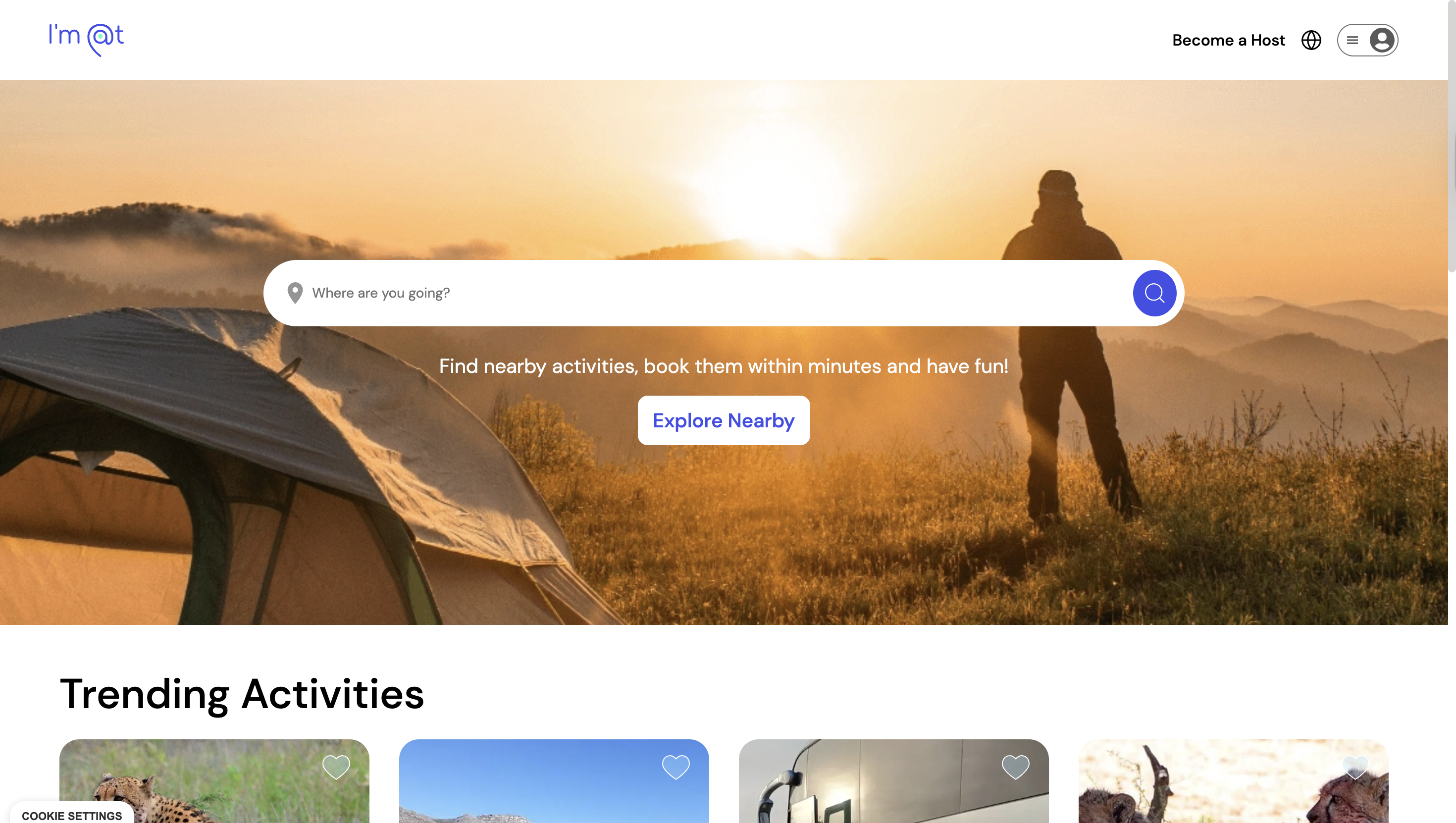
At Im-at, we curate high-impact, community-first experiences that connect you with the real heart of every destination. Whether you're exploring the Cape Winelands on a Cape Town 3-day excursion, stepping into South African heritage on a Lesedi Cultural Village tour, or searching for something entirely new, our platform makes it easy to find unique local experiences that are vetted, meaningful, and bookable in minutes. Your next real adventure is closer than you think.
Frequently asked questions
What makes a local excursion truly authentic?
A truly authentic local excursion is designed and led by community members, focusing on real traditions and everyday life rather than a scripted tourist performance. Genuine local partnerships are the foundation, not surface-level branding.
Are local excursions always more expensive?
Local-led tours can cost more due to fair wages and genuinely unique experiences, but travelers consistently accept the price for the ethical and memorable benefits they receive. Higher costs are justified when the value is clearly communicated.
How do I know if a local excursion benefits the community?
Check whether proceeds stay local, guides are actual community members, and activities support local businesses and traditions. Community-based models retain 30 to 50% more income locally compared to mass tourism operations.
Can mass-market tours be considered 'local' if they feature community stops?
Most mass tours lack genuine community involvement even when they include local stops. True local excursions are led by community members and reinvest in the area. Copying itineraries leads to overtourism, while community-led designs create lasting value.