

TL;DR:
- Proper planning and ethical choices enhance genuine cultural connection during travel.
- Small group experiences led by locals foster authentic cultural immersion and community support.
- Slowing down and actively participating lead to deeper, more meaningful travel experiences.
Many travelers return home realizing they spent more time photographing landmarks than actually connecting with the people, food, and traditions that make a destination unique. That disconnect is more common than you think, and it's almost always a planning problem, not a destination problem. With the right preparation, you can turn any trip into something genuinely memorable. This guide walks you through every stage, from clarifying your interests and choosing ethical operators to verifying authenticity on the ground and adapting when plans shift. The result is a trip that feels lived rather than consumed.
Table of Contents
- Assess your interests and research local culture
- Select ethical, sustainable, and community-led options
- Plan active participation and meaningful engagement
- Verify authenticity and adapt throughout your trip
- Why slow travel and mindful choices deliver lasting enrichment
- Next steps to plan unforgettable cultural journeys
- Frequently asked questions
Key Takeaways
| Point | Details |
|---|---|
| Clarify your interests | Start planning by identifying which aspects of local culture intrigue you most, like art, food, history, or festivals. |
| Choose ethical options | Select experiences that protect authenticity, respect local communities, and avoid exploitation. |
| Participate actively | Make your trip richer by engaging in hands-on workshops, community festivals, and locally-led activities. |
| Verify and adapt | Stay alert for signs of staging or exploitation and adjust your plans to support authentic, community-driven activities. |
| Embrace slow travel | Give yourself time for deep reflection and meaningful connections, rather than just checking off sights. |
Assess your interests and research local culture
The most impactful cultural trips start long before you board a plane. They start with a simple question: what actually moves you? Understanding what kind of cultural experiences resonate with you personally is the foundation of everything else.
Some travelers light up at a local food market. Others want to stand inside a 500-year-old temple and hear its history from someone whose family has worshipped there for generations. Others want to dance at a regional festival or learn a craft from an artisan. None of these is more valid than another, but knowing your preference shapes every decision you make afterward.
Here's a quick comparison of cultural focus areas to help you identify where to direct your energy:
| Focus area | Example activities | Best for |
|---|---|---|
| Food and drink | Cooking classes, market tours, farm visits | Sensory learners, food lovers |
| History and heritage | Guided site tours, museum visits, oral history walks | Detail-oriented travelers |
| Arts and crafts | Pottery workshops, textile weaving, live performances | Creative, hands-on travelers |
| Festivals and rituals | Seasonal celebrations, religious ceremonies, parades | Social, immersive travelers |
Once you know your focus, research becomes much more targeted. Here are quick ways to uncover what's genuinely local before you arrive:
- Browse local tourism board websites and community event calendars
- Follow regional Instagram accounts and travel hashtags in the destination's language
- Listen to travel podcasts hosted by locals or long-term residents
- Read blogs written by people who live in the destination, not just visit it
- Ask in travel forums for recommendations from recent visitors
When you're ready to go deeper, explore local activity options that go beyond the typical tourist trail. And if you want a broader framework, purposeful travel methods can help you structure your approach before you even pick a destination.
One research finding worth keeping in mind: cultural immersion thrives with small groups and local expert guides. That means the best research outcome isn't a packed list of attractions. It's finding one or two well-guided, small-group experiences that give you real context.
Select ethical, sustainable, and community-led options
With your interests and relevant traditions in mind, it's crucial to select options that genuinely support local communities and safeguard cultural authenticity. Not every tour that markets itself as "authentic" actually is. Some experiences commodify sacred traditions or funnel money away from local families entirely.
Here's a breakdown of ethical experience types and their real-world impact:
| Experience type | What it looks like | Community impact |
|---|---|---|
| Community-led tours | Guides are local residents or indigenous leaders | Income stays in the community |
| Fair trade craft workshops | Artisans set prices and own their work | Supports economic independence |
| Animal-friendly activities | No riding, no captivity, sanctuary-based only | Protects animal welfare |
| Homestay programs | Staying with local families, not resort hotels | Direct cultural exchange |
To evaluate whether a tour or experience is genuinely ethical, follow these steps:
- Check who owns and operates the business. Is it locally owned or a foreign-run company?
- Ask directly whether local guides are employed full-time and paid fairly.
- Look for third-party certifications or endorsements from recognized sustainability organizations.
- Read recent reviews specifically mentioning community involvement and guide quality.
- Ask if any portion of the fee goes back to local schools, conservation projects, or artisan cooperatives.
Pro Tip: Always ask if the provider employs local guides, supports artisans, and follows animal welfare protocols before booking. A reputable operator will answer these questions confidently and with specifics.
It's equally important to know what to avoid. Sustainable operators support local businesses, artisans, animal welfare, and cultural respect. Operators that don't meet these standards often run experiences that look immersive on the surface but exploit the very communities they claim to celebrate.
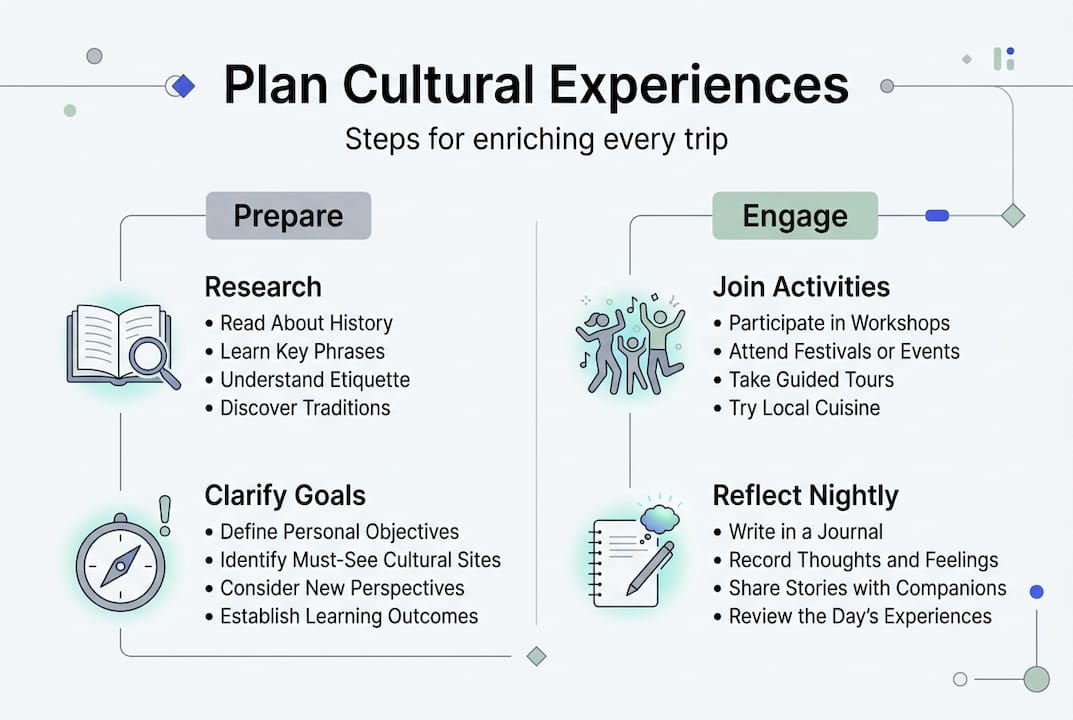
Edge cases matter too. Avoid exploitative volunteering or commodified sacred traditions, and in sensitive indigenous areas, prioritize community-led tours and permission-based photography. You can explore strong cultural tour examples and learn more about mastering immersive travel to sharpen your selection criteria.
Plan active participation and meaningful engagement
Once ethical and authentic experiences are prioritized, thoughtful planning for hands-on participation ensures deeper enrichment. There's a meaningful difference between watching a traditional dance performance and learning the footwork yourself. Passive sightseeing gives you images. Active participation gives you understanding.
Here are proven ways to build active engagement into your itinerary:
- Join a local cooking class that sources ingredients from a neighborhood market
- Attend a community festival rather than a tourist-facing recreation of one
- Volunteer with a vetted local organization for a half-day, not a week-long program
- Take a craft workshop taught by a practicing artisan, not a hotel activity coordinator
- Walk a neighborhood with a resident guide who knows its social history, not just its architecture
The numbers back this up. 73% of travelers seek authentic experiences over passive observation, and small-group formats with local expert guides consistently produce the deepest cultural learning. That's not a coincidence. When you're in a group of six instead of sixty, guides can answer real questions, take detours, and respond to what the group actually finds interesting.
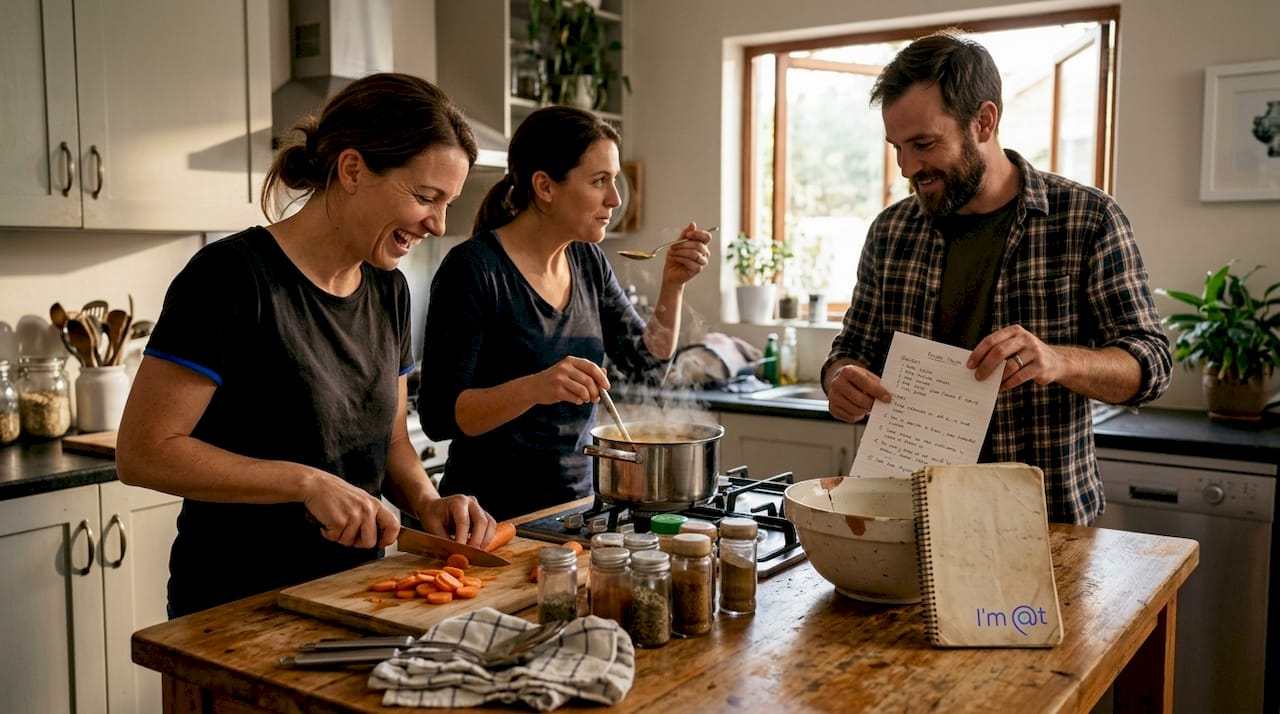
Understanding the benefits of cultural immersion can also help you make the case to travel companions who might default to a more conventional itinerary. And for specific activity ideas, a look at travel activity ideas can spark options you haven't considered.
Pro Tip: Block 30 minutes each evening during your trip to write down one thing that surprised you and one thing you want to learn more about. That small habit turns scattered moments into a coherent story you'll actually remember.
Slow travel reinforces all of this. Spending three days in one neighborhood beats rushing through five cities in a week. Depth always wins over breadth when cultural enrichment is the goal.
Verify authenticity and adapt throughout your trip
Planning is only part of the journey. Verifying authenticity and staying adaptable during your trip is how you ensure real value. Even the most carefully researched itinerary can lead you to an experience that feels staged once you're actually there.
Here's how to evaluate authenticity while you're on the ground:
- Observe who else is there. Are you surrounded entirely by tourists, or are locals also participating? Local presence is a strong signal of genuine cultural value.
- Ask your guide direct questions. How long have they lived here? What does this tradition mean to their family? Authentic guides answer from personal experience, not a script.
- Check for community involvement. Is the site or event organized by local residents, or does it feel managed by an outside company for profit?
- Trust your instincts. If something feels performative or uncomfortable, it probably is. You're allowed to leave.
- Adapt your plans. If a local recommends something off your itinerary, take the detour. The best cultural moments are rarely scheduled.
"Balance authenticity with ethics. Avoid exploitative volunteering or commodified sacred traditions. In sensitive indigenous areas, prioritize community-led tours and permission-based photography."
Photography deserves special attention. In many indigenous and sacred settings, taking photos without explicit permission is not just rude. It can be genuinely harmful, reinforcing extractive dynamics between visitors and communities. Always ask first, and accept a no gracefully.
The role of local guides in helping you navigate these moments is hard to overstate. A good guide doesn't just explain history. They help you read the room, understand what's appropriate, and connect with people in ways that would otherwise take weeks to develop. Discovering authentic travel rewards often comes down to trusting those guides and staying open to what the day actually offers.
Why slow travel and mindful choices deliver lasting enrichment
Here's something most travel content won't tell you: more experiences do not equal better enrichment. In fact, the opposite is often true. Travelers who pack their itineraries with ten cultural stops in five days frequently return feeling overstimulated and emotionally disconnected from everything they saw.
The travelers who describe their trips as life-changing almost always share one trait. They slowed down. They spent a full morning in one market instead of visiting four. They had a two-hour conversation with a ceramics maker instead of photographing a dozen workshops.
Mindful choices compound over time. Choosing one deeply ethical, community-led experience over three superficial ones doesn't just benefit the community. It benefits you. You leave with a story, a relationship, and a perspective shift rather than a camera roll.
Reflection matters just as much as participation. Before a trip, clarify your intentions. During it, notice what surprises you. After it, write or talk about what changed. That cycle is what turns a vacation into genuine growth. The demand for authentic experiences is growing precisely because people are recognizing that checklists don't deliver what they're looking for. Depth does.
Next steps to plan unforgettable cultural journeys
Ready to put these strategies into practice and elevate your next adventure? Here's how to take the next step.
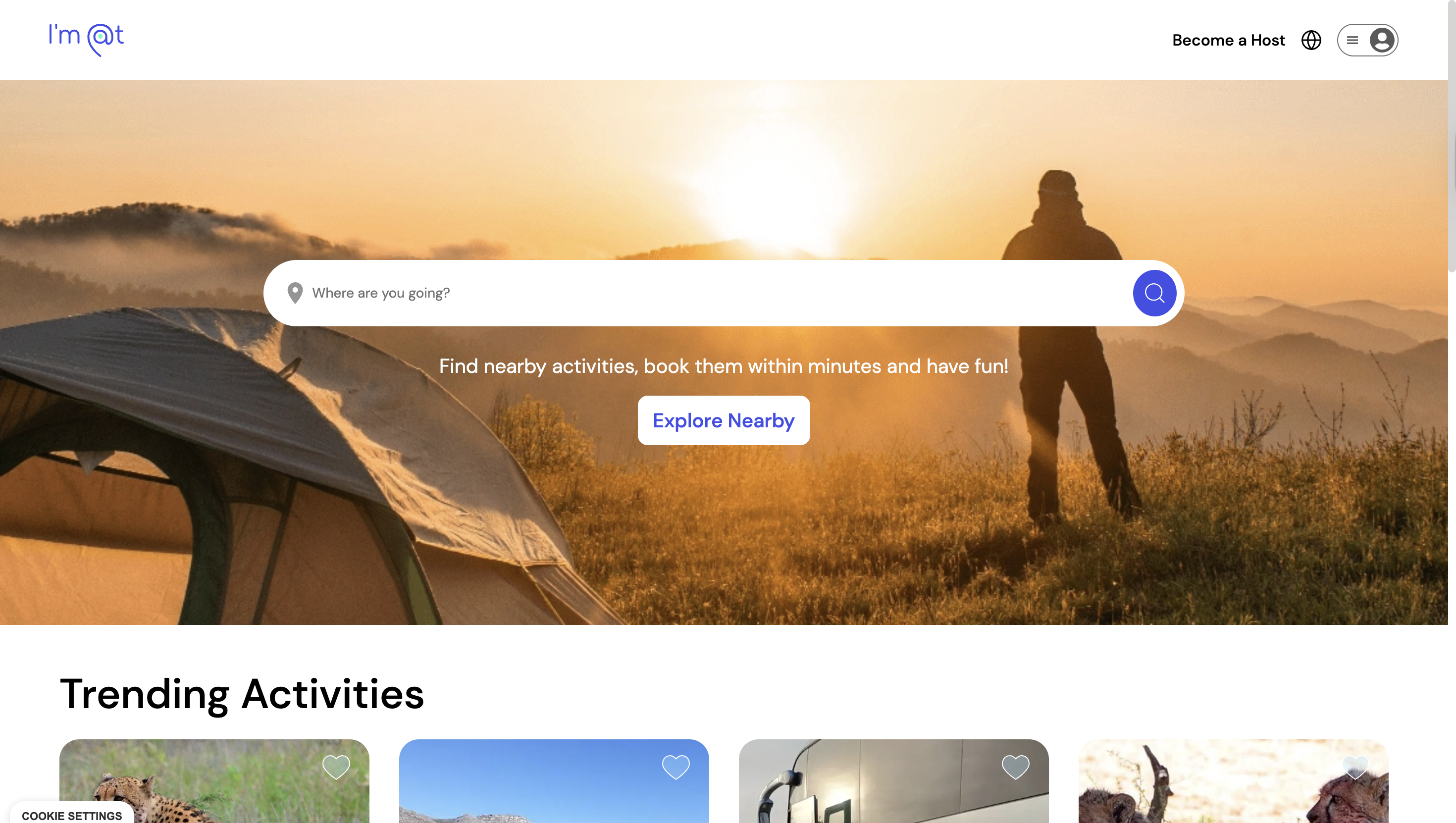
Im-at is built for exactly this kind of travel planning. Whether you're searching for a community-led cooking class in Southeast Asia, a heritage walking tour in West Africa, or a small-group craft workshop in South America, the platform connects you with vetted, local-led experiences in minutes. You can filter by activity type, location, and group size so you find options that match your values and your schedule. Explore cultural travel planning tools and start building a trip that goes beyond sightseeing and into something genuinely meaningful.
Frequently asked questions
What makes a cultural experience authentic?
Authentic cultural experiences involve community-led activities, local expert guidance, and meaningful participation. Small groups with local guides consistently produce the deepest sense of genuine immersion.
How can I ensure my travel is sustainable and ethical?
Prioritize operators that support local businesses, artisans, and animal welfare. Sustainable travel choices also mean avoiding experiences that commodify sacred traditions or exploit local communities for profit.
Is it better to travel slowly or plan a packed itinerary for cultural immersion?
Slow travel consistently delivers richer cultural understanding. Slow travel over checklists allows for deeper engagement, spontaneous connections, and more meaningful memories than rushing through multiple destinations.
What should I look for to avoid exploitative or staged experiences?
Check for genuine community involvement, ethical business practices, and respect for sacred traditions. Permission-based photography and transparent guide employment are reliable indicators of a trustworthy operator.
How do I find community-led tours or experiences?
Research local tourism boards, read blogs written by residents, and ask in travel forums for providers run by local or indigenous leaders. Community-led tours in indigenous areas are especially important to seek out through trusted, community-endorsed channels.