
TL;DR:
- Urban exploration involves discovering and documenting abandoned or hidden city spaces that are off-limits or difficult to access. It emphasizes preservation, responsible photography, and ethical practices to capture urban history and memory while navigating physical and legal risks. The community values responsible exploration as a grassroots form of urban heritage preservation beyond mere thrill-seeking.
Cities seem like open books. Streets are mapped, neighborhoods are photographed, and every major landmark is tagged on social media before you even arrive. But walk past a sealed factory gate, a locked rooftop stairwell, or a tunnel grate beneath a busy avenue and you'll realize that most cities are hiding entire chapters. Urban exploration is the practice of seeking out exactly those chapters, and once you understand what it is and how it works, the way you see every city will change permanently.
Table of Contents
- What is urban exploration?
- Core motivations and ethics of urbex
- Risks, legality, and the boundaries of exploration
- Urban exploration in practice: Experiences, communities, and tips
- Why urban exploration is more than trespassing: The overlooked value
- Explore urban adventures with us
- Frequently asked questions
Key Takeaways
| Point | Details |
|---|---|
| Discover hidden urban spaces | Urban exploration reveals city areas that are often unseen or inaccessible to the public. |
| Ethics matter | Responsible urbex follows a 'leave no trace' ethic to preserve locations for all. |
| Legal risks exist | Urban exploring can carry legal consequences based on trespassing and local laws. |
| Community and documentation | Urbex thrives on sharing experiences and documenting urban history through photography. |
| Start safe and informed | Begin with research, connect with experienced explorers, and prioritize safety in every expedition. |
What is urban exploration?
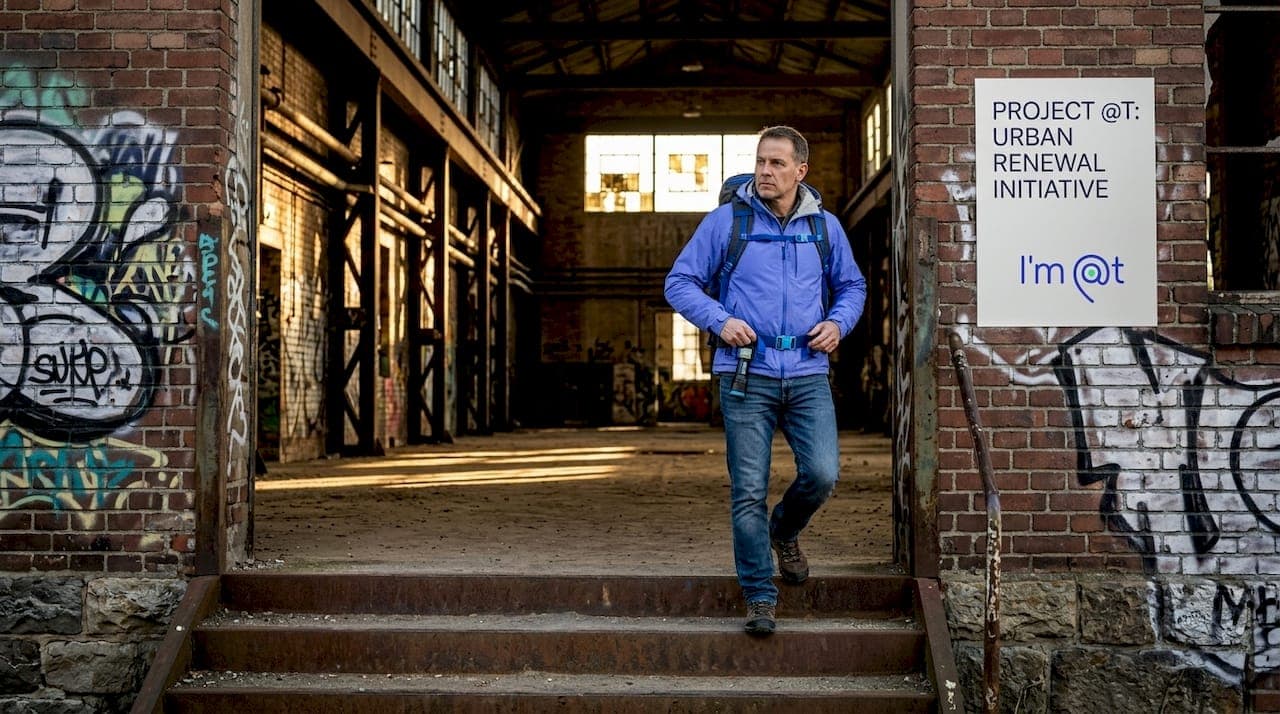
Urban exploration, commonly shortened to "urbex," is exactly what it sounds like and also nothing like what most people picture. Urban exploration is defined as the activity of spending time in towns and cities by going into buildings and other places that are hidden or no longer used, and that may not be open to the public. That definition captures the basics, but the actual practice runs much deeper than just wandering into empty buildings.
Urbex involves exploration of man-made structures that are abandoned, derelict, or hard to access, often including industrial sites and underground or rooftop environments, with documentation through photography as a key element of the practice. That documentation angle is critical because it separates urban exploration from simple trespassing in the eyes of many practitioners. The goal isn't vandalism or theft. It's witnessing and recording spaces that history has left behind.
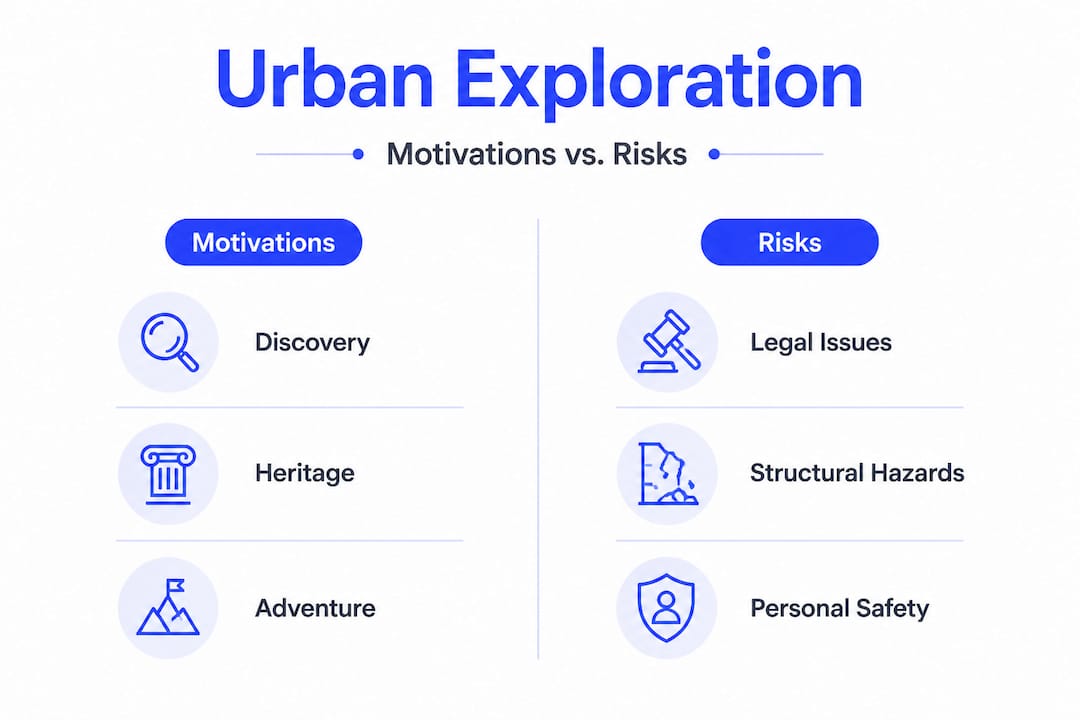
The types of locations urbex enthusiasts target span a surprisingly wide range:
| Location type | Examples | Typical access challenge |
|---|---|---|
| Abandoned buildings | Factories, hospitals, schools | Locked gates, structural decay |
| Underground spaces | Tunnels, sewers, utility corridors | Hidden entrances, permits needed |
| Rooftops | Skyscrapers, bridges, water towers | Security systems, physical barriers |
| Brownfields | Derelict industrial zones | Contamination risks, fencing |
| Decommissioned infrastructure | Power plants, rail yards, bunkers | Government ownership, legal exposure |
Key vocabulary matters in this space. A "brownfield" is land previously used for industrial purposes that may be contaminated but has been abandoned. "Derelict" refers to structures that have been left in a state of disrepair through neglect. Knowing these terms helps you communicate clearly in the urbex community and identify the right types of sites for your skill level.
"Urban exploration is not about destruction. It's about witnessing. The camera is our only tool, and the image is our only souvenir." — common sentiment in urban explorer communities
For anyone serious about getting more from city visits, checking out essential exploration tips before you plan a trip will give you a real advantage. Pairing that research with smart city excursion tips creates a solid foundation for any adventure, urban or otherwise.
Core motivations and ethics of urbex
With a clear definition in mind, it's natural to ask what drives urban explorers and what ethical lines they set for themselves.
People come to urbex from wildly different directions. Some are photographers chasing the visual drama of decay. Others are historians tracking down physical evidence of lost industries. Architecture students study buildings that would otherwise be demolished without documentation. Then there are the pure thrill seekers who simply want access to places most people will never see. All of these motivations can coexist within a single community, and often do.
The motivations behind urbex break down into a few clear categories:
- Adventure and physical challenge. Navigating unstable floors, climbing structures, and finding hidden access points provides a genuine adrenaline experience.
- Historical discovery. Many abandoned sites contain intact artifacts, machinery, and records that give direct insight into the past.
- Artistic expression. The textures, light, and atmosphere of decaying spaces attract photographers and visual artists looking for something that can't be staged.
- Architectural study. Buildings reveal their construction and design most clearly when stripped of furniture, people, and renovation.
- Community and identity. Urban explorer groups form tight bonds built on shared respect for the spaces they visit and for each other.
What holds all of these motivations together is a strong ethical code. Urbex ethics are preservation-oriented: take only pictures, avoid taking or damaging items or structures, and leave no trace beyond footprints. That principle is sometimes called "leave only footprints" and it functions as the unofficial rule that every credible urbex practitioner holds themselves to.
"The spaces we explore are already dying. Our job is to witness them, not accelerate that process." — a widely shared sentiment in online urbex communities
Pro Tip: Before visiting any site, spend time researching its history. The more you know about a location before you enter, the more meaningful your documentation becomes and the more carefully you'll treat what you find there.
Scholars studying alternative tourism have connected urbex to broader heritage debates, framing it as a grassroots practice. Urbex relates to heritage as an alternative or grassroots heritage practice characterized by documentation and temporariness of exploration communities. That framing elevates the practice well beyond thrill-seeking. When official preservation efforts don't reach a forgotten factory or a sealed hospital, urbex documentation may be the only record that survives.
Risks, legality, and the boundaries of exploration
Strong ethics don't always protect against the real risks and legal line-walking of urbex, so it's essential to understand those boundaries and how to navigate them.
Urban exploration carries genuine physical and legal risk. Understanding both categories clearly is what separates smart explorers from the ones who end up injured or arrested. Academic and legal framing treats urbex as experiential exploration of abandoned or disused sites that can involve knowingly unlawful entry, with legal rights and obligations varying by jurisdiction.
Physical risks include:
- Structural instability. Floors, ceilings, and stairs in abandoned buildings can collapse without warning, especially after years of water damage.
- Toxic materials. Older buildings frequently contain asbestos insulation, lead paint, and in some cases chemical residue from industrial use.
- Restricted oxygen environments. Underground spaces and sealed rooms can have dangerously low oxygen levels.
- Sharp metal and broken glass. Common throughout abandoned industrial sites and often concealed under debris.
- Wildlife and infestations. Bats, rodents, and insects can carry disease and are common occupants of long-abandoned spaces.
Legal risks vary significantly by location. What's treated as a minor civil matter in one country may carry a criminal trespassing charge in another. Some jurisdictions distinguish between entering a property and entering with intent to commit a crime, which changes the legal exposure entirely. In urban areas with high-value real estate, property owners often pursue legal action aggressively to deter exploration.
| Risk type | Common examples | Mitigation strategy |
|---|---|---|
| Structural collapse | Rotted floors, unstable ceilings | Test surfaces before full weight |
| Toxic exposure | Asbestos, mold, chemicals | Wear respiratory protection |
| Trespassing charges | Criminal vs. civil liability | Research local laws first |
| Getting lost | Underground tunnels, large complexes | Bring navigation tools and backup lighting |
| Injury without help | Remote locations | Always go with at least one partner |
Pro Tip: Never explore alone. Bring a partner, share your planned location with someone not on the trip, and set a check-in time. If something goes wrong in a remote or sealed space, your life may depend on someone knowing where to look.
Not every urbex site is a crumbling warehouse. Some explorers push into semi-active locations, like buildings undergoing renovation or infrastructure still in partial use. These edge cases add complexity because the legal and physical risks are less predictable. If you want to experience the atmosphere of hidden and mysterious urban spaces through a guided format, something like urban legend experiences offers a taste of that world without the same exposure to risk.
Urban exploration in practice: Experiences, communities, and tips
Now that the risks and gray areas are clear, you can experience urbex safely and meaningfully with the right approach and connections.
Getting started in urbex isn't complicated, but doing it right requires preparation. The biggest mistake new explorers make is showing up to a site without doing homework first. Research is everything.
Urbex documentation of abandoned, derelict, or hard-to-access structures, including photography, is a defining feature of the practice. Starting with photography in mind gives you purpose inside a site and helps you stay focused rather than wandering without intention.
Gear basics for beginners:
- A sturdy pair of boots with ankle support and puncture-resistant soles
- A headlamp with fresh batteries plus a backup flashlight
- Dust mask or respirator rated for fine particles
- Gloves that protect against sharp edges
- A fully charged phone with offline maps downloaded
- Basic first aid kit including bandages and antiseptic
Connecting with the urbex community early accelerates your learning significantly. Online forums, social media groups, and regional meetups connect explorers who share site information, safety advice, and post-visit documentation. Experienced explorers often vet new members carefully before sharing sensitive site locations, which is a sign of a healthy community protecting the places it cares about.
Sites appropriate for beginners differ meaningfully from those suited to experienced explorers. Beginners do well starting with:
- Publicly accessible ruins. Some cities have officially sanctioned ruin tourism where you can experience abandoned architecture without legal risk.
- Open-air industrial heritage sites. Former rail yards or dockland areas sometimes become public parks while retaining industrial character.
- Guided ruin tours. Organized tours to historically significant abandoned sites exist in many cities and combine access with storytelling.
Experienced explorers eventually progress toward more challenging terrain: sealed underground networks, rooftop access in dense urban areas, or rural industrial complexes far from public footpaths.
Photography in urbex isn't just documentation. It's a discipline. Light management in dark interiors, framing decay without manipulating the scene, and capturing scale in vast abandoned halls all require genuine skill. Many urbex photographers deliberately avoid editing that changes the authentic look of a space because truth is the point.
Pro Tip: Build your portfolio on accessible, legal sites first. Not only does this develop your photography skills, it also builds credibility in the urbex community so that when you ask experienced explorers for guidance, you have something real to show them.
For those ready to push into more structured adventure, maximizing your urban adventure offers practical approaches that work whether you're going fully independent or opting for guided experiences. Combining urbex instincts with the authentic travel approach helps you see cities as living systems with layers that most visitors never access.
Why urban exploration is more than trespassing: The overlooked value
The simplest version of the urbex story goes like this: thrill seekers break into abandoned buildings, take cool photos, and occasionally get arrested. That version isn't wrong, but it's missing most of the story.
Here's what gets overlooked. Every time a building is torn down or renovated beyond recognition, a piece of urban memory disappears. Official historic preservation programs have limited budgets, strict eligibility criteria, and bureaucratic timelines. Thousands of structurally significant, historically interesting sites fall through the gap. Urban explorers fill that gap, not perfectly and not always legally, but often with genuine dedication.
Academic perspectives are honest about the tension: participants often knowingly enter property where laws are violated, and this legal risk is part of the activity's real-world profile. That tension is real and shouldn't be minimized. But the framing of urbex as purely criminal misses what scholarship increasingly recognizes as a grassroots heritage practice characterized by documentation and temporariness of exploration communities.
Think about what that documentation actually represents. A factory closes. The workers leave. The records get filed or lost. An urbex photographer enters five years later and finds the production line intact, tools still on the workbenches, calendars still on the walls. Those images circulate in communities, inspire local history researchers, and sometimes reach the descendants of the people who worked there. That's not nothing. That's memory work.
The communities that form around urbex are also worth taking seriously. These aren't random groups of vandals. Many urbex communities have strict internal standards, require evidence of responsible behavior before granting access to sensitive sites, and actively document and report vandalism caused by non-members. The alternative tourism value they create contributes something real to how cities understand and tell their own stories.
The honest position is this: urbex operates in legally uncomfortable territory, and no amount of good intention changes that fact. But dismissing the entire practice as trespassing erases a genuine contribution to urban heritage. The best urban explorers are, in effect, archivists who go where institutions won't.
Explore urban adventures with us
Cities contain experiences that maps and mainstream tourism barely touch. If the world of urban exploration has sparked your curiosity about accessing the unseen layers of a city, you don't have to start from scratch or go it alone.

At Im-at, we connect adventurous travelers with curated experiences that open up cities in genuinely unexpected ways. From the physically demanding Arrabida Adventure Circuit to immersive mystery experiences like The Unholy Secrets, our platform brings together guided adventures with expert local knowledge. You get the thrill of discovery with the safety of an experienced guide and a community of like-minded explorers. Browse our full catalog today and find the urban adventure that fits your style.
Frequently asked questions
Is urban exploration legal?
Urban exploration sometimes involves trespassing, making legality dependent on local laws and whether the property owner has given permission. Always research the specific laws in the jurisdiction you're visiting before entering any site.
What are the core rules or ethics of urbex?
Urbex ethics center on the principle of take only pictures and leave only footprints, meaning you should never damage, remove, or alter anything at a site you visit.
What types of places do urban explorers visit?
Explorers seek abandoned industrial sites, old factories, tunnels, rooftops, and off-limits or hidden urban locations that are derelict or hard to access through normal means.
How do I get started with urban exploration?
Start by researching the history of locations in your area, connecting with online urbex communities for guidance, and building your skills at accessible and legally permissible sites before progressing to more complex environments.
Is photography required for urban exploration?
Photography is not required, but documentation through photography is a defining and widely shared element of urbex culture that gives the practice much of its purpose and community identity.