
TL;DR:
- Guided tours offer expert navigation and interpretation across various formats tailored to different travel styles and interests.
- Choosing the right tour depends on preferences for breadth, depth, physical ability, and desired authenticity, with guide quality being crucial.
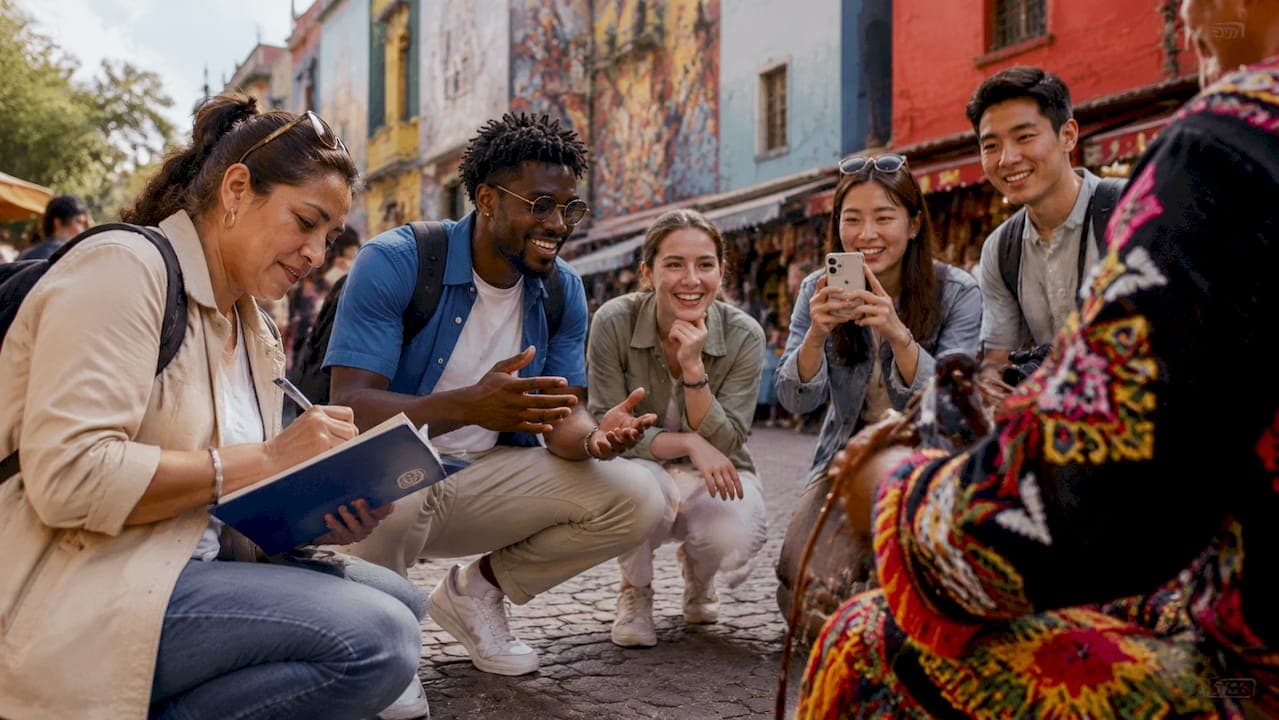
A guided tour is defined as a visit where a professional guide shows the way and provides expert commentary, often on a fixed schedule. The types of guided tours available today span everything from intimate walking excursions through medieval alleyways to multi-day escorted coach journeys across entire continents. Choosing the right format changes your trip entirely. Group size, transport mode, and thematic focus each shape how much you learn, how far you travel, and how much control you keep. This guide breaks down every major tour format so you can match the experience to your travel personality before you book.
1. Types of guided tours: walking tours
Walking tours are the most direct way to experience a city at street level. A local expert leads a small group through neighborhoods, markets, and historic districts, stopping to explain what you are seeing in real time. The pace is slow enough to absorb detail but active enough to cover meaningful ground in two to three hours.

The format works especially well in dense urban centers like Rome, Istanbul, and New Orleans, where the best stories are tucked behind unmarked doors. Free walking tours, popularized across European capitals, operate on a tip model and attract solo travelers and budget-conscious explorers. Premium walking tours in cities like Kyoto or Edinburgh charge a fixed fee and cap group size tightly, often at eight to twelve people, which keeps the experience personal.
Pro Tip: Book walking tours for your first full day in a new city. The orientation you gain from a two-hour walk saves hours of aimless wandering later in the trip.
2. Bus and coach tours
Bus tours cover ground that walking simply cannot. A guide narrates from the front of the vehicle while the group moves between landmarks, neighborhoods, or even cities in a single day. This format suits travelers who want broad geographic coverage without managing their own logistics.
Hop-on, hop-off bus services in cities like London, Barcelona, and Cape Town give travelers a self-directed version of the format. Fixed-route coach tours, by contrast, follow a set schedule and work best for first-time visitors who want a structured overview. The tradeoff is depth. You see more places but spend less time at each one.
3. Bike tours
Bike tours sit between walking and bus tours on the effort and coverage spectrum. A guide leads the group on two wheels through parks, waterfronts, or countryside routes that cars and buses cannot access. Amsterdam, Copenhagen, and the Loire Valley in France are classic settings where bike tours outperform every other format.
The physical requirement is real. Most urban bike tours assume basic cycling ability and cover six to fifteen miles. Some operators in cities like Hanoi or Medellín offer electric bikes, which removes the fitness barrier entirely. The reward is access: bike paths through rice paddies, canal routes through historic centers, and vineyard tracks that no coach can reach.
4. Boat and water tours
Boat tours reframe a destination entirely by putting you on the water. Cities built around rivers, harbors, or coastlines reveal a completely different character from the water than from the street. Venice, Sydney, Stockholm, and Chicago all offer guided boat experiences that show architecture, geography, and history from angles unavailable on land.
Beyond cities, boat tours access natural environments like the Amazon, the Galápagos, and the Norwegian fjords where land transport is impossible. Narrated river cruises in Paris or Prague run one to two hours and suit casual sightseers. Expedition-style vessel tours in Patagonia or Antarctica run for days and attract serious adventure travelers.
5. Escorted group tours
Escorted tours are group travels conducted by a tour director and typically include accommodation, transport, meals, and sightseeing bundled into a single package. The format is fast-paced by design, rarely spending more than three nights in any single location. A tour director manages all logistics end-to-end, which removes decision fatigue entirely.
This format suits travelers who want maximum destination coverage with minimum planning effort. A two-week escorted tour of Western Europe might visit eight countries, which is genuinely difficult to replicate independently at the same price point. The tradeoff is flexibility. The itinerary is fixed, and spontaneous detours are not part of the deal.
Escorted tours bundle logistics end-to-end, easing traveler burden in a way that self-guided options simply do not match. For first-time international travelers or those visiting complex destinations like Egypt or Japan, that structure is a genuine advantage.
6. Small-group discovery tours
Small-group tours average 15 people in Europe and 18 elsewhere, and that size difference unlocks experiences that larger groups cannot access. Private wine tastings at family-owned estates, after-hours museum access, and cooking classes in local homes all become possible when the group is small enough to fit around a single table.
The format balances structure with depth. You still have a guide and a planned itinerary, but the pace is slower and the interactions are more personal. Operators like G Adventures and Intrepid Travel have built their entire business models around this format, and the category has grown significantly as travelers prioritize quality over quantity. Small-group tours unlock access to venues and experiences that larger groups simply cannot enter.
Pro Tip: Read the maximum group size in the fine print before booking. "Small group" means different things to different operators. Anything above 20 people starts to feel like a standard coach tour regardless of the marketing language.
For a deeper look at what makes this format work, the Im-at guide on small-group tour characteristics is worth reading before you compare options.
7. Private guided tours
Private tours offer a customized itinerary and one-on-one guide attention. You set the pace, choose the stops, and ask every question you want without holding up a group. The format costs more than group options, but the experience is categorically different.
Private tours work best when your interests are specific. A private art history tour of Florence with a guide who holds a PhD in Renaissance painting delivers something no group tour can replicate. Families with young children, travelers with mobility considerations, and anyone visiting a destination for a professional or research purpose all benefit from the private format. The guide's role in co-creating the tour experience becomes most visible in private settings, where the interaction is direct and continuous. For more on why this format consistently outperforms group options for certain traveler profiles, the Im-at article on private guide advantages makes the case clearly.
8. Culinary and food tours
Culinary tours treat food as the primary lens for understanding a place. A guide leads the group through markets, street food stalls, family-run restaurants, and specialty producers, explaining the cultural and agricultural context behind each dish. Cities like Mexico City, Bangkok, Bologna, and Istanbul have built entire tour industries around their food cultures.
The format works on multiple levels simultaneously. You eat well, you learn history and geography through ingredients, and you meet producers and vendors who rarely interact with standard tourists. A three-hour food tour through a city's central market often delivers more cultural insight than a full day at the main museum.
9. History, art, and cultural tours
History and art tours go deep on a single subject rather than broad across a geography. A specialist guide leads the group through museums, archaeological sites, galleries, or historic districts with a level of interpretive detail that general sightseeing tours cannot match. Guided tours vary widely in focus and environment, and specialist cultural tours represent the most intellectually demanding end of that spectrum.
The Louvre in Paris, the Acropolis in Athens, and the Vatican Museums in Rome all offer specialist guided experiences that transform what would otherwise be an overwhelming crowd experience into a focused, meaningful visit. The guide's expertise is the product. You are paying for interpretation, not just access.
10. Night tours, expedition tours, and special event tours
Night tours reveal a destination after dark, which is genuinely a different place. Ghost tours in cities like Edinburgh, Salem, and New Orleans combine local history with atmospheric storytelling. Illuminated landmark tours in Paris or Prague show architecture in a completely different light. Wildlife night drives in South Africa and Botswana access nocturnal animals that daytime safaris miss entirely.
Expedition tours take the small-group format to its extreme. Expedition-style tours are often limited to 8 guests, emphasizing deep engagement and strict capacity limits in wilderness environments. Operators running expeditions in Patagonia, the Arctic, or the Atacama treat the environment itself as the guide's primary subject.
Special event tours build an itinerary around a single annual happening: the Rio Carnival, the Pamplona bull run, the Albuquerque International Balloon Fiesta, or the Cannes Film Festival. The event is the anchor, and the guide provides context, access, and logistics that independent travelers cannot easily replicate.
Pro Tip: Curated group travel around special events often sells out six to twelve months in advance. If a specific event is your primary travel motivation, book the tour before you book the flights.
Key takeaways
The right type of guided tour depends on matching group size, transport mode, and thematic focus to your specific travel goals and physical preferences.
| Point | Details |
|---|---|
| Transport mode defines access | Walking, bike, boat, and bus tours each reach different environments and suit different fitness levels. |
| Group size shapes the experience | Small-group and private tours offer depth and access; escorted group tours offer coverage and convenience. |
| Themed tours deliver cultural depth | Culinary, history, and expedition tours go deeper on a single subject than general sightseeing tours. |
| Logistics bundling reduces effort | Escorted tours handle accommodation, transport, and meals end-to-end, which suits first-time or complex-destination travelers. |
| Night and event tours unlock exclusives | After-dark and special event formats access experiences that standard daytime tours cannot replicate. |
Why tour type matters more than destination
Most travelers pick a destination first and a tour type second. That is the wrong order. I have watched people book a fast-paced escorted coach tour through Southeast Asia and spend two weeks frustrated that they never had time to sit in a single place long enough to feel it. The destination was right. The tour type was wrong.
The most useful framework I have found is to ask one question before anything else: do you want breadth or depth? Escorted group tours and hop-on, hop-off bus formats are built for breadth. Small-group discovery tours, private tours, and themed culinary or art tours are built for depth. Expedition tours are built for something else entirely: immersion in an environment rather than a checklist of sights.
Physical ability matters more than most people admit when choosing. A bike tour through Hanoi is genuinely strenuous in 95-degree heat. A walking tour of hilly Lisbon covers real elevation. Boat and bus formats remove that variable entirely, which is not a compromise. For some travelers, it is the correct choice.
The guide's expertise is the variable that tour type labels do not capture. A brilliant guide on a standard walking tour beats a mediocre guide on a private tour every time. Read guide-specific reviews on platforms like Viator and GetYourGuide, not just overall operator ratings. The guide's role in shaping the quality of any tour format is the factor most travelers underestimate until they experience both ends of the spectrum.
— Mikahil
Find your next guided tour on Im-at
Im-at connects travelers with guided tours that match every style described in this article, from adventure-focused day trips to multi-day cultural itineraries.
The Exclusive 4x4 Nature & Beach Tour delivers the expedition-style small-group experience for adventure seekers who want off-road access to landscapes buses cannot reach. For travelers drawn to structured multi-day cultural itineraries, the Cape Town 3-Day Attraction covers townships, the Cape Peninsula, and wine tasting in a single package. Wine lovers looking for an intimate thematic experience will find the Douro Valley small-group tour combines a river cruise, lunch, and private tastings in one afternoon. Browse the full Im-at catalog at im-at.com to find tours that fit your pace, group size, and interests.
FAQ
What is a guided tour?
A guided tour is a visit where a professional guide shows the way and provides expert commentary about a location, often on a fixed schedule. The guide's role combines navigation with interpretation, making the experience educational as well as logistical.
How do I choose between tour types?
Match the tour format to your priorities: choose escorted group tours for maximum coverage with minimal planning, small-group or private tours for depth and personalization, and themed tours for specific interests like food, history, or wildlife.
What are the benefits of small-group tours?
Small-group tours averaging 15 to 18 travelers unlock access to private venues, family-owned estates, and lesser-known sites that larger groups cannot enter. The smaller size also allows more direct interaction with the guide and a more flexible pace.
Are private guided tours worth the extra cost?
Private tours cost more than group formats but deliver a fully customized itinerary, one-on-one guide attention, and the ability to set your own pace. For travelers with specific interests or mobility considerations, the difference in experience justifies the price difference.
What is an expedition tour?
An expedition tour is an immersive, small-group wilderness experience typically limited to 8 guests, with strict capacity controls designed to protect the environment and maximize engagement. These tours operate in remote destinations like Patagonia, the Arctic, and the Atacama Desert.