
TL;DR:
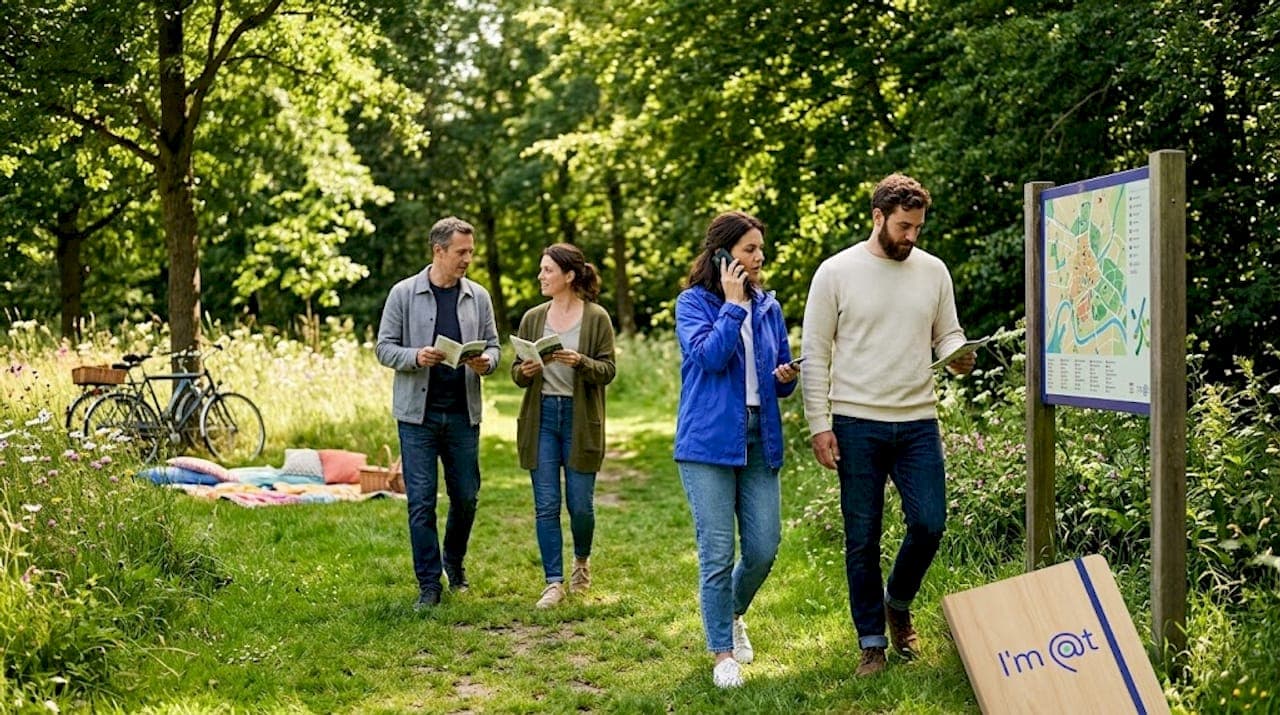
- Guided tours offer expert insights and convenience but have less flexibility than self-guided experiences. Self-guided tours provide autonomy and lower costs, leveraging technology for quality content. Combining both options can optimize your trip based on destination complexity, personal preference, and access restrictions.
Most travelers assume guided tours are the "safe" choice and self-guided tours are for experienced adventurers only. Neither assumption holds up. The real difference between guided and self-guided tours comes down to structure, pace, and what kind of experience you actually want. One gives you expert context and zero logistics to worry about. The other hands you the map and lets you run. Both can deliver unforgettable travel. The trick is knowing which one fits your specific trip, destination, and personality before you book.
Table of Contents
- Key takeaways
- The difference between guided and self-guided tours explained
- Pros and cons of each tour type
- Practical considerations before you decide
- Which traveler type are you?
- How to make the final call
- My honest take after years of both
- Find your next tour on Im-at
- FAQ
Key takeaways
| Point | Details |
|---|---|
| Cost and flexibility differ sharply | Self-guided audio tours typically cost $5–$15 while guided tours run $30–$40 with fixed time slots. |
| Site complexity should drive your choice | Guided tours shine at historical or cultural sites; self-guided works better at open, easy-to-navigate destinations. |
| Access restrictions can force the decision | Some restricted zones require ranger-led guided tours booked months in advance. |
| Hybrid approaches offer the best of both | Using a guided tour for high-demand experiences and self-guided for the rest maximizes value and freedom. |
| Technology is leveling the playing field | GPS-triggered audio apps give self-guided tours a quality edge that rivals traditional guides in many settings. |
The difference between guided and self-guided tours explained
Before weighing the pros and cons, you need a clear picture of what each tour type actually looks like in practice.
A guided tour places you in a group led by a knowledgeable guide who controls the itinerary, timing, and narrative. You show up, follow, and absorb. The guide handles the logistics, interprets the site, and answers questions on the spot. Guided tours often bundle transport, entry tickets, and sometimes meals. Pricing typically runs $30–$40 per person with fixed departure times that require advance booking, sometimes weeks or months ahead.
A self-guided tour puts you in charge. You move at your own pace using maps, printed materials, or digital tools like GPS-triggered audio apps. Nobody is waiting for you, and nobody is rushing you. Self-guided audio tours typically cost $5–$15, with no fixed schedule and no reservation required in most cases.
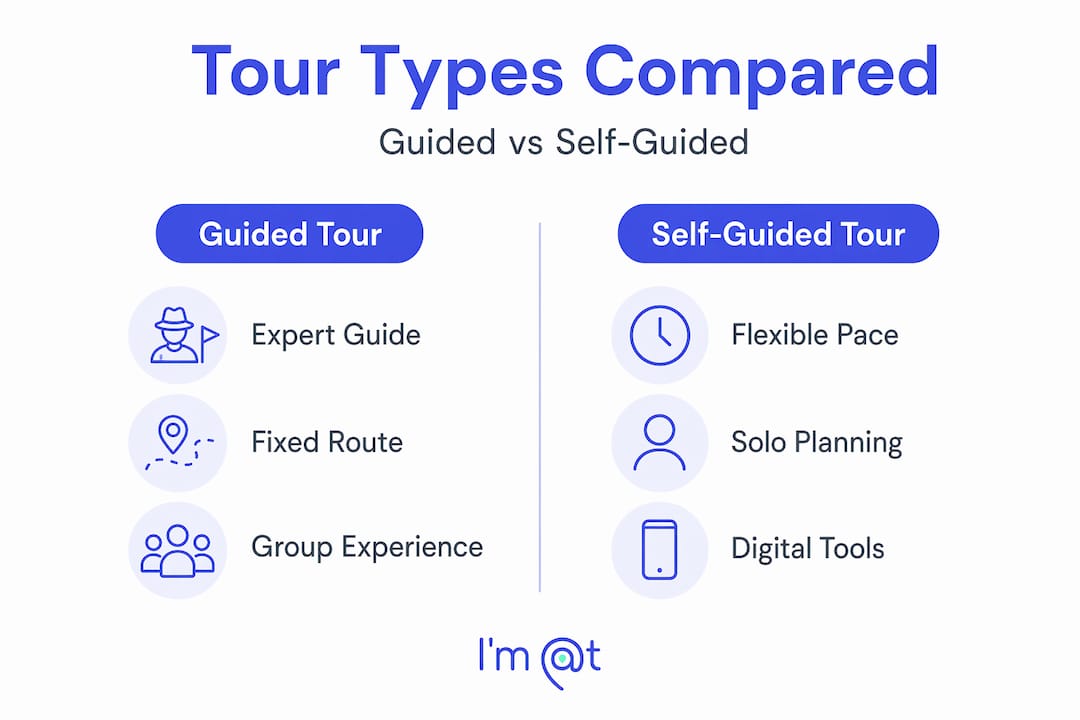
Here is a side-by-side comparison of the core differences:
| Factor | Guided tour | Self-guided tour |
|---|---|---|
| Cost | $30–$40 per person (average) | $5–$15 per person (average) |
| Schedule | Fixed departure times | Flexible, go anytime |
| Booking | Often required weeks ahead | Usually on-demand |
| Interaction | Live Q&A with a guide | Pre-recorded or app-based |
| Planning burden | Low (guide handles logistics) | Higher (you do the research) |
| Flexibility | Limited | High |
A real-world example makes this concrete. At Hueco Tanks State Park in Texas, visitors who want access to restricted rock art zones must book ranger-led tours up to three months in advance. Self-guided visitors are welcome on the main trails without reservations. Same park, completely different experience depending on which option you choose.
Pros and cons of each tour type
Neither format is universally better. Each has genuine strengths and real tradeoffs.
Why guided tours work
Guided tours do more than move you from point A to point B. A skilled guide builds rich narratives connecting sites with history, political context, and personal stories that no audio recording can replicate. At a site like Pompeii or Angkor Wat, the difference between wandering and understanding can be the difference between a forgettable afternoon and a memory that stays with you for years.
The other major benefit is convenience. Guided tours reduce planning stress by bundling transport, accommodations, and tickets into a single booking. You hand over that mental load and focus on being present.
The downsides? Less flexibility. If you want to spend 45 minutes at one painting while the group moves on, that is not an option. Group dynamics also vary. A chatty, disengaged tour group can undercut even the best guide.
Why self-guided tours work
Self-guided tours give you something no guided tour can: complete autonomy. You linger where you want, skip what bores you, and return to spots that moved you. That personalization alone is worth a lot to many travelers.
Budget control is another real benefit. At $5–$15 versus $30–$40, the savings add up fast across a week of activities. And GPS-triggered audio apps now deliver consistently fact-checked, high-quality content that rivals traditional guides in straightforward settings.
The tradeoff is that self-guided tours offer one-way information with no chance for follow-up questions or real-time adaptation. You also carry the planning burden. Misjudging timing or missing site-specific rules can cost you access to areas you came specifically to see.
Pro Tip: At any complex historical site, consider a guided tour for your first visit and return self-guided if you want a deeper look at specific areas. You get the expert foundation and the personal freedom.
Practical considerations before you decide
Choosing between a guided and self-guided tour is not just about preference. Logistics, safety, and accessibility all play a role.
-
Check access restrictions first. Some parks and heritage sites restrict certain zones to guided tours only. Self-guided visitors assuming open access can arrive and miss the most significant parts of a site entirely. Research site-specific rules before you assume you can go wherever you want.
-
Book guided tours earlier than you think. High-demand guided tours at popular destinations fill weeks in advance. If a specific experience is non-negotiable for your trip, secure your booking the moment your dates are confirmed.
-
Factor in safety. In unfamiliar terrain or politically complex destinations, guided tours provide a meaningful safety net. Guides carry local knowledge of risks that no app can replicate. Self-guided travel in those contexts requires sharply higher personal vigilance.
-
Consider your mobility and energy. Group tours move at a set pace. If you or someone in your group has mobility challenges, a self-guided approach lets you rest, adjust, and skip steps without holding anyone up.
-
Use technology to your advantage. Modern self-guided experiences powered by digital travel tools have closed the quality gap significantly. Apps with GPS-triggered audio mean you get the right context at exactly the right location, hands-free.
-
Explore hybrid options. Booking a guided "anchor" experience at your trip's most complex destination and handling everything else self-guided gives you the best of both worlds. Combining tour styles maximizes value and keeps your schedule flexible.
Pro Tip: If you are visiting a major cultural site for the first time in a country where you do not speak the language, a guided tour pays for itself in context and avoided mistakes. Save the self-guided approach for your second day in that city.
Which traveler type are you?
Matching your tour style to your actual travel personality makes a bigger difference than any feature comparison. Here is how different traveler profiles typically align:
- Solo travelers seeking independence. Self-guided tours are almost always the right call. You move on your own schedule, spend as long as you want anywhere, and answer to nobody. The savings also stretch your budget for more experiences overall.
- Solo travelers wanting social connection. Guided group tours solve the social isolation problem of solo travel. You meet people naturally, share reactions in real time, and often continue exploring together after the tour ends.
- Families with young children. Self-guided tours allow you to adjust pace on the fly when nap schedules blow up or someone needs a snack break. Guided tours with fixed itineraries are much harder to manage with unpredictable young kids.
- First-time visitors to a destination. A guided tour provides orientation, cultural context, and the kind of insider knowledge that takes years to acquire independently. The vital role of tour guides is most obvious when you are brand new somewhere.
- Experienced travelers revisiting a place. Self-guided tours let you go deeper into specific areas you missed before, at your own pace. You already have the foundation. Now you build on it.
- Budget-focused travelers. Self-guided options cost significantly less per experience, and modern audio apps deliver enough context to make the trade-off worthwhile at most sites.
- Visitors to complex cultural or heritage sites. Guided tours excel here. Expert interpretation enhances understanding at sites where without context, the significance of what you are looking at can be genuinely lost.
How to make the final call
At this point in the comparison of tour types, you probably have a clearer sense of where you lean. Use this framework to lock in your decision.
| Question | Lean guided | Lean self-guided |
|---|---|---|
| How complex is the destination? | High historical or cultural complexity | Open, easy-to-navigate location |
| What is your budget? | Cost is secondary to experience | Budget control matters |
| How important is flexibility? | Fixed itinerary is fine | You want to wander freely |
| Is this your first visit? | Yes, orientation matters | No, you know the area |
| Does the site have access restrictions? | Yes, guided required for some zones | No restrictions on access |
One more thing worth saying: the guided tours vs self-guided debate often misses the obvious answer. For many trips, the right move is not choosing one or the other. It is using both. Book a guided tour for the anchor experience, then go self-guided for the rest. You get expert depth where it matters and personal freedom everywhere else.
Pro Tip: When researching your options, use Im-at's tour finder to filter by tour type, location, and budget to find guided and self-guided options side by side.
My honest take after years of both
I have done group guided tours in Morocco's medinas, solo self-guided walks through Kyoto back streets, and everything in between. Here is what I have actually learned.
The travelers who insist guided tours are always better tend to undervalue what happens when you get genuinely lost. Not dangerously lost. Productively lost. When you turn down an unmarked street because something looks interesting and end up finding a neighborhood market that no tour bus has ever stopped at. That kind of discovery only happens when nobody is leading you.
But I have also watched self-guided travelers walk straight past some of the most extraordinary things in a destination because they did not know what they were looking at. Without context, a 2,000-year-old inscription is just old writing on a wall.
What I have come to believe is that the best trips I have taken were the ones where I stopped treating this as a binary choice. I book a guided tour when I genuinely need a human to unlock a place for me. I go self-guided when I want the experience to be mine to shape. And I try to stay honest with myself about which situation I am actually in.
The other thing I have learned: do not let a bad self-guided experience make you swear off independence, and do not let a mediocre guide make you think all guided tours are overpriced. Quality varies enormously in both formats. Keep experimenting until you find what consistently works for your travel style.
— Mikahil
Find your next tour on Im-at
Whether you are convinced a guided tour is the right call or ready to go fully self-guided, Im-at makes it easy to find and book the experience that fits.
Im-at brings together guided, self-guided, and private tours across destinations worldwide, so you can compare options by price, format, and activity type in one place. If you want a structured, expert-led multi-day experience, the Cape Town 3-day guided tour covers townships, the Cape Peninsula, and wine tasting with knowledgeable local guides. For adventure seekers who prefer to set their own pace, the Terceira Island hiking and caving experience offers flexible exploration in the Azores. Browse the full catalog at Im-at and book the experience that actually matches how you travel.
FAQ
What is the main difference between guided and self-guided tours?
Guided tours are led by an expert who controls the itinerary, timing, and narrative, while self-guided tours let you explore independently at your own pace using maps or apps. The core tradeoff is structure and expert knowledge versus flexibility and cost savings.
Which is better, a guided or self-guided tour?
Neither is objectively better. Guided tours suit first-time visitors, complex historical sites, and travelers who want low planning burden; self-guided tours are better for independent travelers, budget-focused trips, and open destinations that are easy to navigate on your own.
Are self-guided tours cheaper than guided tours?
Yes, significantly. Self-guided audio tours typically cost $5–$15 compared to $30–$40 for guided tours, and they do not require advance booking in most cases.
Can you combine guided and self-guided touring on the same trip?
Absolutely, and many experienced travelers consider this the smartest approach. Booking a guided tour for your most complex or high-demand experience and going self-guided for the rest gives you expert depth where it counts and full freedom everywhere else.
Do self-guided tours require booking in advance?
Usually not, but this depends on the destination. Some sites with restricted access require guided tours booked months ahead, and self-guided visitors may be barred from those specific zones. Always check site-specific rules before you arrive.