

TL;DR:
- Genuine hidden gem tours reveal lesser-known places with local expertise, specific details, and authentic experiences. They prioritize transparency, small groups, and community sustainability, unlike marketing-heavy generic trips. Finding these tours requires critical review, timing, local connections, and patience, leading to more meaningful travel memories.
Most travelers have booked a tour advertised as a "hidden gem" only to find themselves on a crowded bus hitting the same five landmarks as everyone else. If that sounds familiar, you're not alone. Understanding what are hidden gem tours, and more importantly, how to tell the real ones from the marketing noise, is the difference between a forgettable trip and one you actually talk about for years. This guide gives you the tools to find authentic, off the beaten path trips that deliver what they promise.
Table of Contents
- Key takeaways
- What hidden gem tours really are vs. the hype
- How to identify and book trustworthy hidden gem tours
- Why sustainable tours make better hidden gems
- Where and when to find the best hidden tours
- My honest take on hidden gem tours
- How Im-at connects you to authentic tours
- FAQ
Key takeaways
| Point | Details |
|---|---|
| "Hidden gem" is often marketing | Look for specific, evidence-based tour descriptions instead of vague promises. |
| Transparency signals quality | Trustworthy tours list exact inclusions, group sizes, and cancellation policies upfront. |
| Timing unlocks better value | Off-peak and shoulder season bookings offer savings and less crowded experiences. |
| Community impact matters | Tours that invest in local wages and training create more authentic, sustainable experiences. |
| Ask the right questions | Guide qualifications, subcontracting practices, and itinerary details reveal real tour quality. |
What hidden gem tours really are vs. the hype
The phrase "hidden gem" has been stretched so far that it now means almost nothing on its own. Scroll through any major booking platform and you'll find thousands of tours using the term, most of them pointing to the same waterfalls, the same market stalls, and the same photo spots featured in every travel magazine.
So what does the phrase actually mean when used correctly? A genuine hidden gem tour takes you somewhere or shows you something that the average tourist, booking from a hotel lobby, would never find. It requires local knowledge that isn't written in any guidebook. Think a pre-dawn fishing trip with a third-generation fisherman in a coastal village, or a private ceramics session with an artisan whose studio sits on a residential alley with zero foot traffic. These are experiences that exist because a knowledgeable local decided to share them, not because a marketing team found them useful.
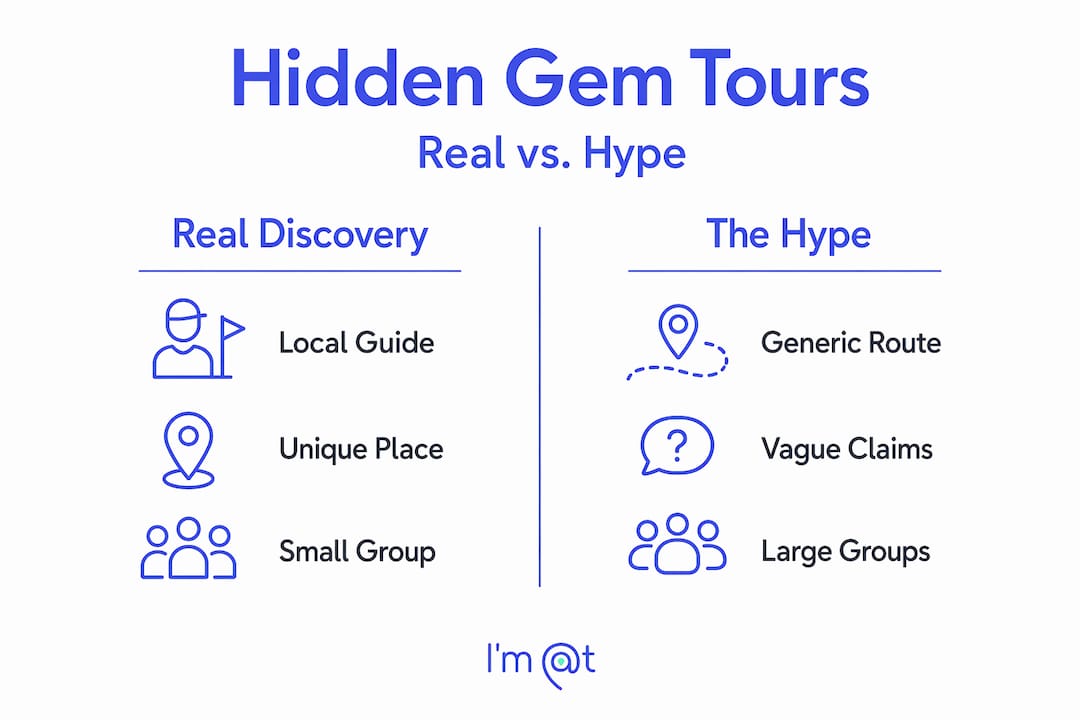
Authentic tours usually mention local ingredients, customs, or makers rather than defaulting to generic sightseeing language. If a listing reads like it could apply to any city in the world, it probably isn't a hidden gem. Real ones are specific.
Here are the characteristics that separate genuine hidden gem tours from inflated marketing:
- Specificity: The listing names exact places, people, or traditions, not vague concepts like "authentic culture."
- Local guide involvement: The person leading the tour has a real, verifiable connection to the place and community.
- Honest limitations: Good tours tell you what they don't include, not just what they do.
- Small group sizes: Genuine discovery doesn't scale well. If a tour seats 40 people, it's probably not revealing anything truly private.
- Clear storytelling: Descriptions reference actual history, specific foods, or named craftspeople.
"The term 'hidden gem' is frequently used as marketing language rather than a guarantee of quality. Travelers should look for evidence-based descriptions and clear, specific details rather than generic promises."
Learning to read tour listings critically is one of the most underrated travel skills you can develop. For a deeper look at how to sharpen that skill, understanding travel discovery is a good place to start.
How to identify and book trustworthy hidden gem tours
Finding a great tour isn't just about where you look. It's about what you look for once you get there. Most travelers make the mistake of filtering by price and star rating alone. Neither tells you much about whether a tour will actually deliver something real.
Here's a practical vetting process you can apply before booking any unconventional guided tour:
- Compare full package cost, not just the headline price. Verifying inclusions such as transportation, entrance fees, meals, and guide gratuities upfront protects you from low-priced tours that add costs at checkout.
- Request an itemized itinerary. A reputable operator will send you a specific schedule with times, locations, and activities. Vague hour-by-hour summaries like "explore the old town" are a red flag.
- Ask about the guide directly. Who is the actual person leading the tour? Where are they from? What's their background? High-quality tours provide full transparency about direct local guide involvement without subcontracting to third parties.
- Confirm the group size. Anything above 12 people changes the dynamic of a "hidden gem" experience significantly. Smaller groups allow for genuine conversation and flexibility.
- Probe the cancellation policy. A clearly stated, fair cancellation policy signals professionalism. Operators who dodge this question or bury it in fine print often have other transparency problems too.
- Check recent reviews, not just the average score. Look for reviews that mention specific details, names of guides, or unexpected moments. Generic five-star reviews with no substance are easy to fake.
Pro Tip: Ask the operator directly: "Do you use subcontracted guides?" Opaque answers on this question strongly suggest professional shortcomings. A confident "no, all our guides are local team members" is what you want to hear.
If you want a structured approach to narrowing down your choices, a step-by-step tour guide can walk you through the full evaluation process.
Why sustainable tours make better hidden gems
There is a pattern you'll notice once you start booking genuinely local, off the beaten path trips. The best ones almost always have a sustainability component built in, not as a marketing badge, but as a natural result of how they operate.
Tours run by and for local communities tend to protect the very things that make them worth taking. A family running a cooking class in their home has a direct reason to preserve their food traditions. A guide whose income comes from showing you a little-known forest trail has a personal stake in keeping that trail clean and accessible. This alignment of interests is what makes community-rooted experiences so reliable.
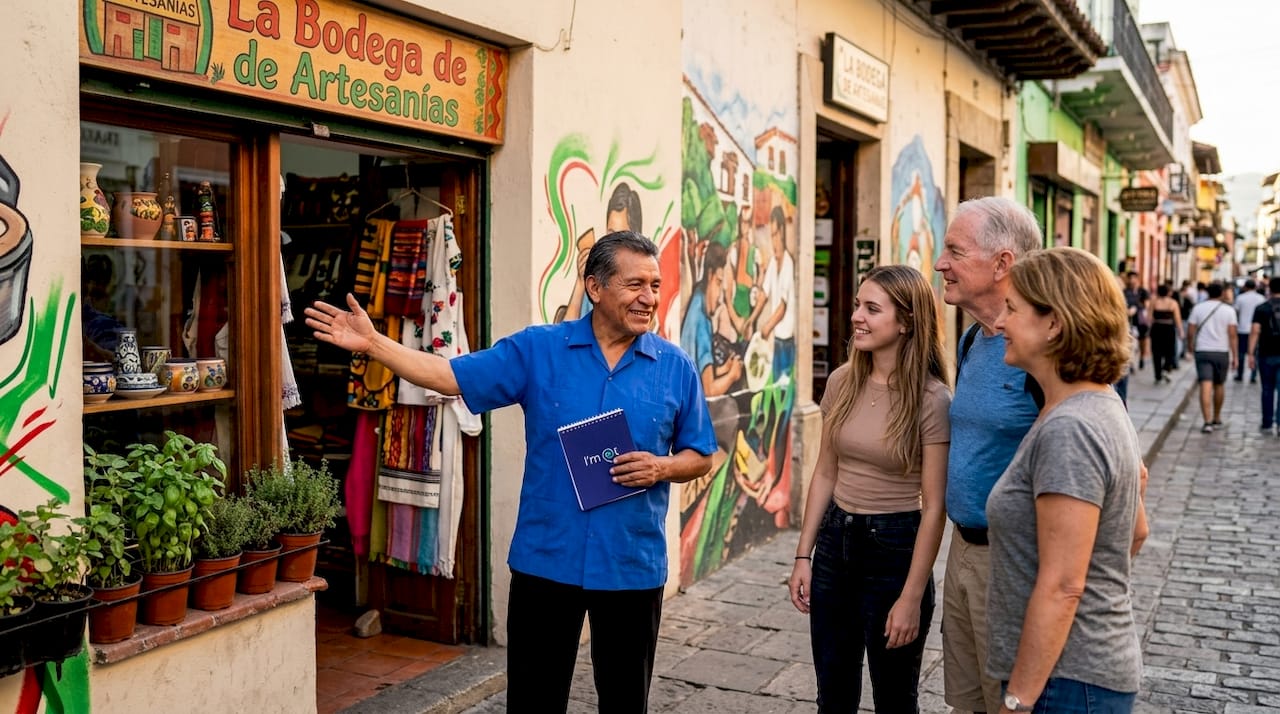
Spending aligned with fair wages and local training funds local services and environmental protection. Your choice of tour operator is, in a real sense, a vote for what tourism looks like in that destination five years from now.
Ask these questions before booking to gauge a tour's community commitment:
- Does the operator employ local guides, drivers, and staff, or does it outsource?
- Where does the money from your booking actually go? Is any portion directed to community projects?
- Does the tour avoid over-touristed sites that are under environmental pressure?
- Are the local businesses you visit (restaurants, artisan shops) independently owned?
"The best hidden gem tours integrate culture, livelihoods, and environmental stewardship into their core design, benefiting locals sustainably."
For a broader perspective on how this works in practice, the principles behind community tourism explain why locally rooted tours consistently outperform standard package options.
Where and when to find the best hidden tours
Location and timing matter far more than most travelers realize. The best experiences often happen in places that don't appear on the first page of any search result.
Hidden gem local tours often occur outside main attraction zones in neighborhoods with resident-first businesses and lower visitor markup. Think residential bakeries, artisan studios in light industrial areas, and community gardens nowhere near the main plaza. These spots exist in almost every city. You just have to know to look in the right direction.
Here's a quick comparison of where and when to find better tour options:
| Strategy | What to expect |
|---|---|
| Shoulder season booking | Lower prices, smaller crowds, more personal attention from guides |
| Neighborhood-based tours | Authentic local businesses, realistic pricing, fewer tourists |
| Local newsletter discovery | New tours before they get mainstream attention or inflated reviews |
| Specialty interest groups | Niche communities (food, history, nature) sharing vetted local operators |
| Weekday or early morning tours | Discount activities and less-crowded experiences in popular locations |
The timing angle is worth doubling down on. Authentic, targeted, well-timed bookings behave like niche markets where relevance beats volume. A small pottery workshop that runs on Tuesday mornings attracts serious participants, not tourists checking a box.
Pro Tip: Follow local guides and small tour operators on social media before you travel. Many of their best experiences sell out to followers before they're ever listed publicly. This is how you access the actual secret vacation spots that don't appear in any roundup article.
If exploring underrated travel destinations is a priority for you, offbeat destination travel offers a solid framework for thinking about where to look beyond the obvious.
My honest take on hidden gem tours
I've spent years traveling with a deliberate bias toward the obscure, and the thing that changed my experiences most wasn't finding better places. It was asking better questions.
Early on, I fell for the marketing language constantly. "Local secrets" tours that ended at a tourist-trap restaurant. "Authentic village experiences" that turned out to be staged performances for three buses of visitors. The disappointment wasn't about the places themselves. It was about the gap between what was promised and what was delivered.
What I've learned is that the operators who are genuinely proud of what they've built don't need to hide behind vague language. They'll tell you exactly where you're going, who you'll meet, and what makes that specific experience worth your time. When I encounter a listing that specifically names local makers and traditions rather than generic sightseeing language, that's the first sign I'm dealing with someone serious.
I've also noticed that travelers who only chase popular sights miss something real. Not just in terms of the places they skip, but in the depth of connection they never quite reach. A half-day with a local guide who genuinely knows their city's history, food, and neighborhoods is worth more than three days on a hop-on hop-off bus. The patience to find and vet those experiences pays off every single time.
My honest advice: slow down the booking process. The extra 20 minutes you spend reading a full itinerary, checking a guide's background, and asking about sustainability practices will save you from forgettable tours and get you to the ones worth remembering.
— Mikahil
How Im-at connects you to authentic tours
Im-at was built for exactly the kind of traveler who reads this far. You're not looking for a generic package. You want specifics, local knowledge, and experiences that hold up when you talk about them later. Im-at's catalog includes tailor-made 4x4 tours designed around transparent itineraries, direct local guide involvement, and genuine community connection. For something more culturally focused, the private Bagamoyo day trip offers the kind of immersive, detailed storytelling that distinguishes real discovery from tourist theater. Every experience listed on Im-at reflects the principles covered in this guide: clear inclusions, local expertise, and no hidden costs. Browse the full activity catalog and find off the beaten path trips that actually mean it.
FAQ
What makes a tour a true hidden gem?
A genuine hidden gem tour offers specific, locally rooted experiences that aren't accessible through standard tourist channels. It features named locations, real local guides, and details that reflect authentic knowledge of the place rather than generic sightseeing language.
How do I spot hidden gem tours that are just marketing hype?
Look for vague descriptions, no specific meeting point, missing cancellation policies, and unclear group sizes. High-quality tour listings explicitly detail inclusions, duration, and logistics. If a listing dodges these basics, treat it as a red flag.
Are hidden gem tours more expensive than standard tours?
Not necessarily. Hidden gem local tours outside main tourist zones often carry lower markup than high-traffic alternatives. Off-peak and shoulder season bookings can reduce costs further without sacrificing quality.
Why do sustainable and community-based tours matter?
Tours that invest in local wages and training protect the culture and environment that make a destination worth visiting. Choosing where to travel is a direct vote for the future of that destination and its communities.
Where is the best place to discover hidden gem tours?
Local newsletters, specialty interest groups, and social media accounts from small operators often surface experiences before they reach mainstream platforms. Pair that with authentic local experience research and you'll find options most travelers never encounter.