
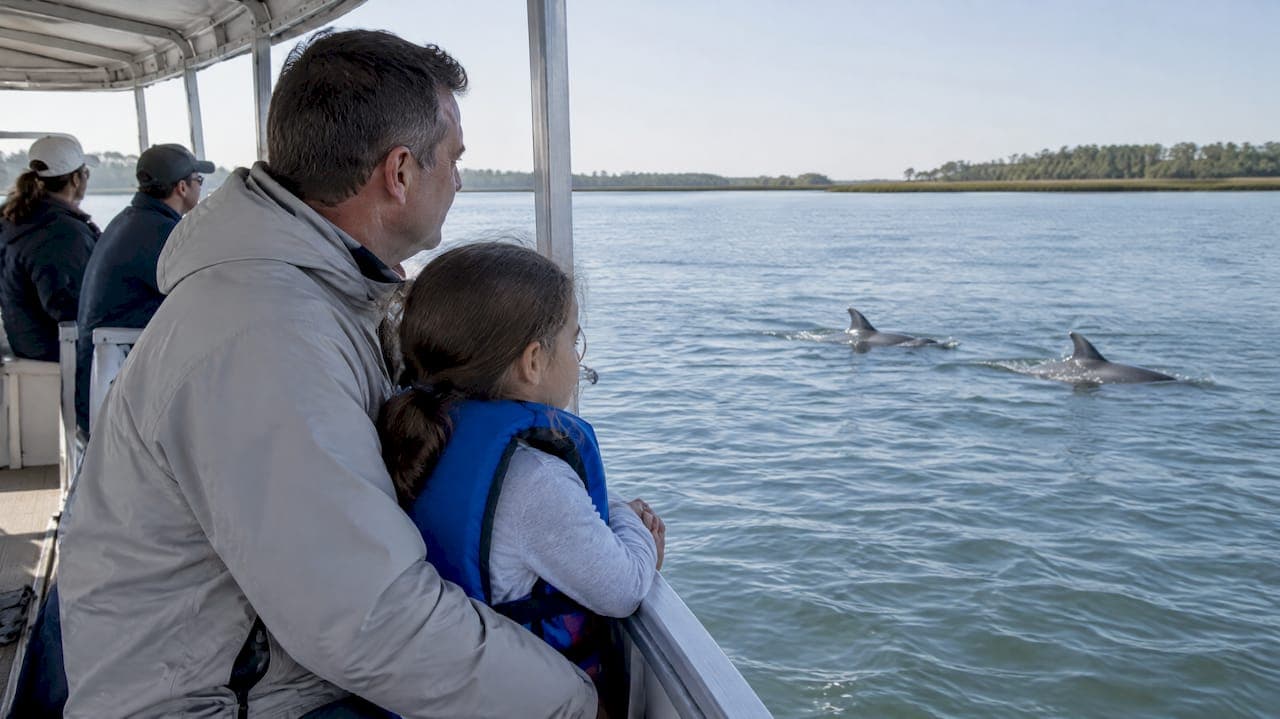
The fastest way to lock in a safe, family-friendly dolphin watching experience is to book a vetted guided tour through a marketplace that lists licensed local guides, clear safety policies, and private-charter options. Sightings still depend on weather, season, and local pods, so the rest of this guide walks through what to expect, how to pick the right operator, and when to go.
TL;DR:
- Favor guides who follow wildlife approach rules and observe quietly; boats that chase pods can scare them off and often produce worse photographs.
- In U.S. waters, NOAA recommends staying at least 50 yards from dolphins, moving slowly nearby, and limiting observation of one pod to 30 minutes.
- Book a morning departure for calmer seas; resident pods may be seen year round, while migratory sightings depend on local seasonal patterns.
- Families with young children, older relatives, or motion sickness concerns may prefer a larger boat with shade and a restroom; small skiffs often lack facilities.
- Confirm weather cancellation terms and what happens if no dolphins appear in writing, since refunds, credits, deposits, and cancellation windows vary by operator and tour type.
Table of Contents
- What to expect on a dolphin watching tour
- How to choose the right dolphin watching tour
- Best times of day, seasons, and places to see dolphins
- Family-friendly tips, accessibility, and what to pack
- Why book through Im-at: how our marketplace helps you find vetted, family-ready tours
- Cancellation and refund policies to consider when booking
- Local regulations and conservation efforts affecting dolphin tours
- A travel writer's perspective: patience beats speed for better sightings
- Book a family-friendly dolphin watching tour on Im-at
- FAQ
- Sources
What to expect on a dolphin watching tour
Tour length and boat type shape the whole experience more than most travelers expect. A quick two-hour skiff or RIB (rigid inflatable boat) trip gets you close to the water and feels fast and exciting, while a pontoon or small yacht ride offers steadier footing, shade, and often a restroom, which matters for families with young kids or older relatives.
Dolphins are wild animals, not performers, so no operator can promise a sighting. Some areas have resident pods that stay in the same bay or estuary year round, which raises your odds, while other regions see transient dolphins passing through on a feeding or migration pattern. A guide who knows local pod behavior will set honest expectations before you ever leave the dock.
Most reputable boats include:
- A pre-departure safety briefing and properly fitted life jackets for every passenger.
- A guide offering narration on dolphin behavior, local ecology, and safety rules.
- Binoculars or spotting scopes for distant sightings.
- Restrooms on larger vessels, though smaller skiffs may not have one.
For photos, patience beats speed. Boats that idle quietly and let dolphins approach on their own terms tend to produce better, closer shots than ones that chase pods at high speed, which usually just pushes the animals away.
How to choose the right dolphin watching tour
Picking a solid operator comes down to a short list of checks rather than guesswork. Look for a valid local operating license, a crew trained in wildlife approach protocols, a reasonable passenger-to-guide ratio, and a clearly stated policy on how close the boat will get and how long it will linger near a pod. NOAA's viewing guidance recommends staying at least 50 yards from dolphins and limiting observation of any one group to 30 minutes, and operators who mention similar limits in their listing are signaling that they take the rules seriously.
Before booking, ask the operator:
- Are you licensed, and do your captains have wildlife-viewing training?
- What is your maximum passenger capacity for this boat?
- How close do you approach dolphins, and how long do you stay with one pod?
- What happens if no dolphins are sighted: refund, credit, or free rebooking?
- What safety equipment and insurance coverage do you carry?
- Is the trip private or shared with other travelers?
- What is included: snacks, restrooms, photos, hotel pickup?
- What is your cancellation and weather policy?
- Do you have a code of conduct for marine wildlife encounters?
Trust signals in a listing include specific review counts, photos that show actual boats and guides rather than stock imagery, and plain-language inclusions instead of vague marketing copy. A private charter costs more per person than a shared tour but buys you a flexible schedule, a quieter boat, and more control over pace, which matters if you are traveling with toddlers or anyone prone to seasickness.
Pro Tip: Skip any operator that advertises "guaranteed sightings." That language often pressures crews to chase animals instead of observing them respectfully.
Best times of day, seasons, and places to see dolphins
Morning departures tend to win on two fronts: calmer seas and better odds. Wind usually picks up by midday, so an early trip is gentler on sensitive stomachs and gives dolphins, which are often more active at dawn, more time to show up before boat traffic increases.
Seasonality depends heavily on whether you are watching resident or migratory pods. A resident population stays local year round, so sightings are fairly consistent across seasons, while migratory dolphins follow food sources and water temperature, meaning your timing window narrows to specific months that a knowledgeable local guide can confirm.
The most reliable sighting locations tend to share a few features:
- Sheltered bays and inlets where dolphins feed away from open-ocean swells.
- Estuaries and river mouths where fresh and saltwater mix, attracting fish and the dolphins that hunt them.
- Mangrove-lined coastlines that shelter calves and juvenile pods.
- Known resident-pod sites that local operators can point to with confidence rather than a general "we usually see them somewhere out there."
Reading recent reviews and asking operators directly about resident pods in their area is the simplest way to separate a consistent sighting spot from a hopeful guess.
Family-friendly tips, accessibility, and what to pack
A little preparation goes a long way toward keeping kids comfortable and the whole group relaxed. Pack sunscreen, hats, and light layers since open water feels cooler and breezier than the shore, along with snacks and a seasickness remedy if anyone in your group gets queasy on boats. Closed-toe, non-slip shoes help on a rocking deck more than sandals do.
Before booking, check:
- Minimum age or height requirements and whether child-sized life jackets are available.
- Whether the boat has a restroom and shaded seating for infants or older travelers.
- Boarding assistance for travelers with limited mobility.
Pro Tip: If you are traveling with infants, non-swimmers, or a nervous first-time boater, a private charter gives you control over pace and seating that a shared tour cannot.
A private, captain-guided dolphin charter built around families, for example, typically runs on a larger boat with a bathroom and a flexible itinerary, which removes a lot of the guesswork for parents.
Why book through Im-at: how our marketplace helps you find vetted, family-ready tours
We built our platform to make finding a trustworthy dolphin watching tour take minutes instead of hours of scattered searching. Our listings aggregate licensed local guides and spell out exactly what is included, from safety briefings and life jackets to snacks and photo packages, so you are never guessing what you are paying for.
On our platform, we:
- Surface family-friendly filters so you can sort for private charters, shorter durations, or morning departures.
- Display reviews and provider details side by side, making it easy to compare cancellation rules and group sizes before you book.
- List clear departure times and inclusions on every activity page, the same way we do for experiences like rowing a traditional Venetian boat with a local guide.
- Publish editorial guides, including our shark diving guide for Mossel Bay, that reflect the same safety-first approach we apply across our activity catalog.
You can read more about how our booking process works before searching for a tour near your destination.
Cancellation and refund policies to consider when booking
Weather and sea conditions can change a dolphin tour on short notice, so a clear cancellation policy matters as much as the itinerary itself. Look for operators who state their refund terms in plain language: a full refund or free rebooking for cancellations made a set number of days ahead, and a separate, more flexible policy for weather-related cancellations the operator initiates.
Ask specifically what happens if no dolphins are spotted. Some operators offer a free return trip or partial credit, while others make no such promise, and that distinction should factor into your decision when two tours are otherwise similar in price and format.
Shared tours sometimes have stricter cancellation windows than private charters, since the operator has to resell your seats to other travelers. Private bookings often carry more flexible terms but may require a deposit. Whatever the policy, confirm it in writing at the time of booking rather than assuming it matches what you have seen on other tours, since terms vary by operator and region.

Local regulations and conservation efforts affecting dolphin tours
Dolphin watching is governed by a mix of national wildlife laws and voluntary industry codes of conduct, and the two work together to limit disturbance to wild pods. In the United States, NOAA guidance calls for keeping at least 50 yards from dolphins, moving at slow or no-wake speeds near animals, avoiding encircling or crowding a pod, and limiting time with any one group to 30 minutes. NOAA also notes that drones and loud vessels can disturb marine mammals, so responsible operators follow local rules on drone use near wildlife.

Internationally, the International Whaling Commission's general principles for whale watching recommend limiting the number of boats near an animal group, controlling approach angles and speeds, and favoring land-based viewing where it is practical, guidance that extends naturally to dolphin tours in the same waters.
Field research backs up why this matters in practice. Peer-reviewed studies of operator behavior have found that while many crews respect the 30-minute interaction limit, compliance with approach distance and crowding rules varies widely between operators, and that passive, quiet observation often produces better sightings than high-speed approaches. Choosing an operator that references these standards, rather than one promising guaranteed close encounters, supports both your experience and the long-term health of local pods. You can read more about how conservation shapes responsible adventure tours in general.
A travel writer's perspective: patience beats speed for better sightings
The best dolphin encounters I have heard described all share one trait: a captain who cuts the engine and waits. Chasing a pod might feel thrilling for thirty seconds, but it scatters the animals and often ends the sighting early. Operators who practice quiet, passive observation and follow established codes of conduct tend to deliver calmer, longer encounters, and that same patience happens to be what keeps local populations undisturbed for the next boat that comes along.
— Mikahil
Book a family-friendly dolphin watching tour on Im-at
The platform makes it simple to search, compare, and book a dolphin watching tour that fits your family's pace and schedule, all from one place.

To get started:
- Search your destination on Im-at and filter for family-friendly or private charter options.
- Compare morning departures, since calmer seas and better odds usually line up early in the day.
- Check inclusions and cancellation terms directly on the listing before you confirm.
Browse available tours and book your spot on Im-at today.
FAQ
Where are the best places to watch dolphins?
Sheltered bays, estuaries, and mangrove-lined coastlines with known resident pods tend to offer the most consistent sightings, since dolphins in these areas do not depend on long migrations. Local operators and recent reviews are the best way to confirm which specific sites near your destination have reliable resident populations.
Why can't you swim with dolphins anymore?
Many regions have restricted or banned swim-with-dolphin programs because close human contact can stress wild animals and disrupt natural behavior. NOAA guidance recommends observing dolphins from a safe distance rather than entering the water with them, and operators who follow this standard typically offer boat-based viewing instead.
What is the best month to go whale or dolphin watching?
The best timing depends on whether you are watching resident dolphins, which can often be seen year round, or migratory pods, which follow seasonal food and temperature patterns. A local guide or recent operator reviews are the most reliable way to confirm the current season's activity in your specific destination.
What is the best time of day to go on a dolphin cruise?
Early morning is usually the best choice, since seas tend to be calmer before midday winds pick up and dolphins are often more active earlier in the day. Calmer water also makes the ride more comfortable for children and anyone prone to motion sickness.
Sources
- Viewing marine life | NOAA Fisheries
- IWC68 – General principles for whale watching (IWC)
- Research on dolphin-watching operator behavior (Journal article)