
Hluhluwe-iMfolozi delivers a malaria-free Big 5 experience built around some of the densest rhino populations in South Africa, and most visitors get everything they came for with several days combining a self-drive loop and one guided drive. Book the guided morning or night drive early, since vehicles fill fast in peak season, and use a platform like Im-at to lock in a tailor-made 4x4 tour before your gate dates.
TL;DR:
- Visiting in the dry season from May to September improves wildlife sightings, especially around waterholes, with the best conditions for seeing the Big 5.
- Two to three days are recommended to thoroughly explore both Hluhluwe and iMfolozi sections without rushing, with peak season booking inside the park recommended six to eight weeks in advance.
- Guided night drives are highly effective for spotting nocturnal species like leopards, genet, and hyenas, and should be prioritized over additional morning drives if limited.
- Staying inside the park, particularly at Hilltop or Mpila camps, maximizes early-morning game viewing during the most active hours.
- Bookings for guides and activities should be confirmed with experienced operators specializing in the specific terrain and wildlife interests to ensure the best safari experience.
Table of Contents
- Hluhluwe Safari Guide: Understanding the Park Layout
- What Wildlife Can You Expect to See in Hluhluwe?
- When Should You Visit and How Many Days Do You Need?
- How Do You Get to Hluhluwe-Imfolozi and Which Gate Should You Use?
- Self-Drive, Guided Drives, or Night Safaris: Which Fits You?
- Where Should You Stay Inside or Near the Park?
- What Are the Park Rules, Fees, and Practical Safety Tips?
- What Does a One, Two, or Three-Day Itinerary Look Like?
- How Do You Book Guides, Drives, and Camps With Confidence?
- Who Are the Guides Worth Booking in Hluhluwe?
- How Do You Choose the Right Guide for Your Trip?
- What Should You Expect During a Guided Safari for Safety?
- Why Does Hluhluwe Matter Beyond the Wildlife?
- A Traveler's Take on Hluhluwe's Real Appeal
- Book Your Hluhluwe Safari Through Im-at
- Where This Guide's Facts Come From
- Sources
Hluhluwe Safari Guide: Understanding the Park Layout
Hluhluwe-iMfolozi Park spans roughly 96,000 hectares, split into two distinct sections that were only merged into a single reserve decades after each was first proclaimed. That history still shapes how the park feels on the ground today.
The northern Hluhluwe section is hillier, greener, and carries most of the tourist infrastructure, including the main loop roads around Hilltop Camp. The southern iMfolozi section opens into flatter, drier savannah country, historically the birthplace of white rhino conservation efforts, and it draws far fewer vehicles per square kilometer.
Splitting your time between the two sections matters for reasons beyond scenery:
- Hluhluwe's dense bush and elevation changes make for dramatic views but can hide animals in thick vegetation.
- iMfolozi's open plains give you longer sightlines, which often means better odds on predators and large herds.
- Crowd levels drop noticeably once you cross from Hluhluwe into iMfolozi, especially on weekday mornings.
- The corridor road connecting the two sections is itself a decent game-viewing stretch, not just a transit route.
If you only have one day, stick to Hluhluwe's loops near your camp. Anything beyond that, and iMfolozi earns a dedicated half-day at minimum.
What Wildlife Can You Expect to See in Hluhluwe?
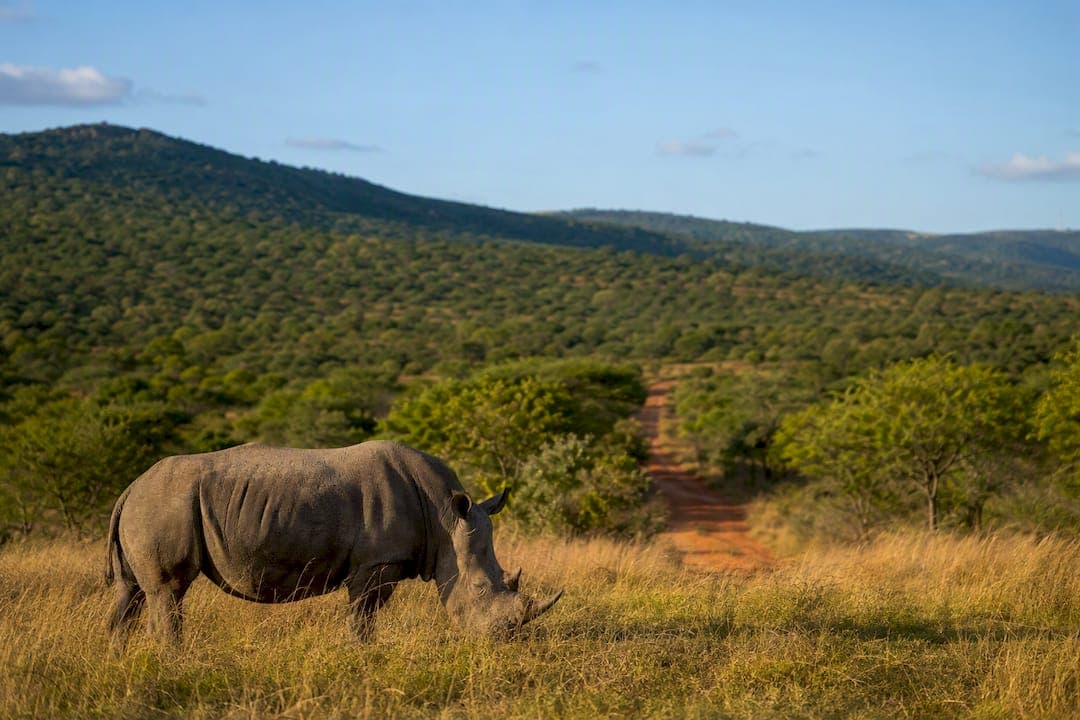
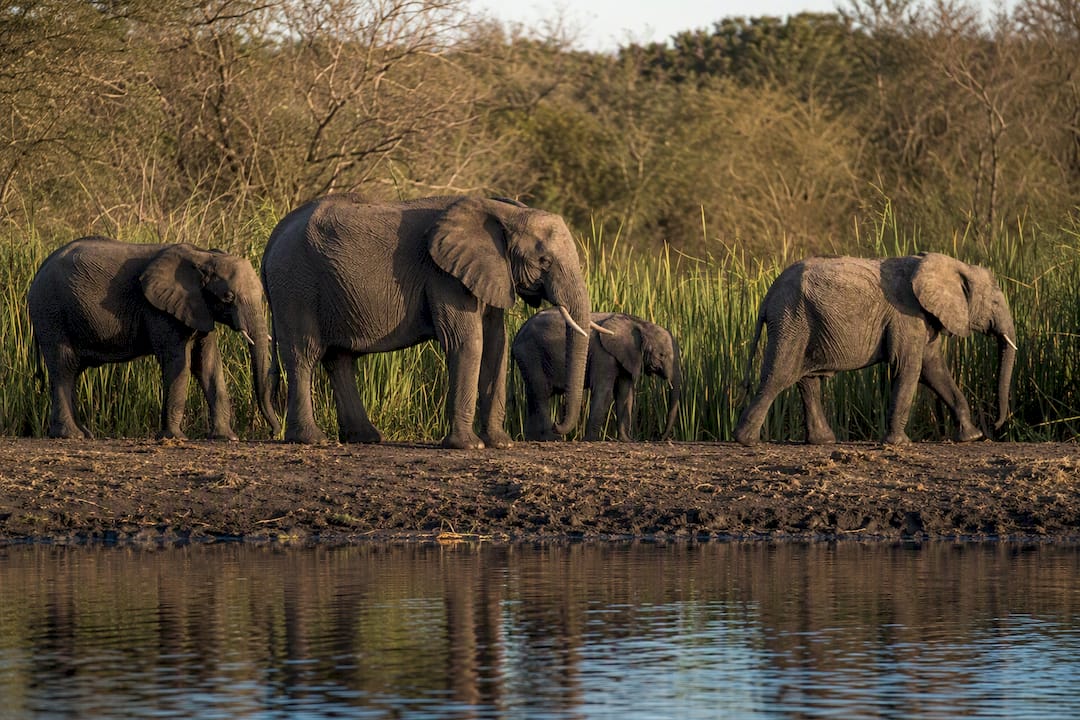
All Big 5 species live in Hluhluwe-iMfolozi, but your odds vary sharply by animal. White rhino sightings are close to a given here. Black rhino, elephant, buffalo, and lion round out the list, with leopard remaining the toughest tick given its nocturnal, secretive habits.
Rhino Density: Hluhluwe-iMfolozi is where South Africa's white rhino population was pulled back from near-extinction in the twentieth century, and the reserve remains a cornerstone of Big 5 conservation history in the region. That legacy explains why guides here talk about rhino the way Kruger guides talk about elephant herds: almost guaranteed, and still thrilling every time.
Beyond the Big 5, expect regular sightings of:
- Giraffe, zebra, and wildebeest across both sections
- Spotted hyena and the occasional cheetah on the open iMfolozi plains
- Nyala, a striking antelope species particularly common around Hluhluwe's river valleys
- More than 340 recorded bird species, making this a genuinely underrated birding destination
Dry season sharpens visibility everywhere because animals cluster near remaining water, which is a key consideration in nature and wildlife activities and planning effective wildlife viewing. Wet season pushes species into denser bush but rewards patient birders and photographers chasing green backdrops and newborn wildlife.
When Should You Visit and How Many Days Do You Need?
May through September, the dry winter months, gives you the clearest sightlines and the most reliable game viewing, since thinning vegetation and shrinking waterholes concentrate animals in predictable spots. The wet summer months from October to April bring lush green scenery, dramatic skies for photography, and a birding calendar that peaks with migrant species, but the taller grass and thicker bush make spotting cats and rhino noticeably harder.
Duration comes down to which sections you want to see. Practical guidance from experienced visitors puts the minimum useful stay at two to three days to properly cover both Hluhluwe and iMfolozi rather than rushing one section.
- One night: Enough for Hluhluwe's core loops only, no time for iMfolozi.
- Two nights: Covers one section thoroughly, with a rushed look at the other.
- Three nights: A relaxed pace through both sections plus a night drive.
Pro Tip: Book Hilltop or Mpila accommodation and any night drives at least six to eight weeks ahead for the June to August peak, when South African school holidays and winter game viewing collide.
How Do You Get to Hluhluwe-Imfolozi and Which Gate Should You Use?
Most international and domestic visitors fly into King Shaka International Airport near Durban, then drive north on the N2. The trip covers roughly 280 kilometers with a drive time of around three hours, making Durban the natural gateway for a Hluhluwe safari guide itinerary rather than Johannesburg, which sits considerably farther away.
Three main gates serve the reserve, each suited to a different plan:
- Memorial Gate feeds directly into the Hluhluwe section and Hilltop Camp, the best choice if you're basing yourself there.
- Nyalazi Gate sits between the two sections and works well if you're heading toward Mpila Camp in iMfolozi.
- Cengeni Gate offers a quieter western entry point, useful for visitors coming from the Zululand interior rather than the coast.
Gate opening and closing times shift with the season, generally running from around 5:00 AM to 7:00 PM in summer and slightly later starts in winter. Arriving after closing isn't just inconvenient. Unfenced wildlife roams the roads after dark, and unauthorized night movement is prohibited for genuine safety reasons, not bureaucratic caution.
Self-Drive, Guided Drives, or Night Safaris: Which Fits You?
Hluhluwe-iMfolozi is one of the easiest South African reserves to self-drive, and that accessibility is part of why guides describe it as a premium Big 5 destination without the driving marathon Kruger sometimes demands. Still, each approach to game viewing has real tradeoffs worth weighing before you book.
- Self-drive gives you total freedom over pace and stops, and the tar and gravel roads stay accessible to standard 2WD sedans through most of the dry season. The downside is a lower seating position than a game vehicle and no ranger interpreting animal behavior in real time.
- Guided day drives put you in an elevated open vehicle with a ranger who knows current sighting patterns, reads tracks, and radios other guides about predator movement. This is where black rhino and lion sightings jump noticeably, and local guides consistently recommend booking at least one guided drive even if you're self-driving the rest of the trip.
- Night drives and walking safaris run seasonally from Hilltop and Mpila camps, typically lasting two to three hours and requiring advance booking. Night drives reveal nocturnal species self-drivers never see, while multi-night wilderness trails in the iMfolozi Wilderness Area suit fitter travelers wanting a genuinely immersive, vehicle-free experience.
Pro Tip: If you can only afford one guided activity, make it a night drive rather than a second morning drive. Leopard, genet, and hyena activity peaks after dark, and you simply cannot see them any other way.
Where Should You Stay Inside or Near the Park?
Your camp choice quietly determines how good your early mornings will be, since driving in from outside the gates costs you the best light and the freshest tracks.
- Hilltop Camp sits on a ridge in the Hluhluwe section with sweeping valley views, a restaurant, and quick access to the main tourist loops. It's the most convenient base for first-timers who want comfort without sacrificing proximity to game.
- Mpila Camp is more remote, self-catering, and sits inside iMfolozi close to the open rhino ranges. It suits visitors prioritizing wildlife access over creature comforts and works especially well if you're doing a walking safari.
- Private lodges and guesthouses near the park boundaries offer higher-end amenities and often their own guided game drives, but you'll spend more time driving to reach the gates each morning.
- Hluhluwe town accommodation is the budget-friendly option, though it adds thirty to forty-five minutes of driving before you even reach a gate, which costs you prime early-morning sighting time.
If maximizing game drive hours matters more than the accommodation itself, sleep inside the park.
What Are the Park Rules, Fees, and Practical Safety Tips?
Conservation fees are charged separately from accommodation, generally around ZAR 240 per adult per day as of recent pricing, though you should confirm current rates directly with Ezemvelo KZN Wildlife before your trip since these figures do change.
Speed limits are set lower on gravel tracks to encourage slow driving for better wildlife viewing, a limit guides treat as a sighting tool rather than a restriction, since driving slowly is what actually reveals wildlife hidden just off the roadside. Staying inside your vehicle at all times outside designated picnic sites isn't optional, and night driving beyond ranger-led drives is prohibited for the same reason gates close on schedule.
- Check the sightings board at whichever gate you enter. It's updated by rangers and other visitors and can redirect your whole morning.
- Pack binoculars, layers for cold winter mornings, and more water than you think you need.
- Fill your fuel tank in Hluhluwe town before entering. Fuel isn't guaranteed inside the park.
- Shoot photography in the first and last two hours of daylight, when animals are most active and the light does the rest of the work for you.
For more general safari behavior and packing guidance, these first-timer safari tips cover the basics that apply well beyond Hluhluwe.
What Does a One, Two, or Three-Day Itinerary Look Like?
- One day: A guided full-day trip from Durban means a genuinely early departure, often before 5:00 AM, and a long day on the road given the roughly three-hour drive each way. It works if a Hluhluwe safari guide day trip is all your schedule allows, but expect a tiring day for a relatively short window inside the park itself.
- Two days: Base at Hilltop, run a morning loop through Hluhluwe's core roads, rest through the heat of midday, then head back out for a late-afternoon drive and book one night drive. This is the sweet spot for most first-time visitors.
- Three days: Split your nights between Hilltop and Mpila to properly experience both sections. Add a guided walking safari in iMfolozi's wilderness area on your final morning for a completely different pace and perspective on the bush.
How Do You Book Guides, Drives, and Camps With Confidence?
Booking sequence matters here. Secure night drives and in-park camps first, since Hilltop and Mpila have limited beds and fill quickly in peak months, then layer in guided day drives or transfers around those confirmed dates.
When comparing guide listings, prioritize:
- Confirmed ranger or guide experience level and years working specifically in Hluhluwe-iMfolozi
- Vehicle type: open safari vehicles beat closed sedans for sightlines and photography
- Group size caps, since smaller groups mean more flexibility to linger at sightings
- Confirmation that drives are authorized through Ezemvelo KZN Wildlife rather than informal arrangements
A platform like Im-at lets you search and compare guided tours side by side, read what each experience includes, and book directly rather than emailing multiple operators and waiting on availability. This step-by-step booking guide walks through comparing listings before you commit.
Who Are the Guides Worth Booking in Hluhluwe?
The strongest guides here share one trait: years of ground time in this specific reserve, not general South African safari experience. Hluhluwe-iMfolozi's terrain, rhino movement patterns, and predator territories differ enough from Kruger or private reserves that generic guiding experience doesn't transfer cleanly.
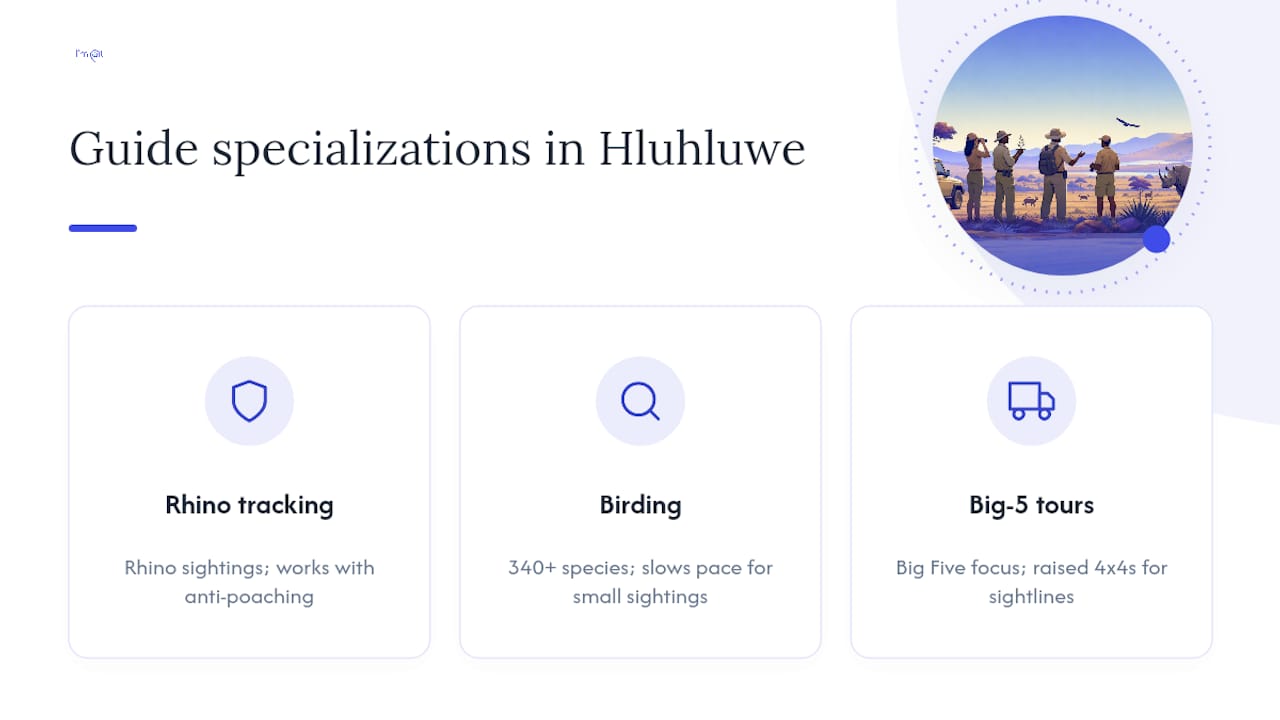
Look for guides who specialize in one of a few areas. Rhino-tracking specialists tend to work closely with anti-poaching units and can explain the conservation story behind every sighting, turning a photo opportunity into something with real weight. Bird-focused guides bring an entirely different skill set, useful given the park's 340-plus recorded species, and they'll slow the pace deliberately to work smaller sightings rather than racing between Big 5 stops.
Operators running open 4x4 vehicles with raised seating consistently outperform closed-vehicle options for both visibility and photography angles, since you're not shooting through glass or a window frame. Multi-day operators who build in both a Hluhluwe loop and an iMfolozi crossing tend to structure trips more thoughtfully than single-day operators working from Durban, simply because they have the time to chase reports rather than sticking to a fixed loop.
A comparable guided game drive example shows how a well-run guided format typically works: fixed departure windows, an experienced driver-guide, and a vehicle built for sightlines rather than comfort alone. That same structure applies whether the reserve is in Zambia or KwaZulu-Natal.
How Do You Choose the Right Guide for Your Trip?
Experience level should be your first filter, but it's not the only one that matters. A guide with fifteen years in the park brings pattern recognition no amount of enthusiasm replaces, spotting a lion's fresh tracks or reading tension in a herd's body language before anything visible happens.
Language matters more than most first-timers expect. If you're traveling with family members who don't speak fluent English, confirm your guide's language options before booking rather than discovering a communication gap on day one. Many operators serving international visitors offer German, French, or Mandarin-speaking guides alongside English and Zulu.
Guiding style is the harder thing to judge from a listing alone, but it's worth asking about directly. Some guides run a fast-paced circuit chasing every radio call about a sighting nearby. Others slow down deliberately, park at a waterhole, and let behavior unfold rather than sprinting to the next tick-box animal. Photographers and patient travelers generally prefer the latter; families with young children sometimes do better with the former, since shorter attention spans need more variety.
Ask directly whether the guide specializes in rhino tracking, birding, or general Big 5 touring. A guide's specialty shapes where they'll take you and what they'll prioritize when multiple sighting reports come in at once, so matching that specialty to what you actually want to see is worth five minutes of research before you book.
What Should You Expect During a Guided Safari for Safety?
Guided drives run in open-sided 4x4 vehicles raised well above ground level, a design that keeps you safely distanced from wildlife while giving you a genuinely better vantage point than any sedan. Rangers carry radios to coordinate sighting reports across the park and know exactly how close a vehicle can safely approach without disturbing an animal or provoking defensive behavior, particularly around rhino cows with calves.
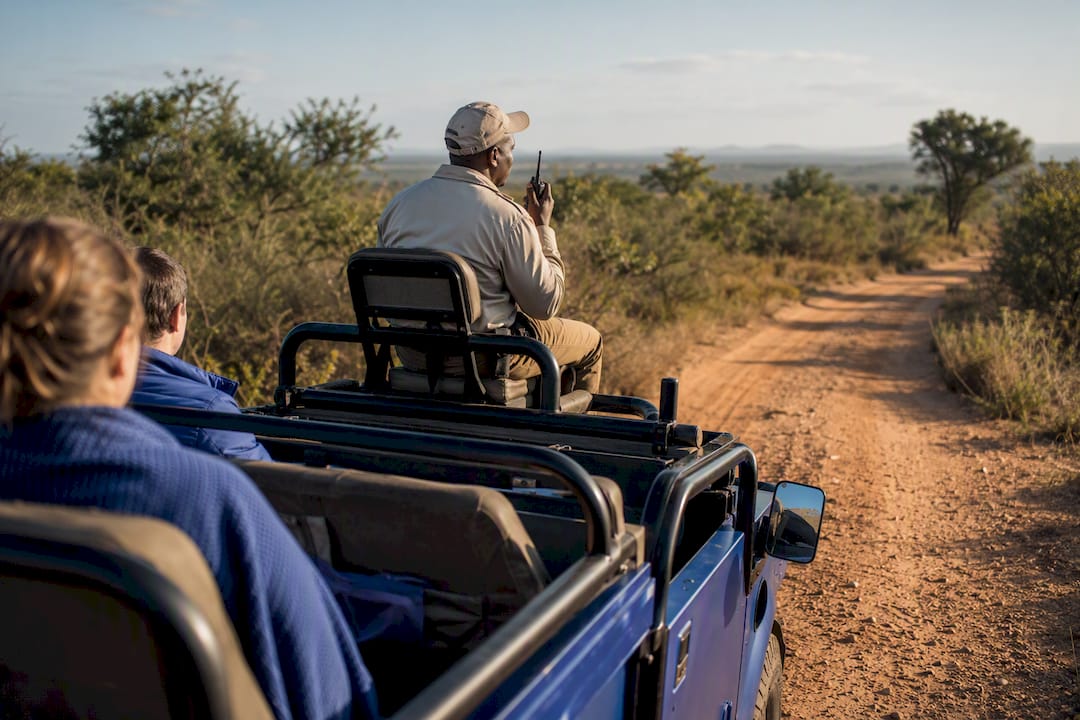
Before departure, your guide should brief you on staying seated during the drive, keeping arms and cameras inside the vehicle near dense bush, and remaining silent during close predator or rhino encounters. These aren't formalities. Elephant and buffalo, statistically responsible for more safari incidents globally than lion or leopard, react to sudden noise and movement far more than to a stationary, quiet vehicle.
Night drives carry their own protocol. Spotlights are used briefly and angled to avoid disorienting nocturnal animals, and vehicles maintain a slower pace than daytime drives given reduced visibility for both guide and wildlife. Walking safaris, when offered, always include an armed field guide and a strict briefing on formation, silence, and what to do if you encounter dangerous game on foot, which is a fundamentally different risk profile than viewing from a vehicle.
Trust your guide's calls without argument in the moment. If a ranger says to stay quiet or ends an encounter early, that decision comes from reading signals you likely can't see yet, and it's the single biggest reason professionally guided drives report far fewer incidents than unguided walking in the reserve.
Why Does Hluhluwe Matter Beyond the Wildlife?
Hluhluwe-iMfolozi carries a conservation history that reshapes how the sightings feel once you know it. This reserve is where South Africa's white rhino population was rebuilt from a population reduced to double digits at the turn of the twentieth century into the thousands that exist today, a recovery story tied directly to this specific landscape rather than to conservation efforts generally.
The Zulu Kingdom's history is woven through this area long before conservation boundaries existed. King Shaka is said to have used the region as a royal hunting ground in the early nineteenth century, and the name "Hluhluwe" itself refers to a thorny climbing plant native to the valleys here, not an arbitrary label. Understanding that layered history, from indigenous land use through colonial-era hunting reserves to the modern conservation model, adds real weight to a rhino sighting that might otherwise register as just another good photo.
Local Zulu communities remain economically and culturally connected to the park today, and many of the guides working here grew up in villages bordering the reserve, carrying knowledge passed down rather than learned purely from a training manual. Asking your guide about that connection, rather than only asking about animal behavior, tends to produce the most memorable conversations of the entire trip.
A Traveler's Take on Hluhluwe's Real Appeal
What surprises most first-time visitors isn't the Big 5 checklist. It's how often you'll find yourself twenty meters from a white rhino on a public gravel road, no fence, no crowd, just you and an animal that nearly disappeared from this planet a century ago. That accessibility is the park's real gift, and it's worth remembering that the conservation fee you pay at the gate directly funds the anti-poaching work keeping that experience possible for the next visitor. Book a local guide when you can. Their knowledge of the terrain, and their stake in its future, run deeper than any guidebook.
— Mikahil
Book Your Hluhluwe Safari Through Im-at
Planning a Hluhluwe trip usually means juggling separate bookings for accommodation, a guided drive, and transfers, often across three different operators who don't talk to each other. Im-at is the direct booking route around that hassle. Search guided tours, compare guide experience and vehicle type side by side, and check out once instead of chasing email confirmations from multiple providers.
If you want full control over your route through both Hluhluwe and iMfolozi rather than a fixed group itinerary, the Tailor-Made 4x4 Tours option lets you build a custom multi-day plan around the camps and sections you actually want to prioritize. Travelers looking for a distinctive add-on experience beyond standard game drives can also browse The Unholy Secrets for something different during downtime between drives. Check available dates now and lock in your guided drive before peak season books out.
Where This Guide's Facts Come From
Fees, gate hours, and current park regulations change periodically. Confirm the latest details directly with Ezemvelo KZN Wildlife before finalizing your booking, and cross-check practical logistics against regional safari planning resources for seasonal updates.
Sources
- Hluhluwe and Umfolozi game reserves | SAHistory
- Hluhluwe-iMfolozi Park guide — self-drive rhino safari 2026 | South Africa Spirit
- Hluhluwe-iMfolozi Park guide — observations and guide tips | SolSalute blog
- Hluhluwe-iMfolozi Park Safari Guide: Gates, Tips & Big 5 | The Wilds Guest House