
TL;DR:
- Malaga offers rich history, diverse beaches, and vibrant food scenes that reward exploration beyond famous sites. Planning ahead and balancing cultural, outdoor, and local experiences enhance the visit, especially during spring and fall. Booking popular attractions early and incorporating local guides unlock more authentic and memorable Malaga adventures.
Malaga doesn't ease you in gently. The moment you arrive, you're hit with centuries of layered history, a coastline that actually delivers, and a food scene that runs circles around most Spanish cities twice its size. The challenge isn't finding things to do in Malaga. It's figuring out what to skip when you only have a few days. This guide cuts through the noise and gives you a curated list of the best experiences the city offers, organized by category, with honest tips on timing, cost, and what's genuinely worth your time.
Table of Contents
- Key Takeaways
- 1. How to choose the right things to do in Malaga
- 2. Alcazaba and the Roman Theatre
- 3. Gibralfaro Castle
- 4. Picasso Museum Malaga
- 5. Malaga Cathedral
- 6. Caminito del Rey
- 7. Malaga's beaches
- 8. Mercado de Atarazanas and the food scene
- 9. Flamenco, museums, and nightlife
- 10. Practical comparison of top Malaga attractions
- My honest take on visiting Malaga
- Plan your Malaga experiences with Im-at
- FAQ
Key Takeaways
| Point | Details |
|---|---|
| Book outdoor tickets early | Caminito del Rey tickets sell out weeks in advance during high season — book the moment dates open. |
| Free culture is available | The Roman Theatre is free to visit; the Picasso Museum offers free entry during the last two hours on Sundays. |
| Beach options vary widely | La Malagueta suits city-goers; El Palo and Pedregalejo deliver a local, slower-paced seafood atmosphere. |
| Combo tickets save money | The Alcazaba and Gibralfaro Castle combined ticket costs €5.50 and reduces wait time when booked online. |
| Mix landmarks with local spots | The best Malaga trips balance famous attractions with market visits, tapas bars, and neighborhood walks. |
1. How to choose the right things to do in Malaga
Not every traveler comes to Malaga for the same reason. Some want museums and cathedral steps. Others want to eat sardines on a beach by noon and be hiking by afternoon. Knowing your priorities before you start planning will save you a lot of frustration.
Start by grouping your interests into three categories: cultural, outdoor, or local experience. Malaga is walkable enough that most of the historic center attractions sit within a 20-minute radius of each other. That makes it easy to combine two or three stops in a single morning without feeling rushed.
Seasonal timing matters more here than people expect. Summer crowds peak hard between July and September. If you're visiting then, morning starts before 9:00 a.m. make a real difference. For outdoor activities like Caminito del Rey, spring and fall offer the most comfortable conditions and shorter lines.
Pro Tip: Book museum and outdoor tickets online before your trip, even if it feels early. Several attractions sell out days or weeks in advance during high season, and last-minute walk-in options are increasingly limited.
2. Alcazaba and the Roman Theatre
These two sites sit right next to each other but represent entirely different eras, and together they tell the story of Malaga better than any tour guide can. The Roman Theatre is free to visit and open Tuesday through Sunday from 10:00 to 18:00. You can walk in, spend 30 minutes, and leave with a solid appreciation for what this city looked like 2,000 years ago.
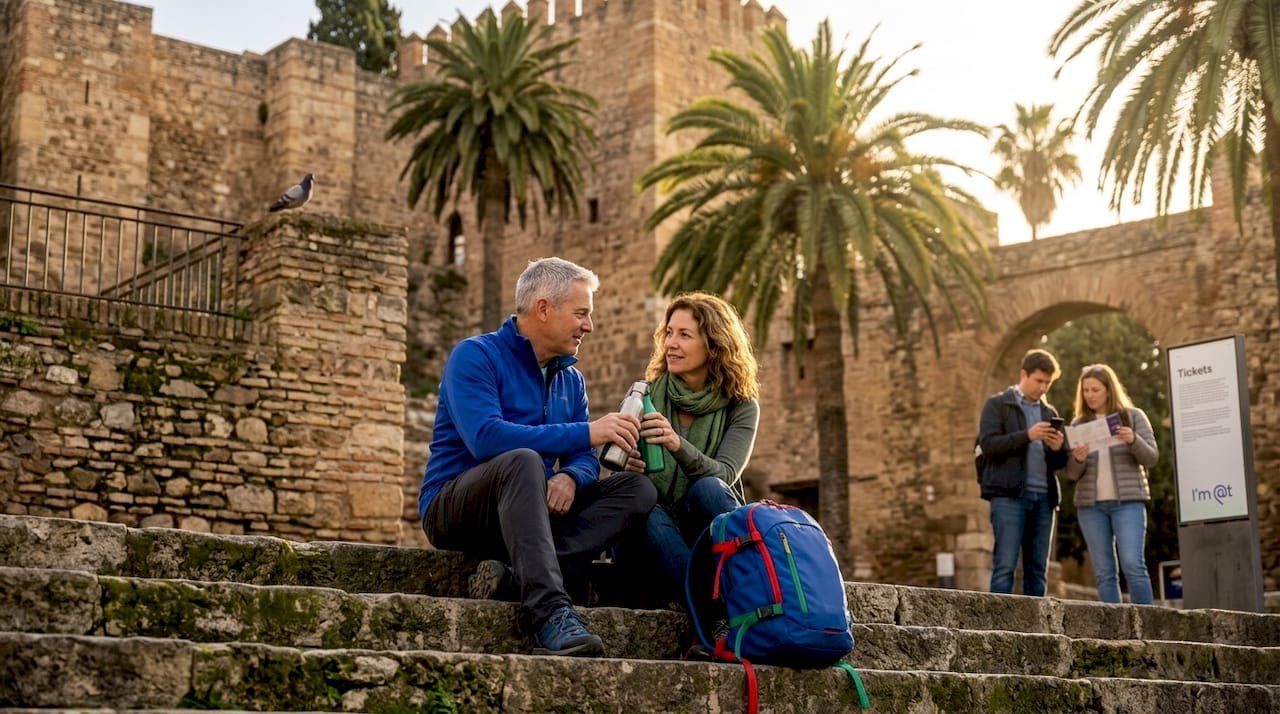
The Alcazaba is the real draw. This Moorish fortress was built using Roman Theatre stones, which creates one of those rare moments where you can literally see two civilizations overlapping. Admission is €3.50 on its own. The walking surfaces inside are uneven, so wear proper footwear. There is no elevator at the Roman Theatre, worth knowing if accessibility is a concern.
Pro Tip: Buy the combined Alcazaba and Gibralfaro ticket online for €5.50. It skips a separate queue and gives you both fortress experiences in one morning.
3. Gibralfaro Castle
Perched above the city, Gibralfaro Castle is the place to go when you want Malaga to show you exactly how beautiful it is. The views from the ramparts take in the bullring, the port, and the Mediterranean in a single sweep. Most visitors pair it with the Alcazaba using the combined ticket at €5.50.
The walk up from the Alcazaba takes about 20 minutes on a steep path through pine trees. It's worth doing on foot if you're able. The alternative is a city bus, Bus 35, which stops nearby. Go early or in the late afternoon when the midday sun has settled down.
4. Picasso Museum Malaga
Pablo Picasso was born in Malaga, and the city doesn't let you forget it. The museum dedicated to him sits in a 16th-century palace in the historic center and holds over 200 works donated by his family. General admission is €9, reduced to €7 for seniors and students. Visitors under 17 get in free.
The collection spans his full career and includes paintings, sculptures, and ceramics that you won't find in the more famous Picasso museums in Barcelona or Paris. Allocate at least 90 minutes to do it properly.
Pro Tip: The museum offers free entry on Sunday evenings during the last two hours of opening. Arrive 30 minutes before that window opens to get in without a long wait.
5. Malaga Cathedral
The Cathedral of Malaga, locally called "La Manquita" (the one-armed lady) because its second tower was never completed, is one of the most recognizable attractions in Malaga. The interior is genuinely impressive, with carved wooden choir stalls that are among the finest in Andalusia. Entry fees are modest and include access to the rooftop, which gives you a different angle on the city skyline than Gibralfaro.
The cathedral sits in the heart of the historic center, making it easy to combine with a coffee stop at one of the surrounding plazas. The streets directly behind the cathedral are quieter and worth exploring on foot.
6. Caminito del Rey
This is the outdoor activity in Malaga that gets the most attention, and it earns it. The trail runs through the Guadalhorce gorge northwest of the city, along a narrow pathway that once served maintenance workers on a hydroelectric project. The views are genuinely spectacular without requiring any technical climbing skill.
Standard tickets cost €10, with guided options at €18. A shuttle bus connects the northern and southern entrances for €2.50, and parking is €2.00. Tickets for June through December 2026 went on sale starting April 8, 2026. Book well in advance because high season dates sell out weeks or even months ahead. If official tickets are gone, third-party operators can sometimes fill the gap, though availability is not guaranteed.
The trail takes approximately three hours to complete. Go in spring or fall for the best weather and the least crowded experience.
Pro Tip: If you're driving, arrive at least 30 minutes before your time slot. The parking area fills up, and late arrival can mean missing your entry window entirely.
7. Malaga's beaches
Understanding which beach matches what you want saves you a wasted afternoon. La Malagueta is the urban option: a 10 to 15 minute walk from the city center, wide, clean, and lined with beach bars. It's convenient and social. If you're staying in the center and want a quick beach fix between sightseeing, this is your spot.
El Palo and Pedregalejo sit a few kilometers east and feel like a different city. These are the neighborhoods where locals actually go. The atmosphere is slower, the chiringuitos (beach restaurants) are more authentic, and this is where you'll find the best espetos (grilled sardines) cooked on open-flame boats pulled right onto the sand. If you have a half day free and want to eat like a Malagueño, go east.
| Beach | Vibe | Distance from center | Best for |
|---|---|---|---|
| La Malagueta | Urban, lively | 10 to 15 min walk | Quick beach day, convenience |
| Pedregalejo | Local, relaxed | 20 to 30 min by bus | Authentic seafood, local atmosphere |
| El Palo | Traditional, family-friendly | 25 to 35 min by bus | Espetos, unhurried afternoons |
8. Mercado de Atarazanas and the food scene
The Mercado de Atarazanas is not a tourist trap dressed up as a market. It's a working food market that happens to be stunning, set inside a 14th-century Moorish arch. Go between 10:00 and 13:00 on a weekday when it's at full energy. You'll find vendors selling fresh fish, olives, jamón, and local cheeses alongside tapas counters where a glass of local wine costs less than a bottle of water at most tourist restaurants.
Malaga's tapas culture operates differently from Madrid or Barcelona. Many bars still offer a free tapa with every drink order, a tradition that's largely disappeared in bigger cities. The Alameda area and the streets around Plaza de la Merced are reliable hunting grounds. For the best restaurants in Malaga, look for places with handwritten menus, no photos on the chalkboard, and a clientele that's mostly speaking Spanish.
Pro Tip: For a food-focused guided tour experience similar in style to what's available in Malaga, you'll see exactly how much depth a local guide adds to a neighborhood food crawl. The same principle applies here: a local guide turns a meal into a full education.
9. Flamenco, museums, and nightlife
Malaga's entertainment scene is broader than most visitors realize. Flamenco shows are available at dedicated venues in the center, and the quality varies significantly. Ask your accommodation for recommendations or check venue reviews from the last six months. Authentic shows run later in the evening, typically from 21:00 onward, and last around an hour.
Beyond the Picasso Museum, the Carmen Thyssen Museum in the historic center houses an excellent collection of 19th-century Spanish paintings, with a strong focus on Andalusian scenes. Admission is around €10 for general entry. The Centre Pompidou Málaga, located in a striking glass cube at the port, brings rotating contemporary exhibitions from the Paris institution. Both are solid options for a rainy afternoon or when you need shade from the midday heat.
Malaga's nightlife centers around the Soho district and the streets around Plaza Uncibay. The city starts late: dinner rarely happens before 21:00, and bars fill up after 23:00. If you want to experience the social rhythm of the city honestly, adjust your clock accordingly.
10. Practical comparison of top Malaga attractions
| Attraction | Entry fee | Best time to visit | Booking needed? |
|---|---|---|---|
| Roman Theatre | Free | Anytime, Tues to Sun | No |
| Alcazaba | €3.50 (or €5.50 combined) | Morning | Recommended online |
| Gibralfaro Castle | Included in combined | Morning or late afternoon | Recommended online |
| Picasso Museum | €9 (free last 2 hrs Sunday) | Weekday mornings | Yes for Sunday free entry |
| Caminito del Rey | €10 standard, €18 guided | Spring or fall | Yes, well in advance |
| Mercado de Atarazanas | Free | Weekday mornings | No |
| Carmen Thyssen Museum | ~€10 | Midday | No |
My honest take on visiting Malaga
I've found that most first-time visitors to Malaga make the same mistake: they overload their itinerary with famous sites and leave no room for the city to surprise them. I get it. You've got three days and a list of things you feel like you're "supposed" to see.
What I've learned, though, is that Malaga rewards slowing down more than almost any city in southern Spain. My favorite mornings there have started with a coffee and a tostada con tomate at a corner bar before 9:00, then a walk through the historic center before the crowds arrived. The Alcazaba at 9:30 a.m. feels completely different from the Alcazaba at noon.
I'd also push back on the idea that the Picasso Museum is the cultural high point of the city. It's good, genuinely good. But the historical layers at the Alcazaba tell a richer, stranger story about how many civilizations have called this place home. That's where I keep coming back.
Caminito del Rey is non-negotiable if you're there for more than two days and have any interest in the outdoors. Book it the moment your travel dates are confirmed. Don't wait.
— Mikahil
Plan your Malaga experiences with Im-at
Knowing what to do in Malaga is one thing. Having your tickets confirmed, your timing locked in, and a local guide ready to show you what you'd miss on your own is another level entirely.

Im-at connects you with guided tours, cultural excursions, and outdoor experiences across the destinations you care about, all bookable in minutes. If you're building a broader Spain or Portugal itinerary around your Malaga trip, browse options like the Sintra cultural guided tour to see how a well-designed local experience actually works. For something more unconventional and memorable, take a look at The Unholy Secrets tour. Im-at's catalog spans continents, so whether Malaga is your whole trip or just the starting point, the next experience is ready when you are.
FAQ
How much does it cost to visit Malaga's top attractions?
The Roman Theatre is free. The Alcazaba costs €3.50, or €5.50 combined with Gibralfaro Castle. The Picasso Museum charges €9 general admission, with free entry during the last two hours on Sundays.
When should you book Caminito del Rey tickets?
Book as early as possible. Tickets sell out weeks or months in advance during high season from March through October, and shuttle bus spots fill up just as fast.
What food should you try in Malaga?
Espetos, grilled sardines cooked over an open flame, are the signature dish. Try them at a chiringuito in Pedregalejo or El Palo for the most authentic experience.
Are Malaga sightseeing tours worth it?
For context-heavy sites like the Alcazaba or flamenco venues, a guided experience adds genuine depth. For free sites like the Roman Theatre, self-guided visits work well on their own.
What's the best time of year to visit Malaga?
Spring and fall offer the most comfortable weather for outdoor activities in Malaga and significantly smaller crowds compared to peak summer months.