
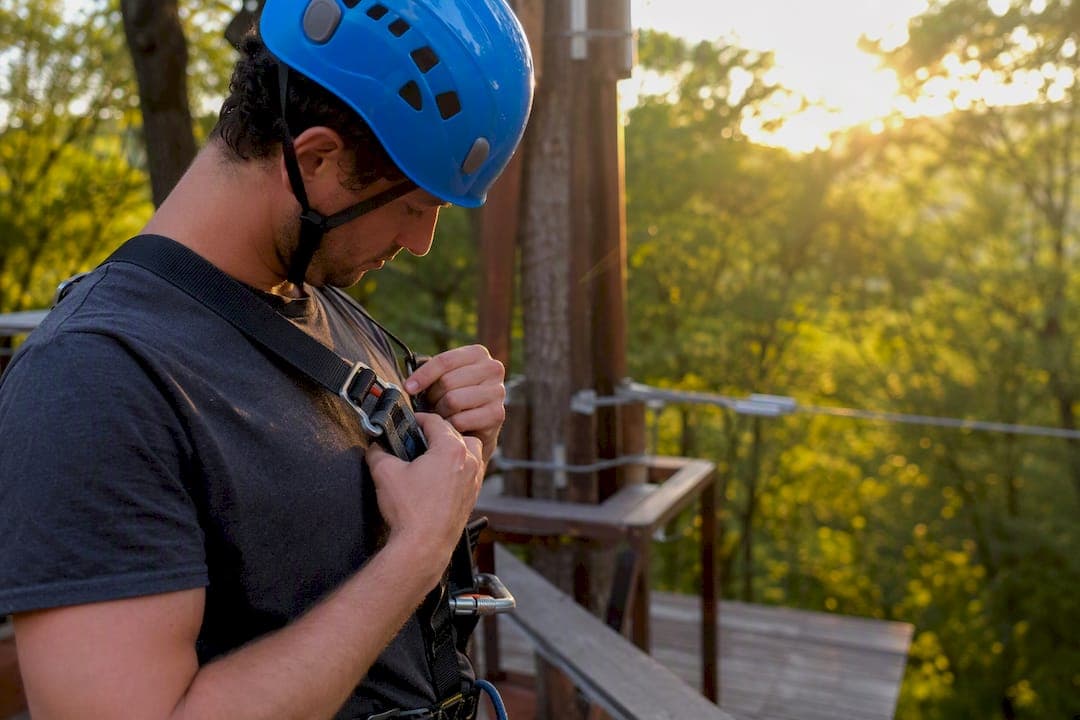
When a zipline operation is built and run by professionals following recognized standards, ziplining is a statistically low-risk activity. A study of U.S. emergency-department visits from 1997 to 2012 found an injury rate of roughly 11.64 per 1 million people, with a minority of those cases serious enough to require hospitalization. That number includes backyard setups and summer camp mishaps, not just commercial parks, which means professionally operated lines are likely even safer than the headline figure suggests.
Before you book, do three things:
- Ask which safety code or standard the operator follows and when the course was last professionally inspected.
- Look at the harnesses, carabiners, and cables yourself. Fraying, rust, or makeshift fittings are disqualifying.
- Actually listen to the safety briefing instead of treating it as a formality.
Key Takeaways
Professionally operated ziplines that follow documented standards, engineer certification, and regular inspection schedules carry a low injury risk relative to many everyday activities.
| Point | Details |
|---|---|
| Verify standards before booking | Ask which code of practice the operator follows and when it was last inspected. |
| Understand the 5:1 safety margin | Cables are rated to hold five times the maximum working load as a built-in buffer. |
| Inspect visible equipment yourself | Look for fraying cable, loose carabiners, or worn harness webbing before you ride. |
| Disclose weight and health honestly | Braking systems and rescue plans depend on accurate rider information. |
| Compare vetted operators on Im-at | Im-at lists outdoor adventure providers so you can check options before booking. |
Table of Contents
- What Makes a Zipline Safe by Design?
- What Standards and Inspections Should Operators Follow?
- What Should You Check in Equipment and Inspections?
- How Trained Should Zipline Staff Be?
- What Are Your Responsibilities as a Rider?
- How Risky Is Ziplining, Really?
- How Do You Choose a Safe Zipline Operator?
- What Happens If Something Goes Wrong?
- What Should a Pre-Ride Safety Briefing Cover?
- What Usually Causes Zipline Accidents?
- Key Numbers From the Code of Practice
- A Marketplace View on Trusting a Zipline Operator
- Book a Vetted Zipline Experience Through Im-at
- Frequently Asked Questions
- Sources
What Makes a Zipline Safe by Design?
A zipline's safety comes down to a handful of engineered components working together, each with built-in redundancy.
- Cable: steel wire rope rated far beyond the loads it will ever carry.
- Anchors: high and low points, usually trees, towers, or engineered platforms, rated for both static and dynamic load.
- Harness: full-body or seat harness distributing force across the hips and thighs.
- Trolley and pulleys: the wheeled unit that rides the cable, engineered to prevent derailment.
- Carabiners: locking connectors linking harness to trolley.
- Braking system: active (operator-controlled) or passive (magnetic or friction-based) mechanism that slows the rider before the platform.
The core safety concept is the ratio between breaking load, the force that would actually snap the cable, and working load, the maximum weight the line is designed to carry in normal use. The Code of Practice for commercial ziplines sets a minimum breaking load to working load ratio of 5 to 1. Picture a cable engineered to hold five times the heaviest rider it will ever see, strung between anchors set at slightly different heights so gravity, not just the brake, does most of the work slowing you down as you approach the platform.
What Standards and Inspections Should Operators Follow?
A properly run zipline park doesn't just build a line and hope for the best. It operates under a documented framework that ties design, construction, and ongoing use to a paper trail.
The Code of Practice governing zipline installation and operation requires a professional engineer to sign off on the design before construction, load testing at 120% of maximum working load once the line is installed, and minimum breaking-load ratios of at least 5 to 1 on all load-bearing components. None of that is optional for a legitimate commercial operation.
Inspection intervals follow a layered pattern:
- Daily visual checks of cable, hardware, and harnesses before the first ride.
- Six-to-twelve-month inspections of tree anchors, since living trees shift and grow in ways steel towers don't.
- Annual third-party performance and load testing across the entire system.
A course that can hand you a logbook showing daily checks, a recent engineer inspection, and a load-test date is telling you something no marketing brochure can: someone with professional liability on the line has verified this equipment recently, not just when it was installed.
That documentation requirement, an operations manual plus a maintained logbook, is what separates a professional adventure park from a hobbyist's backyard build.
What Should You Check in Equipment and Inspections?
Staff at a well-run park do the same visual pass every single morning, and you can do a version of it yourself while waiting in line.
Daily staff checks:
- Cable for visible fraying, kinks, or corrosion.
- Carabiners locking properly with no play in the gate.
- Harness webbing free of cuts, burns, or UV degradation.
- Helmets available and undamaged.
- Trolley wheels and pulleys spinning freely without grinding.
Periodic checks:
- Load testing at scheduled intervals.
- Rope splices meeting minimum length standards so they don't slip under tension.
- Clamp torque checked against the required pattern, since rope-clamp standards specify exact numbers and spacing.
- Tree anchor inspections by a qualified arborist where trees serve as anchor points.
Pro Tip: A frayed strand looks like a tiny burst of wire hairs poking out from the main cable body, easy to miss from a distance but obvious up close. A loose clamp usually shows as a visible gap between the clamp and the cable, or bolts that look hand-tightened rather than torqued to spec. If you can wiggle a component with two fingers, that's not normal.
How Trained Should Zipline Staff Be?
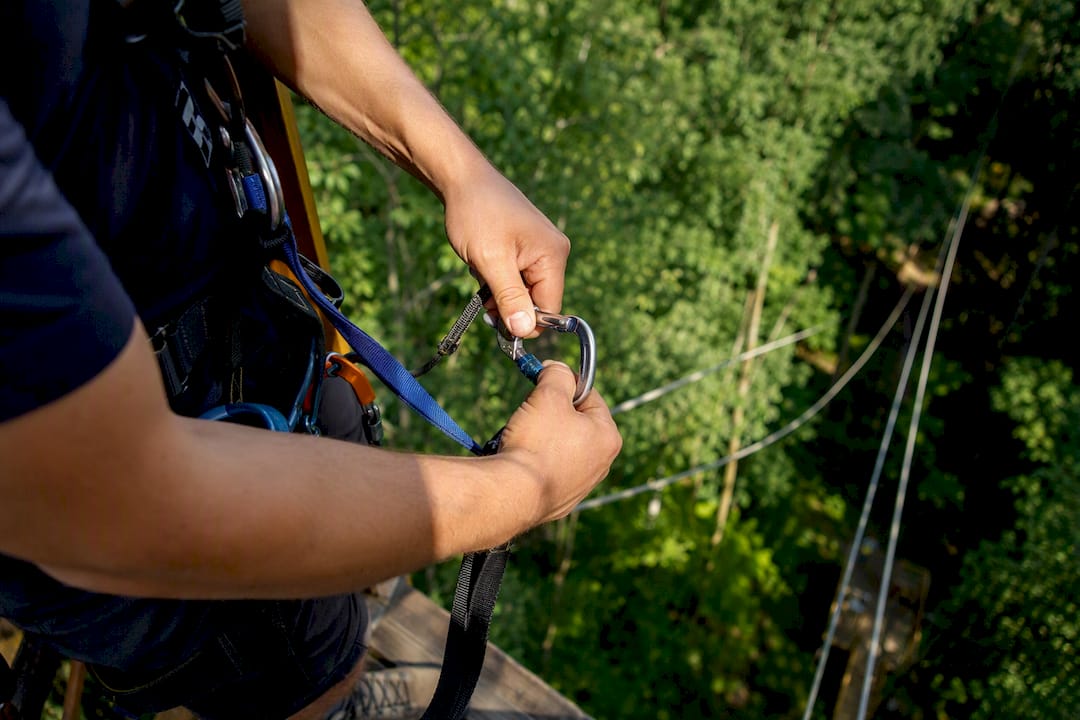
The person running your line should be what the industry calls a "competent person," someone who can inspect equipment, recognize a problem before it becomes an incident, and execute a rescue if something goes wrong mid-course.
OSHA's guidance on zipline worker safety points operators toward ANSI and ACCT standards covering training, supervised practical experience, and formal competence assessments before staff work unsupervised. That training typically covers:
- Daily equipment inspection procedures.
- Braking and speed-control technique for active-brake systems.
- Aerial rescue methods, including how to reach a stalled rider.
- Radio communication protocols between platforms.
During normal operation, staff manage rider spacing, confirm harness attachment, and control launch timing. During an incident, that same staff needs to execute rescue and first aid without waiting for guesswork.
What Are Your Responsibilities as a Rider?
Your own behavior matters as much as the equipment. Before you clip in, be honest about your weight and any relevant health conditions, wear closed-toe shoes and clothing that won't snag on hardware, and actually absorb the safety briefing instead of nodding along.
Once you're on the course:
- Keep your body positioned as instructed, typically seated or reclined depending on harness type.
- Keep hands away from the cable and trolley mechanism.
- Never unclip or adjust your own gear mid-course.
- Follow staff hand signals and verbal instructions without hesitation.
Weight disclosure isn't a formality. Zipline braking systems, particularly passive magnetic brakes, are calibrated to specific load ranges, and understating your weight can throw off the deceleration a system expects. Industry professionals also note it affects rescue planning: a rescuer needs to know what they're lifting before they climb out to reach you.
How Risky Is Ziplining, Really?
The emergency-department study that tracked zipline injuries from 1997 to 2012 counted a large number of nonfatal injuries treated in U.S. ERs over that 16-year span, with an injury rate consistent with the one stated above. Healthychildren cites nearly the same figure and flags that a large share of those injuries involved children, often on backyard kits rather than professional courses.
That data comes from NEISS, the CPSC's national injury surveillance system, which lumps backyard zipline kits, summer camp lines, and commercial adventure parks into one dataset. A professional operation with engineer-certified equipment and daily inspections almost certainly sits well below that blended average. Put in context, it's a lower injury rate than most people would guess, closer to riding a bicycle around the neighborhood than anything resembling extreme sport territory.
How Do You Choose a Safe Zipline Operator?
Vetting an operator takes about five minutes and can be done before you ever leave home.
Before booking, ask:
- Which safety standard or code of practice does the course follow?
- When was the last professional inspection or load test?
- What's the weight limit, and what's the rescue plan if someone gets stuck?
On-site, look for:
- A visible operations manual or maintained logbook.
- Staff wearing identification or displaying training credentials.
- Harnesses and helmets that look clean, current, and undamaged.
Red flags that should send you elsewhere:
- No written inspection records when you ask.
- Equipment that looks homemade or mismatched.
- Staff who can't or won't answer basic safety questions.
An operator confident in their setup will answer these questions without hesitation. One that dodges them is telling you something too.
What Happens If Something Goes Wrong?
A competent operator has a rescue plan before you ever step onto the platform, not one improvised in the moment. That means staff trained in aerial rescue, working radios between stations, and at least one person on-site with first-aid training.
After any incident, expect:
- An incident log documenting exactly what happened.
- Notification of relevant authorities where regulations require it.
- The affected line taken out of service until it's re-inspected and cleared.
If you're involved in an incident, seek medical attention if staff advise it, even for something that feels minor at the time. Keep any documentation, photos, incident reports, staff names, since it protects you if follow-up questions arise later.
What Should a Pre-Ride Safety Briefing Cover?
A real safety briefing runs longer than a cursory "hold on tight" and covers specific, repeatable actions you'll need on the course. Expect staff to walk through how to sit or lean in the harness, where to place your hands (and where absolutely not to place them), and how the braking system on that particular line works, since active brakes and passive magnetic brakes require different rider behavior on approach.
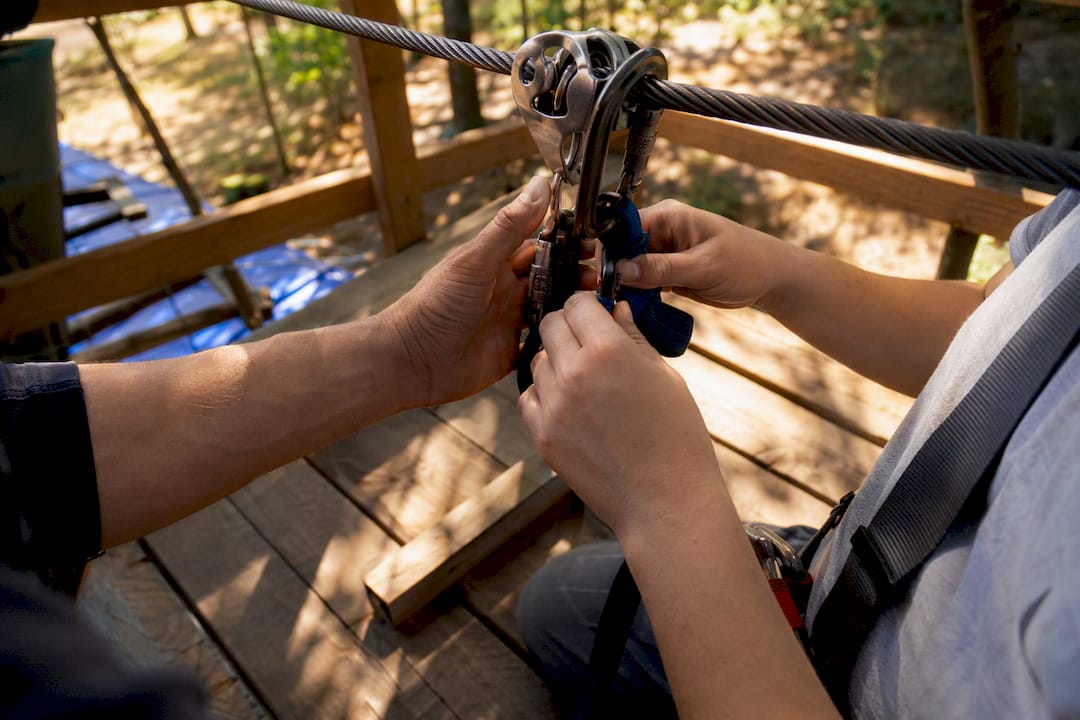
Staff should also demonstrate the hand signals or verbal cues they'll use mid-course, explain what to do if you stop short of the platform, and confirm your harness and helmet fit before you leave the ground. A thorough briefing usually includes a practice clip-in on a low training line or platform so you can feel the equipment before committing to height.
Good operators also cover the boring but important stuff: what to do with loose items like phones or sunglasses, whether long hair needs to be tied back, and what the maximum and minimum rider weight or height requirements are for that specific line. If a briefing skips any of this and rushes straight to the platform, that's worth noting.
Riders who tune out during the briefing tend to be the ones who freeze mid-course or panic when the trolley slows faster than expected. The few minutes spent listening are arguably the single highest-leverage safety action you take all day, cheaper than any equipment and entirely within your control.
What Usually Causes Zipline Accidents?
Most zipline incidents trace back to a small, repeatable set of causes rather than random bad luck.
Equipment failure from deferred maintenance or worn components is the most preventable category. Daily visual inspections and scheduled load testing exist specifically to catch a fraying cable or a loosening clamp before it becomes a failure point.
Improper attachment, a carabiner not fully locked or a harness buckled incorrectly, usually stems from rushed staff or riders who don't wait for a proper equipment check. Operators following ANSI/ACCT competence standards build in a double-check step for exactly this reason.
Collision at the platform happens when riders come in too fast, often because a passive brake wasn't calibrated for that rider's actual weight, circling back to why honest weight disclosure matters.
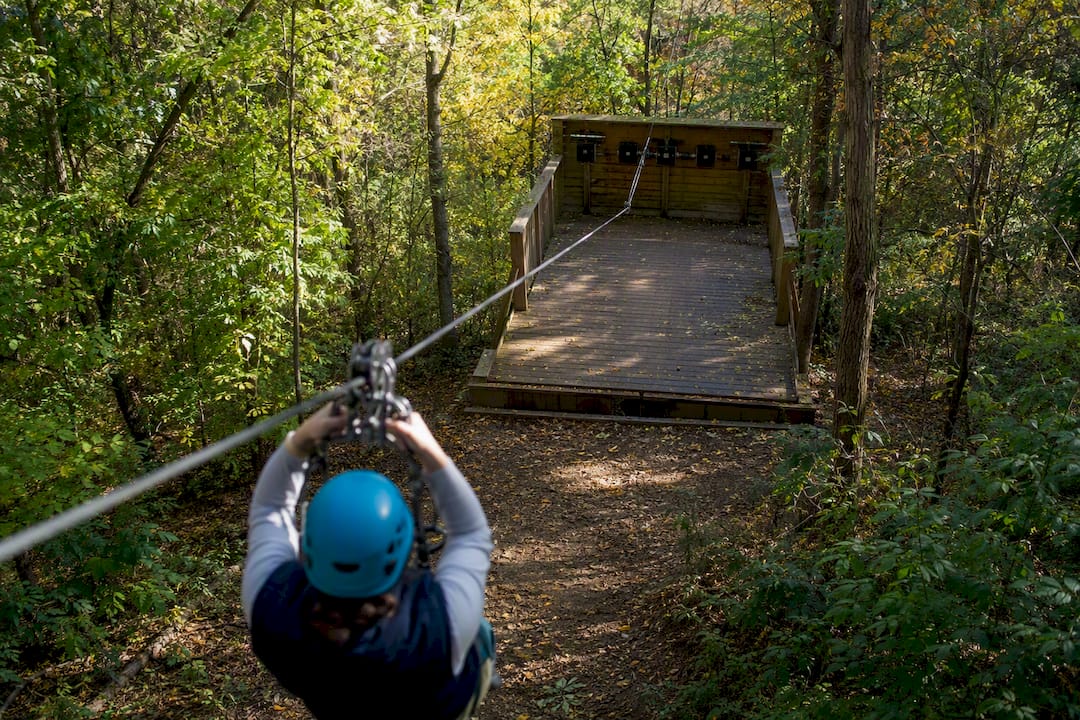
User error mid-course, grabbing the cable, trying to slow yourself manually, or shifting body position against staff instruction, causes friction burns and falls that have nothing to do with equipment quality and everything to do with rider behavior.
Backyard and unregulated setups carry disproportionate risk. HealthyChildren.org specifically warns against consumer zipline kits lacking the engineering, anchoring, and braking redundancy that commercial codes require. If you want the activity, book a professional course.
Key Numbers From the Code of Practice
Operators and curious riders alike benefit from knowing the actual numeric thresholds behind a well-run course, all drawn from the national Code of Practice governing commercial ziplines.
| Specification | Plain-language meaning |
|---|---|
| Breaking load to working load ratio | Minimum 5:1, meaning the cable can hold five times the maximum weight it's rated to carry in normal use. |
| Installation load test | New lines are tested at 120% of maximum working load before opening to the public. |
| Swaged fitting strength reduction | Calculations reduce swaged fitting strength to account for real-world variation. |
| Clamp-fitted rope strength reduction | Rope strength is reduced for calculation purposes once it's fitted with clamps. |
| Tree anchor inspection interval | Periodic inspections are needed, since living anchors shift differently than steel towers. |
| Annual performance testing | Full system load and performance testing at least once a year. |
A Marketplace View on Trusting a Zipline Operator
From where Im-at sits, connecting travelers to hundreds of outdoor operators, the pattern is consistent: the parks that answer inspection questions fastest and most specifically are almost always the ones running the tightest operations. Before you show up for any booked zipline experience, ask directly for the operator's most recent inspection date and don't settle for a vague answer.
Book a Vetted Zipline Experience Through Im-at
Comparing operators one by one, checking certifications, reading reviews scattered across different sites, takes real time most travelers don't have on a trip. Im-at solves that by listing outdoor adventure operators, including zipline and canopy tour providers, in one searchable marketplace where you can compare options and book in minutes instead of hopping between a dozen tabs.
That convenience doesn't replace due diligence on the ground. Always verify inspection dates, certifications, and safety documentation directly with the operator before you participate, regardless of how you booked. If you're planning a trip that includes an aerial adventure, browse ziplining experiences in Cape Town or check out the Exclusive 4x4 Nature & Beach Tour for a broader outdoor day out, and start comparing available dates now.
Frequently Asked Questions
Is ziplining safe for beginners? Yes, professionally run courses brief every rider regardless of experience level, and staff handle clip-in, harness checks, and braking, so no prior skill is required.
What is the weight limit for most ziplines? Weight limits vary by course and braking system, typically ranging from around 35 pounds minimum to 250 to 300 pounds maximum, so check the specific operator's posted limits before booking.
How often should zipline equipment be inspected? Staff should perform visual checks daily, and a qualified professional should conduct full load and performance testing at least annually, per the Code of Practice.
Are backyard zipline kits safe? They carry higher risk than commercial courses because they typically lack engineered anchors, certified braking systems, and the inspection requirements professional operators follow.
What should I wear ziplining? Closed-toe athletic shoes, form-fitting clothing without loose drawstrings, and hair tied back if it's long. Avoid skirts, sandals, or anything that could catch on hardware.
What happens if I panic mid-course? Trained staff can talk you through it via radio or hand signals, and rescue systems exist specifically for riders who stall or freeze partway across the line.
Sources
- Injuries associated with zip lines — American Journal of Emergency Medicine (1997–2012)
- Code of Practice: The installation and operation of commercial Ziplines and Aerial Adventure Parks (national gazette document)
- Protecting Zip-Line Workers — OSHA guidance document
- Healthychildren
- NEISS injury data — U.S. Consumer Product Safety Commission