
When you book a safari, a cooking class, or a city tour through a marketplace, the platform collects your payment, confirms the booking, and then pays the provider on its own schedule, not instantly. For providers, that means getting paid depends on finishing account verification and picking a payout method before the first booking even lands. Deposits, staged balances, and multiple payment options at checkout all shape whether that booking happens at all.
TL;DR:
- Most providers must complete identity verification, choose a payout method, and upload required documents before receiving their first payment.
- Payouts typically occur within 7 to 14 days or are scheduled weekly or biweekly, depending on the platform’s risk management policies.
- Using staged payments with deposits and clear cancellation policies can reduce booking abandonment and payment disputes.
- Offering local and alternative payment methods relevant to the target market can significantly lower booking abandonment rates.
- Automating reconciliation with booking IDs and organized proof documents helps streamline dispute handling and reduces staff workload.
Table of Contents
- How Does Online Payment Processing Work on a Marketplace?
- What Do Providers Need to Set Up to Get Paid?
- When Do Providers Actually Get Paid?
- Deposits, Staged Payments, and Refunds That Don't Create Headaches
- Which Payment Methods Actually Affect Whether Someone Books?
- How Do You Reconcile Payouts Without Losing Your Mind?
- What Providers Ask Us Most About Getting Paid
- List Your Activity and Get Paid Without Building Your Own Checkout
- Sources
How Does Online Payment Processing Work on a Marketplace?
The mechanics behind accepting payments online on a tours-and-activities platform follow a fairly consistent pattern, even though the details shift from one marketplace to another. A traveler pays at checkout, the platform verifies the transaction, the booking is confirmed, and the money sits with the platform until it's released to the provider.
Here's the typical sequence:
- The traveler enters payment details and the platform either authorizes the charge or captures it immediately, depending on the booking type.
- Once payment clears, the platform issues a voucher or confirmation. That's often the customer's only proof of booking, and providers use it to verify who's showing up.
- The platform holds the funds, sometimes in a dedicated trust or escrow arrangement, until conditions for release are met.
- The provider's payout is scheduled and sent through their chosen method.
Some experiences are "on request," meaning the provider has to confirm availability before the booking is finalized. Payment models vary too. Some platforms authorize a card and capture funds only after confirmation; others capture right away and refund if the provider can't accommodate the date. Stripe's documentation on travel payouts describes this as a "travel payout" model, distinct from retail, because money often needs to cross currencies and sit for a defined period before it moves again.
What Do Providers Need to Set Up to Get Paid?
Getting paid on a marketplace isn't automatic the moment you list an activity. You need to clear a few setup steps first, and skipping any of them is the most common reason a first payout gets delayed.
- Complete identity and business verification. Marketplaces need your legal business details, tax information, and sometimes proof of licensing, especially for activities like diving, off-road tours, or anything involving safety certification.
- Choose a payout method. Most platforms support bank transfer, virtual cards, or e-wallets. Pick the one that matches your bank's processing speed and currency needs, since converting currencies at payout time can eat into your margin.
- Upload invoicing and tax documents. This is usually a one-time setup in your provider dashboard, but it's worth revisiting annually as tax rules change.
- Check your payout status regularly. Dashboards typically show pending, processing, and completed payouts, so you can track exactly where your money sits in the pipeline.
Pro Tip: Run a small test booking before you promote your listing widely. It's the fastest way to catch a payout method error before real customer money is on the line.
When Do Providers Actually Get Paid?
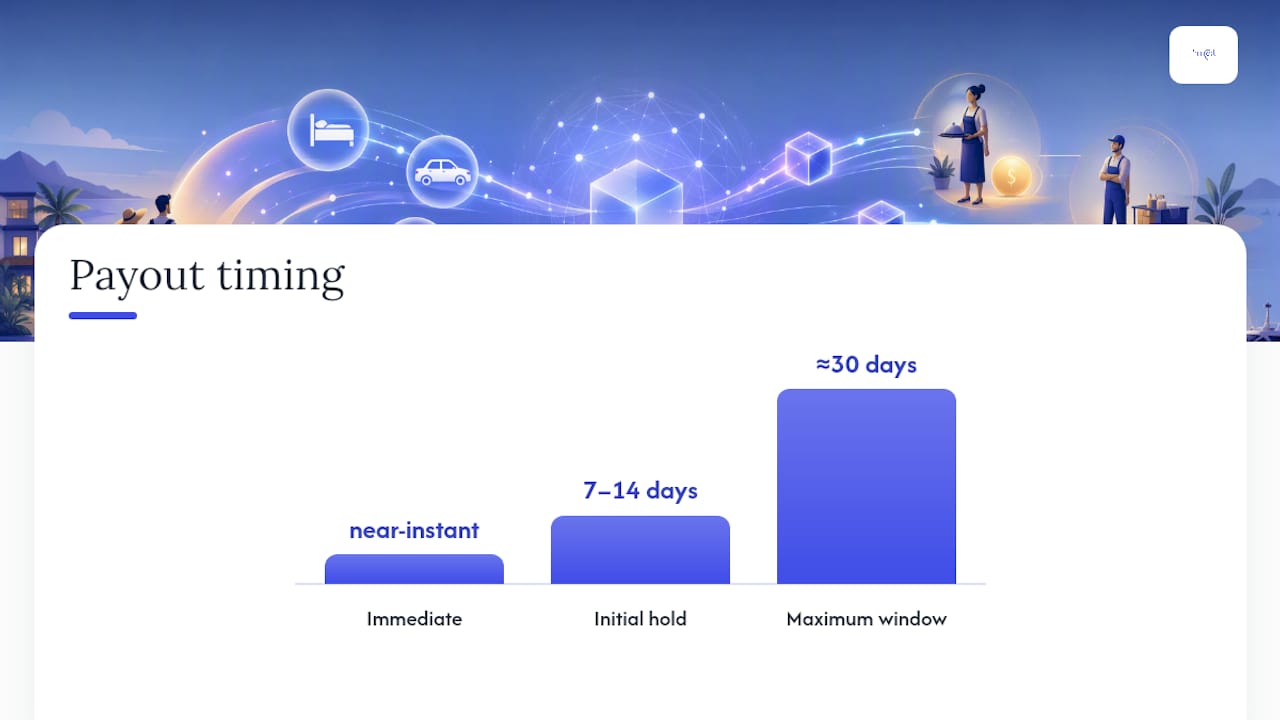
Payout timing on activity marketplaces ranges from near-instant to about 30 days, and the difference usually comes down to how the platform manages fraud risk and dispute exposure rather than how fast banks can move money.
According to Rezgo's breakdown of marketplace mechanics, payout windows generally fall into a few patterns:
- Immediate or near-immediate payout, common for platforms with lower dispute risk or trusted, established providers.
- Rolling payout after an initial hold, where the first several bookings are held longer, often 7 to 14 days, until a provider's track record is established.
- Weekly or biweekly scheduled payouts, which batch all bookings from a set period into a single transfer.
Holds exist because travel bookings carry more chargeback risk than typical retail purchases. A customer who never shows up, or disputes a charge weeks after the activity, puts the platform on the hook if funds already left the building. To manage the wait, plan your staffing and gear purchases around your confirmed payout schedule rather than your booking calendar, keep a short cash buffer for the slow season when hold periods bite hardest, and track pending payouts in your dashboard so you're never surprised by timing.
Deposits, Staged Payments, and Refunds That Don't Create Headaches
Full prepayment isn't always realistic for higher-priced multi-day experiences, which is why most marketplaces support deposit and balance structures instead of forcing one lump payment.
- Set a deposit between 10% and 30% of the total price at booking, then schedule the remaining balance to charge automatically closer to the activity date.
- Confirm your booking engine supports staged charges, since this needs more than a payment gateway. It requires the actual booking-engine integration to trigger the second charge and retry failed attempts automatically.
- Set clear refund and cancellation windows upfront. Most disputes trace back to a customer misunderstanding the cancellation policy, not an actual service failure, so put the terms in the confirmation voucher, not just buried in a listing page.
Handled well, staged payments reduce abandoned bookings without pushing all the collection risk onto the provider.
Which Payment Methods Actually Affect Whether Someone Books?
Missing the right payment method at checkout is one of the quieter reasons bookings fall through. Travelers rarely complain about it. They just close the tab.
A high share of travel customers abandon a purchase when their preferred payment method isn't offered, according to Atlasperk's research on travel payment processing. That's a strikingly high number for a purchase category where the traveler has usually already decided what they want to do.
Practical priorities for providers and platforms:
- Cards remain the default everywhere, but alternative payment methods (APMs) matter heavily depending on the traveler's home market. Certain Asian and European markets lean hard toward local wallets and bank-linked payment apps rather than cards.
- Buy-now-pay-later options can lift average order value on higher-priced multi-day experiences, though they add less value for a $40 walking tour.
- Instead of enabling every payment method a gateway offers, look at where your bookings actually come from and cover the top three or four methods driving most of that traffic.
Adding options nobody uses just clutters the checkout page. Adding the one option your biggest source market actually wants can measurably cut abandonment.
How Do You Reconcile Payouts Without Losing Your Mind?
Matching a marketplace payout to the individual bookings inside it gets messy fast once you're running more than a handful of activities a week. The fix isn't more spreadsheet time. It's better use of the data the platform already gives you.
- Use the booking ID on every transaction as your reconciliation anchor. It's the one identifier that ties a payout line item back to a specific customer and date.
- Where available, automated reconciliation APIs match payments to bookings without manual entry, and Atlasperk's guide on travel payment processing notes this can meaningfully cut the staff hours operators spend reconciling by hand each month.
- For disputes, keep vouchers, guest message threads, and any attendance sign-in sheets organized by date. When a chargeback lands, you typically have a narrow window to respond, and scrambling for proof after the fact almost always costs the case.
Pro Tip: Build a simple folder structure by month and booking ID before your first dispute ever happens. Retrofitting a filing system while a chargeback clock is running is how providers lose winnable cases.
What Providers Ask Us Most About Getting Paid
The question we hear most from new providers isn't about pricing. It's "when does the money actually show up?" Most onboarding friction traces back to two things: incomplete verification documents and a mismatched payout currency that delays the first transfer. Both are fixable before they cause a problem.
Payout cadence and voucher issuance are configured at setup so providers know their schedule before their first booking arrives. A practical first 30 days looks like this: finish verification within the first week, confirm your payout method and currency, run a test booking to check the whole chain works, and review your first payout dashboard entry line by line before you scale up your listing.
— Mikahil
List Your Activity and Get Paid Without Building Your Own Checkout
The platform handles the entire payment side of booking so you don't have to build or maintain your own checkout system. When a traveler books your tour, cooking class, or safari, the platform collects the payment, issues the confirmation voucher, and schedules your payout on a set cadence, the same flow described throughout this guide, without you needing a merchant account or a custom booking engine.
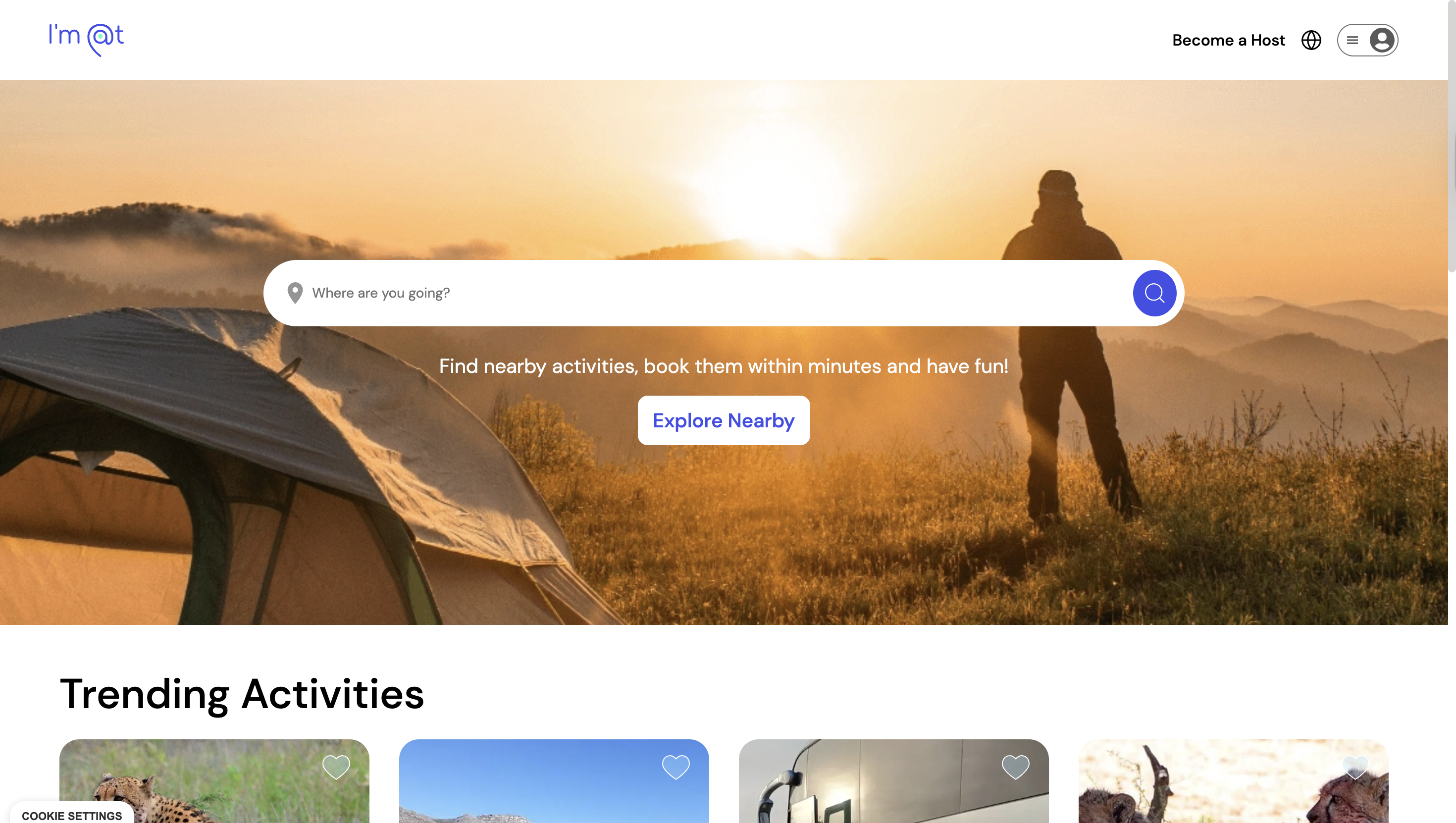
Listing on a marketplace also puts your activity in front of travelers actively searching for something to book that week, offering a broader reach than a standalone website might achieve. You still control your pricing, availability, and cancellation terms. The platform manages the transaction and the payout mechanics behind it. If you're weighing whether to join a travel platform instead of running your own payment setup, start by checking out a live listing like The Unholy Secrets to see how the booking and payout flow looks from the traveler's side, then list your own activity to get your payout schedule set up.
Sources
For deeper detail on payout mechanics, staged payments, and travel-specific fraud handling, see Stripe's travel payouts guide, Atlasperk's travel payment processing guide, and PayCompass on tour operator payments. For marketplace mechanics specifically, read Rezgo's explainer on activity marketplaces.
- Travel payouts and cross-border money movement explained — Stripe
- Payment Processing for Travel: Gateways for Agencies & Operators — Atlasperk
- How online activity marketplaces work — Rezgo