

The fastest way to get a tour in your language is to book either a fluent human multilingual guide or a tech-enabled self-guided audio tour, and the right pick depends on what you actually want from the day. Live guides win when you plan to ask questions and want back-and-forth conversation. Multi language tours built around AI narration or pre-recorded audio win when you want broad language coverage, flexible timing, and a lower price.
Before you book anything, run through this:
- Confirm the exact language and dialect, not just "Spanish" or "Portuguese."
- Ask whether you can interrupt with questions or if it's one-directional audio.
- Check if a private guide is available in your language, or only a group option.
Get those three answers first. Everything else is refinement.
Key Takeaways
Getting a tour in your language comes down to matching your interaction needs to the right delivery format, then verifying fluency claims before you pay.
| Point | Details |
|---|---|
| Pick format by interaction need | Choose a human guide for live Q&A, or self-guided audio for pace and lower cost. |
| Verify before booking | Request a sample audio clip, transcript, or short demo in your target language. |
| Check dialect, not just language | Confirm the specific dialect and ask directly whether the guide is a native speaker. |
| Know the tech trade-offs | AI translation can introduce lag; wireless headsets can lose reliability in crowds. |
| Use Im-at to confirm details upfront | Search listings, review provider bios, and message operators directly to confirm language support before booking. |
Table of Contents
- What Are the Main Types of Multi Language Tours?
- What Technology and Accessibility Features Should You Check?
- How Do You Choose the Right Multilingual Tour Before Booking?
- What Should You Confirm in Writing Before You Book?
- How Im-at Helps You Verify Language Support Before You Book
- How Do Operators Train and Select Multilingual Guides?
- Where Do Multi Language Tours Fall Short?
- What Does a Successful Multi Language Tour Look Like in Practice?
- Why the Real Bottleneck Isn't Language Coverage
- Book a Multi Language Tour Through Im-at
- Sources
What Are the Main Types of Multi Language Tours?
Four formats dominate the market, and each solves a different problem. Knowing which is which keeps you from paying for interaction you won't get, or settling for a recording when you actually wanted a conversation.
- Human multilingual guides. A real person walks with you, answers off-script questions, and adjusts pacing based on your interest. This is the format for travelers who want depth on local history or culture, and it's usually the most expensive because it often means booking a private or small-group slot; for insights on how language access enhances culinary and cultural tours, see The Role of Local Cuisine in Tourism: A Traveler’s Guide. If interactive storytelling matters to you, a live guide is worth the premium.
- Interpreter headset setups. A single guide speaks one language while an interpreter translates live over wireless receivers. This works well for larger groups moving through museums or cathedrals where a loud multilingual crowd would be disruptive. Reliability depends heavily on receiver range and interpreter skill.
- AI-powered real-time translation. Software translates the guide's narration into your language almost instantly, and some systems handle live Q&A by translating your spoken question and the guide's answer back and forth. Developers argue this format removes the need for a separate human guide per language group entirely, which is a real shift in how mixed-language crowds get served. Ask about lag time and whether the system supports a custom glossary for place names.
- Self-guided multilingual audio and QR-triggered tours. You walk at your own pace while a phone or receiver plays narration triggered by GPS or a scanned code. Language counts here can be surprisingly high since there's no live interpreter to hire per language.
Pro Tip: Ask an operator how many languages they actually support versus how many are "available on request." Those are two very different promises.
Language availability varies a lot by destination. A tour in a major European capital might offer eight or more languages; a niche regional tour might only cover two or three.
What Technology and Accessibility Features Should You Check?
Not all multilingual tech performs the same, and vendor marketing rarely tells you where the weak points are. A few technical questions separate a smooth experience from a frustrating one.
- GPS versus QR triggers. GPS works well outdoors on walking routes since it fires automatically as you approach a stop. Indoors, on a coach, or in a museum with thick walls, GPS signal gets unreliable, so QR codes or numbered manual triggers work better.
- Audio delivery. Receivers with headphones cut ambient noise far better than a phone speaker in a crowded plaza. If you're sensitive to background noise, ask specifically about receiver-based audio rather than phone-based playback.
- Transcripts, subtitles, and alt-text. These aren't just nice extras. They matter for travelers who are hard of hearing, learning the language, or simply want to read along in noisy environments. Operators serious about accessibility publish these upfront rather than making you ask.
Some platforms now generate narration across 14 languages with GPS and QR triggers and transcripts built in, which shows how fast multilingual rollout has become for operators willing to invest in it. Market examples like Olyusei's AI-powered tour system advertise real-time translation with multi-language subtitles and live Q&A, features worth asking any operator to demonstrate before you pay.
Verify claims rather than trust the brochure copy. Ask for a 30-second sample clip in your language, a transcript excerpt, or a short live demo before booking.
How Do You Choose the Right Multilingual Tour Before Booking?
Work through this in order, and you'll cut booking time roughly in half.
- Decide your interaction requirement first. If you need to ask questions on the fly, that rules out pure audio formats immediately.
- Set your budget. Private human guides cost the most; interpreter headsets and AI systems fall in the middle for group tours; self-guided audio is usually the cheapest per person.
- Identify accessibility needs. If you need captions or a transcript, confirm that before you pay, not after.
- Match to a delivery format using the first three answers.
Before you commit, ask the operator directly:
- Which dialect does the guide speak, and can they confirm native fluency?
- Can I hear a sample clip or read a transcript?
- Is this private or shared with other language groups?
- How does Q&A work during the tour?
- What's the refund policy if the promised language support doesn't show up?
Watch for red flags: no sample audio available, vague language lists ("multiple languages spoken"), or no way to verify the guide's actual fluency level. Pricing shape matters too. Private human guides often run a flat group rate regardless of headcount, while tech-enabled tours typically charge per person, which usually makes them cheaper for solo travelers or couples.
Pro Tip: If an operator hesitates to send a sample audio clip, that hesitation is itself an answer.
What Should You Confirm in Writing Before You Book?
Get these details in writing, not just verbally promised at check-in:
- Exact language and dialect
- Delivery format (live guide, headset, AI audio, self-guided)
- Meeting point and any equipment provided
- Whether the tour is private or shared
A short message like this works for most operators:
Ask for evidence beyond a verbal yes: a sample clip, the guide's bio, or reviews that specifically mention language support hold more weight than a generic five-star rating. If you arrive and the promised language support isn't there, raise it immediately with the operator on-site and request a partial refund or reschedule rather than waiting until after the tour ends.
How Im-at Helps You Verify Language Support Before You Book
Booking risk usually comes down to one thing: not knowing what you're getting until you show up. Im-at's listing pages are built to close that gap before you pay.
- Provider bios and event pages show language details and guide background upfront, not buried in fine print.
- Messaging tools let you ask a provider directly about dialect, fluency, or private-tour availability before booking.
- Operators publishing self-guided multilingual tours can list language options clearly, similar to how modern audio-tour platforms now roll out narration across more than a dozen languages in a matter of minutes per stop.
The goal isn't to add another layer of guesswork. It's to give you the same three answers this guide opened with, confirm the language, the dialect, and whether you can ask questions, before you hand over payment.
How Do Operators Train and Select Multilingual Guides?
Reputable operators don't just hire someone who "speaks decent French." They screen for regional accent familiarity, comfort with unscripted questions, and depth of subject knowledge, since a guide can be fluent in a language and still struggle to explain a 400-year-old cathedral's construction history on the fly.

Training programs typically combine language assessment with route-specific briefings, so a guide working a wine region tour learns the vocabulary for soil types and fermentation, not just travel small talk. Many operators also run guides through mock Q&A sessions to test how they handle unexpected tangents, since real tourists rarely ask the questions in the script.
For AI-assisted tours, the "training" shifts toward building glossaries. Museums and historic sites often feed operators a list of proper names, artist names, and technical terms so the translation software preserves them correctly instead of mangling a name like "Michelangelo" into something unrecognizable. That glossary work is arguably more important than raw translation speed, since a fast but inaccurate translation erodes trust fast.
Smaller, independent operators sometimes skip formal training entirely and rely on guides who grew up bilingual. That's not a flaw, but it does mean you should ask directly whether a guide's second language came from immersion or from a classroom, since conversational fluency and tour-narration fluency aren't always the same skill.
Where Do Multi Language Tours Fall Short?
Translation accuracy is the most obvious weak point. Idioms, historical jokes, and regional slang often don't survive translation cleanly, whether the translator is human or software. A guide might deliver a punchline that lands perfectly in English and falls completely flat once translated, because the humor depended on wordplay that simply doesn't exist in the target language.

Latency is a real issue with AI-powered systems specifically. A half-second delay between the guide speaking and your translation arriving doesn't sound like much, but over a two-hour tour it adds up to a noticeably disjointed experience, especially during Q&A when you're waiting for both your question and the answer to translate. Technical literature on real-time translation systems consistently flags latency and accuracy as the core trade-off any operator has to manage, and wireless audio reliability compounds the problem in crowded or signal-heavy environments, a challenge documented in technical research on wireless tour-audio systems.
Cultural nuance is harder to fix with technology. A guide explaining a religious custom or a politically sensitive historical event needs judgment about tone, not just accurate vocabulary. Self-guided audio tours sidestep this by scripting content carefully in advance, but that removes the ability to adjust based on who's actually listening. There's no clean fix here, only trade-offs you should know about before you pick a format.
What Does a Successful Multi Language Tour Look Like in Practice?
Look at how quickly self-guided audio platforms have scaled language coverage. One operator launched walking tours in 14 languages using browser-based playback, skipping the app-install friction entirely and pairing GPS triggers outdoors with QR codes for indoor stops, plus transcripts for accessibility. That combination, browser access, dual trigger systems, and built-in transcripts, solves three separate traveler pain points with one setup.
On the private-guide side, operators offering guided safaris in South Africa have leaned into advertising services in a traveler's preferred language as a core selling point rather than an afterthought, recognizing that language access can be the deciding factor between two otherwise similar safari bookings.
The common thread across working implementations isn't the technology itself. It's that operators treat language support as something to prove upfront, sample audio, transcripts, clear dialect labeling, instead of something travelers have to discover after paying.
Why the Real Bottleneck Isn't Language Coverage
Most advice on multilingual tours obsesses over language count, as if offering 20 languages automatically beats offering six. It doesn't. A tour with six languages and verified native fluency in each beats a tour claiming 20 languages through machine translation nobody proofread.
The conventional wisdom also underrates interaction quality. Travelers fixate on "will this be in my language" and forget to ask "will I be able to ask a follow-up question." A gorgeous multilingual audio track that can't answer why the guide mentioned a specific date is still a monologue, not a tour.
What actually separates a good multilingual experience from a disappointing one is verification, not variety. Ask for the sample clip. Ask about the glossary. Ask whether the guide is a native speaker or fluent-but-not-native, because that distinction shows up the moment someone asks an unscripted question. Prioritize proof over promises, and the language count will take care of itself.
— Mikahil
Book a Multi Language Tour Through Im-at
Comparing operator websites one by one to figure out which ones actually confirm language support is tedious, and half of them won't answer your message for two days. Im-at cuts that step out by putting provider bios, language details, and direct messaging in one place, so you can ask about dialect and fluency before you commit rather than gambling on a booking form.
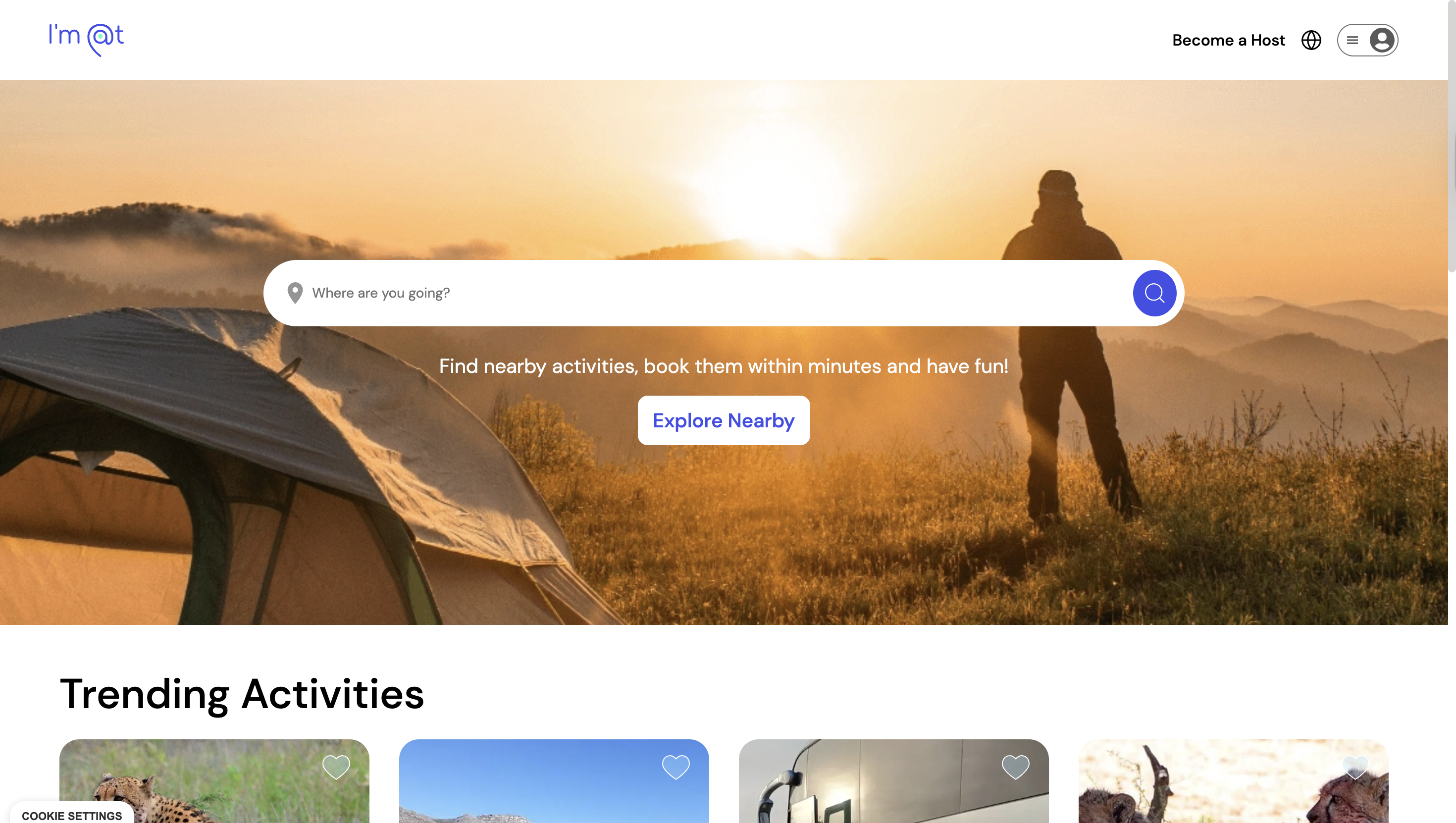
Search a destination, filter by activity type, and open a provider's page to see what language information they've already listed. If it's missing, message them directly through the platform and ask the same three questions this guide walked through: language, dialect, and whether you can ask questions during the tour. One listing worth checking is The Unholy Secrets, a good example of how an event page lays out guide and format details before you book. If you're weighing a live guide against a self-guided option first, this breakdown of guided versus self-guided tours is worth a quick read before you search.
Start your search on Im-at and confirm language support directly with a provider before you book.
Sources
- AI and travel: trip lifetime or safe boring experience (Stellenbosch Business)
- Technical/academic research on translation systems (CiteSeerX)
- AI-powered guided tours | Olyusei
- Wexplo Tours: Self-guided audio tour platform