
TL;DR:
- Small group tours typically include 8 to 24 participants, offering personalized access and cultural immersion. They focus on purpose-built itineraries with high guide-to-guest ratios, providing authentic experiences and fewer crowds. Travelers should verify maximum group sizes, itinerary design, and experiential offerings to choose the best option for immersive travel.
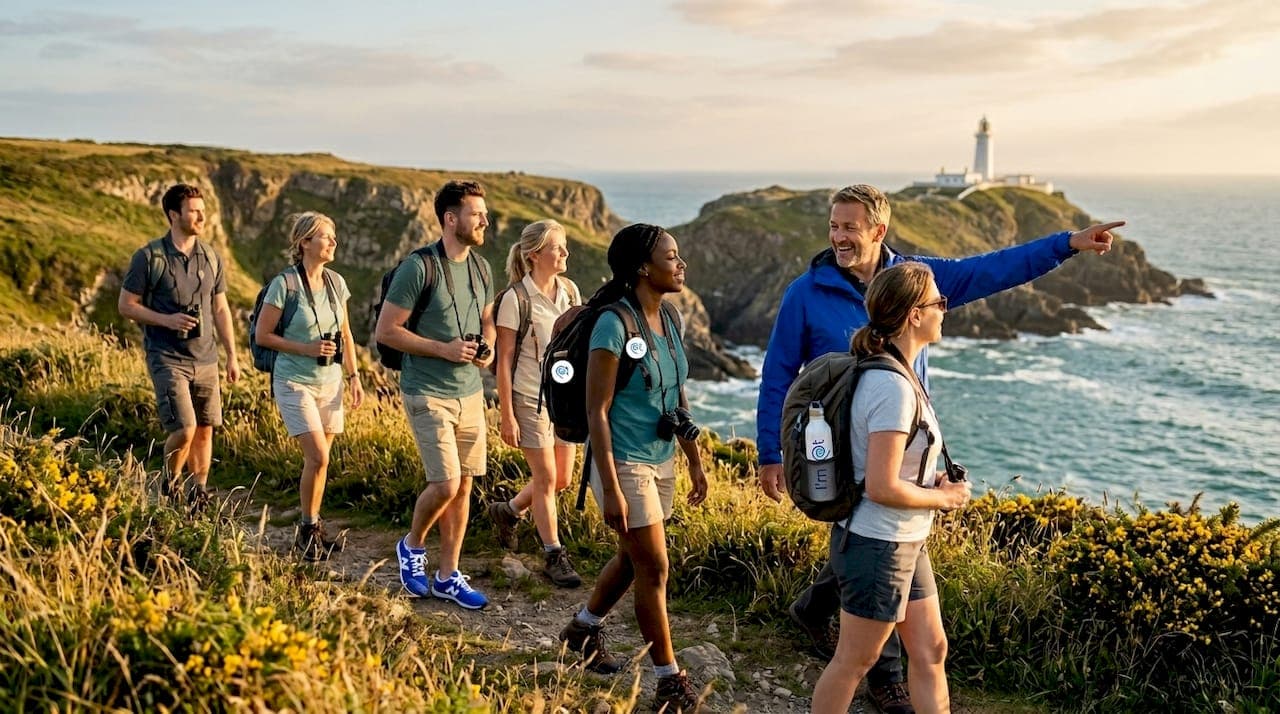
A small group tour is a guided travel experience with a limited number of participants, designed to deliver a more personal, immersive, and manageable trip than traditional large-group travel. The definition of small group tours varies by operator, but group sizes typically range from 8 to 16 people, with some operators extending that cap to 24 or 26. This format is one of the fastest-growing segments in experiential travel in 2026, driven by travelers who want authentic cultural encounters, better guide attention, and access to places a bus full of tourists simply cannot reach. If you are weighing your options, understanding exactly what separates a small group tour from other travel formats is the clearest place to start.
What are the typical sizes and characteristics of small group tours?
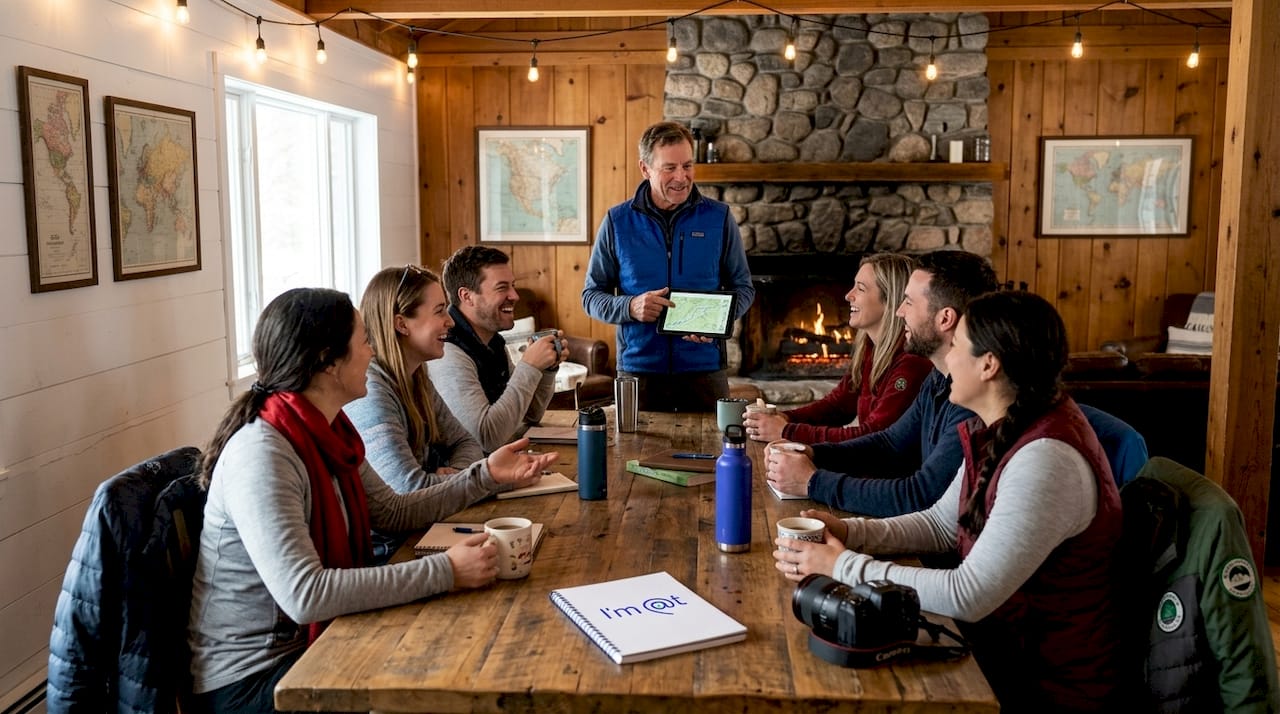
The definition of small group tours does not follow a single industry standard. Market research defines the range as 2 to 20 participants, while major operators apply their own caps based on destination, transport type, and itinerary design. That gap matters when you are booking a trip and expecting an intimate experience.
Here is how leading operators define their small group caps in 2026:
| Operator | Small Group Cap | Notes |
|---|---|---|
| G Adventures | 10–12 | Among the tightest caps in the industry |
| Globus | 15 | Focused on access and authenticity |
| Collette | 19 | Purpose-built small group line |
| Insight Vacations | 24 (18 in Africa) | Premium tiered caps by region |
| CIE Tours | 26 | Broader definition of small group |
The factors that drive these differences include vehicle size, accommodation type, and the nature of the activities planned. A 4x4 safari through remote terrain naturally caps lower than a city walking tour. Boutique hotels in rural Portugal may only accommodate 12 guests at once. Destination infrastructure shapes the ceiling as much as operator philosophy does.
Pro Tip: When comparing operators, ask for the maximum number of participants per departure, not just the advertised average. The average can be misleading if a tour regularly departs at full capacity.
Understanding small group tour characteristics also means recognizing that the label "small group" is a marketing term as much as a structural one. Two operators can both call their product a small group tour while operating at very different scales. Reading the fine print on maximum group size per departure is the single most important step before booking.
What benefits distinguish small group tours from larger tours or solo travel?
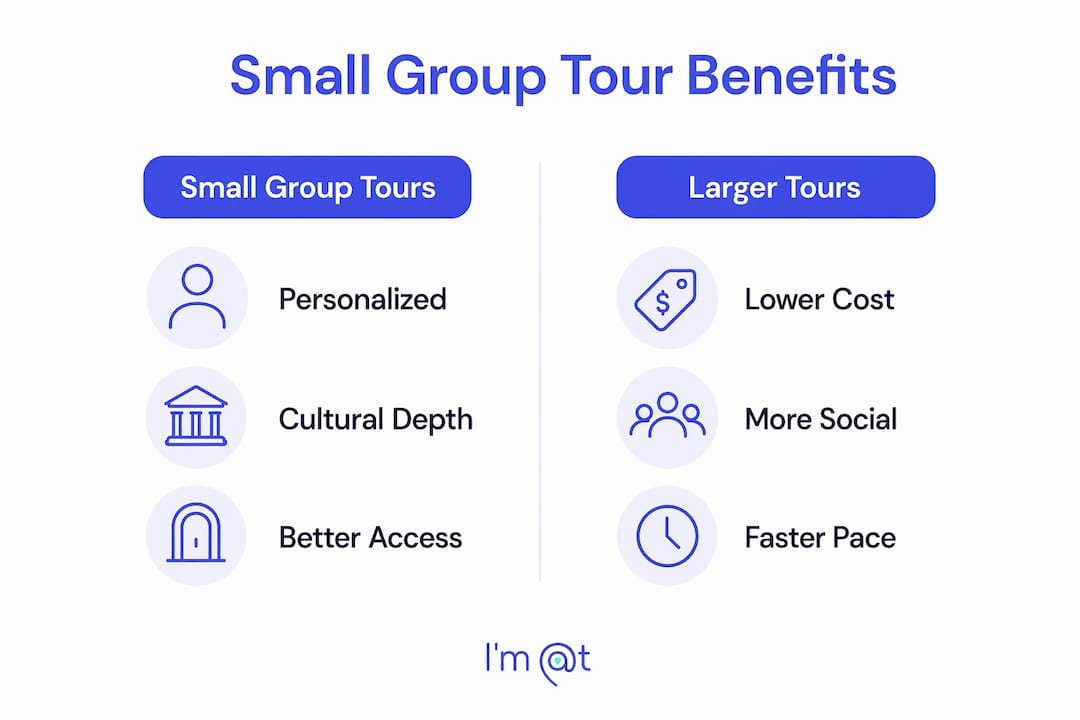
The benefits of small group tours come down to one core principle: smaller groups unlock access that larger groups cannot get. Globus CMO Steve Born put it directly, stating that small groups translate to bigger wows through access and authenticity. That access operates on multiple levels, from physical entry to cultural depth.
Here are the primary advantages travelers consistently report:
- Special access: Smaller groups can enter sites during off-hours, visit artisan workshops, and attend family-hosted meals that are simply not viable for 40-person coaches.
- Personalized guide attention: With fewer guests per guide, your questions get answered, your pace gets respected, and your interests can genuinely shape the day.
- Shorter lines and less crowding: Boarding a vehicle, entering a site, or ordering lunch takes minutes instead of half an hour.
- Stronger social bonds: Traveling with 10 people for two weeks creates real friendships. The same trip with 40 strangers rarely does.
- Flexible pacing: Structured activities balanced with free time and guest choices give travelers breathing room without sacrificing the guided experience.
- Better accommodations: Small groups fit into boutique hotels, riads, and guesthouses that large groups cannot use, adding character to every overnight stay.
The comparison with solo travel is equally instructive. Solo travelers gain freedom but lose the logistical support, local knowledge, and built-in community that a guided small group provides. Small group travel explained simply is this: you get the freedom of independent travel with the infrastructure and expertise of a guided tour. That combination is why traveler demand in 2026 increasingly favors guided travel with more space to form deeper connections.
Pro Tip: Before booking, ask the operator for their guide-to-guest ratio. A ratio of 1:10 or better signals a genuinely attentive experience. Anything above 1:15 starts to feel like a larger group regardless of the headcount.
For travelers who want to explore how small group formats compare directly to going it alone, Im-at's breakdown of group versus solo travel is worth reading before you decide.
How does small group tour design differ operationally from larger tours?
The most important distinction in small group travel explained properly is the difference between a purpose-built small group tour and a scaled-down large group tour. These are not the same product. Collette's small group line was built specifically for smaller groups, with fewer one-night stays and more time at each location. That is a fundamentally different itinerary philosophy, not just a reduced headcount.
| Feature | Purpose-built small group tour | Adapted large group tour |
|---|---|---|
| Pacing | Slower, more time per destination | Faster, more stops |
| Accommodations | Boutique hotels, guesthouses | Standard chain hotels |
| Unique experiences | Artisan workshops, private meals | Standard site visits |
| Itinerary flexibility | Higher, built-in guest choices | Lower, fixed schedule |
| Guide attention | High, personalized | Moderate to low |
Purpose-built tours also unlock experiences that are not feasible at scale, such as igloo stays in Finland or family-hosted dinners in rural Morocco. These moments define the memory of a trip. They are not add-ons. They are the product itself, made possible only because the group is small enough to be welcomed somewhere intimate.
Operationally, smaller groups also reduce the logistical friction that erodes travel quality. Boarding a 4x4 with 10 people takes two minutes. Boarding a coach with 45 people takes fifteen. That difference compounds across a two-week itinerary into hours of recovered time and significantly less frustration. The guide-to-guest ratio is the operational metric that determines how "small" a small group actually feels on the ground.
For travelers interested in what culturally immersive small group itineraries look like in practice, Im-at's guide to cultural tour examples shows how this format translates into real destinations.
How to choose the best small group tour for your needs
Selecting the right small group tour requires more than reading a brochure. The variation in how operators define and deliver small group travel means that due diligence is the difference between a transformative trip and a disappointing one. There is no universal number for what qualifies as a small group tour, so travelers must verify specifics directly.
Follow these steps before committing to a booking:
- Confirm the maximum group size per departure. Ask the operator directly. The advertised size and the actual cap can differ, and you want the worst-case scenario, not the average.
- Ask for the guide-to-guest ratio. This single number tells you more about the quality of attention you will receive than any marketing copy.
- Identify whether the tour is purpose-built or adapted. Ask the operator whether the itinerary was designed from scratch for small groups or modified from a larger product.
- Review the itinerary for pacing signals. Count the number of one-night stays. More than three in a two-week trip suggests a rushed schedule that undermines the small group advantage.
- Check what unique experiences are included. Private meals, artisan visits, and off-hours site access are hallmarks of a genuinely small group product. Generic museum visits are not.
- Research operator reviews on platforms like TripAdvisor or Google. Focus on reviews that mention group size, guide quality, and pacing rather than just destination highlights.
- Compare pricing in context. Small group tours cost more than large group tours for real reasons. The premium reflects boutique accommodations, better access, and higher guide ratios. Evaluate value, not just price.
Im-at's step-by-step resource on finding the perfect tour walks through this selection process in detail, including what questions to ask operators before you pay a deposit.
Key takeaways
Small group tours deliver superior access, pacing, and cultural depth because their size is a design constraint, not just a headcount.
| Point | Details |
|---|---|
| Size varies by operator | Caps range from 10 to 26 depending on operator, destination, and transport type. |
| Purpose-built beats adapted | Tours designed from scratch for small groups offer better pacing and richer experiences. |
| Guide-to-guest ratio matters | A ratio of 1:10 or better signals genuinely personalized service and attention. |
| Unique access is the core benefit | Small groups reach igloo stays, private meals, and artisan workshops that large groups cannot. |
| Verify before you book | Always confirm the maximum group size per departure, not just the average or the label. |
Why small group tours are reshaping how I think about travel
I have spent years watching travelers return from large group tours with beautiful photos and a vague sense that something was missing. The itinerary was checked off. The highlights were visited. But the trip did not feel like theirs. Small group travel fixes that problem at the structural level, and I think most travelers underestimate how much the group size shapes the entire emotional texture of a trip.
What strikes me most is that the best small group operators do not just reduce the headcount. They rebuild the product around what becomes possible at that scale. A family-hosted dinner in a Tanzanian village is not a scaled-down version of a buffet lunch at a tourist hotel. It is a completely different category of experience, and it only exists because the group is small enough to be welcomed into someone's home.
The traveler demand shift in 2026 toward more immersive, connection-driven travel is real, and small group formats are the clearest structural response to it. But I would caution travelers against assuming that any tour labeled "small group" delivers on that promise. The label is common. The execution varies enormously. The operators who built their products from the ground up for small groups, rather than simply capping enrollment on an existing large group tour, are the ones worth your money.
My honest recommendation: prioritize the guide-to-guest ratio and the number of purpose-built unique experiences over the total headcount. A tour with 18 people, a 1:9 guide ratio, and three private cultural experiences will outperform a tour with 10 people and a generic itinerary every single time. The 2026 travel trends confirm that travelers who understand this distinction book better trips and report higher satisfaction.
— Mikahil
Discover small group experiences worth booking on Im-at
Im-at connects travelers with small group and private tour experiences built for depth, not volume. Whether you are planning a cultural day trip or a multi-day adventure, the platform makes it easy to find experiences designed around intimate access and expert guidance.
The Tailor-Made 4x4 Tours on Im-at are a strong example of purpose-built small group travel: customizable routes, expert local guides, and group sizes that keep the experience genuinely personal. For a single-day immersive option, the Private Bagamoyo Day Trip combines local history, culture, and cuisine in a format that a large group tour simply cannot replicate. Browse Im-at's full catalog to find small group experiences that match your travel style and destination.
FAQ
What is the standard definition of small group tours?
A small group tour is a guided trip with a limited number of participants, typically between 8 and 24 people, designed to offer more personalized attention and immersive experiences than larger group travel. The exact cap varies by operator, with no single universal definition across the industry.
How do small group tours differ from private tours?
A private tour is booked exclusively for one traveler or one party, with no other guests joining. A small group tour includes multiple unrelated travelers up to the operator's cap, typically between 10 and 26 people, sharing the guide and itinerary.
Why do small group tour prices tend to be higher?
Small group tours cost more because they use boutique accommodations, maintain higher guide-to-guest ratios, and include access to experiences not viable for large groups. The premium reflects real operational costs, not just marketing positioning.
What should I check before booking a small group tour?
Confirm the maximum group size per departure, the guide-to-guest ratio, and whether the itinerary was purpose-built for small groups or adapted from a larger tour. These three factors determine the actual quality of the experience more than the advertised group size label.
Are small group tours suitable for solo travelers?
Small group tours are one of the best formats for solo travelers because they provide built-in community, logistical support, and local expertise without requiring a travel companion. Many operators actively design their small group products to attract and accommodate solo bookings.