
TL;DR:
- Effective trip planning balances scheduled activities with open time for discovery and relaxation.
- Prioritize authentic, purpose-driven experiences tailored to your travel mood and interests.
- Use digital tools, local advice, and flexible frameworks to create memorable, unconstrained travel experiences.
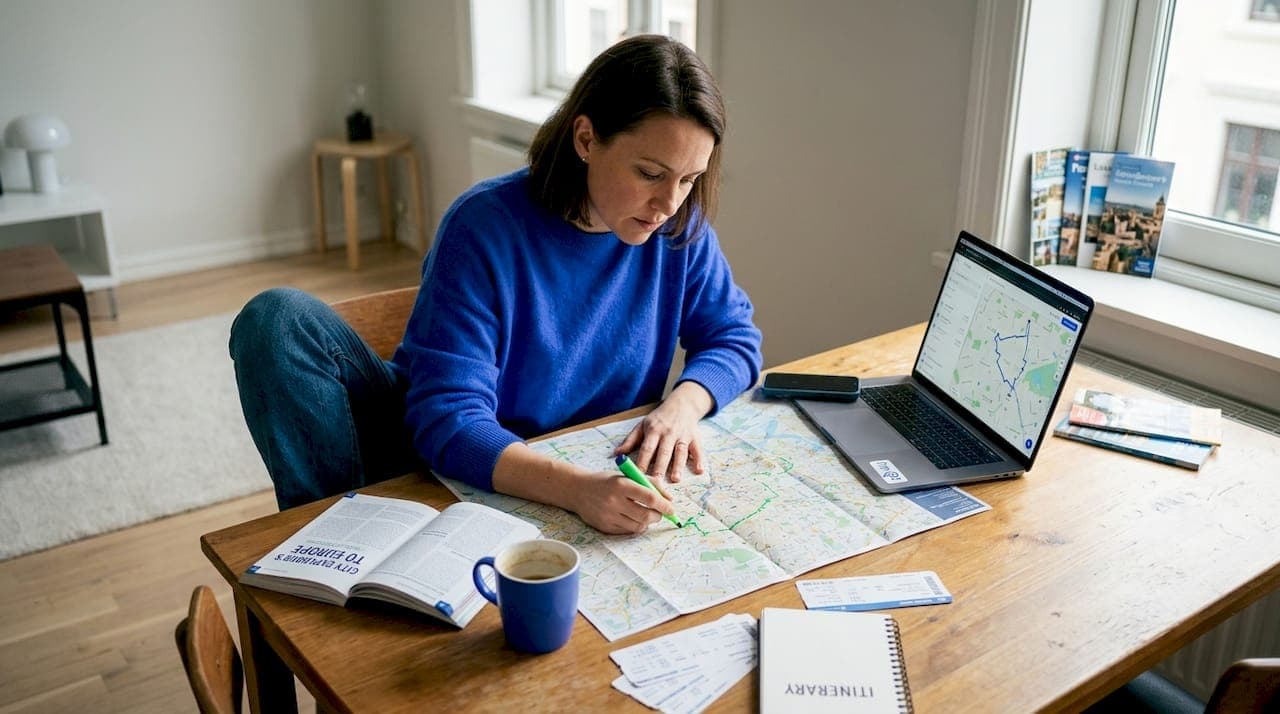
Every trip comes with a hidden problem: too many options and not enough time. You land in a new city buzzing with possibilities, and within hours you're either overcommitting to a packed schedule or wasting precious hours scrolling through review sites in your hotel room. Smart activity planning isn't about filling every hour. It's about choosing the right experiences, in the right order, with enough breathing room to actually enjoy them.
Table of Contents
- Set your travel activity priorities
- Research local and authentic experiences
- Compare and select the best activities
- Plan your itinerary and stay flexible
- Rethinking activity planning: Why a little uncertainty makes trips unforgettable
- Plan with confidence — let expert guides do the work
- Frequently asked questions
Key Takeaways
| Point | Details |
|---|---|
| Prioritize your travel goals | Focus on what matters most to you, whether it’s adventure, culture, or relaxation. |
| Seek genuine local experiences | Authentic, community-driven activities create richer memories than standard tourism. |
| Balance structure with spontaneity | Leave space in your itinerary for last-minute finds and unplanned adventures. |
| Leverage digital planning tools | AI and curated apps help you streamline research, scheduling, and flexibility on-the-go. |
| Expert guides can simplify planning | Consider curated tours or activities for a stress-free introduction to a new destination. |
Set your travel activity priorities
Once you know why you want to travel and what moves you, it's much easier to choose between the many activities on offer. The first step isn't booking anything. It's getting honest about what kind of traveler you are on this particular trip.
Are you craving physical adventure? Cultural depth? Pure relaxation? Or something harder to name, like the desire to feel genuinely connected to a place and its people? Your answer shapes every decision that follows. A traveler in Lisbon looking for connection will spend their morning at a neighborhood market, not at a famous viewpoint. A traveler chasing adrenaline in Cape Town will prioritize surf lessons over museum hopping.
Purpose-driven travel is growing fast, with personalization via AI and human curation rising alongside bleisure travel (blending business and leisure) and regional exploration. Travelers are moving away from generic beach holidays toward experiences that feel intentional and personally meaningful.
This shift matters because it changes how you should build your list. Instead of asking "What are the top 10 things to do here?", ask yourself:
- What do I want to feel by the end of this trip?
- Which type of activity energizes me versus drains me?
- Am I here for depth or breadth — one or two immersive days, or many quick experiences?
- Does this destination offer something I genuinely cannot find at home?
Good experience curation starts with these questions. AI-powered platforms and curated travel apps can now filter thousands of options down to a manageable shortlist based on your stated interests, available time, and even your energy level across the day. But the filtering only works well when you've given it real input.
Pro Tip: Block one full day on your itinerary and label it your "wild card" day. Don't book anything for it in advance. Use it for whatever you discover in the first few days of travel. Some of the best experiences in any destination are the ones you stumble into.
Seek out authentic travel experiences that reflect the local pace of life, rather than building a schedule that looks impressive on paper but leaves you exhausted and disconnected.
Research local and authentic experiences
After clarifying your priorities, the next step is finding out what makes a destination unique and how you can access those opportunities. Generic tourism has its place, but the experiences that stay with you long after a trip are rarely the ones you found on a billboard.
73% of modern travelers seek authentic, deeper journeys rather than tourist hotspots. That means the demand for local and meaningful experiences is at an all-time high. The challenge is knowing where to look.
Here's a practical approach to researching local activities before and during your trip:
- Check independent travel blogs and regional forums. Writers who live in or deeply know a destination often surface the kinds of experiences that never make it onto mainstream booking platforms.
- Talk to your accommodation host. Whether you're at a boutique hotel, guesthouse, or rental apartment, the person who lives there knows what's worth your time this week, not what was worth it five years ago.
- Look for time-sensitive events. Festivals, food markets, seasonal harvests, and one-off workshops are the definition of "only here, only now." Sites like local tourism boards and community calendars are underused gold mines.
- Search for activity-specific communities. If you're into hiking, cooking, photography, or street art, there are usually local groups or meetups that welcome visitors and give you access to experiences far beyond what's listed for tourists.
- Use curated platforms that specialize in local activity discovery. These narrow the noise and surface what's genuinely available in your area right now.
"The best activity I ever booked wasn't online — it was a recommendation from the woman who ran the coffee shop downstairs. She told me about a weekly neighborhood cooking class that wasn't listed anywhere. It became the highlight of my entire trip."
Exploring nearby activities with this kind of intentionality often uncovers things that feel personal, not packaged. The difference between a tourist and a traveler often comes down to how they research.
When you're exploring new destinations, treat your research phase as its own form of travel planning. Spend time reading about the culture, the history, and the current local scene before you arrive. You'll recognize opportunities when they appear, rather than realizing them only after you've left.
Compare and select the best activities
With a pool of possibilities, it's time to get practical and decide what actually fits. Having a long list of great options is only useful if you have a system for narrowing it down.
Purpose-driven activities are increasingly what bleisure travelers and regional explorers prioritize over traditional tourist checklists. Knowing this, your comparison process should weigh meaning and fit as much as logistics.
Use the following table to evaluate your shortlisted activities side by side:
| Activity | Purpose fit | "Only here" factor | Booking required | Time needed | Budget |
|---|---|---|---|---|---|
| City food tour | Cultural depth | High | Yes (advance) | 3 hours | Mid |
| Sunrise hike | Adventure | High | No | Half day | Low |
| Art museum | Learning | Medium | No | 2 hours | Low |
| Cooking class | Connection | High | Yes (advance) | 4 hours | Mid |
| Wine tasting tour | Relaxation + culture | High | Yes (advance) | Full day | Mid-High |
This kind of visual comparison helps you see at a glance where your energy and money will have the most impact. It also prevents the common trap of booking too many medium-quality experiences instead of a few deeply satisfying ones.
When making your final selection, use this checklist:
- Must-dos: Experiences that directly match your stated travel purpose and are only available here
- Maybes: Activities you'd enjoy but that have alternatives or can be dropped without regret
- Leave room for surprises: Keep at least 20% of your schedule intentionally unbooked
Look into the full range of local activity types available at your destination before committing to any single one. You might discover a category of experience you hadn't considered. Guided night tours, craft workshops, community-based experiences, and street food walks are often overlooked in favor of headline attractions, yet they frequently deliver more value per hour.
Also consider logistics carefully. Some activities require advance booking weeks or even months ahead, particularly popular cooking classes, small-group tours, and seasonal events. Others are walk-in friendly. Understanding this before you finalize your list prevents the disappointment of missing out on something you really wanted.
For deeper inspiration on unforgettable activity options, look beyond what's trending and focus on what genuinely fits the destination's character. A mountain region calls for different experiences than a coastal city, and the best activities are always the ones that feel native to where you are.
Plan your itinerary and stay flexible
Now that you've chosen your activities, the final step is to map them out in a way that keeps your trip enjoyable and stress-free. A good itinerary isn't a rigid schedule. It's a flexible framework that gives your days shape without robbing them of spontaneity.

AI-supported itineraries are making it increasingly easier to balance must-see attractions with genuine downtime and open-ended exploration. Smart travel planning tools can even flag conflicts, suggest timing based on crowd patterns, and send real-time alerts if conditions change.
Here's a sample daily layout that balances structure with flexibility:
| Time slot | Activity type | Booking status |
|---|---|---|
| Morning (8–11am) | Core booked experience | Confirmed |
| Late morning (11am–1pm) | Local wander or discovery | Open |
| Afternoon (2–5pm) | Secondary activity or rest | Flexible |
| Evening (6–9pm) | Dinner or social experience | Optional booking |
This structure gives you two anchor points per day (a morning activity and an evening option) with unstructured time in between. That gap is where your best travel stories tend to happen.
Some practical tips for staying flexible without losing track of your plans:
- Reserve your top priorities first. Book high-demand activities as soon as your dates are confirmed to avoid losing spots.
- Build travel time into every slot. Getting between activities takes longer than you think, especially in unfamiliar cities.
- Have a backup plan for weather-dependent activities. Know your indoor alternatives so a rainy afternoon doesn't derail your mood.
- Check cancellation policies before booking. The best plans are ones you can adjust without penalty if something better comes along.
- Set a daily rhythm, not a minute-by-minute schedule. Knowing roughly what part of the day you prefer active versus relaxed experiences helps you place activities intuitively.
Pro Tip: Reserve your top three experiences in the first day or two of booking, then fill the rest of your itinerary with flexible or walk-in options. This gives you a solid foundation while keeping your schedule breathing room for discovery.
Rethinking activity planning: Why a little uncertainty makes trips unforgettable
Here's something most travel planning advice won't tell you: the goal of planning is not a perfect schedule. It's a trip that feels worth remembering.
The problem with over-planning is that it turns travel into a performance. You're no longer experiencing a place — you're executing a task list. Every unplanned hour feels like a failure rather than an opportunity. That's not travel. That's logistics tourism.
With your plan in place, it's worth thinking about the magic that happens outside the itinerary. Some of the most-told travel stories start with "We had nothing booked that afternoon, so we just..." and then something unexpected and wonderful follows. A chance encounter, a street festival nobody mentioned online, a conversation with a local that leads somewhere surprising.
The best trips have a spine of structured, intentional activities and a lot of open flesh around them. Structure prevents frustration and ensures you don't miss things that genuinely matter. But openness is where meaning lives.
Embracing travel discovery as a deliberate design choice, not a planning failure, changes the entire experience. When you block a "wild card" afternoon and give yourself full permission to follow whatever catches your eye, you're not being disorganized. You're being a smarter traveler.
There's also a practical argument for intentional downtime. Fatigue is one of the most underestimated trip-killers. Travelers who jam-pack their days often describe feeling like they need a vacation to recover from their vacation. Rest isn't wasted time. It's what allows you to be fully present for the experiences that matter most.
The most useful thing you can do as a traveler is to plan just enough and then let the destination do the rest.
Plan with confidence — let expert guides do the work
If you'd rather spend less time planning and more time experiencing, working with expertly curated tours is one of the smartest moves you can make. Well-designed experiences handle the logistics, the local knowledge, and the timing so you can show up and be fully present.
At Im-at, we connect travelers with standout, handpicked experiences across a range of destinations worldwide. Whether you're in the mood for something dramatic like The Unholy Secrets, an immersive evening event that blends mystery and performance, or something as sensory and scenic as a Douro Valley wine tour with lunch and a river cruise through Portugal's wine country, Im-at makes it easy to find, compare, and book in minutes. Skip the hours of research and go straight to the experience.
Frequently asked questions
How do I avoid over-scheduling my trip?
Schedule your key activities first and leave plenty of open slots for spontaneity or downtime. AI-supported itineraries can help you balance booked experiences with built-in breathing room more effectively than manual planning alone.
What's the best way to find authentic, local activities?
Mix digital research with personal recommendations from locals, hosts, or fellow travelers for the best results. Since 73% of travelers now seek genuine, deeper experiences over tourist hotspots, curated local platforms and community forums are increasingly reliable sources.
How far in advance should I book popular activities?
Book at least a few weeks ahead for must-do experiences, especially small-group tours, workshops, and seasonal events that have limited capacity. Keep some time open for last-minute discoveries you'll only find once you arrive.
What digital tools help with flexible itinerary planning?
Use AI-powered apps and curated online platforms that offer reminders, reservations, and quick rescheduling options. Digitally curated itineraries are specifically designed to help travelers balance structured must-dos with flexible downtime across any type of trip.
Recommended
- Travel planning tools: save time & boost experiences
- Smart city excursion tips: Maximize your urban adventure
- Step-by-step adventure travel guide: plan your trip
- Outdoor Adventure Planning Guide for Memorable Trips
- Organize your Vegas sightseeing workflow for luxury | MyVegasLimoTour
- Streamline your London sightseeing: efficient workflow guide - The London Journal | London Vacation Guide