

TL;DR:
- Tour aggregators have transformed travel planning by consolidating tours into single platforms with seamless search, comparison, and booking. They offer benefits like price negotiation, standardized policies, and mobile vouchers, but travelers must beware of pending confirmations and hidden differences. Ultimately, aggregators serve as reliable starting points for standard experiences, while custom and unique tours often require direct operator contact.
Planning a trip used to mean hours of cross-referencing tour websites, emailing operators in different time zones, and hoping your booking actually went through. The role of tour aggregators has fundamentally changed that experience. These platforms, more formally called online travel agencies (OTAs) in the experiences segment, now handle everything from discovery to voucher delivery, all in one place. What was once a fragmented, stressful process has become something most travelers can sort out in under twenty minutes. Here is what you actually need to know.
Table of Contents
- Key takeaways
- The role of tour aggregators explained
- Benefits travelers actually feel
- Impact on the travel industry and operators
- Limitations travelers often miss
- How to get the most from aggregator platforms
- My honest take on where aggregators stand
- Discover curated tours through Im-at
- FAQ
Key takeaways
| Point | Details |
|---|---|
| Aggregators are growing fast | OTAs accounted for 37% of global tour bookings in 2025, up from 33% in 2024. |
| They work through API technology | Aggregator platforms normalize data from hundreds of operators so you can search, compare, and book in a single interface. |
| Instant vs. pending matters | Not every booking confirms immediately. Understanding confirmation types helps you avoid timing surprises for time-sensitive activities. |
| Operators are feeling the shift | Direct operator bookings fell from 29% to 25% as aggregator channels grew, affecting how operators market and price their tours. |
| Use aggregators as a starting point | Aggregator platforms give you pricing leverage and comparison power, but checking operator details directly remains worth your time. |
The role of tour aggregators explained
Tour aggregators are platforms that pull together listings from dozens or even hundreds of independent tour and activity operators into a single searchable interface. Think of them as the booking engine sitting between you and the actual guide leading your Cape Town township tour or your Douro Valley wine cruise. The industry most often calls these platforms OTAs, though "tour aggregator" specifically describes platforms focused on activities and experiences rather than flights or hotels.
The technology behind them is more sophisticated than it looks from the outside. Aggregators rely on layered API systems to pull inventory data from each operator's booking software, normalize it into a consistent format, and serve it back to you with uniform pricing, availability calendars, and cancellation terms. This normalization is what lets you compare a walking food tour in Lisbon with a safari in Kruger using the same filters and booking flow.
Here is a quick breakdown of the key components in how tour aggregators work:
- Inventory sourcing: Operators list their tours either directly through the platform's supplier portal or via a third-party booking software integration.
- Data normalization: The platform standardizes pricing, availability, descriptions, and cancellation policies so everything reads consistently for the traveler.
- Booking mechanics: You select a date and time, pay through the platform, and receive a voucher (usually a QR code) delivered via email or in-app.
- Confirmation types: Some bookings confirm instantly after payment, while others are "pending" and require the operator to manually approve before your spot is secured.
- Customer service mediation: If something goes wrong, the aggregator handles your complaint rather than leaving you to chase down the individual operator.
Pro Tip: Before booking any experience through an aggregator, check whether the listing shows "instant confirmation" or "pending confirmation." For activities on tight travel schedules, only book instant-confirmation tours to avoid last-minute uncertainty.
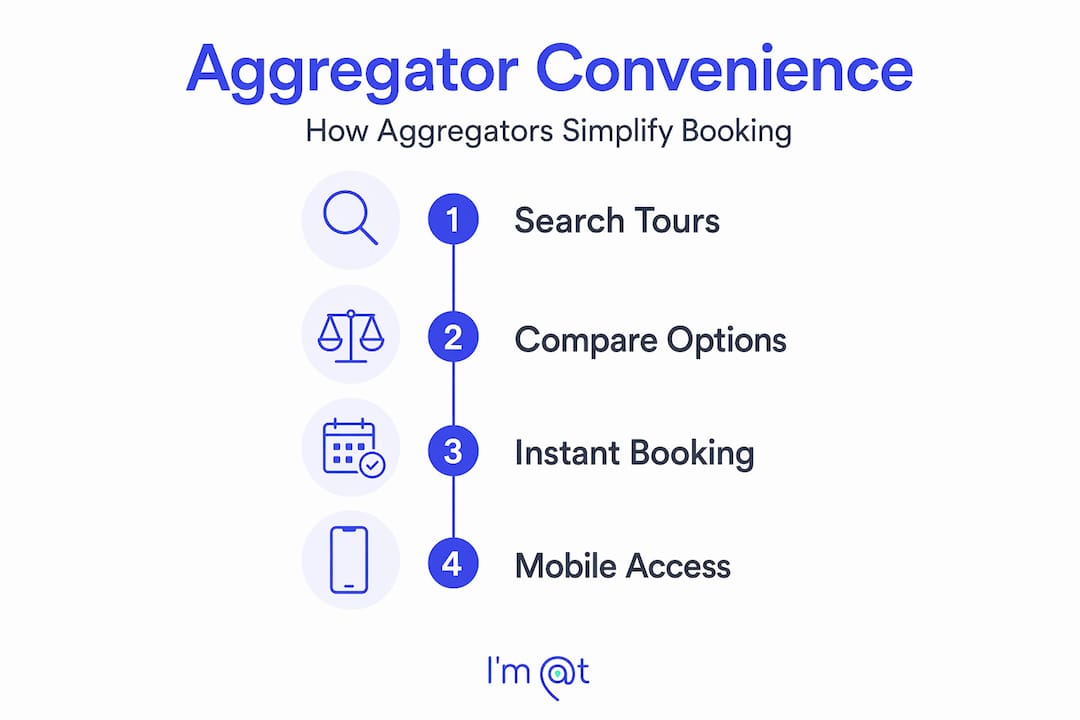
The convenience layer these platforms provide is genuinely underappreciated. Coordinating bookings across multiple independent operators in a foreign country, each with their own cancellation window and contact preference, would be an organizational nightmare for most travelers.
Benefits travelers actually feel
The most obvious benefit is comparison. Instead of visiting fifteen separate operator websites with fifteen different booking systems, you can filter by price, duration, language, group size, and review score in one place. That alone saves a meaningful amount of research time.
Price competitiveness is the second major advantage, and it works in a less obvious way than most people expect. Aggregator platforms negotiate volume discounts with operators because they deliver consistent booking volume. The price you see on an aggregator is often lower than the same tour booked directly on the operator's own site, particularly for popular tours in high-demand destinations.
Here are the core benefits of tour aggregator services worth knowing before your next trip:
- Standardized cancellation policies. Most aggregators enforce a platform-wide cancellation window (commonly 24 to 48 hours before the activity), so you know exactly where you stand regardless of which operator runs the tour.
- Single payment and voucher system. You pay once, receive one voucher, and redeem it on-site. No juggling multiple confirmation emails in three different languages.
- Buyer protection. Aggregators mediate disputes between travelers and operators. If a tour is canceled or misrepresented, you have a clear escalation path.
- Mobile-first experience. Most platforms deliver QR code vouchers directly to your phone, which you simply scan at the meeting point.
- Genuine price comparison. Searching across operators simultaneously gives you real market context on what a tour should cost, which makes you a better-informed buyer.
Pro Tip: Download the aggregator's mobile app before you travel. App-based vouchers are more reliable than printed copies and work even when your email or PDF access is spotty.
You can read more about booking activities online to understand how these platforms shape access and pricing across different regions and activity types.
Impact on the travel industry and operators
The growth of OTAs has reshaped how tour operators think about distribution. Direct website bookings fell from 29% to 25% between 2024 and 2025 while aggregator channels grew to 37% of all bookings. That is a significant structural shift, and operators are responding by adjusting their strategies.

The practical impact on operators breaks down like this:
| Area | Direct Booking | Through Aggregator |
|---|---|---|
| Commission cost | None (0%) | Typically 20–30% per booking |
| Customer reach | Limited to own marketing | Access to aggregator's global audience |
| Booking volume | Variable, lower | Higher and more consistent |
| Customer relationship | Direct and personal | Mediated through platform |
| Cancellation handling | Operator manages directly | Platform handles on operator's behalf |
The commission pressure is real. An operator running a $100 tour through an aggregator may net $70 to $80 per booking. That margin compression pushes operators to raise base prices, run their own parallel marketing, or negotiate higher commission tiers for preferred placement on the platform.
The dependency on digital platforms for traveler acquisition also creates a fragility that smart operators try to balance. A platform policy change, a ranking algorithm update, or a sudden price war on the aggregator can shift booking volumes overnight. This is why the healthiest operators treat aggregators as one distribution channel among several rather than their primary business driver. Understanding how tour operators interact with these platforms reveals just how interdependent the two sides have become.
Limitations travelers often miss
Tour aggregator platforms are genuinely useful, but there are gaps in the experience that the polished interface tends to obscure. Knowing them in advance makes you a sharper traveler.
- The pending confirmation risk. A booking is not a confirmed spot until the operator approves it. Pending confirmations can take hours or even a full day. If you are booking the morning of your desired activity, a pending tour is essentially a gamble.
- Pricing that lags reality. Aggregators use caching and scheduled data refresh to handle high request volumes. The price you see while browsing may not match the checkout price if availability or rates changed since the page last refreshed. Always confirm the final price before entering payment details.
- Standardization hides real differences. The cancellation policy looks uniform across listings, but operator-specific conditions, such as minimum group sizes, meeting point distances from city centers, or language restrictions, may not surface until you read the fine print.
- AI is changing the game. Agentic AI tools are beginning to route travelers directly to experiences without needing a traditional listing platform as the middle step. Aggregators that rely purely on being a search layer are under real pressure to evolve toward fulfillment and trust-building services to stay relevant.
- Private and custom experiences rarely appear. Aggregators favor scalable, repeatable tours. If you want a fully custom private guide or a bespoke itinerary, you will almost always need to contact operators directly.
How to get the most from aggregator platforms
Using tour aggregators well is about knowing when to lean on them and when to step around them.
- Start your search on an aggregator, not a search engine. Aggregator filters give you structured comparison that a general web search cannot replicate. Use them to understand the market.
- Check instant confirmation first. Filter specifically for instant-confirmation tours when your schedule is tight. Save pending-confirmation options for flexible days.
- Read the tour details, not just the headline. Meeting point location, group size limits, and included meals matter. The standardized interface makes it easy to skip this step, and that is exactly when surprises happen.
- Compare with the operator's direct price. For any tour over $80 per person, spend two minutes checking the operator's website. Sometimes direct booking includes extras the aggregator listing omits.
- Use the mobile app on travel day. QR vouchers on your phone are faster and more reliable at busy meeting points than hunting through email attachments.
- Book custom experiences directly. Aggregators are built for standard group tours. A private day trip, a tailor-made safari, or a specialized cultural experience will almost always get you better terms and more personal attention by contacting the operator or a specialist platform directly.
Pro Tip: Book time-sensitive activities like airport transfer tours or early-morning wildlife drives at least 48 hours in advance on any aggregator platform. Last-minute pending confirmations for these activity types carry genuine booking risk.
The broader shift toward digital travel planning means these tools are only getting more capable. Learning to use them with intention puts you ahead of most travelers.
My honest take on where aggregators stand
I've spent years watching travelers either over-rely on aggregators or dismiss them entirely, and both approaches miss the point.
What I've learned is this: the real value of a tour aggregator is not the interface. It is the trust infrastructure. When you book through a platform that handles disputes, manages refunds, and verifies operators, you are buying peace of mind alongside the tour. That matters enormously in unfamiliar destinations where you have no way to vet a guide independently.
Where I've seen aggregators fail travelers is in the false sense of completeness they create. The platforms surface what is bookable at scale. The genuinely extraordinary experiences, a local family running food tours out of their home kitchen, a master craftsman offering private workshops, a small-group off-road safari with a guide who has spent thirty years in the bush, often do not appear in any aggregator catalog. They live in word-of-mouth and specialist platforms.
My view on AI reshaping travel intermediaries is that aggregators will not disappear, but the pure discovery function will erode. AI agents will handle the search. What aggregators need to offer, and the better ones already do, is fulfillment reliability and customer protection. That is genuinely hard to replicate.
Use aggregators confidently for standard tours, group experiences, and city excursions. Treat them as the starting point, not the ceiling, for what your trip can include.
— Mikahil
Discover curated tours through Im-at
If understanding the role of travel intermediaries has you ready to actually book something worthwhile, Im-at puts the best of what aggregators do well in one focused platform built for adventure seekers.
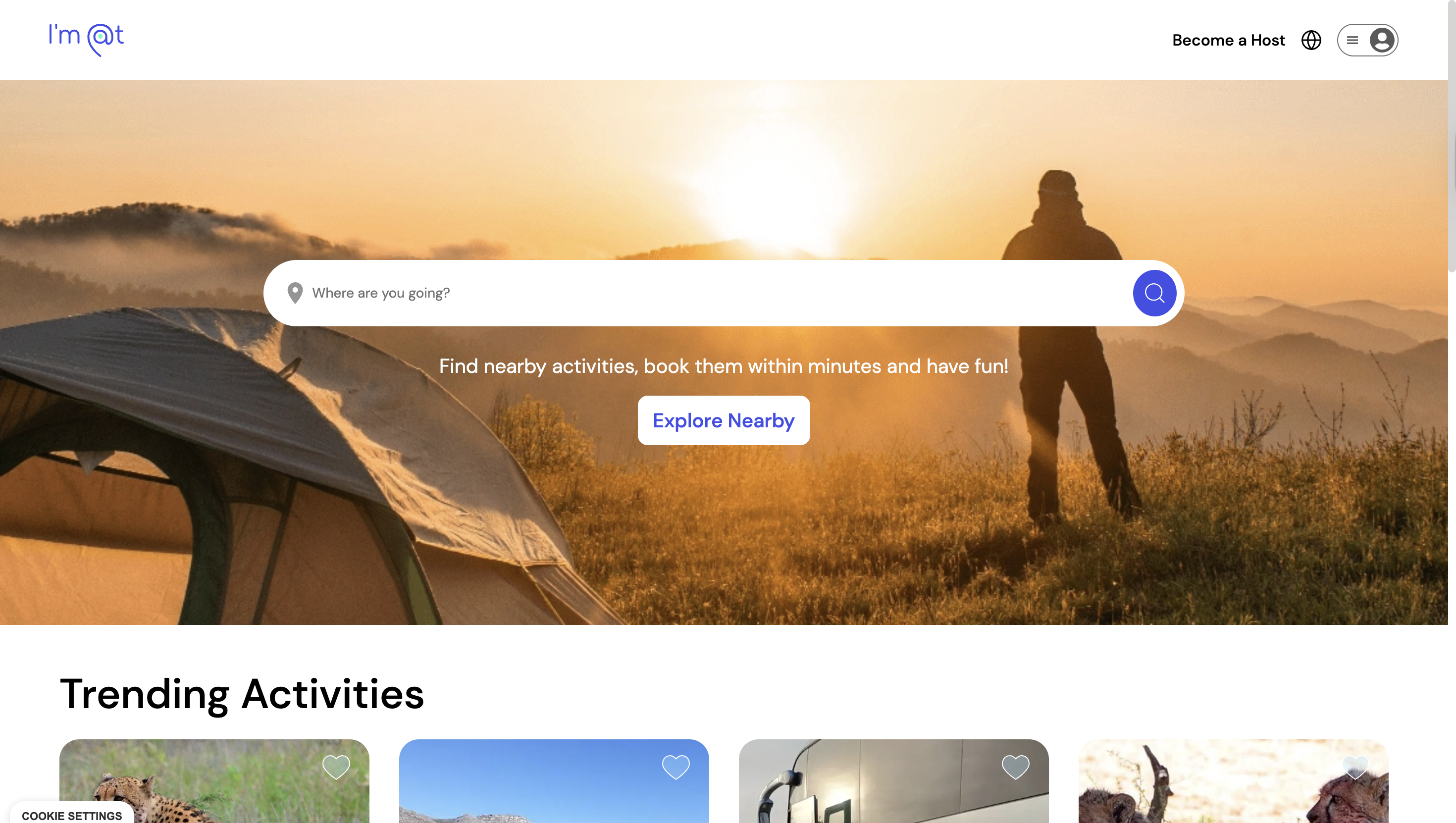
Im-at functions as both a search engine and booking portal for guided tours, safaris, cultural experiences, and day trips across destinations worldwide. Every listing on the platform is curated for quality, with clear confirmation types and upfront details. You can explore culturally rich experiences like The Unholy Secrets or go deep with a Cape Town 3-day tour covering townships, the Cape Peninsula, and wine tasting. Whether you are planning a weekend getaway or a longer adventure, Im-at makes the booking process fast, reliable, and genuinely interesting.
FAQ
What is the role of tour aggregators in travel?
Tour aggregators consolidate tour and activity listings from multiple independent operators onto a single platform, handling search, comparison, booking, payment, and voucher delivery so travelers do not need to contact each operator separately.
How do tour aggregators work technically?
They use API connections to pull inventory data from operator booking systems, normalize it into a consistent format, and serve real-time or cached availability and pricing to travelers through a unified search interface.
Are prices cheaper on tour aggregator platforms?
Often yes. Aggregators negotiate volume discounts with operators, which can result in lower prices than booking directly, though it is worth comparing both for high-value tours.
What is the difference between instant and pending confirmation?
Instant confirmation means your booking is secured immediately after payment. Pending confirmation requires the operator to manually approve your booking, which can take several hours and carries more uncertainty for time-sensitive travel plans.
How is AI affecting the future of tour aggregators?
Agentic AI is beginning to connect travelers directly with experiences, which pressures aggregators to shift from pure search and listing functions toward trust-building and fulfillment services to remain relevant.