

TL;DR:
- Travel technology has transformed trip planning from weeks of research into minutes of personalized, AI-driven workflows. It expands travelers' possibilities by surfacing unique experiences, but human judgment remains essential for safety and genuine exploration. Using AI as a strategic starting point enables smarter travel, blending automation with curiosity and personal decision-making.
Travel planning used to eat up hours of research, tab-juggling, and second-guessing. That picture has changed dramatically. Generative AI adoption for travel planning grew 1.5x in a single year, with personalized itineraries as the top reason travelers reach for AI tools, and 55% say they would pay for a dedicated AI travel app. Whether you are booking a Cape Town safari or a weekend food tour in Lisbon, the technology available today turns what used to take days into a matter of minutes.
Table of Contents
- How technology reshaped trip planning: The big picture
- AI-powered travel tools: From inspiration to booking in minutes
- Mobile apps and smart booking: The traveler's pocket toolkit
- Personalization, trust, and the limits of travel tech
- What most travel planners miss about technology's real value
- Take the next step: Tech-powered adventures await
- Frequently asked questions
Key Takeaways
| Point | Details |
|---|---|
| AI speeds up planning | Artificial intelligence cuts down the time from inspiration to booking by generating custom itineraries. |
| Mobile apps empower travelers | Real-time mobile tools allow easy booking, trip changes, and access to unique local experiences. |
| Personalization drives adoption | The main reason travelers use tech tools is to get trips tailored to their interests and budgets. |
| Trust and human input matter | Technology improves efficiency but travelers often need to verify or customize AI recommendations for optimal results. |
| Limitations still exist | AI solutions handle most trips well but may falter with complex constraints or highly personalized requirements. |
How technology reshaped trip planning: The big picture
Not long ago, planning a trip meant flipping through guidebooks, calling hotels, and hoping the map in your glove compartment was still accurate. Today, that entire process fits inside a smartphone, powered by AI, real-time data, and globally connected booking platforms. The shift is not just about convenience. It fundamentally changes what trips you can take, what experiences you can access, and how boldly you can plan.
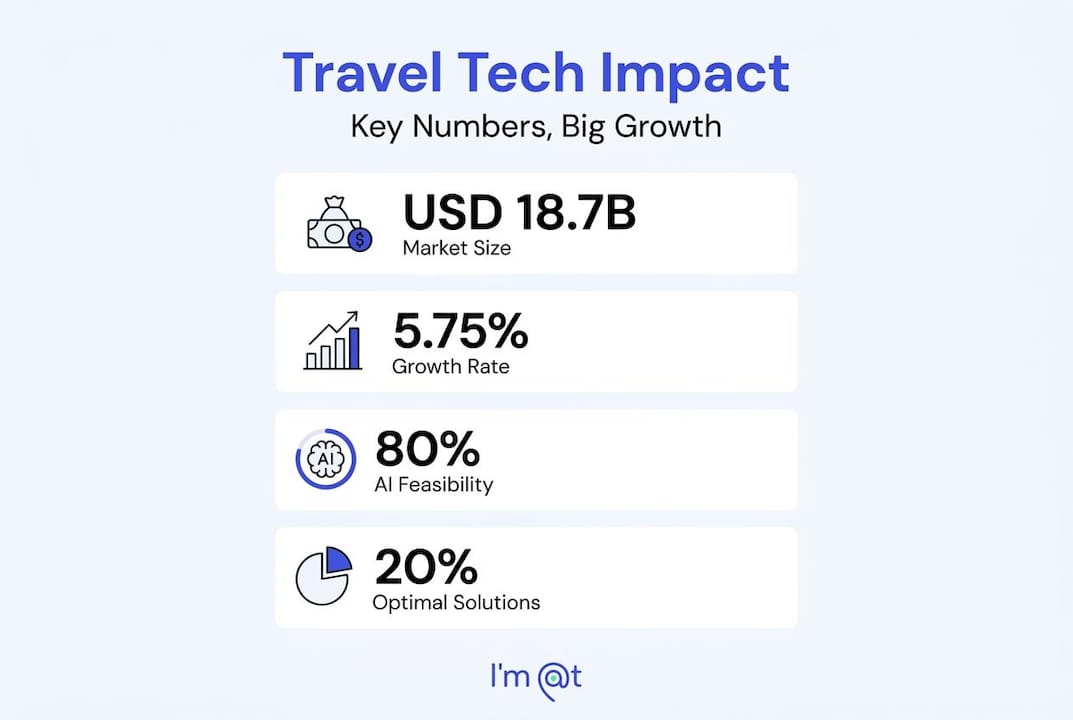
The numbers back this up. The travel technology market is projected to reach USD 18.7 billion by 2034, growing at a 5.75% compound annual growth rate, driven by AI personalization, mobile apps, and smart booking platforms. That kind of growth signals more than a trend. It signals a complete rewiring of the travel industry.
Here is what that shift looks like in practice:
Before digital planning tools:
- Average trip planning time: 4 to 6 weeks
- Limited to destinations covered in travel guides or by word of mouth
- Booking required calling ahead, waiting, and hoping for availability
- Local activities were often discovered only after arrival
After digital and AI-powered planning:
- Full itineraries generated in under 10 minutes
- Access to thousands of verified local experiences worldwide
- Real-time availability, dynamic pricing, and instant booking confirmation
- Personalized recommendations based on budget, travel style, and interests
| Planning element | Traditional approach | Tech-powered approach |
|---|---|---|
| Destination research | Guidebooks, magazines | AI recommendations, reviews |
| Activity discovery | Local word of mouth | App-based search and curation |
| Booking | Phone or travel agent | In-app, instant confirmation |
| Itinerary building | Manual, paper-based | AI-generated, editable |
| Real-time changes | Difficult, costly | Instant, flexible |
Keep an eye on the latest travel technology trends to understand where the market is heading next, because the pace of change is accelerating fast.
AI-powered travel tools: From inspiration to booking in minutes
Artificial intelligence is the biggest single force reshaping how travelers plan. The key insight is that AI does not just search for options. It understands context. You tell it you want a culturally rich weekend trip under $800 with no flights, and it builds you a complete plan. That level of responsive personalization was simply not possible before.

AI-powered tools dominate travel planning by generating personalized itineraries from user prompts that include interests, budget, and travel style, compressing the entire discovery-to-booking process into a single workflow. The result is that travelers who used to spend a Sunday afternoon researching can now spend that time actually looking forward to the trip.
Here is a practical breakdown of how to use AI tools effectively:
- Start with a detailed prompt. The more specific you are, the better the output. Instead of "I want to go somewhere warm," try "I want a 5-day coastal trip for two adults who love snorkeling, local food markets, and boutique hotels under $150 per night."
- Use AI to surface hidden options. AI tools pull from massive datasets and often surface lesser-known destinations or activities that standard search engines would bury.
- Cross-check for real-time accuracy. AI knowledge can have cutoff dates. Always verify opening hours, prices, and booking availability directly with the platform or provider.
- Iterate quickly. One of AI's greatest strengths is its speed. If the first itinerary doesn't fit your vision, adjust one element and regenerate. You can run five or six versions in the time it would take to make a single phone call.
- Layer in manual judgment. Once AI gives you the skeleton, use your own research and curiosity to personalize the details. AI sets the table. You decide what to eat.
Several AI travel planning tools stand out for different use cases. Specific platforms like Booking.com's AI Trip Planner, Google Gemini's travel integration, Expedia's Trip Matching from Instagram reels, and Gondola AI for loyalty points optimization each address a different stage of the planning process.
| Tool | Best for | Standout feature |
|---|---|---|
| Booking.com AI Trip Planner | Full trip planning | Integrated booking across properties |
| Google Gemini Travel | Research and discovery | Deep web knowledge and map integration |
| Expedia Trip Matching | Inspiration to booking | Matches reels and social content to trips |
| Gondola AI | Points and miles travelers | Loyalty optimization and award alerts |
| ChatGPT with browsing | Custom, complex itineraries | Flexible prompting and rapid iteration |
Pro Tip: For personalized travel planning, include your dietary restrictions, physical limitations, or preferred pace of travel in your AI prompts. Tools that understand "we like slow mornings and prefer walking over taxis" will produce dramatically more usable results.
Mobile apps and smart booking: The traveler's pocket toolkit
Desktop AI tools are powerful, but mobile apps bring that power to the moment you need it most, whether you are standing at a bus stop in Marrakech or deciding between two activities in Queenstown with an hour to spare. Mobile-first planning is not just a convenience upgrade. It is a fundamentally different relationship with travel.
The benefits of travel apps extend well beyond pre-trip research. Real-time notifications, last-minute availability alerts, and on-the-ground navigation turn a static plan into a living document you can adjust on the fly. This is particularly valuable for adventure travelers, who often face rapidly changing weather, trail conditions, or guide availability.
Apps like Treka connect adventure seekers with verified local guides for adrenaline activities, cultural experiences, and eco-tours, complete with real-time booking and GPS navigation. The "verified local guide" element matters enormously. One of the most common frustrations with independent travel is the difficulty of assessing quality and authenticity before you commit to an activity. Apps that vet their guides and display verified reviews solve a genuine trust problem.
"The best travel apps don't just replicate what a browser can do. They add contextual intelligence, connecting you with experiences that match where you are and what you care about, right now."
Research on digital travel platforms shows that AI-enhanced website performance improves user experience scores by 78.9%, particularly in speed and sustainability metrics. However, mobile optimization remains a challenge that not all platforms have fully solved. If an app is slow to load activity listings or fumbles through checkout on a weak mobile signal, those performance issues directly cost travelers time and opportunities.
Practical ways to get the most from mobile travel tools:
- Download offline content before you go. Maps, itineraries, and guide profiles saved offline protect you when data coverage drops.
- Enable location permissions selectively. Many apps surface their best recommendations only when they know your precise location.
- Use in-app messaging with guides. Direct communication through the app creates a paper trail and keeps booking details in one place.
- Set availability alerts. For popular activities that sell out, automated alerts mean you book the moment a slot opens rather than discovering it is gone.
The booking activities online process has also become significantly more flexible. Many platforms now support partial payments, free cancellation windows, and instant rescheduling, features that simply did not exist in the era of phone bookings and printed confirmations.
Personalization, trust, and the limits of travel tech
Technology has changed travel planning in genuinely remarkable ways. But it is worth being clear-eyed about where it still falls short, because understanding the limits of your tools makes you a smarter traveler.
AI tools excel at speed and broad personalization but struggle when preferences become tightly layered or constraints multiply. Research using the COMPASS benchmark found that AI agents achieve high feasibility of around 80%, meaning they produce plans that are logistically possible, but only about 20% of solutions rank in the top tier for actual optimization. In plain language: AI will almost always get you a workable plan, but it rarely gets you the perfect one without human refinement.
That gap is especially visible for travelers with complex needs. Families with young children who also want adventure activities, couples navigating different fitness levels, or solo travelers with strict dietary requirements plus budget caps tend to find that AI suggestions need significant manual adjustment before they are truly usable.
"90% of travelers are excited about AI-powered planning tools. But only a single-digit percentage say they are fully confident in acting on AI recommendations without double-checking them."
Industry analysis from Skift and Phocuswright frames the current moment as one of augmentation rather than replacement. AI is not replacing the travel expert, the local guide, or your own judgment. It is giving all three of you better information to work with.
Here is a practical framework for deciding when to trust tech and when to verify manually:
- Trust AI for logistics. Flight times, hotel availability, transfer routes, and duration estimates are areas where AI is accurate and fast.
- Use AI for inspiration, not gospel. A suggestion for "the best viewpoint in Porto" might be outdated, seasonal, or simply reflecting reviews that skew toward tourists rather than locals.
- Verify any activity that involves safety. For adventure experiences, always check that guides are certified, equipment is current, and policies meet your standards, regardless of what the app shows.
- Cross-reference niche preferences. If you have highly specific dietary needs, accessibility requirements, or cultural sensitivities, call ahead. AI does not always catch the fine print.
- Read recent reviews, not just aggregate scores. A 4.8-star activity from three years ago might look very different today.
For smart activity planning, the most effective approach combines algorithmic discovery with personal judgment, using tech to find options and your own critical sense to evaluate them. Dive deeper into curated choices with this experience curation guide that explores how to build genuinely memorable trips rather than just logistically sound ones.
What most travel planners miss about technology's real value
Here is a perspective that most travel tech articles skip: the most powerful thing technology does for travelers is not make booking faster. It is expand the possibility space of what you think you can do.
Before app-based discovery platforms existed, most travelers defaulted to what was already famous. You went to Paris and saw the Eiffel Tower. You went to Cape Town and did the Table Mountain cable car. Not because those are bad choices, but because they were the ones visible through traditional planning channels. Technology made the long tail of travel experiences accessible. The offbeat cooking class in a local neighborhood, the midnight kayak tour, the community-led township experience that doesn't appear in any guidebook. These are the experiences that tend to define a trip in memory, and technology is often what surfaces them.
Discovering unique experiences is now genuinely democratized. A first-time traveler with a smartphone has access to the same discovery tools as a seasoned travel writer, and often finds better options because the algorithms are not biased toward what is already famous.
The pitfall, however, is real. When you outsource all of your travel decisions to an algorithm, you lose the serendipity and personal curiosity that makes travel meaningful. The traveler who follows every AI recommendation to the letter often ends up on the same path as every other traveler using the same app. Smart travelers treat technology as a starting point, not a destination. They use AI to compress the logistics, then spend their saved time wandering, asking locals, and making the trip their own.
The travelers who get the most out of digital tools are not the ones who use them the most. They are the ones who use them most strategically.
Take the next step: Tech-powered adventures await
You now have the tools, frameworks, and realistic expectations to use travel technology the way it was meant to be used: as a powerful starting point that you shape with your own curiosity and judgment.
At Im-at, we put that philosophy into practice every day. Our platform lets you search, discover, and book curated experiences around the world, from adrenaline-fueled outdoor adventures to intimate cultural tours, all in minutes. Whether you are looking for a unique event experience, planning a full Cape Town guided adventure complete with township visits, Cape Peninsula scenery, and wine tasting, or dreaming of a Douro Valley river cruise through Portuguese wine country, the experiences are ready and waiting. Browse what's trending, find your next story, and book it before the afternoon is over.
Frequently asked questions
What are the best apps for adventure travelers to connect with local guides?
Apps like Treka specialize in matching adventure seekers with verified local guides for adrenaline activities, cultural tours, and eco-experiences, all with real-time booking and built-in GPS.
How does AI improve the speed and quality of travel planning?
AI-powered tools generate full personalized itineraries in minutes based on your interests, budget, and travel style, collapsing what used to be days of research into a single workflow.
How trustworthy are AI-generated travel plans for highly customized trips?
AI agents achieve around 80% feasibility but only about 20% of solutions rank as truly optimal, meaning AI is excellent for workable plans but benefits significantly from human refinement for complex or tightly constrained itineraries.
What are the biggest challenges in using mobile-first planning tools?
While mobile apps dramatically improve speed and access, AI-enhanced platforms still face mobile optimization challenges, particularly around performance on slower connections and seamless offline functionality.
Why do some travelers still hesitate to trust technology in planning trips?
Industry research shows that while 90% of travelers are excited about AI tools, only a small fraction are fully confident in AI recommendations for major decisions, reflecting legitimate concerns about accuracy, nuance, and the limits of automated suggestions.