

TL;DR:
- Online booking offers travelers 24/7 access, instant confirmation, and detailed filtering options.
- Pre-booked activities ensure availability, help plan itineraries, and reduce last-minute stress.
- Reviews, transparent policies, and direct or OTA options help travelers make informed, trustworthy choices.
There's a stubborn idea that the best travel moments are the ones you stumble into. Show up, wander, and see what happens. It sounds romantic, but the reality is that 57% of reservations are now made online, and 68% of travelers prefer booking their entire trips digitally rather than through agents. The shift isn't accidental. Travelers who pre-book online are consistently getting better access, stronger protection, and more rewarding experiences. This article breaks down exactly why online activity booking has become the smarter way to travel and how you can use it to your advantage.
Table of Contents
- Convenience and choice: The core advantages of online bookings
- How online bookings ensure availability and better planning
- Trust, transparency, and informed decisions
- OTAs vs. direct booking: Picking the right channel for your trip
- A fresh perspective on online bookings: Security meets serendipity
- Ready to experience more with smarter bookings?
- Frequently asked questions
Key Takeaways
| Point | Details |
|---|---|
| Flexibility and choice | Booking online opens up more activities and makes comparing options much easier. |
| Advance planning advantage | Securing activities before travel protects you from sellouts and lets you plan confidently. |
| Transparency reduces risk | Trusted reviews and details make it safer to select the right provider and avoid scams. |
| Channel choice matters | OTAs offer deals and variety, while direct bookings add flexibility and better support. |
| Hybrid approach wins | Combining advanced booking for essentials with spontaneous local finds delivers the best experience. |
Convenience and choice: The core advantages of online bookings
Now that you know how the trend has shifted, let's focus on exactly what makes online booking so appealing for travelers.
Picture this: it's 11 p.m. and you're lying in bed, suddenly inspired to book a sunrise hot air balloon ride for your trip to Cappadocia. In the old world, you'd have to wait for a travel agency to open, hope they had availability, and trust a brochure with three blurry photos. Today, you pull up your phone, scroll through verified options, read dozens of real reviews, compare prices, and confirm your seat in under ten minutes. That's the power of 24/7 access.
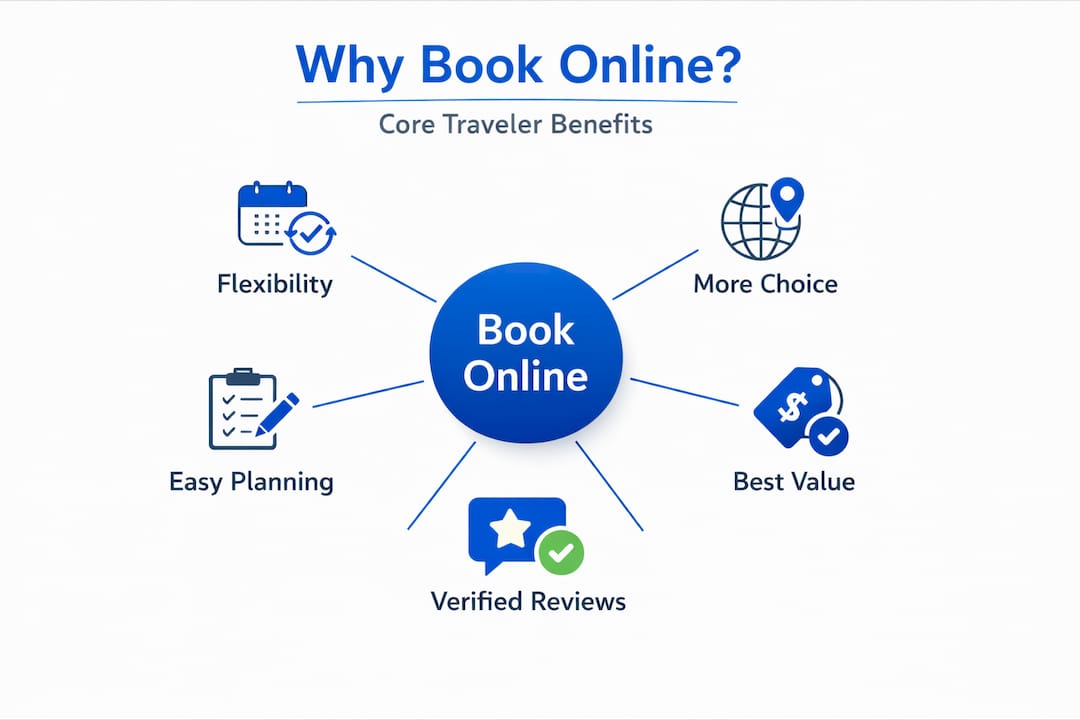
Seamless adventure booking isn't just about convenience. It fundamentally changes the quality of your travel decisions. You're no longer guessing. You're choosing with real information.
Here's what travelers consistently gain when they book activities online:
- 24/7 access to a massive catalog of experiences, with no dependency on shop hours or time zone differences
- Instant confirmation sent directly to your inbox or app, so you always have proof of booking
- Filtering tools that let you sort by price, duration, group size, rating, or date in seconds
- Automatic reminders that reduce the chance of missing a booked experience
- Mobile-friendly management, so you can adjust, review, or cancel bookings from anywhere
"Convenience drives online booking, but assurance of availability pushes advance bookings for popular adventures amid overtourism." — Arival
That last point matters more than people realize. Overtourism is a genuine issue in top destinations around the world. Places like Machu Picchu, the Serengeti, and Angkor Wat now enforce strict daily visitor caps. Walking up without a reservation isn't adventurous anymore. It's often just a wasted trip to the gate.
When exploring local activity options, online platforms give you a bird's-eye view of everything available in a destination, including hidden gems that aren't plastered on tourist maps but are listed by local guides and small operators.
Pro Tip: Use the filter feature to sort activities by "highly rated" and "small group" together. These two criteria almost always surface the best-value, most personal experiences in any location.
How online bookings ensure availability and better planning
With the key advantages clear, let's look at how online booking specifically changes the way you plan and ensures you don't miss out on must-do experiences.

Data tells a revealing story here. 60% of travelers book their activities at least three days before the experience, primarily for organization and to guarantee their spot. A meaningful chunk books even further out, sometimes a full month in advance, especially for bucket-list activities with limited capacity.
| Booking window | Percentage of travelers | Primary motivation |
|---|---|---|
| 30+ days in advance | ~25% | Bucket-list, high-demand experiences |
| 3 to 29 days in advance | ~35% | Planning, availability assurance |
| Day of or after arrival | ~48% | Flexibility, spontaneity |
That last row is worth examining. Nearly half of travelers still book after they arrive, and many of them do so for the flexibility. The problem is that flexibility becomes a disadvantage when the activity you wanted is sold out, the price surged, or the guided tour already left without you.
Effective trip planning around online booking follows a clear logic. Think of your pre-booked activities as anchors for your itinerary. Here's how to structure it:
- Identify your non-negotiables. What is the single experience you would be devastated to miss? Book that first.
- Check seasonal and capacity limits. Wildlife safaris, wine harvest tours, and national park permits often have firm cut-offs. Secure these early.
- Build your schedule outward. Once the anchor experiences are locked in, plan meals, transit, and free exploration around them.
- Leave breathing room. Don't over-schedule. The goal of pre-booking essentials is to free up mental space, not fill every hour.
- Set calendar reminders for check-in or meeting times. Most platforms let you add booking details directly to your phone calendar.
Digital travel planning has made this kind of structured, layered approach genuinely easy. Tools that aggregate bookings, maps, and real-time updates mean you spend less energy managing logistics and more time actually enjoying your trip.
Key insight: The travelers who end up most disappointed aren't the ones who over-planned. They're the ones who assumed availability and arrived to find the gates closed.
Trust, transparency, and informed decisions
Securing your spot is important, but how do you know you're booking with the right company or picking a great activity? This is where online research and transparency come in.
One of the most underrated benefits of online booking is the sheer volume of honest information available before you commit a single dollar. Reviews and detailed information build trust in ways that glossy brochures never could. When a guide has 340 reviews averaging 4.8 stars, you have a very clear signal. When that same listing has three recent reviews mentioning safety issues, you have an equally clear signal.
Modern booking platforms give you a clear picture across several critical dimensions:
- Verified traveler photos showing the actual experience, not a marketing shoot
- Cancellation policy details written in plain language, not buried in fine print
- Pricing breakdowns that show what's included and what costs extra
- Operator credentials and any relevant certifications or licenses
- Response rates from the operator, which signal how reliable their communication is
"Good transparency isn't a bonus feature. It's the difference between a regrettable booking and a life-changing one."
Checking activity reviews and info before booking also protects you from a range of travel pitfalls. Ghost tours that charge premium prices but offer minimal experience. "Eco-friendly" operators with no actual sustainability practices. Guides who don't speak the language they advertised. These problems show up in reviews consistently, and a few minutes of reading can save you significant time, money, and disappointment.
The comparison capability matters too. You might find three different operators offering a similar river kayaking tour. One is significantly cheaper. But when you compare the detail pages, the cheaper option doesn't include equipment rental, has a three-hour transfer not mentioned in the headline, and has two recent reviews flagging poor organization. The slightly pricier option includes everything and has photos of clean, well-maintained gear. That kind of side-by-side visibility is impossible at a street-level booking booth.
OTAs vs. direct booking: Picking the right channel for your trip
Even with all the benefits, picking the right online booking channel makes a major difference, so let's break down your real options.
The two main approaches are booking through an Online Travel Agency (OTA) like Viator or GetYourGuide, or booking directly with the operator. Both have real strengths, and OTA share of experience bookings is rising year over year. Understanding which to use and when is a skill that pays off.
| Factor | OTA booking | Direct booking |
|---|---|---|
| Variety of options | Very wide, easy to browse | Limited to one operator's offerings |
| Price | Often includes OTA commission markup | Can be lower with no middleman |
| Customer support | Varies; sometimes slow or generic | Usually faster and more personalized |
| Flexibility | Policies set by platform | More room to negotiate or adjust |
| Trust and reviews | Centralized and standardized | May be harder to verify independently |
| Bundling options | Often available | Rarely available |
Direct booking is preferred by many seasoned travelers for control, fewer fees, and stronger personal support. About 20% of travelers in some markets are actively shifting toward booking directly with operators, particularly for complex or adventure-focused trips where communication before arrival matters.
That said, OTAs are genuinely excellent for discovery. When you're researching a new destination and don't know which operators are reputable, filtering through an OTA's reviewed and vetted catalog is a powerful starting point.
The edge cases with OTAs tend to emerge during problems. Cancellations, overbookings, or itinerary changes can create frustrating loops where neither the OTA nor the operator takes clear ownership. Direct bookings typically resolve these faster because you're dealing with one accountable party.
Here's a practical framework for adventure tourism booking options:
- Use OTAs to discover and shortlist experiences in an unfamiliar destination
- Read operator profiles carefully and look for direct booking options on their own website
- Book direct for complex, high-stakes experiences like multi-day treks, private safaris, or anything requiring significant customization
- Use OTAs for simple, standardized experiences where the booking is straightforward and you want the platform's buyer protection
Pro Tip: After finding a great operator on an OTA, Google their business name directly. Many operators list a small discount on their own site for direct bookings, since they save on the OTA commission.
A fresh perspective on online bookings: Security meets serendipity
Here's a nuanced view that most booking guides won't give you: online booking isn't about scheduling every minute of your trip. It's about creating the conditions for genuine adventure.
The debate between planners and spontaneous travelers is often framed as a binary choice. Planners book early online for security; spontaneous seekers risk last-minute or offline options for flexibility. But that framing misses something important. The best travel experiences we've seen and heard about consistently involve a smart middle ground.
When your must-do experiences are locked in online, the pressure to fill every moment dissolves. You stop anxiously scanning for the "right" thing to do and start actually noticing what's around you. That's when the real discoveries happen, the neighborhood market a local recommends, the beach trail that isn't on any map, the impromptu cooking lesson at a family-run restaurant.
Pre-booking your highlights doesn't kill spontaneity. It funds it.
Think of it this way: a musician who has memorized their core repertoire can improvise freely because the foundation is solid. A traveler who has secured their key experiences can wander freely because they're not anxious about missing the thing they came for.
The transparency that comes with online booking, those verified reviews, honest photos, and clear policies, also changes how you approach the unknown. You develop a sharper eye for what a trustworthy operator looks like. You know which questions to ask. When you do stumble on something unplanned and book it on the spot, you're doing so with better judgment, not blind hope.
Exploring unique travel discoveries is far more rewarding when your essential experiences are already secured. The unscripted moments feel like a bonus, not a gamble.
Ready to experience more with smarter bookings?
If you're ready to put these insights to work and ensure your next trip is smooth and memorable, here's where to start.
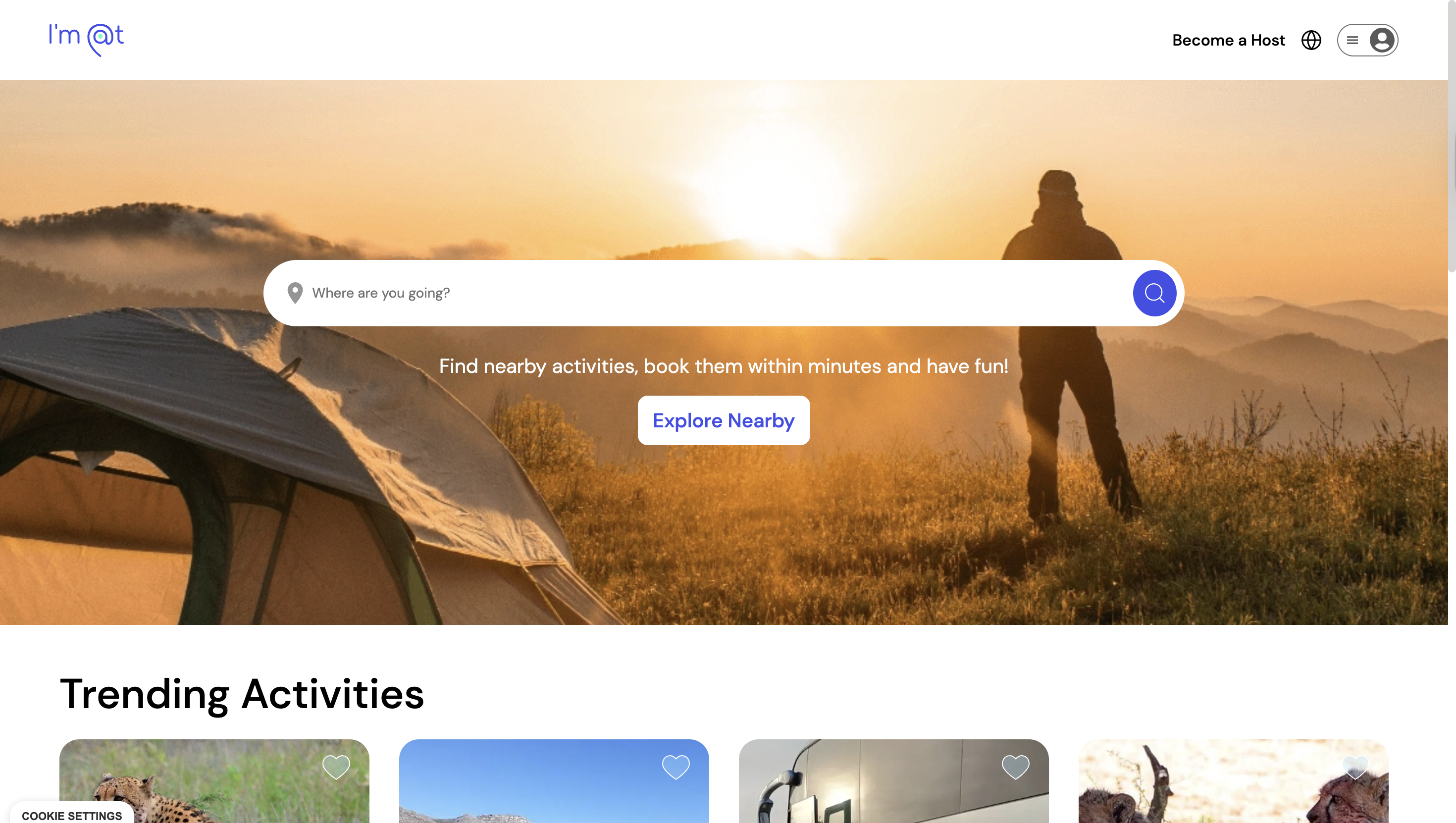
Im-at makes the entire process feel effortless. Whether you're planning a leisurely afternoon or a full-blown adventure itinerary, the platform connects you with expert-curated experiences backed by transparent information and secure booking.
Start with something extraordinary. The unique tailor-made tours are designed for travelers who want personalized itineraries without the hassle of building everything from scratch. If wine, scenery, and culture are calling your name, the Douro Valley experience combines a river cruise with wine tasting and lunch in one seamless day. For something truly bucket-list worthy, the Victoria Falls guided tours put you right at the edge of one of the world's most breathtaking natural wonders, with a knowledgeable guide by your side. No lines, no guesswork, just the experience.
Frequently asked questions
Is it better to book activities online or after I arrive?
Booking online secures your spot and often gets you better pricing, especially for high-demand experiences where 60% of travelers reserve at least three days out. Arriving without a reservation at popular sites increasingly means missing out entirely.
What advantages do online booking sites offer over travel agents?
Online platforms give you immediate access to 57% of global reservations with side-by-side comparisons, verified reviews, and instant confirmation, all without office hours or agent fees.
Are there risks when booking activities through OTAs?
Yes. While OTAs offer solid variety and buyer protection, cancellations and overbookings can create complicated resolution loops, and their policies sometimes lack the flexibility that direct bookings provide.
What if my plans change after booking online?
Always read the cancellation policy before confirming. Most reputable platforms display their flexibility terms clearly, and transparent booking information is one of the core advantages of booking digitally rather than in person.
Can I find last-minute activities online?
Absolutely. Many platforms support real-time availability and instant confirmations. However, 48% of travelers who book after arrival do so for flexibility, and they accept the trade-off that top-rated or capacity-limited experiences may already be sold out.