

TL;DR:
- Travel personalization now uses AI and data to tailor trips to individual preferences.
- It enhances every stage of travel, from planning to post-trip feedback, saving time and reducing stress.
- Platforms that leverage real-time, AI-driven recommendations offer more meaningful, authentic experiences for all travelers.
Many travelers assume that trip planning is a one-size-fits-all process. Book a flight, pick a hotel, follow a guidebook. But that model is quickly becoming outdated. Emerging technology now makes it possible to build travel experiences that fit your exact interests, pace, and preferences. Whether you love street food markets, sunrise hikes, or wine-country road trips, personalization means your next adventure can feel like it was designed just for you. In this article, we break down what travel personalization actually means, how it works behind the scenes, and how you can start using it to get more out of every trip.
Table of Contents
- What does personalization in travel really mean?
- How technology enables smarter, personalized journeys
- Benefits of personalization for the modern traveler
- When and how to leverage personalization for your next trip
- Why real personalization is about more than technology
- Ready to personalize your journey?
- Frequently asked questions
Key Takeaways
| Point | Details |
|---|---|
| Personalization explained | Travel personalization means tailoring trips to your unique interests using data and technology. |
| AI-driven recommendations | AI and machine learning improve trip suggestions by analyzing traveler preferences and past behaviors. |
| Real-life benefits | Personalized travel reduces stress, saves time, and creates richer, more memorable experiences. |
| Practical application | You can leverage personalization at every travel stage—from research to booking to on-trip adventures. |
What does personalization in travel really mean?
Personalization in travel is the process of adapting a trip to fit the unique interests, habits, and preferences of each individual traveler. It sounds simple, but it represents a major shift from how travel has worked for most of history.
For decades, travel planning meant calling an agent who made educated guesses based on limited information. A family that loved beaches got a beach resort recommendation. An adventure seeker might get a safari brochure. The advice was helpful, but broad. It relied on general categories, not on knowing you specifically.
Today, travel experience curation has moved into a new era. Platforms now collect data on your past bookings, browsing behavior, and stated preferences to build a detailed picture of what you actually enjoy. That picture then drives every recommendation you see.
The technology behind this includes AI and machine learning, customer relationship management systems, and advanced recommendation algorithms. Specifically, personalization now uses techniques like neural collaborative filtering and fuzzy logic TOPSIS to generate activity and itinerary suggestions tailored to your history and interests across every stage of your trip.
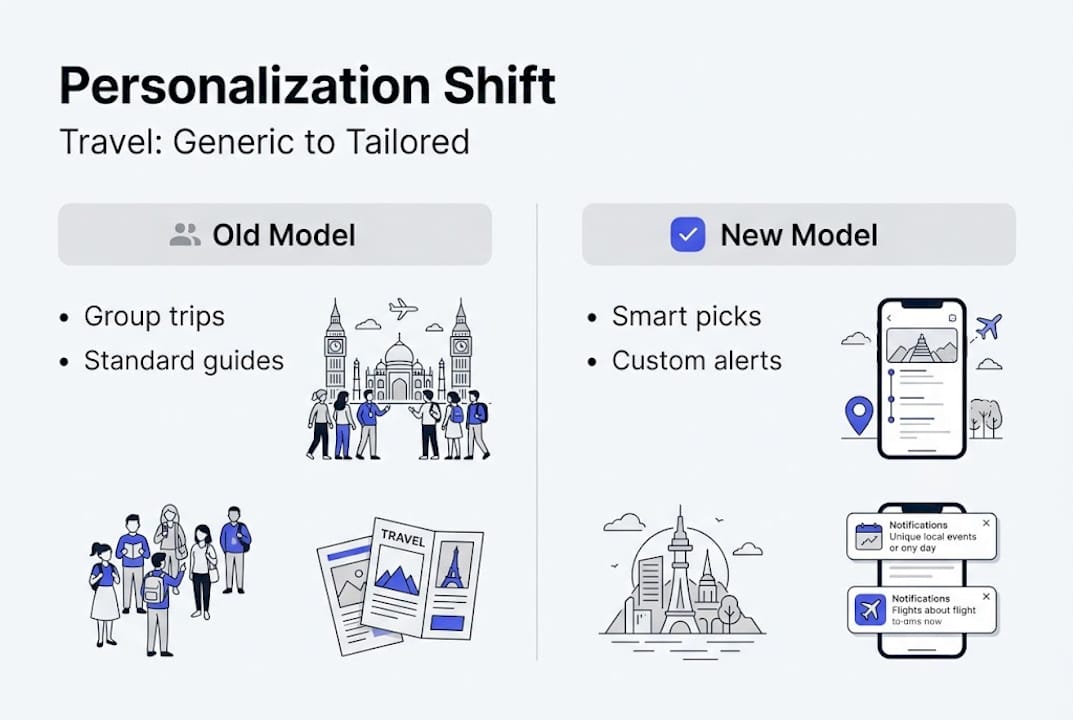
Old vs. new personalization approaches
| Approach | Old model | New model |
|---|---|---|
| Data used | Generic categories | Individual history and preferences |
| Recommendation method | Human agent judgment | AI and ML algorithms |
| Timing | Pre-trip only | Before, during, and after travel |
| Accuracy | Broad and approximate | Precise and continuously improving |
| User input required | Verbal or written forms | Passive data collection and active choices |
What does this look like in practice? A foodie traveler might see curated culinary tour options the moment they open a booking app. A hiker might get trail excursion suggestions sorted by difficulty and distance from their hotel. Personalization and guest experience improvements now extend beyond the trip itself, with post-travel follow-ups that refine future recommendations based on ratings and reviews.
Personalized travel elements include:
- Custom itinerary building based on travel style and budget
- Activity suggestions matched to past behavior and stated interests
- Real-time recommendations during the trip based on location and time
- Post-trip analytics that improve future suggestions
- Pre-departure content like packing tips and local guides tailored to your destination
The shift is significant. Travel is no longer something that happens to you. It is something that adapts to you.
How technology enables smarter, personalized journeys
Understanding the idea of personalization, it is important to see how technology now powers these tailored journeys.
The engine behind modern travel personalization is a combination of three core systems: AI and machine learning, customer relationship management platforms, and specialized recommendation algorithms. Each plays a distinct role.
AI and ML automate recommendations for activities and use neural collaborative filtering to outperform traditional algorithms, especially when user data is limited or sparse. This matters because most travelers do not have hundreds of bookings on record. NCF can still generate accurate, relevant suggestions with far less data than older systems require.
Technology roles in travel personalization
| Technology | Role | Benefit to traveler |
|---|---|---|
| Neural collaborative filtering | Predicts preferences from limited data | Accurate suggestions even for new users |
| Fuzzy logic TOPSIS | Ranks options under uncertain conditions | Better decisions with incomplete information |
| CRM systems | Stores and tracks user history | Consistent experience across interactions |
| Machine learning | Continuously improves over time | Recommendations get sharper with every trip |
Fuzzy logic is worth understanding. Traditional algorithms operate in black and white: you either like something or you do not. Fuzzy logic handles the gray areas. It can weigh nuanced preferences, like a traveler who sometimes enjoys adventure but prefers moderate difficulty, and still produce a useful ranked list of activity options.
CRM systems connect the dots across time. When you book a safari in one season and a cooking class the next, a good CRM notes both. It starts to build a profile that reflects your evolving tastes, not just your most recent click.
Travelers who use platforms with AI-driven recommendations report significantly higher satisfaction with activity choices compared to those using generic search results, according to recent hospitality research.
Pro Tip: When evaluating a travel platform, look for features like "recommended for you" sections, preference settings in your profile, and post-trip rating prompts. These are signs the platform is using travel planning tools that actually learn from your behavior.
A real-world example: If you have booked two day trips focused on marine wildlife, a smart platform will surface whale watching tours, dolphin excursions, and coastal safaris before you even search for them. That kind of proactive suggestion saves time and often surfaces experiences you would not have found on your own. It also connects naturally to experience curation guides that help you plan deeper, more satisfying itineraries.
Benefits of personalization for the modern traveler
With technology making personalization possible, let us look at how these innovations actually benefit you during your travels.
The most obvious benefit is time saved. When a platform already knows your preferences, you spend less time scrolling through irrelevant options. You get to the good stuff faster. For travelers with limited vacation days, that is genuinely valuable.

Personalization impacts every stage of your trip, from the itinerary you build before departure to the real-time suggestions you receive on the ground and the curated offers waiting when you return home. This continuity creates a smoother experience from start to finish.
Key benefits of personalized travel:
- Less decision fatigue: Fewer irrelevant options means clearer choices
- Better activity alignment: Every suggestion fits your interests, not a general audience
- Memorable moments: Tailored experiences tend to feel more meaningful and personal
- Reduced stress: A well-matched itinerary removes the anxiety of figuring everything out on the fly
- Smarter spending: You invest in experiences you will actually enjoy rather than generic tourist traps
Personalization also benefits travelers at different budget levels. A budget traveler who prefers free walking tours and local food stalls will get different suggestions than someone looking for private helicopter rides and fine dining. The platform adjusts to the traveler, not the other way around.
Pro Tip: Fill out your profile completely on any travel or activity platform you use. The more you share about your preferences, past trips, and travel style, the more relevant your exploring nearby activities results will become over time.
Personalization also encourages travelers to move beyond the obvious. Because platforms learn that you appreciate authentic travel rewards, they start surfacing hidden gems: the neighborhood cooking class, the lesser-known game reserve, the local festival that happens to coincide with your dates. These are the experiences people talk about for years. Standard search results rarely surface them.
The post-trip phase is underrated. After you return and rate your experiences, those inputs sharpen every future recommendation. Your travel profile becomes a living record of what excites you, and that record works for you the next time you start planning.
When and how to leverage personalization for your next trip
Having seen the benefits, let us turn those insights into actions for your next adventure.
Personalization can occur at all stages of travel: before you leave, while you are exploring, and after you return. The key is knowing how to engage with it at each point.
Steps to personalized trip planning:
- Set up your profile before you search. Create an account on your chosen travel or activity platform and fill in your interests, travel style, and past destinations. This seeds the recommendation engine with useful data immediately.
- Share your preferences actively. Use filters, save favorites, and rate past experiences. Every action teaches the platform more about what you want.
- Use discovery tools. Platforms with built-in travel discovery features can surface activities you had not considered, adding unexpected depth to your itinerary.
- Book experiences that match your profile. Try something like a Hermanus whale watching tour if marine wildlife fits your interests. A platform tracking your preferences will recognize this and build on it.
- Rate and review after every experience. This closes the feedback loop and makes every future trip more relevant.
Common pitfalls to avoid:
- Skipping profile setup and expecting good recommendations anyway
- Ignoring platform suggestions because they feel unfamiliar
- Using only generic search without engaging personalization features
- Failing to rate experiences after your trip
- Sticking to the same types of activities when the platform suggests something new
Digital guest services in modern hotels and travel apps also support real-time personalization. You might receive a push notification about a local festival happening near your hotel, or a same-day discount on an activity that matches your profile. Staying open to these prompts often leads to the best moments of a trip.
Why real personalization is about more than technology
Technology is remarkable. It can analyze thousands of data points, rank options in milliseconds, and surface experiences you never would have found through traditional search. But after years of watching travelers plan and experience trips, we believe the most rewarding journeys come from pairing smart tools with genuine curiosity.
Algorithms optimize for what you have liked before. That is useful. But the traveler who tries something slightly outside their comfort zone, who says yes to the market tour instead of the museum, often walks away with the richest stories. The benefits of cultural experiences are well documented, but they require a willingness to step beyond a curated bubble.
True personalization is a conversation between your data and your instincts. Let the platform do the heavy lifting on filtering and discovery. Then trust yourself to make the final call. The best trips we have seen blend a smart itinerary with room for spontaneity. Technology sets the table. You decide what to eat.
Ready to personalize your journey?
If you are inspired to experience the difference personalization makes, here is how to get started.
At Im-at, you can turn personalized trip ideas into real bookings in minutes. Browse experiences designed to match different travel styles, from intimate cultural excursions to once-in-a-lifetime adventure tours.
Looking for something extraordinary? The Cape Town private helicopter and wine tour combines aerial views of the Cape Peninsula with world-class wine tasting, perfect for travelers who want a premium, curated experience. Or explore the Cape Town township wine tour for a journey that blends local culture with the region's famous vineyards. Both experiences are bookable directly on Im-at, where your preferences help shape what you discover next.
Frequently asked questions
What is an example of personalization in travel?
Personalization might look like receiving custom tour recommendations based on your past travel activities and food preferences. Platforms using AI and past trip data can match suggestions to your specific interests rather than offering generic options.
How does AI improve personalized travel suggestions?
AI analyzes your past trips and preferences to make better activity and itinerary recommendations over time. Systems using neural collaborative filtering are especially effective at generating accurate results even when your booking history is limited.
Can personalization help reduce travel stress?
Yes. Tailored itineraries mean less time researching and fewer missed opportunities, which leads to a smoother trip overall. Because the platform handles the filtering, every travel stage feels more manageable and less overwhelming.
Is personalization only for luxury travelers?
Not at all. Today's personalization tools work for travelers at every budget level, adjusting suggestions based on your stated preferences and spending habits. Technology and travel data make tailored planning accessible regardless of how you prefer to travel.