

TL;DR:
- Travel apps simplify planning with real-time updates, consolidated itineraries, and seamless bookings.
- They offer significant savings through price comparisons, exclusive deals, and loyalty rewards.
- Responsible use involves offline preparation, privacy awareness, and balancing app use with spontaneous experiences.
Planning a trip used to mean stacks of guidebooks, hours on hold with hotels, and a folder stuffed with printed confirmations. Today, that picture looks completely different. Travel apps provide convenience by enabling real-time information, seamless booking, and itinerary planning in just a few taps. Yet plenty of travelers still rely on outdated methods, missing out on significant savings and smarter experiences. This article breaks down exactly how travel apps simplify leisure getaways, adventure trips, and cultural excursions, and what you need to know to use them wisely.
Table of Contents
- How travel apps streamline planning and booking
- Unlocking savings and exclusive deals with travel apps
- Travel apps for leisure, adventure, and cultural discovery
- What to watch out for: app limitations and best practices
- A seasoned traveler's perspective: what apps can't do (and why it matters))
- Discover unique adventures with IM-AT
- Frequently asked questions
Key Takeaways
| Point | Details |
|---|---|
| Saves time and stress | Travel apps simplify trip planning and booking, cutting down on manual tasks and confusion. |
| Unlocks exclusive deals | Many apps offer discounts and price comparisons—travelers can save up to 30% on flights and hotels. |
| Supports unique travel styles | Apps cater to leisure, adventure, and cultural travelers—making hyperlocal discovery and offline navigation easy. |
| Beware app limitations | Information overload, privacy concerns, and tech dependence are real; use best practices for safety. |
| Experience trumps automation | Apps help, but in-person knowledge and serendipity can offer richer travel moments than any screen. |
How travel apps streamline planning and booking
Not long ago, booking a trip required juggling multiple websites, calling tourist offices, and hoping your printed directions stayed accurate. That process was slow, error-prone, and frankly exhausting. Modern travel apps have flipped the script entirely.
The practical advantages are hard to ignore. Apps like TripIt automatically pull your flight, hotel, and activity confirmations into one clean itinerary. Booking.com lets you filter, compare, and reserve accommodation in seconds. Viator connects you to thousands of guided tours with verified reviews. Google Travel stitches everything together so your whole journey lives in one place. These travel planning tools don't just save time; they reduce the cognitive load that makes trip planning feel overwhelming.
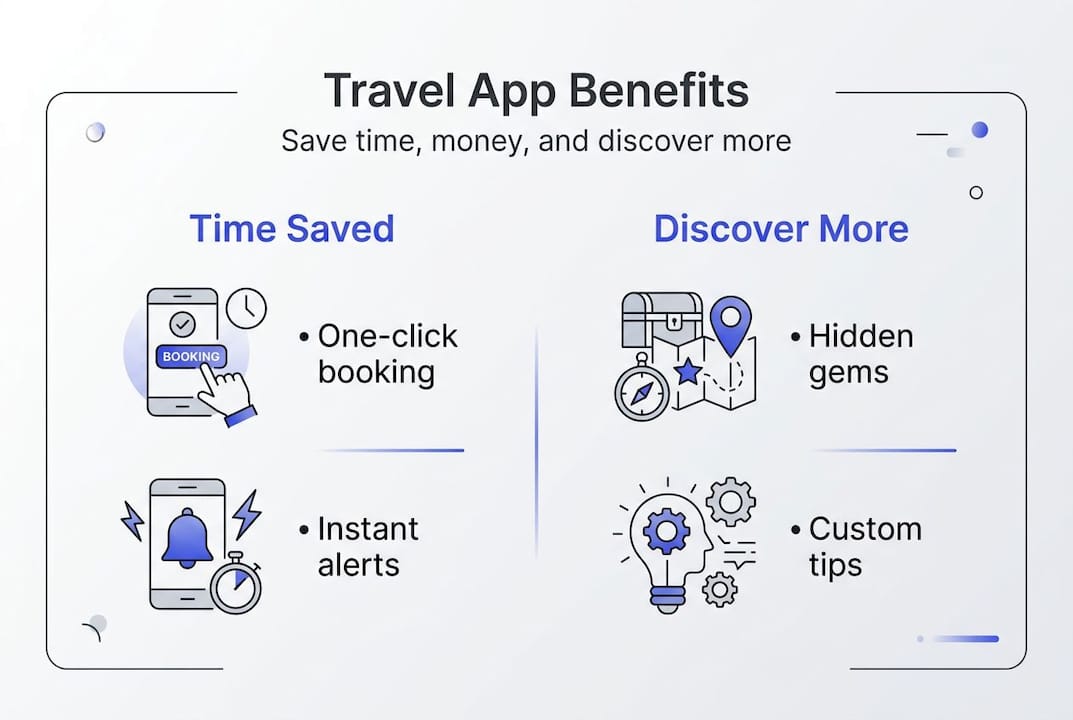
Here's a quick comparison that shows just how different the two approaches feel:
| Task | Without an app | With a travel app |
|---|---|---|
| Finding accommodation | Multiple site searches, phone calls | Filter and book in under 5 minutes |
| Building an itinerary | Manual spreadsheet or paper notes | Auto-generated from booking confirmations |
| Real-time flight updates | Check airline website repeatedly | Push notification to your phone |
| Discovering local activities | Guidebooks, word of mouth | Geolocated suggestions in seconds |
| Managing changes | Re-booking calls, email chains | Instant rebooking within the app |
The difference is stark. And it's not just about speed. Apps also catch the things you'd miss, like a gate change or a tour that fills up fast.
Key advantages travelers report:
- Real-time flight and booking alerts keep you informed without any effort
- Consolidated itineraries reduce the risk of missing connections or reservations
- User reviews give you honest, unfiltered insights before you commit
- One-tap seamless adventure booking means less time planning and more time experiencing
- Offline access ensures your plans survive even when WiFi doesn't
According to expert app reviews, the best travel apps combine booking, navigation, and discovery features in a single interface, which is where most of their real value comes from.
Pro Tip: Forward all your booking confirmation emails to TripIt before your trip. It reads them automatically and builds your full itinerary without any manual input, saving you at least an hour of organization time.
Unlocking savings and exclusive deals with travel apps
Convenience is just one part of the story. Travel apps are also powerful money-saving tools, and the numbers back that up.

Price comparison apps like Skyscanner and Expedia scan hundreds of airlines and accommodation providers simultaneously. You see the full range of options in real time, not just what one provider wants you to see. Apps can deliver averages of 30% savings on flights compared to booking directly through airline websites. That's a meaningful difference, especially for long-haul travel.
Here's a realistic look at what app-based savings can look like:
| Booking type | Average saving via app | Example saving on $1,000 spend |
|---|---|---|
| Flights | Up to 30% | $300 |
| Hotels | 15-25% | $150-$250 |
| Tours and activities | 10-20% | $100-$200 |
| Car rentals | 10-15% | $100-$150 |
Beyond price comparisons, apps like Booking.com push exclusive flash deals to users who opt into notifications. These limited-time offers often undercut publicly listed rates. Loyalty programs built into apps also stack discounts over time, rewarding repeat travelers with free nights or priority access.
According to top travel app downloads data, personalization features are now a major driver of app retention. When an app learns your preferences, it surfaces deals you actually want rather than flooding you with irrelevant options.
Best practices for maximizing app savings:
- Set price alerts on Skyscanner or Google Flights and wait for the right moment to book
- Compare at least three platforms before confirming any reservation
- Book travel experiences in-app to access app-exclusive discounts not available on the web
- Enable notifications for flash deals, especially during off-peak seasons
- Join loyalty programs within apps to accumulate rewards across multiple trips
- Use incognito mode when first searching, then switch to your app account to capture personalized deals
The key insight here is that apps don't just find lower prices. They put you in a stronger negotiating position by giving you full market visibility instantly.
Travel apps for leisure, adventure, and cultural discovery
Not all travelers want the same things, and the best apps understand that. Whether you're after a relaxing beach resort, a multi-day hiking challenge, or a deep dive into local culture, there's a tool designed for your style.
Leisure travelers lean on Booking.com and Viator for curated hotel picks and organized excursions. These apps offer filtered searches by mood, budget, and proximity. You can find spa retreats, sunset dinner cruises, or family-friendly day trips without scrolling endlessly.
Adventure seekers rely on apps like AllTrails for trail difficulty ratings, elevation maps, and real-time weather warnings. Apple Maps has become surprisingly capable for navigation in remote terrain. These tools, combined with offline maps for hiking and real-time alerts for weather or delays, are now considered essential gear for serious outdoor travelers.
Cultural explorers turn to Lonely Planet for neighborhood guides, historical context, and local food recommendations. Apps built around travel discovery help users find hyperlocal experiences that generic search engines simply miss, from street art tours to traditional cooking classes in private homes.
Must-have features by travel type:
- Leisure: Price filters, accommodation reviews, spa and dining listings, activity bundles
- Adventure: Offline maps, trail data, weather alerts, gear checklists, emergency contact features
- Cultural: Audio guides, neighborhood history, local event calendars, language translation tools
The global experiential travel market is growing rapidly, driven by travelers who want meaningful engagement with destinations rather than passive sightseeing. Apps that surface hyperlocal content are at the center of this shift.
Using apps to explore nearby activities is one of the fastest ways to find experiences that match your specific interests, including the kind of local activity types that rarely make it into standard travel guides.
Pro Tip: Before any hiking or cultural exploration, download your destination's offline map in Google Maps or Maps.me. This single step ensures you can navigate confidently even when mobile data cuts out in remote villages or deep trails.
What to watch out for: app limitations and best practices
Apps are powerful, but they aren't perfect. Knowing their weak spots helps you use them more effectively and avoid the most common pitfalls.
Disadvantages of travel apps include information overload, accuracy issues, dependency on technology, and privacy concerns. Each of these deserves real attention before you rely on an app for a critical travel decision.
Information overload is real. With dozens of apps all competing for your attention and each offering hundreds of results, decision fatigue sets in fast. A hotel with 4,000 reviews looks trustworthy, but reading through them is a job in itself. Outdated data is another issue. Smaller tour operators sometimes don't update their listings promptly, and a restaurant that closed six months ago may still appear in an app's recommendations.
Steps to minimize risk when using travel apps:
- Download offline content (maps, itineraries, tickets) before leaving WiFi zones
- Cross-check reviews on at least two different platforms before booking anything significant
- Verify critical details (opening hours, tour availability) directly with providers 24-48 hours before
- Keep your phone charged with a portable battery pack; app dependency drains batteries faster
- Update apps before your trip to avoid bugs that affect booking or navigation
Privacy is the most overlooked concern. Many apps collect location data, travel patterns, and payment information. These digital travel guides and booking platforms often share data with third parties unless you specifically opt out.
App privacy best practices:
- Review app permissions carefully; deny location access when the app doesn't need it
- Read the privacy policy before entering payment details
- Use a dedicated travel email address to limit spam and data exposure
- Enable two-factor authentication on any app that stores payment info
- Delete apps that request excessive permissions for features you don't use
Using planning tools for travel thoughtfully means getting all the benefits while keeping your data and attention protected.
A seasoned traveler's perspective: what apps can't do (and why it matters)
Here's something most travel app guides won't tell you: the best moments of any trip are almost never the ones you booked in advance.
Apps are extraordinary at logistics. They compress hours of research into minutes. But there's a real risk that over-reliance on curated suggestions narrows your experience. When every restaurant is pre-selected by an algorithm and every tour is filtered by rating, you end up with a trip that looks great on a screen but feels oddly predictable in person.
"The best moments often come from going off-script." That means taking a detour down an unmarked alley, accepting an invitation from a shopkeeper, or joining a small local tour that never made it onto any app's featured list. These are the stories people tell for years.
The strongest approach blends both worlds. Use apps for the framework, but leave deliberate gaps in your itinerary for spontaneous discovery. Seek out authentic local excursions that sit outside the mainstream platforms.
Pro Tip: Ask your accommodation host or a local guide to recommend one experience that isn't on any app. You'll almost always hear something genuinely surprising.
Discover unique adventures with IM-AT
You've done the research, understood the tools, and sharpened your travel instincts. Now it's time to put that into action.
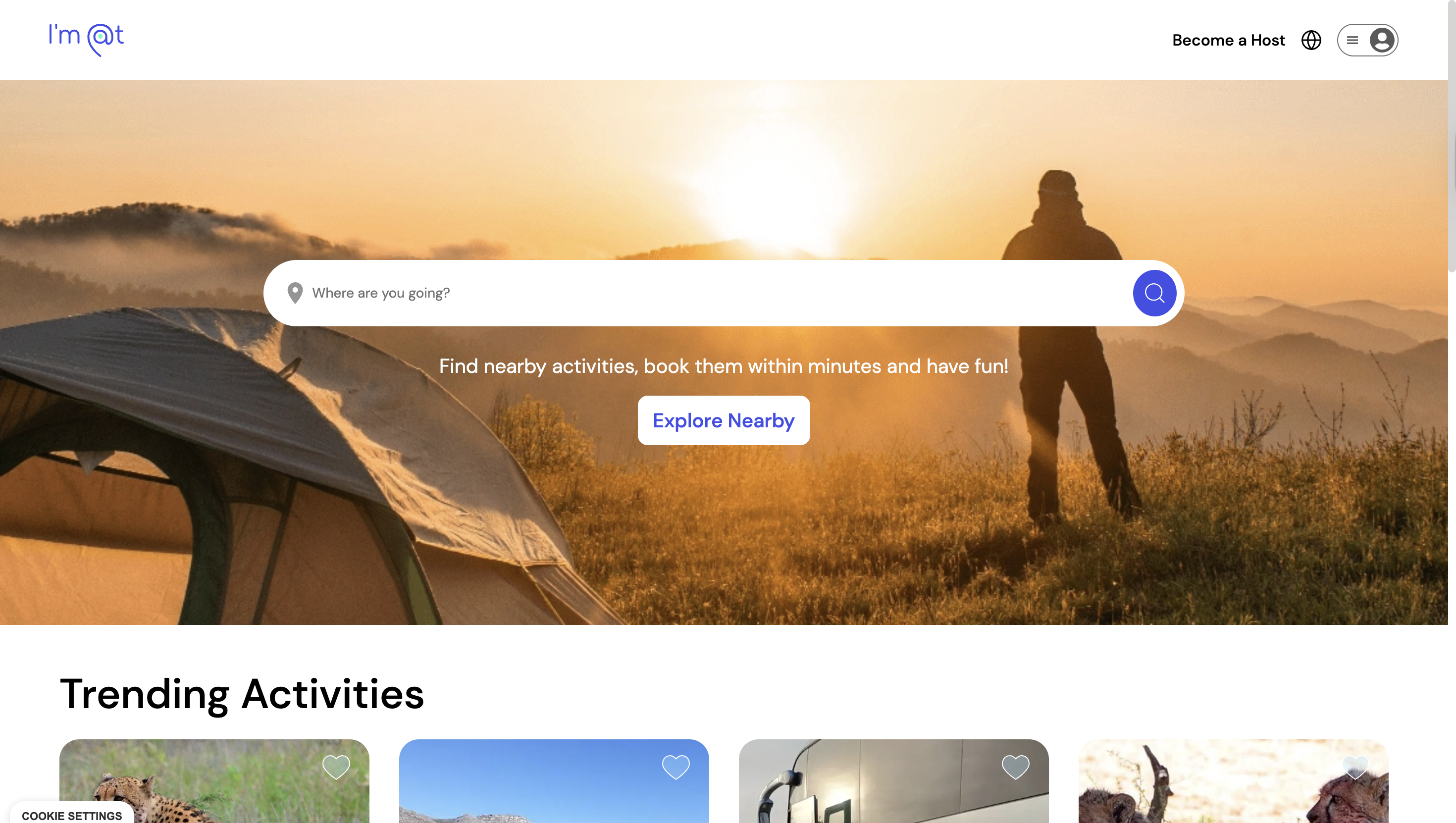
IM-AT is built exactly for this moment. Whether you're ready to book a custom 4x4 tour through rugged landscapes, explore palaces and hidden gardens on a Sintra guided tour, or push your limits with Terceira hiking and caving, the platform connects you directly with verified experiences curated for real travelers. No generic packages, no guesswork. Just activities matched to your travel style, ready to book in minutes.
Frequently asked questions
Do travel apps work without internet?
Many travel apps offer offline features like downloaded maps and saved itineraries, but real-time updates for flight and booking alerts require an active connection. Always download key content before you go offline.
How do travel apps protect my privacy?
Most apps provide privacy controls, but privacy concerns remain a known disadvantage. Always review app permissions and opt out of data sharing where possible before entering personal information.
Are travel apps really cheaper than booking direct?
Yes, in many cases. Apps with price comparison tools and exclusive deals can deliver up to 30% savings on flights compared to booking directly, depending on timing and destination.
What if an app gives inaccurate information?
Always cross-check important details on a second source, and download offline data before traveling to remote areas where connectivity and real-time accuracy can't be guaranteed.