

TL;DR:
- Effective travel planning in 2026 emphasizes booking flights first to secure volatile fares before other reservations. Travelers must prioritize early application for digital border authorizations like the UK ETA and EU EES to prevent denied boarding. Incorporating a 10 to 15 percent budget buffer and choosing flexible bookings helps mitigate disruptions and hidden costs.
Effective travel planning in 2026 is defined by one core principle: sequence your commitments correctly or pay the price. Airfare volatility, new digital border systems like the UK ETA and the EU Entry/Exit System, and rising disruption rates have made the old "book it when you feel like it" approach genuinely costly. The best travel planning tips 2026 travelers can follow combine early flight booking, administrative readiness, and financial buffers into a single layered strategy. This guide gives you that strategy, step by step.

1. Book your flight first — every time
The single most effective move in any 2026 travel guide is locking in your flight before anything else. Flight searches were up 4% for summer 2026 compared to the previous year, with many travelers shortening itineraries and paying premiums for flexible fares. That demand spike means prices move fast and seats on preferred routes disappear faster.
When your flight date is fixed, every other decision becomes easier. Hotel check-in windows, tour bookings, and visa appointment slots all align around a confirmed departure. Without a flight, you are building a plan on sand.
The layered commitment strategy works like this:
- Book the international flight first, since it is the most volatile and hardest to replace
- Secure accommodation second, prioritizing properties with free cancellation
- Book tours and activities last, once the core itinerary is stable
- Leave buffer days on either end of the trip for delays or extended stays
Pro Tip: Set a Google Flights price alert for your target route at least 90 days out. When the fare drops to your threshold, book immediately rather than waiting for a lower price that may never arrive.
Layering your commitments this way balances cost, risk, and uncertainty. It also protects you if a visa or travel authorization gets delayed, since you have not yet committed to non-refundable hotels or tours.
2. Understand the new digital border systems before you travel
Two major entry systems changed the rules for international travel in 2026, and ignoring either one can get you denied boarding before you even reach the airport.
The UK Electronic Travel Authorization became mandatory on 25 February 2026. Here is what you need to know:
- The UK ETA costs £16, rising to £20 from April 2026, and is linked directly to your passport
- Approval typically takes up to 3 working days, but you should apply at least two weeks before travel to allow for any complications
- The authorization is valid for two years and covers multiple trips
- There is no appeal process if your application is refused, making accuracy on the form critical
The EU Entry/Exit System became fully operational on 10 April 2026, replacing passport stamping with digital biometric recording at EU borders. The system captures fingerprints and facial images, detects identity fraud, and records any previous refusals of entry. This means border processing now takes longer at many EU entry points, and travelers should build extra time into airport arrivals.
Pro Tip: Apply for your UK ETA before booking non-refundable hotels or tours. Confirming ETA approval first removes the risk of losing money on bookings you cannot use if the application is refused.
Treat these authorizations as dependencies in your planning chain. Your flight date and hotel check-in are invalid without them.
3. Build a budget with a 10 to 15 percent buffer
Most travelers underestimate trip costs by focusing only on flights and accommodation. Food, local transport, activity fees, airport transfers, and currency exchange fees add up quickly, and any single disruption can blow a tight budget entirely.
Experts recommend a 10 to 15 percent contingency buffer on top of your full estimated trip cost. That buffer is not a luxury. It is the difference between a disrupted trip and a ruined one.
| Budget category | Common mistake | Smarter approach |
|---|---|---|
| Flights | Booking cheapest fare without flexibility | Pay for changeable tickets on key routes |
| Accommodation | Non-refundable rates to save 10% | Free cancellation rates within 72 hours of check-in |
| Activities | Booking everything upfront | Reserve 50% in advance, leave 50% flexible |
| Contingency | No buffer at all | Add 10 to 15% of total trip cost as a reserve |
Hidden budget leaks to watch for:
- Credit card foreign transaction fees of 2 to 3 percent on every purchase
- Last-minute rebooking fees when flights change
- Travel insurance purchased after a disruption occurs, which covers nothing
- Airport food and transport when connections are missed
Flexible cancellation policies combined with travel insurance are more valuable than chasing the lowest fare without protection. A $30 saving on a non-refundable ticket can cost $300 if your plans shift.
4. Plan your travel health prep at least 6 weeks out
Health preparation is the most commonly delayed item on any travel planning checklist, and it is the one with the least flexibility. Some vaccines require multiple doses spaced weeks apart, and starting too late means incomplete protection at departure.
The CDC-recommended window for travel health consultations is 4 to 6 weeks before departure. That timeline accounts for vaccine scheduling, prescription lead times, and any follow-up appointments.
Key steps for your health planning checklist:
- Book a travel health consultation at least 6 weeks before departure, not the week before
- Bring your physical immunization records to the appointment, not just your memory
- Ask specifically about multi-dose vaccines like hepatitis A and B, which require a series over several weeks
- Request written documentation of all vaccines received, since some destinations require proof at the border
- Pick up any prescription medications, including antimalarials, before you leave home
Mapping backwards from your departure date using your immunization records gives your doctor the clearest picture of what you still need. Travelers who skip this step often arrive at their destination with partial protection or scramble for last-minute pharmacy visits abroad.
5. Choose flexibility over the cheapest price
The defining characteristic of smart travel in 2026 is treating flexibility as a feature you pay for deliberately, not an afterthought. Disruptions and fare fluctuations have made rigid, low-cost itineraries a genuine liability.
"The travelers who come out ahead in 2026 are not the ones who found the cheapest deal. They are the ones who built in enough room to adapt when things changed." This reflects the growing consensus among travel advisors who are seeing more clients request change-friendly bookings as a baseline, not an upgrade.
What flexibility looks like in practice:
- Choosing hotels with free cancellation up to 24 to 48 hours before check-in
- Booking tours and experiences that allow date changes without penalty
- Purchasing travel insurance at the time of your first booking, not after something goes wrong
- Selecting flights with at least one free change included in the fare
Travelers increasingly hire travel advisors in 2026 specifically for on-call support when disruptions hit. That support is worth more than the advisor fee when a missed connection or denied entry threatens the whole trip. For solo travel tips 2026, this kind of backup is especially valuable since there is no travel companion to split the problem-solving with.
You can also use travel planning tools to compare cancellation policies across platforms before committing to any booking.
6. Use off-peak timing to cut costs without cutting quality
Timing is one of the most underused levers in affordable travel ideas for 2026. Traveling outside peak school holiday windows and major local events reduces airfare, accommodation rates, and crowd levels simultaneously.
Traveling off-peak to destinations like Cape Town, Lisbon, or Chiang Mai in shoulder season delivers the same experience at 20 to 40 percent lower cost across flights and hotels. The experience is often better. Fewer crowds at major attractions, shorter queues, and more attentive service are consistent benefits of shoulder-season travel.
For family travel planning advice, off-peak timing requires more coordination around school schedules, but even shifting a trip by two weeks can produce meaningful savings. A family of four traveling to Europe in late August versus early July can realistically save several hundred dollars on flights alone.
Pro Tip: Check local public holiday calendars for your destination, not just your home country. A national holiday at your destination can spike hotel prices and crowd levels even during what looks like an off-peak window on your end.
Golf tourism destinations like Marbella follow their own seasonal demand patterns, with spring and autumn offering the best combination of weather and value. The same logic applies to any activity-focused destination.
7. Build your itinerary around a checklist, not a wish list
A travel itinerary built on a structured checklist produces fewer surprises than one assembled from inspiration alone. The checklist approach forces you to confirm each element before moving to the next, which surfaces problems early when they are still fixable.
A solid travel itinerary checklist covers flights confirmed, travel authorizations approved, accommodation booked, health prep completed, travel insurance active, and local transport arranged. Each item is a gate. You do not move forward until it is checked.
For multi-destination trips, build the checklist per leg rather than for the whole trip at once. Each destination may have different entry requirements, health recommendations, and booking lead times. Treating each leg as its own mini-plan prevents the common mistake of assuming one set of rules applies everywhere.
Smart activity planning fits into this framework at the final stage, once the structural elements are confirmed. Booking a guided safari or a city food tour is far more satisfying when you know your flights are locked, your entry is approved, and your budget has room for it.
Key takeaways
Effective 2026 trip planning requires booking flights first, securing digital travel authorizations early, budgeting with a 10 to 15 percent buffer, and treating flexibility as a deliberate purchase rather than a fallback.
| Point | Details |
|---|---|
| Book flights first | Airfare is the most volatile element; lock it in before hotels or tours. |
| Secure authorizations early | UK ETA and EU EES require advance applications to avoid boarding denial. |
| Budget with a buffer | Add 10 to 15% above estimated costs to cover disruptions and hidden fees. |
| Start health prep at 6 weeks | Multi-dose vaccines require lead time; book your travel health consult early. |
| Pay for flexibility | Free cancellation and travel insurance outperform cheap non-refundable bookings. |
Why I think most travelers are still sequencing their trips wrong
I have reviewed hundreds of trip plans over the years, and the most common failure is not a bad destination choice or an overspent budget. It is sequencing. Travelers book a hotel they love, then search for flights, then realize the authorization they need takes two weeks to process and their departure is in ten days.
The dependency chain in 2026 is real and unforgiving. Your UK ETA must be approved before you can confidently book anything non-refundable. Your flight date must be fixed before your hotel dates make sense. Your health prep must start before you think you need it, because the calendar does not care about your enthusiasm.
What I find most useful is treating trip planning like a project with hard dependencies, not a shopping cart you fill in any order. The travelers who do this well arrive at the airport with every box checked. The ones who do not spend their first travel day fixing problems that were entirely predictable.
Digital tools and platforms like Im-at have made the activity and experience layer of trip planning genuinely fast and enjoyable. The structural layer, flights, authorizations, health, and insurance, still requires deliberate attention and correct sequencing. Get that right first, and the rest of the trip plans itself.
— Mikahil
Plan your next experience with Im-at
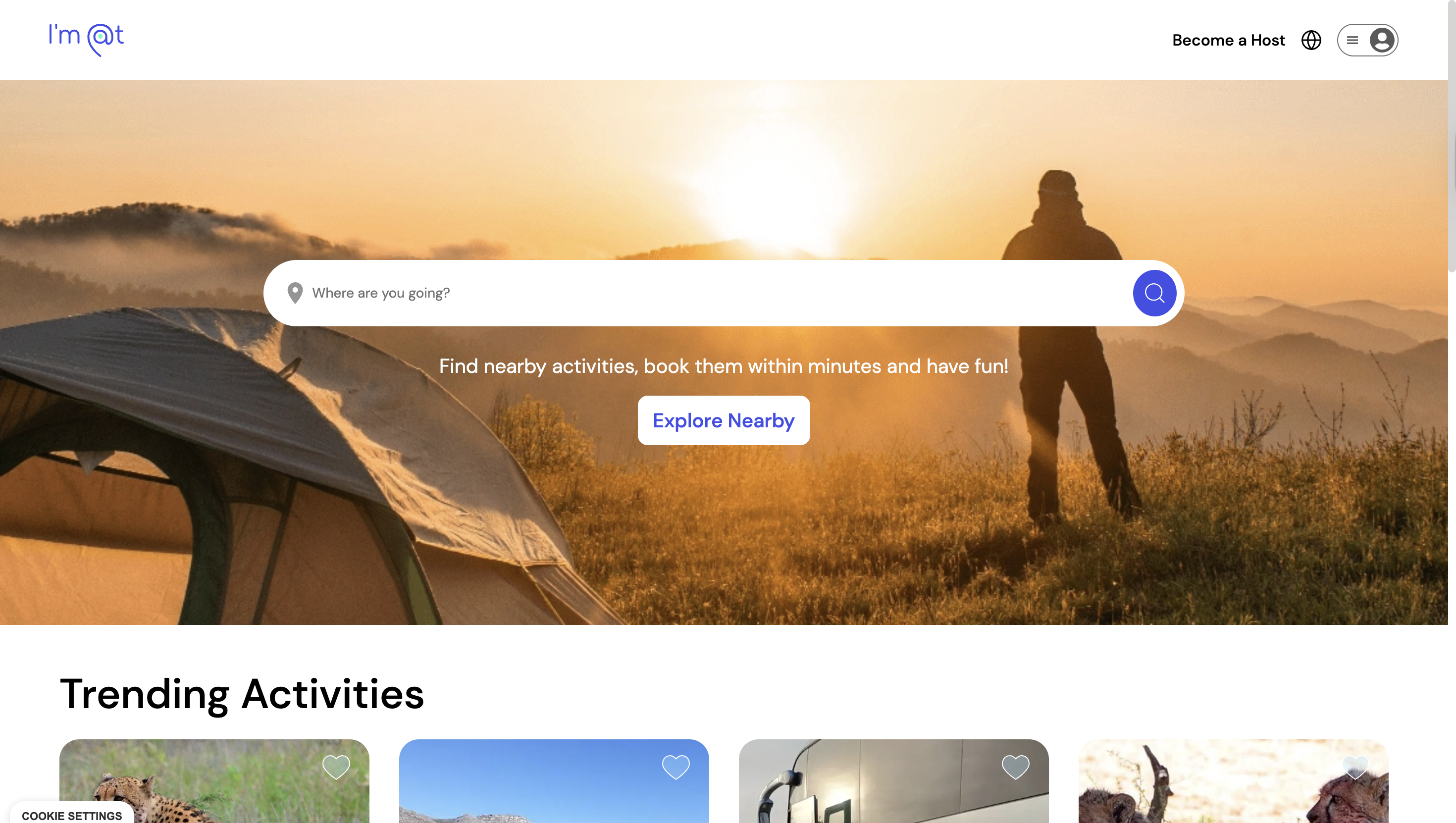
Im-at connects you with curated experiences that make the activity layer of trip planning the easiest part. Once your flights are booked and your authorizations are sorted, Im-at lets you browse and book guided tours, cultural excursions, and multi-day adventures in minutes. If you are planning a trip to South Africa, the Cape Town 3-Day Attraction combines a township tour, Cape Peninsula drive, and wine tasting into one structured itinerary. For something more unconventional, The Unholy Secrets offers a unique experiential event worth building a trip around. Browse the full catalog at Im-at and find your next experience before the best spots fill up.
FAQ
What is the first step in travel planning for 2026?
Book your international flight first. Airfare is the most volatile element of any trip, and fixing your flight date gives every other booking a stable foundation to build on.
Do I need a UK ETA for travel in 2026?
Yes, if you are traveling to the UK from a visa-free country, the UK ETA has been mandatory since 25 February 2026. It costs £16 (rising to £20 from April), takes up to 3 working days to process, and must be approved before you board.
How much of a budget buffer should I add to my trip cost?
Experts recommend adding 10 to 15 percent on top of your total estimated trip cost. This covers unplanned expenses like rebooking fees, missed connections, and last-minute price increases.
When should I start health prep before an international trip?
Start at least 4 to 6 weeks before departure. Some vaccines require multiple doses spaced weeks apart, and starting late means incomplete protection by the time you travel.
Is travel insurance worth buying in 2026?
Yes, and it is most valuable when purchased at the time of your first booking. Insurance bought after a disruption occurs does not cover that event, so early purchase is the only way to get full protection.