

Some of the best single-day excursions in the United States sit within two hours of where you already are. Whether you're driving out of Chicago, Boston, Los Angeles, or Denver, the country's regional variety means you can swap your usual weekend for a waterfall hike, a historic battlefield, a coastal town, or a desert canyon, all without packing an overnight bag. This guide covers standout day trip ideas by region, with specific destinations, activity picks, and practical planning advice to help you get the most out of every hour.
Top picks by region at a glance:
- Midwest and Great Lakes: Indiana Dunes National Lakeshore, Galena (IL), Sleeping Bear Dunes (MI), Door County (WI)
- Northeast and Mid-Atlantic: Acadia National Park (ME), the Catskills (NY), Antietam National Battlefield (MD), Swallow Falls State Park (MD)
- West Coast and Southwest: Point Reyes National Seashore (CA), Sedona (AZ), Columbia River Gorge (OR), Joshua Tree National Park (CA)
A day trip works best when the round-trip drive stays manageable and the destination offers enough to fill four to eight hours without feeling rushed. The destinations below meet that bar.
What makes the Midwest and Great Lakes worth a day trip?
The Midwest gets underestimated as day trip territory, but the Great Lakes shoreline alone offers more variety than most travelers expect. State parks, historic river towns, and sand dunes the size of small mountains all sit within easy reach of Chicago, Detroit, Indianapolis, and Milwaukee.
Standout destinations:
- Indiana Dunes National Lakeshore (IN): About 60 miles from Chicago, the dunes rise up to 200 feet above Lake Michigan. The Dunes Succession Trail traces ecological change from beach to forest in a single 1.5-mile loop. Families with kids love the wide sandy beach; hikers prefer the more rugged Cowles Bog Trail.
- Galena, Illinois: A 19th-century lead-mining town that looks almost unchanged from the 1850s. The main street runs along the Galena River with independent shops, historic inns, and Ulysses S. Grant's preserved home. Drive time from Chicago is about two hours.
- Sleeping Bear Dunes National Lakeshore (MI): The Pierce Stocking Scenic Drive gives you 12 miles of overlooks above Lake Michigan without leaving your car, though the Dune Climb trail is the real draw. Plan for three to four hours on-site minimum.
- Door County, Wisconsin: The peninsula between Green Bay and Lake Michigan packs in cherry orchards, lighthouses, and fish boils within a two-and-a-half-hour drive from Milwaukee. Peninsula State Park is the anchor stop; the town of Fish Creek handles lunch.
- Starved Rock State Park (IL): Eighteen canyons carved by glacial meltwater, all within 90 minutes of Chicago. The LaSalle Canyon waterfall is the most photographed spot. Go on a weekday if you can; weekend parking fills by 9:00 AM.
Pro Tip: Arriving at natural attractions before 9:00 AM or after 1:00 PM gives you the best shot at securing a parking spot as midday turnover shifts the crowd.
Spring through fall covers the ideal window for most Midwest destinations. Winter access is possible at some sites but trail conditions vary, and a few parks reduce their hours significantly after October.
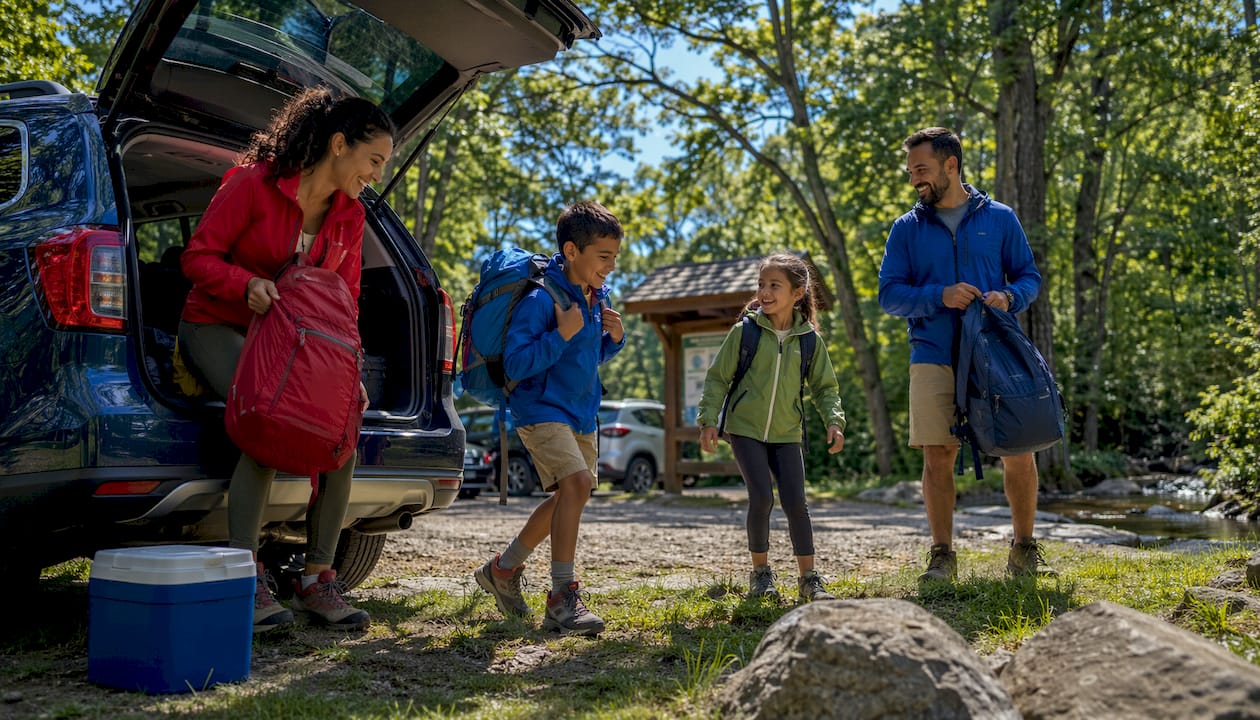
Day trip ideas and suggested itineraries for the Northeast and Mid-Atlantic
The Northeast corridor and Mid-Atlantic states pack an unusual density of history, mountains, and coastline into short driving distances. You can leave Philadelphia and reach the Delaware Water Gap in under two hours, or drive from Washington, D.C., into the Maryland mountains for a full afternoon of hiking.
Destinations worth the drive:
- Antietam National Battlefield (MD): The Antietam battlefield sits about 70 miles from Washington, D.C., near Sharpsburg, Maryland. The auto tour covers eight miles with 11 stops. Combine it with a walk along the Chesapeake and Ohio Canal at the Williamsport Visitor Center for a full day.
- Swallow Falls State Park (MD): Western Maryland's Swallow Falls features Muddy Creek Falls, the tallest free-falling waterfall in the state. The canyon trail loops through old-growth hemlock forest and takes about 90 minutes at a relaxed pace. Deep Creek Lake is minutes away for an afternoon on the water.
- Gathland State Park and South Mountain (MD): The Gathland State Park area along South Mountain connects to the Appalachian Trail and includes a unique Civil War Correspondents Memorial arch. Pair it with Gambrill State Park for ridge views over the Frederick Valley.
- The Catskills (NY): Kaaterskill Falls, a two-tiered waterfall taller than Niagara, sits about two and a half hours from Manhattan. The trail to the upper viewing platform is steep but short. The town of Woodstock is 20 minutes away for lunch and galleries.
- Acadia National Park (ME): A longer drive from Boston (about four hours), but the payoff is Cadillac Mountain, the first place in the continental US to see sunrise from october through march. Book a timed-entry permit well in advance during summer.
- Cape May, New Jersey: Victorian architecture, a working lighthouse, and some of the best birding on the East Coast. About two hours from Philadelphia. The beach is free; the lighthouse climb costs a few dollars.
Sample itinerary: Swallow Falls and Deep Creek Lake (western Maryland)
| Time | Activity |
|---|---|
| 8:00 AM | Depart from the Washington, D.C., area |
| 10:00 AM | Arrive Swallow Falls State Park; hike canyon loop |
| 11:30 AM | Drive to Deep Creek Lake State Park |
| 12:30 PM | Lunch in McHenry or Oakland |
| — | Kayak or paddleboard rental at Deep Creek Lake |
| — | Begin return drive |
Seasonal timing matters here. The Catskills and Acadia get genuinely crowded in july and august, and timed-entry systems at Acadia mean showing up without a reservation in peak season is a gamble. Spring and early fall offer better parking, cooler temperatures, and fewer crowds at nearly every Northeast destination.
Key day trips with activity recommendations on the US West Coast and Southwest
The West Coast and Southwest offer some of the most visually dramatic day trips in the country, from Pacific tide pools to red rock canyons to high-desert forests. Distances can be longer than in the East, so choosing a single anchor destination rather than trying to string several together pays off.
Top picks:
- Point Reyes National Seashore (CA): About 90 minutes from San Francisco, Point Reyes offers elk herds, a working lighthouse, and dramatic cliffs above the Pacific. The Tomales Point Trail through Tule Elk Reserve runs about nine miles round-trip. Bring layers; the coast stays cold and foggy even in summer.
- Sedona, Arizona: The red rock formations around Sedona are accessible from Phoenix in under two hours. Cathedral Rock and Bell Rock are the most photographed; the Airport Mesa loop gives you a 360-degree panorama in under an hour. Sedona's Uptown district handles lunch, though prices run high.
- Columbia River Gorge (OR): Multnomah Falls, the second-tallest waterfall in the US, sits about 30 miles east of Portland. The Historic Columbia River Highway connects a dozen viewpoints and smaller falls in a single scenic drive. Crown Point Vista House is the best photography stop.
- Joshua Tree National Park (CA): Three hours from Los Angeles, Joshua Tree straddles two desert ecosystems. The Skull Rock Nature Trail is accessible for families; Cholla Cactus Garden is a five-minute walk with striking views. Go in spring for wildflower season or in fall to avoid triple-digit heat.
- Zion National Park (UT): About two and a half hours from Las Vegas. The Riverside Walk is paved and accessible for all fitness levels; Angels Landing requires a permit and serious nerve. Shuttle service runs through the canyon from spring through fall, so you don't need to drive inside the park.
- Big Sur (CA): McWay Falls drops directly onto a beach at Julia Pfeiffer Burns State Park, and the drive along Highway 1 is itself the attraction. About three hours from San Francisco or two from Monterey. Check road conditions before you go; Highway 1 closes periodically after storms.
Pro Tip: For outdoor adventure planning in desert destinations like Sedona or Joshua Tree, carry at least two liters of water per person and start hikes before 8:00 AM in summer. Heat builds fast after 10:00 AM.
West Coast destinations tend to reward early arrivals. Popular trailheads at Point Reyes and Zion fill by mid-morning on weekends, and the NPS recommends arriving before 9:00 AM or after 1:00 PM to catch midday turnover at busy parks.
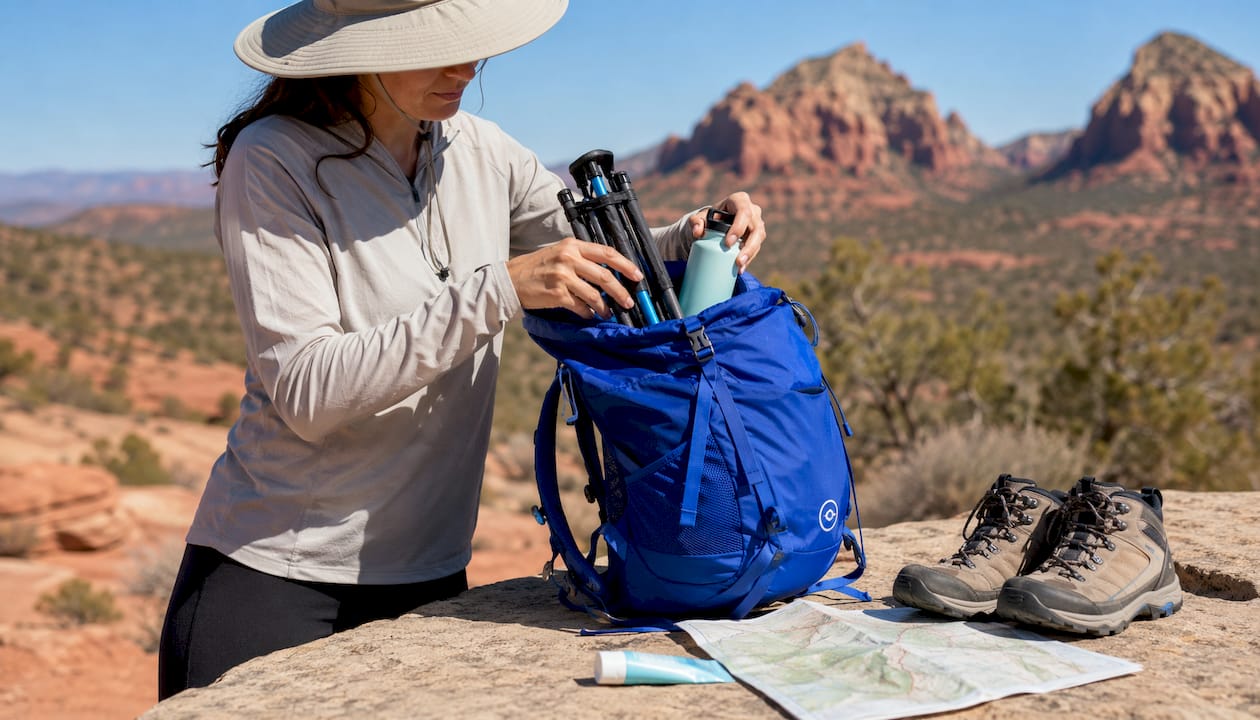
How to prepare for a one-day trip including essential items and packing tips
Packing for a day trip is simpler than packing for a week, but the mistakes people make are surprisingly consistent. Forgetting water, wearing the wrong shoes, or skipping a paper map in an area with no cell signal can turn a great outing into a miserable one.
The core packing list:
- Footwear: Comfortable, broken-in walking shoes or trail runners. New shoes on a long hike are a reliable way to end the day early.
- Hydration: At least one liter of water per person for light activity; two or more for hiking or hot weather. A reusable bottle with a filter (like a Sawyer Squeeze or LifeStraw) adds flexibility on trails.
- Navigation: Download offline maps via Google Maps or Gaia GPS before you leave. Cell coverage disappears fast in parks and rural areas. Some sites like Great Seal State Park have no visitor centers on-site, so pre-checking trail maps is the only option.
- Weather layers: A packable rain jacket and a light fleece take up almost no space and cover most weather surprises. Coastal and mountain destinations shift fast.
- Snacks and cash: Many rural parks and historic sites don't take cards. A small amount of cash and easy snacks (nuts, bars, fruit) keep energy up between meals.
- Sun protection: Sunscreen, sunglasses, and a hat. Easy to skip, hard to forget once you've burned on a cloudless ridge.
- Site-specific gear: Some venues have specific requirements. Fishkill Farms, for example, provides picking containers for their u-pick orchards, but you'll still want a bag for the drive home. Check the destination's website the night before.
A good packing list for leisure travel covers most of these bases, but the single most useful habit is laying everything out the night before and cutting anything you're not sure you'll use.
Pro Tip: Build a small "just in case" kit: a basic first aid kit, a portable phone charger, and a printed copy of your travel itinerary checklist. These three items solve the most common day trip emergencies.
Expert advice and best practices for planning a successful day trip
The single biggest planning mistake travelers make is trying to see too much. Packing five attractions into eight hours sounds ambitious on paper; in practice, it means rushing through everything and enjoying nothing. Local experts consistently recommend anchoring around one or two main attractions and leaving the rest of the day flexible.
Planning principles that actually work:
- Pick one anchor activity. Build the day around a single must-do, whether that's a specific hike, a museum, or a historic site. Everything else is a bonus. This approach, sometimes called "anchor and explore," consistently produces more satisfying trips than a packed schedule.
- Limit major site visits. Visiting more than two sprawling or historic destinations in a single day leads to fatigue and shallow experiences. Sintra, Portugal, learned this the hard way; the town now limits visitor itineraries to two major sites per day to prevent overcrowding and rushed visits. The same logic applies to places like Zion or Acadia.
- Book timed-entry tickets in advance. Acadia, Zion, and several other popular parks now require timed-entry reservations during peak season. Showing up without one means turning around. Check the park's reservation page at least two weeks out.
- Use transit time wisely. Keeping your drive time proportional to your on-site time prevents the trip from feeling like a commute with a brief stop in the middle. If you're spending three hours driving round-trip, aim for at least five to six hours on the ground.
- Time your arrival strategically. Midday turnover at popular trailheads means parking opens up around 1:00 PM as morning hikers leave. Arriving early (before 9:00 AM) or later in the afternoon both beat the mid-morning crunch.
- Check seasonal access. Many destinations have reduced hours, closed facilities, or difficult road conditions outside their peak season. A quick check of the park or attraction's official page the week before saves real frustration.
Pro Tip: Loop-style routes, where you take a different road back than the one you came in on, add scenery variety and reduce monotony on longer drives. Plan your custom day trip route so the return leg passes through a different town or viewpoint.
Small-town stops between major attractions often become the most memorable part of the day. A local bakery, a roadside farm stand, or a historic courthouse square adds texture that no national park can replicate. These micro-destinations are worth building in deliberately, not just stumbling onto.
Key Takeaways
The most successful day trips share one trait: a single strong anchor activity with room to breathe around it, not a packed schedule that turns exploration into a checklist.
| Point | Details |
|---|---|
| Pick one anchor activity | Build the day around one must-do attraction and treat everything else as optional. |
| Arrive early or after 1:00 PM | Parking at popular trailheads and parks fills mid-morning; early and afternoon arrivals beat the crunch. |
| Pack the essentials | Comfortable shoes, water, offline maps, layers, and cash cover the most common day trip problems. |
| Limit major site visits | Two major attractions per day is the practical ceiling for a satisfying, unhurried experience. |
| Plan by region | Midwest, Northeast, and West Coast each offer distinct day trip styles within two to three hours of major cities. |
Why the best day trips are the ones you almost didn't plan
There's a version of day trip planning that looks great in a spreadsheet and falls apart by noon. You've seen it: the itinerary with six stops, color-coded driving segments, and a lunch reservation that requires leaving the trail 20 minutes early. By 3:00 PM, everyone is tired, no one got to linger anywhere, and the drive home feels like a defeat.
The trips that actually stick in memory tend to have one thing in common: they had room in them. You found the waterfall, sat by it longer than planned, skipped the fourth stop, and ended up at a diner in a small town you'd never heard of. That's not poor planning. That's good planning with the right amount of slack built in.
What I'd push back on is the idea that more research always produces better trips. It often produces over-itinerized ones. The smart activity planning principle that actually works is simpler: know your anchor, know your drive time, and know what you're willing to skip. Everything else is negotiable.
The regional destinations in this guide, from Swallow Falls to Sedona to Sleeping Bear Dunes, all share one quality worth noting: they reward slowing down. You don't need to hike every trail or hit every viewpoint. Pick the one that sounds best, get there early, and let the day unfold from there.
Ready to book your next day trip experience?
If you want to skip the planning friction and go straight to booking, Im-at makes it easy to find and reserve guided tours, cultural experiences, and outdoor adventures in destinations around the world. From cultural village day tours to hiking adventures on Table Mountain, the platform connects you with experiences worth the trip. Browse Im-at's full catalog at im-at.com and find something worth getting out of the house for.