
TL;DR:
- Leisure activities are freely chosen pursuits that involve active engagement and personal satisfaction. Engaging in diverse categories like physical, creative, and social activities enhances mental and physical health. Micro-leisure, which includes brief activities, is accessible and effective for busy individuals seeking restoration.
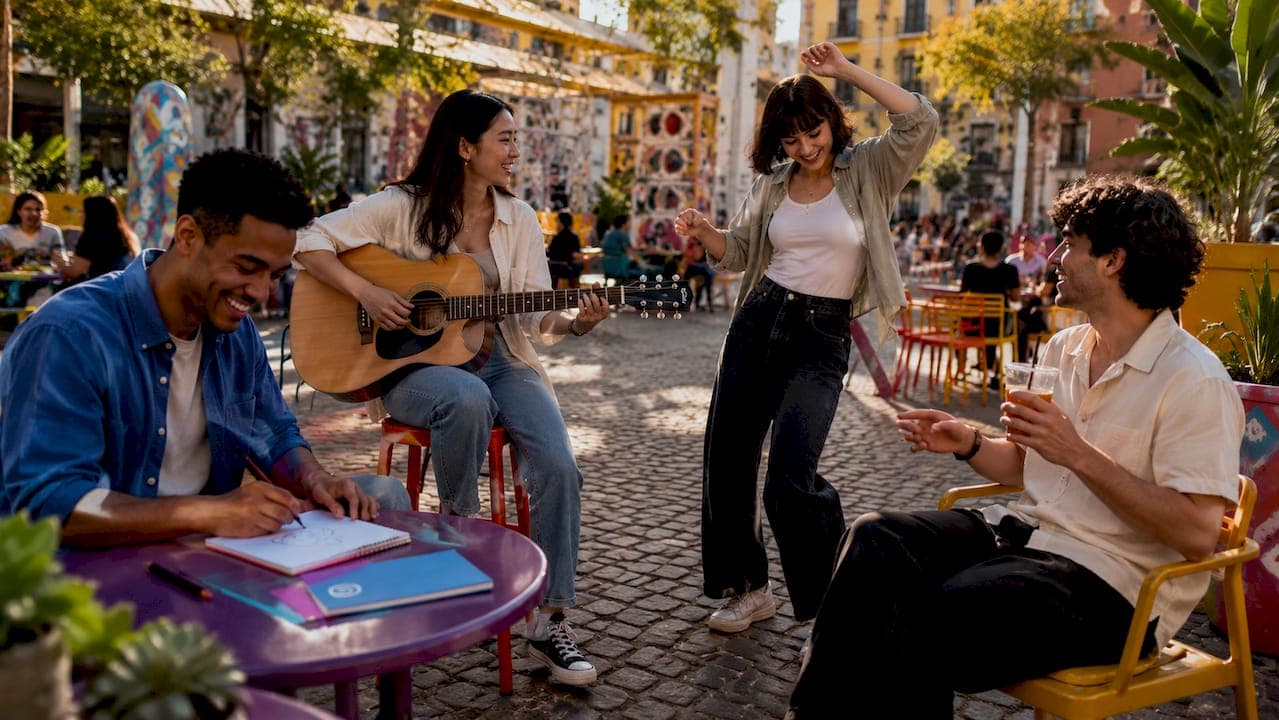
Leisure activities are freely chosen pursuits people do during their free time for enjoyment, relaxation, and personal growth. Unlike work or obligations, true leisure requires active engagement and freedom of choice. It is not the same as passive rest or mindless screen time. Leisure studies scholars define it as an umbrella concept that includes hobbies, recreation, entertainment, and rest, but always with a sense of autonomy and intrinsic motivation. Understanding what leisure activities actually are, and how to choose them well, is the first step toward a more satisfying and balanced life.
What are leisure activities and how are they defined?
Leisure is defined as time free from work or duty, spent in ways you actively choose for personal satisfaction. The key word is choice. Leisure involves autonomy and intrinsic motivation, meaning you do it for its own sake, not because someone expects it of you. That distinction separates leisure from chores, passive channel surfing, or obligatory social events.

Leisure also differs from rest. Rest is recovery. Leisure is engagement. You can rest by sleeping, but you engage in leisure by painting, hiking, or playing chess. Leisure scholars further break it into three scopes: casual leisure (immediately rewarding, low effort), serious leisure (skill building over time), and project-based leisure (a defined goal like planning a trip or building furniture). Knowing which scope fits your mood and schedule helps you pick activities you will actually stick with.
What are the main types of leisure activities?
Experts categorize leisure into eight functional types. Each type meets a different recovery or enjoyment need, which is why variety across categories produces better results than doubling down on just one.
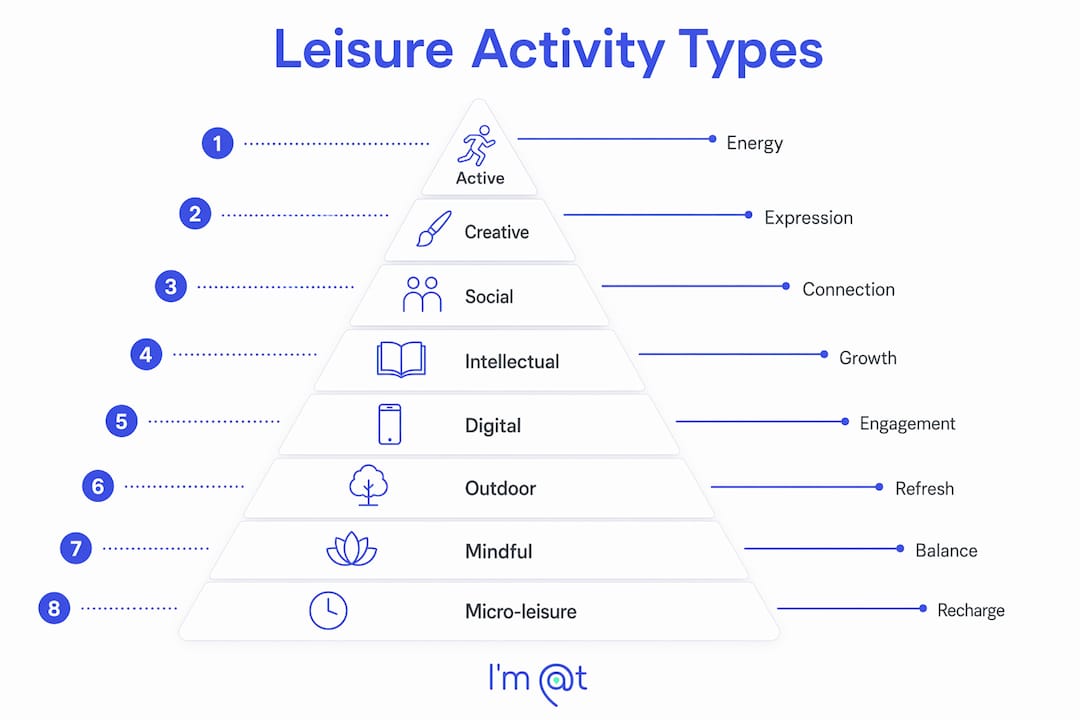
| Category | Nature | Solo or Social | Mental or Physical |
|---|---|---|---|
| Active | Energetic | Both | Physical |
| Creative | Expressive | Solo | Mental |
| Social | Connective | Social | Mental |
| Intellectual | Stimulating | Solo | Mental |
| Digital | Passive/Active | Both | Mental |
| Outdoor | Exploratory | Both | Physical |
| Mindful | Restorative | Solo | Mental |
| Micro-leisure | Spontaneous | Both | Both |
Here is what each type looks like in practice:
- Active leisure: Running, swimming, cycling, team sports. Builds fitness and releases endorphins.
- Creative leisure: Painting, writing, photography, cooking. Produces something tangible and builds skill.
- Social leisure: Game nights, group fitness, volunteering, community events. Feeds connection and belonging.
- Intellectual leisure: Reading nonfiction, solving puzzles, learning a language. Keeps the mind sharp.
- Digital leisure: Gaming, streaming, social media. Can be restorative in short doses but drains energy when overused.
- Outdoor leisure: Hiking, gardening, birdwatching, kayaking. Combines physical movement with nature exposure.
- Mindful leisure: Meditation, yoga, journaling, breathwork. Lowers cortisol and improves emotional regulation.
- Micro-leisure: A five-minute walk, a quick sketch, a short playlist. Brief, spontaneous bursts that fit into any schedule.
Micro-leisure deserves special attention. Most people assume leisure requires a free afternoon. Micro-leisure proves otherwise. A ten-minute crossword or a short knitting session can be genuinely restorative in brief periods. That makes it the most accessible category for busy people.
What are the health benefits of leisure activities?
A June 2026 study published in ScienceDirect found that multi-domain leisure engagement across physical, social, mindfulness, cognitive, and volunteer activities is directly linked to improved physical and mental health. The finding matters because it shows that variety is not just nice to have. It is the mechanism through which leisure actually works.
One of the most powerful psychological effects is the flow state. Psychology Today experts identify flow as key to genuine mental restoration during leisure. Flow is a state of deep immersion where time seems to disappear and focus is effortless. Activities like rock climbing, painting, or playing a musical instrument are classic flow triggers. Passive activities like watching TV rarely produce it.
The contrast between passive and active leisure is worth taking seriously. Passive leisure feels easier in the moment but delivers less recovery. Active leisure, even when it requires effort, leaves you feeling more restored. Cognitive benefits include sharper memory and reduced risk of mental decline. Emotional benefits include lower anxiety and greater life satisfaction. Physical benefits include reduced inflammation and better cardiovascular health. Social leisure adds a layer of belonging that solo activities cannot replicate.
Pro Tip: Mix at least three leisure categories each week. One physical, one creative or intellectual, and one social. That combination covers the full range of recovery needs the 2026 ScienceDirect research identified.
How to choose leisure activities that fit your life
The most common mistake people make is choosing aspirational activities instead of authentic ones. Someone who hates crowds signs up for a group pottery class because it looks appealing on social media. They quit after two sessions. Personality match sustains engagement far better than novelty alone.
Social energy is the most overlooked factor. Introverts recharge through solo or small-group activities. Extroverts recharge through high-energy social ones. Matching social energy to your activity type prevents the exhaustion that causes people to abandon hobbies. An introvert who forces themselves into a loud team sport will not last. An extrovert who commits to solo journaling may feel restless and give up.
Use this selection process to find activities you will actually maintain:
- Audit your energy. Are you an introvert, extrovert, or somewhere in between? This shapes your entire category shortlist.
- Check your time blocks. Do you have 10-minute windows, 30-minute windows, or occasional full afternoons? Match activity length to realistic availability.
- List what you already enjoy. Identify patterns. If you liked art class as a kid, creative leisure is likely a strong fit.
- Try before committing. Sample an activity twice before buying equipment or signing up for a course.
- Mix casual and serious. Pair one low-commitment micro-leisure habit with one skill-building activity. The micro-leisure keeps you active on busy days; the serious leisure gives you a sense of progress.
Pro Tip: Avoid choosing activities based on what you think you should enjoy. Leisure works best when it feels like freedom, not self-improvement homework. If an activity feels like a chore after three tries, replace it without guilt.
For travelers, smart activity planning follows the same logic. Matching your energy and time to the right experience makes the difference between a trip that restores you and one that wears you out.
Examples of popular leisure activities to try right now
The range of leisure activities is wider than most people realize. Here are strong options organized by category, including quick micro-leisure ideas for days when time is tight.
Outdoor and active leisure:
- Hiking or trail walking (30 minutes to a full day)
- Cycling through a local park
- Swimming or open-water swimming
- Yoga outdoors
- Birdwatching or nature photography
Creative leisure:
- Sketching or watercolor painting
- Writing short stories or journaling
- Cooking a new recipe from a different culture
- DIY crafts or home projects
- Learning basic guitar or ukulele
Intellectual and mindful leisure:
- Reading nonfiction or literary fiction
- Solving crossword puzzles or Sudoku
- Meditating for 10 minutes using a guided audio session
- Learning a new language through a free app
- Watching a documentary on a topic you know nothing about
Social leisure:
- Joining a local running club or book group
- Volunteering at a community garden or food bank
- Hosting a board game night
- Taking a group cooking or dance class
Micro-leisure ideas for busy days:
- A five-minute walk outside
- Sketching one object on a notepad
- Listening to one song you love with full attention
- Doing five minutes of stretching
Leisure activities range from casual relaxation to serious skill-building projects. Not every activity needs a long-term commitment. Trying something once or twice counts. The goal is to keep your leisure life varied and alive, not to master every hobby you touch.
For travelers looking to go deeper, immersive travel activities offer a way to combine leisure with genuine cultural experience, turning a trip into something far more memorable than sightseeing alone.
Key takeaways
Leisure activities deliver the most benefit when they are freely chosen, varied across categories, and matched to your personality and available time.
| Point | Details |
|---|---|
| Definition matters | Leisure requires active choice and engagement, not just passive rest or free time. |
| Variety drives results | Mixing physical, social, and mindful activities covers the full range of recovery needs. |
| Personality fit sustains habits | Matching activities to your social energy prevents early dropout and frustration. |
| Micro-leisure counts | Ten-minute activities like crosswords or short walks deliver real restorative value. |
| Flow amplifies benefits | Activities that produce deep immersion restore mental health more effectively than passive options. |
Why I think most people are doing leisure wrong
People treat leisure like a productivity task. They schedule it, optimize it, and then feel guilty when it does not feel "worth it." That mindset kills the whole point.
The research is clear. Genuine leisure requires freedom and intrinsic motivation. The moment you start doing it to perform wellness or post about it, it stops being leisure and becomes another obligation. I have watched people burn out on hobbies they genuinely loved because they turned them into side hustles or social media content.
The other mistake I see constantly is all-or-nothing thinking. People skip leisure entirely on busy weeks because they cannot do it "properly." Micro-leisure fixes this. A five-minute walk or a quick sketch is not a consolation prize. It is a legitimate form of restoration, backed by research, and it keeps the habit alive until you have more time.
My honest advice: pick one activity you did as a child that you stopped for no good reason. Start there. Childhood leisure choices are often the most authentic ones, made before social pressure and aspiration got involved. That is usually where your real preferences live.
— Mikahil
Plan your next leisure experience with Im-at
Im-at connects you with curated, bookable leisure experiences around the world, from cultural city tours to outdoor adventures. Whether you want to spend an afternoon on a guided Cape Town 3-day attraction covering townships, the Cape Peninsula, and wine tasting, or push yourself physically with hiking Table Mountain, the platform makes finding and booking the right experience fast and straightforward.
Im-at lists activities across dozens of destinations, so you can filter by type, duration, and location to find something that genuinely fits your energy and schedule. For travelers who want leisure that feels meaningful rather than accidental, it is a practical starting point.
FAQ
What are leisure activities in simple terms?
Leisure activities are things you freely choose to do during your free time for enjoyment, relaxation, or personal growth. They are distinct from work, chores, and passive rest.
What are the main types of leisure activities?
The eight main types are active, creative, social, intellectual, digital, outdoor, mindful, and micro-leisure. Each type meets a different recovery or enjoyment need.
What are the benefits of leisure activities for mental health?
A 2026 ScienceDirect study links multi-domain leisure engagement to improved physical and mental health. Activities that produce a flow state, such as painting or climbing, deliver the strongest mental restoration.
How do I choose leisure activities that I will actually stick with?
Match activities to your social energy and realistic time blocks. Introverts benefit from solo or small-group options, while extroverts thrive in high-energy social settings. Personality fit is the strongest predictor of long-term engagement.
Can short activities count as real leisure?
Yes. Research supports activities as brief as 10 minutes, such as crosswords, knitting, or a short walk, as effective leisure. Micro-leisure is a recognized category that delivers genuine restorative value in limited time.