

TL;DR:
- Travelers who include diverse activities in their trips report stronger memories and better physical health outcomes. Alternating high-impact, cultural, water, and restorative experiences prevents fatigue and enhances overall wellbeing. Planning trips around anchor activities and contrasting experiences creates more satisfying and memorable travel experiences.
Activity variety is the single most reliable predictor of post-trip satisfaction, outperforming destination prestige, budget, and weather. Travelers who build itineraries around diverse experiences report stronger memories, better physical health outcomes, and a deeper sense of connection to the places they visit. Research confirms that varied exercise routines during travel carry a 19% reduction in all-cause mortality risk. That figure applies to leisure trips too, not just gym programs. The role of activity variety in trips goes far beyond keeping boredom at bay. It shapes how your body recovers, how your mind processes new environments, and how much of a destination you actually absorb.
What types of activities contribute to a balanced trip?
Multi-adventure itineraries typically integrate 4 to 6 distinct activities, such as hiking, kayaking, cultural tours, and culinary experiences. That range is not arbitrary. Each activity type engages a different set of muscles, senses, and cognitive processes, which is exactly what prevents the flat, forgettable feeling that single-theme trips often produce.
A well-structured itinerary draws from four core categories:
- Physical high-intensity: hiking, surfing, cycling, rock climbing
- Physical low-intensity: snorkeling, leisurely walking tours, paddleboarding
- Cultural and creative: cooking classes, museum visits, gastronomy tourism, local market exploration
- Restorative: spa visits, scenic café stops, sunset watching, journaling
Mixing categories across a single day or across consecutive days creates a rhythm that keeps energy levels stable. A morning hike followed by an afternoon cooking class, for example, shifts the body from aerobic exertion to fine motor engagement and social interaction. That shift is not just pleasant. It actively prevents the compounding fatigue that derails trips by day three.
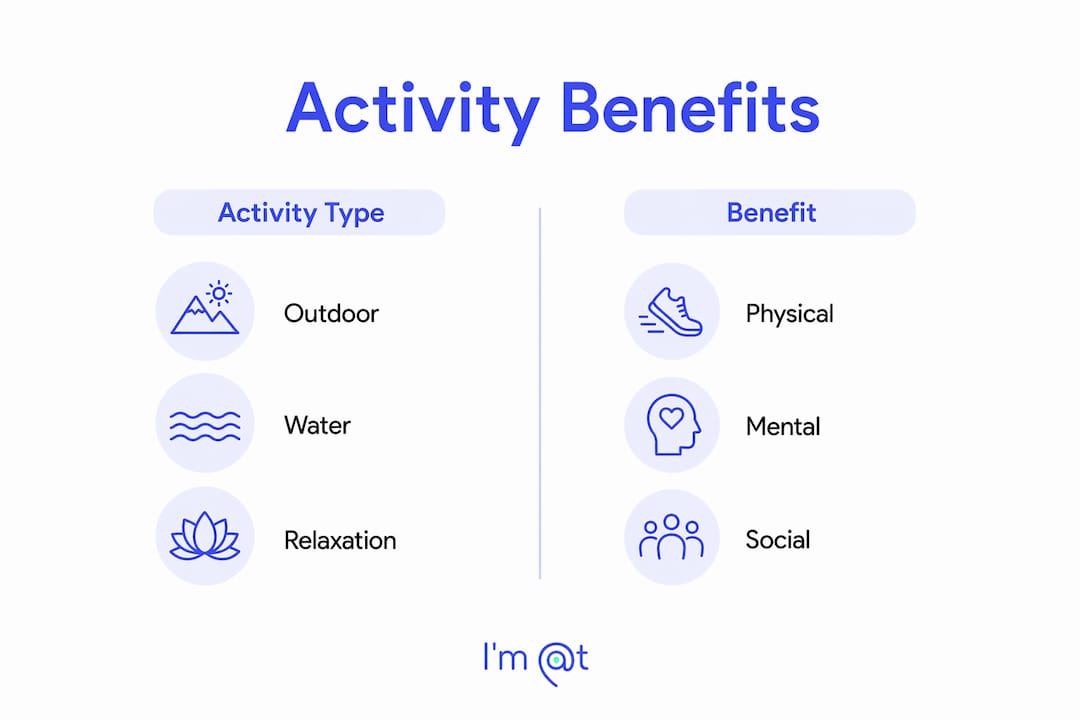
The table below shows how each activity category contributes across three key dimensions of traveler wellbeing.
| Activity type | Mental benefit | Physical benefit | Social benefit |
|---|---|---|---|
| High-intensity outdoor | Stress relief, focus | Cardiovascular fitness | Team bonding |
| Cultural and culinary | Curiosity, creativity | Light movement | Deep local connection |
| Low-intensity water | Calm, mindfulness | Active muscle recovery | Shared experience |
| Restorative leisure | Mental reset | Rest and repair | Quiet connection |
Pro Tip: Alternate land and water activities on back-to-back days. Water sports use different muscle groups than hiking or cycling, so mixing land and sea acts as active recovery rather than added strain.
How does activity variety enhance traveler wellbeing?
Diverse activities stimulate multiple neural pathways, which builds cognitive flexibility and improves problem-solving during travel. Avoiding specialization in one type of leisure activity keeps the brain adaptive and alert. That matters on a trip because you constantly face small challenges: reading a map, ordering food in a new language, navigating public transit. A mind exercised by variety handles those moments with less friction.
"Variety in activities aids not only physical health but stimulates cognitive and emotional resilience essential for travel adaptation. Rotating between contrasting activities maintains excitement and counters mental fatigue better than same-activity repetition."
Psychological burnout is a real risk on longer trips. Homogeneous activity schedules produce mid-trip fatigue precisely because they fail to alternate stimulation with recovery. The fix is not fewer activities. The fix is smarter contrast.
The "wild and mild" framework addresses this directly. Mixing high-adrenaline experiences with serene self-care moments helps travelers recharge between intense days. A white-water rafting morning followed by a wine tasting afternoon is not indulgent. It is physiologically sound trip design. Modern travelers increasingly adopt this reset-after-the-rush approach because it produces a fuller sense of a destination, not just a highlight reel of extreme moments.
Active relaxation between adventure days, such as a slow café morning or a short botanical garden walk, restores energy more effectively than complete inactivity. Full rest days often leave travelers feeling sluggish rather than refreshed. Low-intensity outings keep the body moving without adding stress, which means you arrive at the next big activity feeling genuinely ready.
What are the best strategies for planning trips with diverse activities?
Activity-first planning is the most effective framework for building a satisfying itinerary. Traditional destination-first planning asks "Where should I go?" Activity-first planning asks "What do I want to feel and do?" That shift changes everything about how a trip comes together.
Planning around anchor experiences reduces "travel waste" and boosts satisfaction by cutting generic sightseeing monotony. An anchor experience is one of your top three must-do activities. Build the rest of the itinerary around those three anchors, then fill gaps with complementary options that contrast in intensity and type.
Follow these steps to build a balanced multi-activity itinerary:
- Identify your three anchor experiences. These are the activities you would regret missing. Everything else supports them.
- Group activities by geographic proximity. Spending excessive time in transit for short activities leads to burnout. Grouping by location maximizes time on the ground and reduces fatigue.
- Alternate high-impact and low-impact days. Overpacking high-intensity adventures across consecutive days erodes endurance and reduces overall enjoyment. Strategic alternation sustains energy across the full trip.
- Schedule active recovery, not passive rest. Replace full rest days with low-intensity outings like a food market visit or a gentle kayak session.
- Use local expertise. Local guides know which combinations of activities work well together and which pairings exhaust travelers. Platforms like Im-at connect you with local providers who have built itineraries around exactly this kind of knowledge.
- Build in buffer time. Rushed transitions between activities create stress. Leave 30 to 60 minutes between bookings to absorb what you just experienced.
Pro Tip: Use smart activity planning frameworks to map your anchor experiences first, then layer in contrasting activity types around them. This approach cuts planning time and produces a more satisfying itinerary.
A well-designed itinerary also accounts for the 2026 travel planning principle of "less transit, more presence." Every hour spent in a car or on a bus is an hour not spent experiencing the destination. Grouping activities within walkable or short-drive zones solves this problem without sacrificing variety.
How do different travelers engage with activity variety?
Traveler demographics shape how people respond to activity variety, and understanding those differences produces better trips. Millennials and Gen Z prioritize unique multi-experience trips over traditional sightseeing, actively seeking itineraries that combine adventure, culture, and self-care. For these travelers, a trip that hits only one note feels incomplete regardless of how beautiful the destination is.
Time-limited travelers face a specific challenge. A four-day trip cannot accommodate every category of experience, so prioritization matters more. For them, activity variety means choosing one anchor adventure, one cultural experience, and one restorative activity rather than cramming in ten options.
Key demographic considerations for planning varied itineraries:
- Solo travelers benefit most from structured group activities like guided tours or cooking classes, which provide social connection alongside the experience itself.
- Couples often find that mixing high-energy shared challenges with quiet, restorative moments deepens the trip's emotional impact.
- Families with children need shorter activity windows and more frequent transitions between types to maintain engagement across all ages.
- Older travelers prioritize low-impact cultural and culinary experiences, with selective high-intensity options on days when energy is highest.
The impact of activity diversity on trips is not uniform across these groups. What energizes a 28-year-old solo traveler may exhaust a family of four. The principle stays the same: contrast and variety produce better outcomes than repetition. The specific mix just shifts based on who is traveling.
Key Takeaways
Trips built around diverse activity types consistently outperform single-theme vacations in satisfaction, physical health, and lasting memories.
| Point | Details |
|---|---|
| Variety drives satisfaction | Trips mixing multiple activity types produce higher post-trip happiness than single-theme itineraries. |
| Wild and mild balance | Alternating high-intensity and restorative activities prevents burnout and sustains energy across the full trip. |
| Activity-first planning | Build itineraries around three anchor experiences, then layer contrasting activities around them by proximity. |
| Active recovery beats full rest | Low-intensity outings between adventure days restore energy more effectively than complete inactivity. |
| Demographics shape the mix | Age, travel style, and group composition determine the right activity balance, not a universal formula. |
Why I think most travelers are still getting this wrong
Most travelers I observe plan their trips around a destination and then scramble to fill the days. That approach almost always produces either an overpacked schedule or a forgettable one. The real shift happens when you flip the question and ask what you want to feel on day four, not just what you want to see on day one.
I have watched travelers return from technically impressive trips feeling flat. They hit every landmark, checked every box, and still felt like something was missing. In almost every case, the itinerary lacked contrast. Every day looked the same in terms of intensity and type. A week of pure adventure is exhausting. A week of pure relaxation is boring. The types of travel activities that stick in memory are almost always the ones that surprised you by following something completely different.
The most satisfying trips I have seen combine a morning that challenges you physically, an afternoon that connects you culturally, and an evening that lets you breathe. That rhythm is not complicated to build. It just requires thinking about contrast before you start booking. The travelers who do this consistently come home feeling like they actually lived somewhere for a few days rather than just passed through it.
— Mikahil
Plan your next trip with Im-at's curated activity catalog
Im-at brings together guided tours, outdoor adventures, cultural experiences, and relaxation options in one place, so you can build a genuinely varied itinerary without spending hours searching across multiple sites.

The Mother City Cape Town 3-Day Attraction is a strong example of activity variety done right. It combines a township cultural tour, a Cape Peninsula nature excursion, and a wine tasting session across three days. Each day delivers a different type of experience, which is exactly the contrast that produces strong memories and genuine recovery between activities. Browse Im-at's full catalog at im-at.com to find multi-activity options that match your travel style, energy level, and destination.
FAQ
What is the role of activity variety in trips?
Activity variety is the practice of mixing different types of experiences, such as adventure, culture, and relaxation, to maximize satisfaction and wellbeing during travel. Trips with diverse activities consistently outperform single-theme vacations in post-trip happiness and physical health outcomes.
How many activities should a balanced itinerary include?
Multi-adventure itineraries typically integrate 4 to 6 distinct activities to deepen destination understanding without causing fatigue. The key is contrast between activity types, not simply adding more options.
Why does mixing land and water activities improve a trip?
Water sports use different muscle groups than land-based activities, so alternating between them provides active recovery rather than compounding fatigue. This approach has been shown to boost energy levels by the fourth day of a multi-sport trip.
How does activity variety benefit mental health during travel?
Diverse activities stimulate multiple neural pathways, which builds cognitive flexibility and emotional resilience. Rotating between contrasting experiences also counters psychological burnout better than repeating the same type of activity.
What is activity-first trip planning?
Activity-first planning means identifying your top three anchor experiences before choosing a destination or booking logistics. This approach reduces travel waste, simplifies budgeting, and produces more meaningful engagement with the places you visit.