

TL;DR:
- Choosing between guided tours and independent activities depends on travel style, group, and schedule.
- Use a structured comparison focusing on priorities like flexibility, cost, and group size to make confident decisions.
- Combining guided experiences with free exploration can create richer, more memorable trips.
Struggling to choose between a guided tour and going solo is one of the most common headaches travelers face before a trip. The options seem endless, the prices vary wildly, and one wrong call can mean a forgettable afternoon instead of the highlight of your vacation. Comparing travel activities is about far more than scanning price tags. You need to factor in your travel style, your group, your schedule, and how much you value flexibility versus structure. This guide walks you through every step of that process so you book confidently and experience more.
Table of Contents
- What to consider before comparing travel activities
- Guided tours vs independent activities: Step-by-step comparison
- How to evaluate booking platforms and apps
- Tips for comparing travel activities with families or groups
- What most travel guides miss about comparing activities
- Discover and book your next adventure seamlessly
- Frequently asked questions
Key Takeaways
| Point | Details |
|---|---|
| Score activity options | Compare based on time, complexity, budget, and group needs for best results. |
| Check platforms and apps | Always cross-check aggregator apps and direct sites for price, inclusions, and reviews. |
| Prioritize flexibility for groups | Families and groups benefit most from tours with inclusions and adjustable schedules. |
| Blend guided and independent | For optimal value, mix guided tours for complex parts and independent experiences for flexibility. |
What to consider before comparing travel activities
Before you open a single booking app or read a single review, you need to get clear on your own situation. Jumping straight into comparisons without knowing your priorities is like shopping for shoes without knowing your size. You will waste time, feel confused, and probably make the wrong call.
Start with time. How many days do you have, and how complex is your destination? A first-time visitor to Marrakech with just two days will have very different needs than a seasoned traveler spending two weeks road-tripping through New Zealand. Short trips in unfamiliar cities often benefit from structure. Longer stays in well-mapped destinations give you room to explore independently.
Next, think about budget honestly. The advertised headline price is rarely the full story. A guided tour that looks expensive upfront may actually include entry fees, transportation, meals, and gratuities that would add up quickly if you organized everything yourself. On the flip side, an independent itinerary that looks cheap might balloon once you factor in taxis, restaurant meals, and missed opportunities from poor local knowledge. As tours research shows, the best approach is to score factors like time constraints, destination complexity, budget in full rather than headline figures, flexibility needs, and group dynamics. A hybrid approach is often optimal.
Here are the key questions to answer before you start comparing:
- How many days do I have at this destination?
- Am I visiting for the first time or returning?
- What is my real budget, including transportation and meals?
- Do I prefer a fixed schedule or the freedom to change plans?
- Am I traveling solo, with a partner, with kids, or in a group?
- How physically demanding can activities be for everyone in my group?
The final point about group composition is often underestimated. Solo travelers can pivot instantly. Families with young children need predictability and safety guarantees. Groups with mixed interests need variety and some flexibility. Understanding this before you compare options saves enormous frustration.
Pro Tip: Write your answers to those six questions in your phone's notes app before browsing any platform. It takes five minutes and immediately filters out 70 percent of irrelevant options.
You can also browse types of travel activities to get a sense of the full range available before narrowing your focus. And if you are curious about what locals actually do, checking local activity options can surface genuinely off-the-beaten-path ideas that aggregators sometimes miss.
Guided tours vs independent activities: Step-by-step comparison
Now that you understand your priorities, use them to analyze the two main categories of travel activities methodically. This is where most travelers get stuck because they compare apples to oranges. A luxury small-group safari should not be compared on price alone to a self-drive park visit. Context matters.
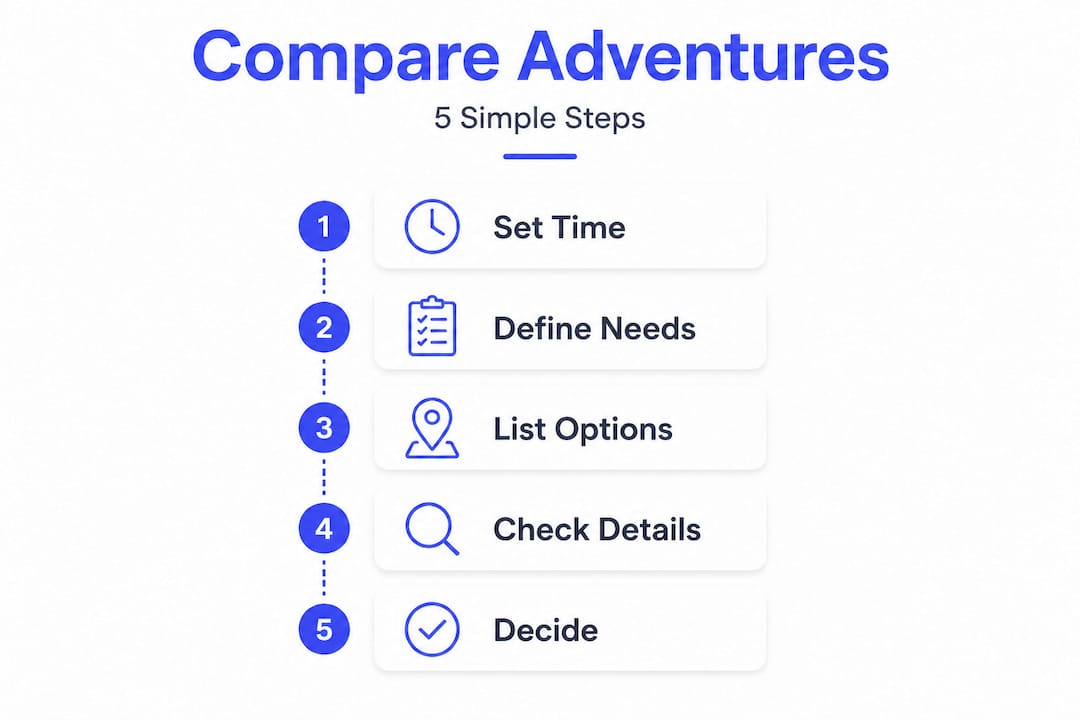
Here is a structured way to score your options:
- List your top three priorities from the preparation step above. For example: flexibility, low cost, and family-friendly.
- Score each activity option from 1 to 5 on each priority. Be honest.
- Add the scores and compare totals. This removes emotion from the decision.
- Check for deal-breakers. Even a high-scoring option loses immediately if it has a problem you cannot work around, like a 6 a.m. departure for a group with young children.
- Consider hybrid options before finalizing. You may find that booking a guided tour for the complex, language-barrier-heavy parts of a trip and going independent for the rest gives you the best of both worlds.
Use this comparison table as a starting framework:
| Factor | Guided tour | Independent activity |
|---|---|---|
| Time efficiency | High: logistics handled | Low to medium: self-managed |
| Cost transparency | Medium: check all inclusions | High: you control every spend |
| Flexibility | Low: fixed schedule | High: change plans freely |
| Local expertise | High: guides provide context | Low: self-researched only |
| Group suitability | High for families, first-timers | High for solo, experienced travelers |
| Spontaneity | Low | Very high |
"The best trip isn't always the cheapest or the most structured. It's the one that fits the way you actually travel." This principle should drive every comparison you make.
The hybrid model deserves more credit than it gets. Imagine spending your first day in Lisbon on a small-group walking tour that orients you to the city's neighborhoods and history. Then, armed with that context, you spend the next three days exploring independently with far more confidence. That combination often produces richer memories than either approach alone would.

For group vs solo travel choices, the calculation shifts meaningfully. Groups tend to benefit from tours that handle logistics, while solo travelers often thrive with independent options that allow them to connect organically with locals and other travelers. If you are chasing unique experience ideas, sometimes the most memorable moments are the ones you stumble into while wandering independently, not the ones listed in a brochure.
Pro Tip: Before finalizing any guided tour, ask the operator directly about group size. Tours with fewer than 12 people almost always deliver a more personal and flexible experience than large bus tours.
Good experience curation means choosing activities that layer together into a coherent trip rather than a scattered collection of tourist checkboxes.
How to evaluate booking platforms and apps
Once you have compared activity types, the next step is picking the right booking platform for your trip style. Not all platforms are equal, and the differences matter more than most travelers realize.
GetYourGuide and Viator dominate the market, but they serve slightly different needs. GetYourGuide tends to be cheaper and more user-friendly for quick bookings, while Viator is stronger on detailed Tripadvisor-integrated reviews and offers a broader variety of bundle options. Both platforms should be on your comparison list, along with the operator's own website, for any activity you seriously consider.
Here is what to check on every platform before booking:
- Cancellation policy: Free cancellation within 24 to 48 hours is standard on most reputable platforms. Anything stricter should give you pause.
- Review recency: Look for reviews from the last three months. Older reviews may reflect staff or quality changes.
- Inclusions listed clearly: Does the price include entrance fees, meals, transportation, and equipment? Or are those extras?
- Direct booking option: Search the operator's name and check their own site. Sometimes direct booking saves 10 to 15 percent.
- Same-day availability: For spontaneous travelers, aggregator apps enable same-day bookings that make last-minute decisions genuinely viable.
| Platform | Best for | Review depth | Price competitiveness |
|---|---|---|---|
| GetYourGuide | Quick booking, user-friendly UI | Moderate | Often lowest |
| Viator | Review research, variety | High (Tripadvisor linked) | Competitive |
| Direct operator | Best local experience | Varies | Sometimes lowest |
| Im-at | Curated global discovery | Growing | Competitive |
Aggregator platforms add real convenience, including streamlined refunds, unified customer support, and the ability to compare multiple options on one screen. However, this convenience sometimes comes at a slight premium compared to booking directly. The trade-off is usually worth it for first-time visitors or complex destinations. For destinations you know well or for repeat operators you trust, booking direct can give you a better price and a more personal experience.
Pro Tip: Save your shortlisted activities on GetYourGuide or Viator, then quickly Google the operator's name plus "official website" before confirming. If the direct price is more than 10 percent lower, book direct every time.
For a broader look at the best activity booking apps available in 2026, there are now several strong alternatives to the two giants that are worth checking, especially for niche adventures or regional destinations.
Tips for comparing travel activities with families or groups
Different travelers have unique needs, so these tips help tailor your comparison specifically for family and group trips, where the stakes for getting it wrong are higher.
When you are traveling with children or a mixed-age group, the single biggest mistake is optimizing for price alone. A cheaper tour that involves long unshaded walks, unpredictable wait times, or an inflexible departure schedule can ruin a full day for an entire family. As tours research highlights, for families or short trips, you should prioritize tours with small groups, clear inclusions, and genuine flexibility to avoid logistical errors. Independent options work better for flexible, repeat visitors who already know what to expect.
Here is a practical checklist for family and group comparisons:
- Group size matters: Small group tours of 12 or fewer people mean more attention, easier logistics, and faster movement.
- Check inclusions carefully: Look for tours that bundle entrance fees, meals, and transport. This simplifies group budgeting significantly.
- Look for flexible departure times: Early morning starts are often brutal for families. Mid-morning departures are frequently available and worth paying a small premium for.
- Read reviews specifically from families: Many platforms allow you to filter reviews by traveler type. A solo traveler's five-star review may not reflect a family's experience at all.
- Plan for diverse interests within your group: For groups with mixed preferences, look for half-day tours that allow different family members to pursue different activities in the afternoon.
- Prioritize independent options for return visits: Once you know a destination, going independent gives you far more control and usually better value.
Pro Tip: When booking for groups of five or more, contact the operator directly before confirming online. Many operators offer unpublished group discounts or will customize itineraries slightly for larger parties.
You can explore a wide range of activity types for groups and browse local activities for groups to get inspiration based on destination and group size.
What most travel guides miss about comparing activities
Most articles on comparing travel activities treat it as a purely logistical exercise. Find the cheapest option. Check the reviews. Book and go. That approach misses something fundamental.
The real value of a travel activity is rarely in the activity itself. It is in the context and expertise that surrounds it. A walking tour of Rome led by a historian who grew up in Trastevere delivers something completely different from the same route walked with a printed map. The streets are identical. The experience is worlds apart. The importance of tour guides is genuinely undervalued in most comparison frameworks, which focus almost entirely on price and logistics.
Here is the uncomfortable truth most guides will not tell you: aggregator platforms are excellent tools but imperfect filters. They surface well-reviewed, commercially optimized operators. But some of the best local guides in the world have no GetYourGuide presence and zero Tripadvisor reviews because they rely entirely on word of mouth. As travel platform research confirms, aggregators add genuine convenience and refund protection, and they enable same-day bookings for spontaneous travelers. But direct booking sometimes connects you to a richer, more local experience that no algorithm would surface.
We also think the travel industry dramatically undervalues spontaneity. The best memories from most trips are rarely the activities booked three months in advance. They are the afternoon you wandered into a food market, the sunset boat ride you arranged on the dock that morning, and the cooking class a guesthouse owner recommended. Building deliberate white space into your itinerary and using last-minute booking apps to fill it can produce moments that planned tours simply cannot replicate.
Our advice: use a structured comparison for the anchor activities of your trip, the things you absolutely cannot miss, and leave 20 to 30 percent of your schedule open for improvisation. That blend produces consistently better trips than either rigid planning or total spontaneity alone.
Discover and book your next adventure seamlessly
Ready to put everything you have learned into practice? Finding and booking the right activity used to mean hours of cross-referencing tabs, second-guessing reviews, and hoping the operator responded to your email before your departure date.
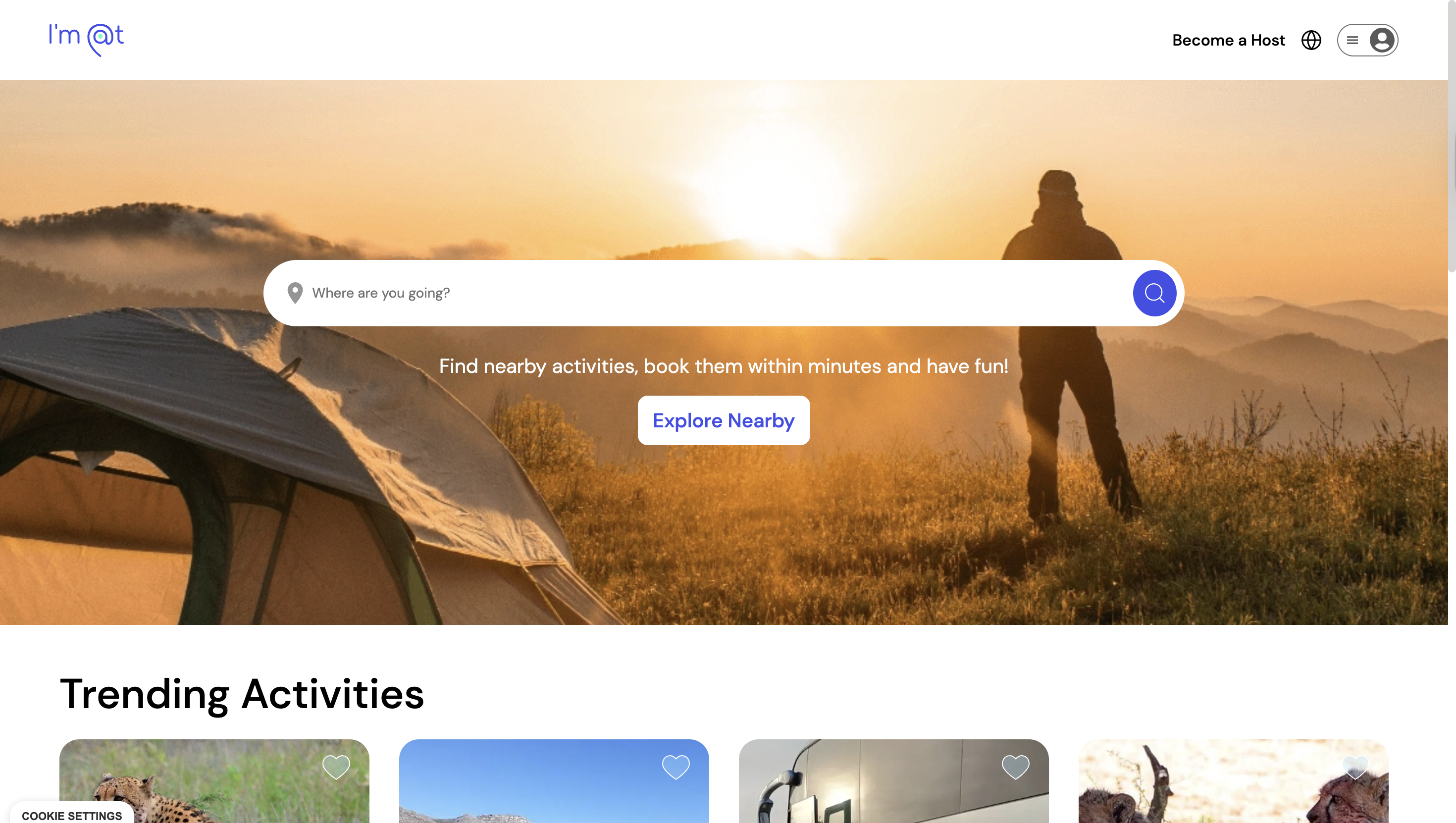
Im-at changes that entirely. The platform functions as both a discovery engine and a booking portal, letting you browse curated experiences across destinations worldwide in minutes rather than hours. Whether you are searching for a thrilling off-the-beaten-path experience, an iconic Cape Town multi-day adventure, or a refined Douro Valley wine and river tour, Im-at brings verified options together in one place so your comparison process is faster, cleaner, and more enjoyable. Guided tours, cultural experiences, outdoor adventures, and local immersion activities are all waiting for you to explore.
Frequently asked questions
What is the best way to compare travel activities for families?
Compare small group tours that include entry fees, meals, and flexible scheduling, since these eliminate most logistical headaches. Prioritizing inclusions and flexibility consistently produces better family experiences than chasing the lowest headline price.
Should I use aggregator apps or book directly with operators?
Both have real advantages. Aggregators add convenience and refund options but may cost slightly more, while direct bookings often deliver better deals and a more personal local connection. Always check the operator's own site before confirming on a platform.
How do I avoid hidden costs when comparing travel activities?
Review every line of inclusions before booking and look specifically for transportation, entrance fees, meals, and gratuities. Scoring full cost vs headline price is one of the most important steps in any honest activity comparison.
Are same-day bookings reliable on apps like GetYourGuide or Viator?
Yes. Both platforms are built to support same-day bookings for most activity types, making them genuinely useful tools for spontaneous travelers who prefer to decide in the moment rather than months ahead.