

TL;DR:
- Multi-activity tours combine four to six distinct activities into a single, cost-effective trip that offers physical variety and destination depth. They simplify logistics, promote group flexibility, and suit a wide range of travelers, including beginners and mixed-ability groups. These tours provide meaningful travel experiences with guided support, flexible options, and high-quality accommodation for an active, memorable adventure.
Multi-activity tours are defined as structured travel itineraries that combine four to six distinct activities, such as hiking, kayaking, e-biking, and cultural excursions, into a single trip. They represent the fastest-growing segment of experiential travel because they solve a problem every traveler faces: too many great options and not enough time. Whether you travel solo, as a couple, or with a mixed-ability group, the advantages of multi-activity trips go well beyond simple convenience. This article breaks down exactly why join multi-activity tours is the right question to ask before your next vacation.
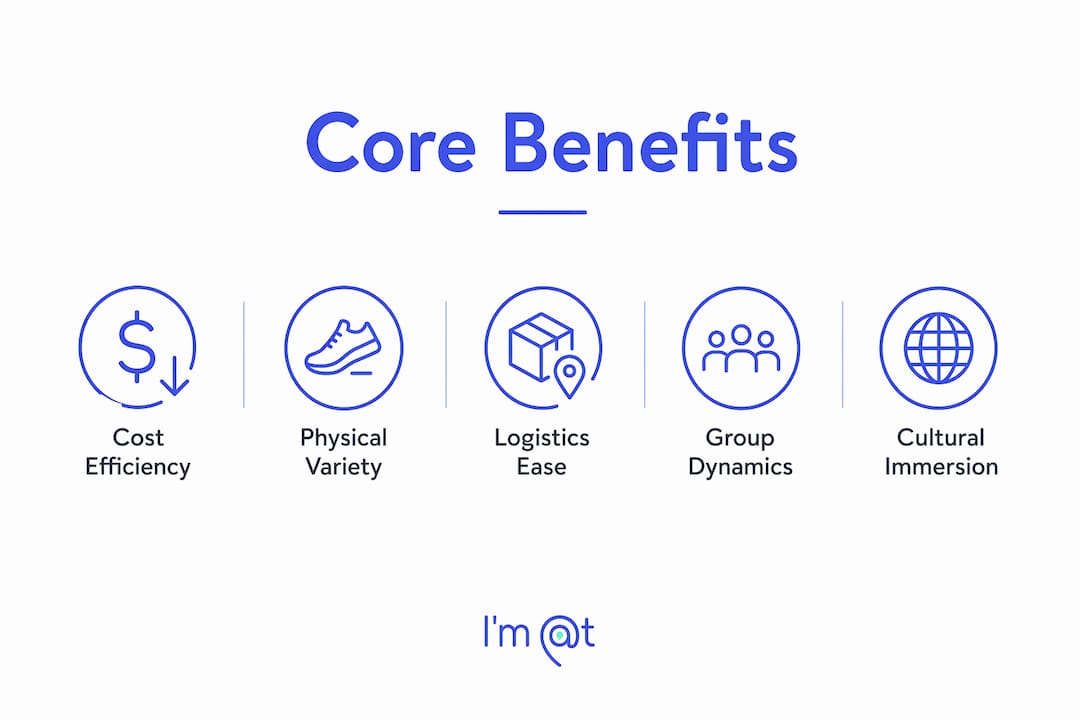
Why join multi-activity tours: the core benefits explained
The single strongest reason to book a multi-activity tour is cost efficiency. Travelers booking multi-activity packages save 20–35% per activity compared to booking each experience individually. That gap adds up fast when you factor in separate guide fees, equipment rentals, and transport for each activity.
Physical variety is the second major advantage. Alternating between activities like hiking and kayaking engages different muscle groups, preventing fatigue and keeping your energy levels steady across the whole trip. A single-activity vacation, say five consecutive days of cycling, tends to grind down the same muscles and the same scenery. Mixing it up keeps both your body and your attention fresh.
The third benefit is depth of destination understanding. Exploring a region by foot, by water, and by bike gives you three completely different perspectives on the same landscape. You notice things on a kayak that you miss on a trail. That layered exposure creates a richer, more lasting connection to the place you are visiting. Multi-activity tours act as structured introductions to a region's ecological and cultural variety, which also helps you decide where to return for a more focused trip later.
Here is what the core benefits look like in practice:
- Cost savings: Bundled pricing cuts per-activity costs by 20–35% versus à la carte bookings.
- Physical balance: Rotating activities prevents repetitive strain and sustains energy across multi-day trips.
- Destination depth: Multiple activity types reveal different layers of the same environment.
- Logistical simplicity: One booking covers guides, gear, transport, and accommodation.
- Group compatibility: Varied options satisfy travelers with different interests and fitness levels.
Pro Tip: Book a tour that includes at least one water-based and one land-based activity. That contrast alone produces the most memorable moments and the widest physical benefit.
How do multi-activity tours improve travel logistics and group dynamics?
Guided multi-activity tours consolidate transportation, accommodation, equipment, and activity coordination into one itinerary. That means you spend zero time researching rental shops, negotiating with local drivers, or figuring out where to store your gear between activities. The mental load of travel drops significantly.

Support vans are one of the most underrated features of these tours. Chase vans enable travelers to opt out of an activity mid-day if they are fatigued or if weather turns without missing the rest of the trip. You do not have to choose between pushing through exhaustion and abandoning the group. That flexibility changes the entire risk calculation for travelers who worry about overcommitting.
Group dynamics improve dramatically when everyone has real options. Multi-sport trips solve group compromise by offering varied activity choices that satisfy travelers of different preferences and fitness levels. One person in your group can take the longer, harder trail while another joins the shorter route, and everyone meets at the same lunch spot. Nobody feels held back or left behind.
- Confirm the guide-to-traveler ratio. Smaller ratios mean more personalized attention and faster problem-solving on the ground.
- Ask about equipment quality. Reputable tours provide maintained, properly fitted gear, which directly affects both safety and enjoyment.
- Check transition times. Well-designed itineraries build in realistic transfer windows so you are not rushing between activities.
- Verify the support vehicle policy. Know exactly when and how you can use the chase van before you need it.
Pro Tip: Ask the tour operator for a sample daily schedule before booking. A good operator will show you exactly how transitions work and where flexibility exists.
Who should join multi-activity tours and what to expect?
Multi-activity tours suit a wider range of travelers than most people assume. The ideal candidates include active couples who want shared adventure without identical fitness levels, mixed-ability groups traveling with friends or family, solo travelers who prefer built-in social structure, and first-time active travelers who want a guided introduction to outdoor adventure. The variety of difficulty options means you do not need to be an athlete to participate fully.
Standard itineraries blend 4–6 diverse activities per trip, and most quality operators offer 2–3 daily difficulty options so you can personalize distance or intensity without pressure. That structure gives you genuine choice every single day. You are not locked into one pace for the entire trip.
Accommodation standards are higher than most travelers expect. Quality packages include 4- and 5-star hotels, daily breakfasts, and local expert guides as standard. The active days are balanced with genuine comfort at night. You can push hard on the trail and still sleep well in a quality bed.
| Traveler type | Best fit reason |
|---|---|
| Active couples | Shared experiences with flexible individual pacing |
| Mixed-ability groups | Daily difficulty options keep everyone included |
| Solo travelers | Built-in social structure and guided safety |
| First-time active travelers | Expert guidance reduces risk and builds confidence |
| Experienced adventurers | Destination variety maximizes time and exposure |
Cultural immersion is woven into the activity mix, not treated as an add-on. Local guides provide context that no app or guidebook can replicate. The trips travelers remember most are defined not by a single highlight but by a collection of varied experiences that create a deeper connection to the destination. That is exactly what a well-designed multi-activity itinerary delivers. You can also explore types of travel activities to understand which combinations tend to produce the richest experiences.
How to choose the right multi-activity tour for your fitness level
The activity mix is the most important factor to evaluate first. Review the full itinerary and confirm that at least two or three activities genuinely interest you. A tour built around activities you feel neutral about will not deliver the energy and engagement that makes these trips memorable. Check how to compare travel activities before committing to any package.
Flexibility systems matter as much as the activity list itself. Confirm that the tour includes a support vehicle, daily difficulty options, and a clear policy for opting out of any single activity. Tours without these features put unnecessary pressure on travelers and reduce the overall experience quality.
Group size and guide expertise directly affect your experience. Smaller groups, typically under 16 travelers, allow guides to give personalized attention and adapt the pace more easily. Ask about your guide's specific certifications and local knowledge, not just their general experience. A guide who knows the local ecology, history, and culture adds a layer of value that no itinerary can fully capture on paper.
- Match the activity mix to your interests, not just your fitness level.
- Prioritize tours with daily difficulty options so you can adjust without disrupting the group.
- Check group size limits and ask for the typical guide-to-traveler ratio.
- Evaluate destination diversity to confirm the tour covers multiple environments, such as coast, forest, and urban areas.
- Read accommodation details carefully. Comfort at night directly affects performance during the day.
Pairing your tour with quality lodging and dining can also elevate the whole experience. Research on combining lodging and dining shows that travelers who integrate food and accommodation planning into their activity itinerary report higher overall trip satisfaction. The active parts of your day land better when the rest of the experience supports them.
Key Takeaways
Multi-activity tours deliver the best value in active travel by combining cost savings, physical variety, and guided logistics into a single, flexible itinerary.
| Point | Details |
|---|---|
| Cost efficiency | Bundled tours cut per-activity costs by 20–35% versus individual bookings. |
| Physical variety | Rotating activities prevents fatigue and keeps energy levels steady across multi-day trips. |
| Logistical simplicity | One booking covers guides, gear, transport, and accommodation. |
| Group flexibility | Daily difficulty options keep mixed-ability groups together without compromise. |
| Deeper destination connection | Multiple activity types reveal different layers of the same region. |
Why I think most travelers underestimate these tours
Most travelers I talk to assume multi-activity tours are designed for hardcore adventurers. That assumption costs them some of the best trips they could take. The real design philosophy behind these itineraries is the opposite: they are built to make active travel accessible to people who are not sure they can keep up.
What surprises travelers most is how much the variety reduces mental fatigue, not just physical fatigue. Doing the same thing for five days, even something you love, creates a kind of numbness. Switching from a morning hike to an afternoon kayak resets your attention completely. You arrive at each activity genuinely curious instead of going through the motions.
The group dynamic shift is also real and worth naming directly. I have seen groups where one person's fitness anxiety threatened to derail the whole trip. On a multi-activity tour with proper difficulty options and a chase van, that anxiety disappears. Everyone finds their level. The shared meals and transition moments become the social glue, not the activities themselves.
The professional guides are the part most people forget to factor in when comparing costs. A guide who knows the local ecology and culture does not just keep you safe. They change what you notice and what you remember. That is not a small thing. It is often the difference between a trip you describe as "great" and one you describe for years.
— Mikahil
Plan your next adventure with Im-at
Im-at connects travelers with guided multi-activity tours across dozens of destinations, from cultural city excursions to outdoor safaris and tailor-made wilderness adventures. The platform lets you filter by activity type, group size, and difficulty level so you find a tour that fits your pace, not someone else's.
The Tailor-Made 4×4 Tours on Im-at combine off-road exploration with cultural stops and wildlife encounters, giving you the activity variety and expert guide support that define a great multi-activity experience. For travelers who want a full urban and natural mix, the Cape Town 3-Day Attraction covers township culture, the Cape Peninsula, and wine tasting in one package. Browse the full catalog on Im-at and book the experience that matches your travel style.
FAQ
What is a multi-activity tour?
A multi-activity tour is a structured travel itinerary that combines 4–6 distinct activities, such as hiking, kayaking, and e-biking, into a single trip with guided support and bundled logistics.
How much can I save by booking a multi-activity package?
Travelers typically save 20–35% per activity compared to booking each experience separately, according to travel industry analysis of bundled versus à la carte pricing.
Are multi-activity tours suitable for beginners?
Yes. Most quality tours offer 2–3 daily difficulty options so travelers of all fitness levels can participate fully without pressure to match the pace of more experienced members.
What does a typical multi-activity tour include?
Standard packages include guided activities, equipment, transportation between activity sites, accommodation in 4- or 5-star hotels, and daily breakfast.
How do I pick the right multi-activity tour?
Match the activity mix to your genuine interests, confirm the tour includes daily difficulty options and a support vehicle, and check the guide-to-traveler ratio before booking. Smaller groups and certified local guides consistently produce better experiences.