

TL;DR:
- Digital tools and AI-powered searches help travelers quickly find authentic local attractions using filters and conversational queries. Layering category, rating, and crowd data refines results, while specific questions and editorial sources improve discovery and validation. Im-at offers curated activities and guided tours for seamless booking and personalized travel experiences.
Discovering nearby attractions is the process of using digital tools, keyword strategies, and AI-powered search to find points of interest around your location quickly and reliably. The right approach combines radius filters, category searches, and conversational AI queries to surface authentic local experiences that generic lists miss. Travelers and locals alike benefit from multi-modal filtering that layers category, rating, and crowd data into a single refined result. Im-at makes this process faster by connecting you directly to curated activities, guided tours, and cultural experiences you can book in minutes.
How to discover nearby attractions with the right tools
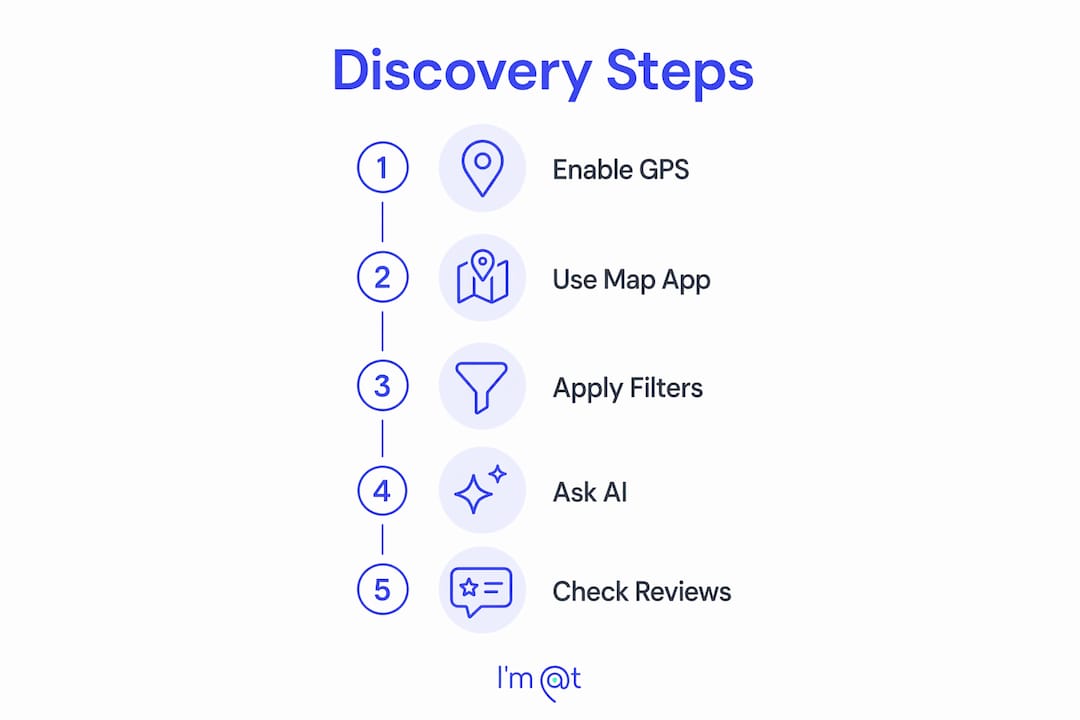
The most effective way to find local attractions starts with choosing tools built for location-based search. Map applications with live location access, radius presets, and category filters give you a structured starting point. Specialized tools let you set a search radius from 1km to 300km, with presets for walking (5km), biking (20km), driving (50km), and full day trips (150km). That range matters because it lets you match your search to your actual plans, whether you have 30 minutes or a full weekend.

Voice-activated AI tools add another layer. Gemini in Google Maps, for example, processes natural language queries and returns real-time data on attractions including addresses, descriptions, websites, ratings, and operating hours. You can ask a full question instead of typing a keyword, and the tool interprets your intent rather than just matching words. That shift from keyword to conversation is the single biggest change in local discovery right now.
Standard map apps also offer category filters, user reviews, and photo galleries that help you evaluate a place before you go. The combination of interactive maps, crowd-sourced ratings, and live hours data removes most of the guesswork from planning a local outing.
Key tools to use:
- Map apps with live GPS and radius controls (walking, biking, driving presets)
- Voice and AI search tools that accept natural language queries
- Category filters covering restaurants, parks, museums, shopping, and tours
- User review panels with recent photos and rating breakdowns
- Operating hours and website links pulled in real time
Pro Tip: Turn on location permissions before you search. Tools that know your exact position return results sorted by actual distance, not estimated proximity, which saves time and prevents wrong turns.
What search strategies actually work for finding local attractions?
Keyword specificity is the fastest way to cut through irrelevant results. Searching "art workshops in Austin" returns far more useful results than searching "things to do." The more specific your phrase, the more the algorithm treats your query as a real intent signal rather than a broad browse request. This applies whether you are using a map app, a travel platform, or a general search engine.
Categorical filtering narrows results further. Categories like museums, parks, and tours let you skip irrelevant listings entirely and focus on what fits your interests. After filtering by category, sort by rating to prioritize quality, then check distance to confirm the spot is actually reachable. This three-step sequence (category, rating, distance) consistently surfaces better results than browsing an unfiltered list.
Here is a repeatable process for refining any local search:
- Start with a specific keyword phrase. Include your interest and a location, such as "kayak rentals near downtown Seattle."
- Apply a category filter. Choose the closest matching category your tool offers, such as "outdoor activities" or "water sports."
- Sort by top-rated. Prioritize places with strong recent reviews over places with high review volume but older feedback.
- Check popular times. Avoid peak hours if you prefer a quieter visit, or plan around them if you want the full energy of a busy spot.
- Verify with Street View. Street View previews let you assess the neighborhood vibe, check parking access, and confirm the entrance before you arrive.
- Cross-check with a local editorial source. Regional newspapers and travel blogs often include parking tips and dining recommendations that map algorithms skip entirely.
Pro Tip: Search during off-peak hours when you plan to visit during peak ones. Popular times data shows crowd patterns by hour, so you can pick a window that matches your preference for busy or quiet.
How does conversational AI change the way you find hidden local spots?
Conversational AI shifts local discovery from browsing static lists to asking context-aware questions. AI-powered discovery responds to nuanced requests that standard category searches cannot process. Asking "find me a quiet cafe with WiFi near the waterfront" returns a clustered, relevant result set. Typing "cafe" into a map search returns hundreds of unfiltered options sorted by proximity alone.
The practical difference shows up in the quality of hidden gems you find. Conversational tools interpret multi-part preferences, such as atmosphere, location, and amenity, simultaneously. That means you surface places that fit your actual situation rather than places that simply match a category label. Travel writers and experienced explorers increasingly rely on this method to find authentic local experiences that algorithm-driven lists overlook.
What conversational AI does better than standard search:
- Handles multi-condition queries ("quiet," "WiFi," "near the waterfront") in a single request
- Clusters results by relevance to your stated preferences, not just proximity
- Surfaces off-the-beaten-path spots that rank low in generic category searches
- Allows follow-up questions to refine results without starting over
- Exports organized location lists you can save for later planning
The key is asking specific, layered questions. "What are some family-friendly outdoor spots open on Sunday morning within 10 miles?" outperforms "parks near me" every time. The more context you give, the more useful the response.
What are the best ways to validate a local attraction before you visit?
Reading recent reviews is the fastest validation step. Look for reviews posted within the last three months, and prioritize those that include photos. Older reviews may reflect a previous owner, a renovation, or a seasonal closure that no longer applies. User photos show you the actual current state of a place, which is often more reliable than the listing photos a business uploads itself.
Street View is underused for this purpose. It lets you spot murals, hidden storefronts, and neighborhood character before you commit to the trip. A quick Street View check also reveals parking options, nearby transit stops, and whether the area matches your expectations for safety and accessibility.
| Validation method | What it reveals | Best used for |
|---|---|---|
| Recent user reviews | Current quality, service, and atmosphere | Restaurants, tours, and experiences |
| User-uploaded photos | Real appearance vs. listing photos | Venues, parks, and shops |
| Street View preview | Neighborhood vibe, entrance, and parking | Any unfamiliar location |
| Popular times data | Crowd levels by hour and day | Planning visit timing |
| Editorial itineraries | Parking tips, dining picks, and local context | Day trips and multi-stop outings |
Editorial day-trip guides from regional newspapers add a layer of curation that algorithms cannot replicate. These guides prioritize non-chain, high-quality spots and include practical details like where to park and what to eat nearby. Combining algorithmic results with editorial sources consistently produces a richer, more authentic outing than either method alone.
How to build local discovery into your travel planning
Saving favorites as you search is the simplest habit that separates good planners from great ones. Most map tools and travel platforms let you create named lists, such as "Cape Town weekend" or "Austin food tour," so you can organize spots by theme rather than scrambling to remember them later. Im-at supports this kind of organized trip planning by letting you browse, save, and book activities in one place.
Thematic planning also helps you balance your itinerary. A day trip built around one theme, such as street art, local food markets, or coastal walks, feels more cohesive than a random list of nearby spots. It also makes navigation easier because thematic clusters tend to be geographically close to each other.
Habits that make local discovery more effective:
- Save shortlisted spots to named lists as you search, not after
- Build thematic itineraries around one interest per outing to keep routes tight
- Use travel planning tools that export or share lists so travel companions stay aligned
- Check local news and community boards for pop-up events not listed on major platforms
- Leave one unscheduled hour per outing for spontaneous detours, which often produce the best memories
Combining prepared routes with deliberate flexibility gives you the structure to cover your priorities and the freedom to follow a local tip when one appears. That balance is what separates a good day out from a genuinely memorable one.
Key Takeaways
The most effective way to find local attractions combines specific keyword searches, AI-powered conversational queries, and editorial validation to surface authentic experiences that generic lists miss.
| Point | Details |
|---|---|
| Use radius presets | Match your search range to your actual plans: 5km for walks, 50km for drives, 150km for day trips. |
| Layer your filters | Combine category, top-rated, and popular times filters to find quality spots at the right moment. |
| Ask conversational AI | Multi-condition queries like "quiet cafe with WiFi near the waterfront" outperform single-keyword searches. |
| Validate before you go | Check recent user photos, Street View, and editorial guides to confirm a spot matches your expectations. |
| Plan thematically | Group nearby spots by theme to build tighter routes and more cohesive outings. |
Why I stopped browsing lists and started asking better questions
I used to open a map app, type "things to do," and scroll until something looked interesting. That method works, but it consistently surfaces the same top-ranked, heavily reviewed spots that everyone else visits. The hidden bakery three blocks off the main drag never appeared. The rooftop bar with the best city view ranked too low to show up on page one.
The shift happened when I started treating AI tools like a knowledgeable local rather than a search engine. Instead of "restaurants near me," I asked "where can I find a low-key spot for a long lunch with good natural light on a Tuesday?" The results were different. Genuinely different. Places I had walked past without noticing suddenly appeared because they matched the full context of my question, not just a category label.
The other change that stuck was pairing digital results with local editorial sources. Regional newspapers and local travel writers know things algorithms do not. They know which parking lot fills up by 10:00 AM, which food stall only opens on weekends, and which trail has the best view at golden hour. That combination of AI precision and human editorial judgment is, in my experience, the most reliable way to find places worth visiting.
The travelers who get the most out of any destination are not the ones with the longest lists. They are the ones who ask the most specific questions and then take the time to verify what they find.
— Mikahil
What Im-at offers for your next local adventure
Im-at connects travelers and locals to curated activities, guided tours, and cultural experiences they can browse and book in minutes. The platform covers everything from outdoor safaris and township tours to wine tasting and city excursions, with listings from verified guides and local operators.
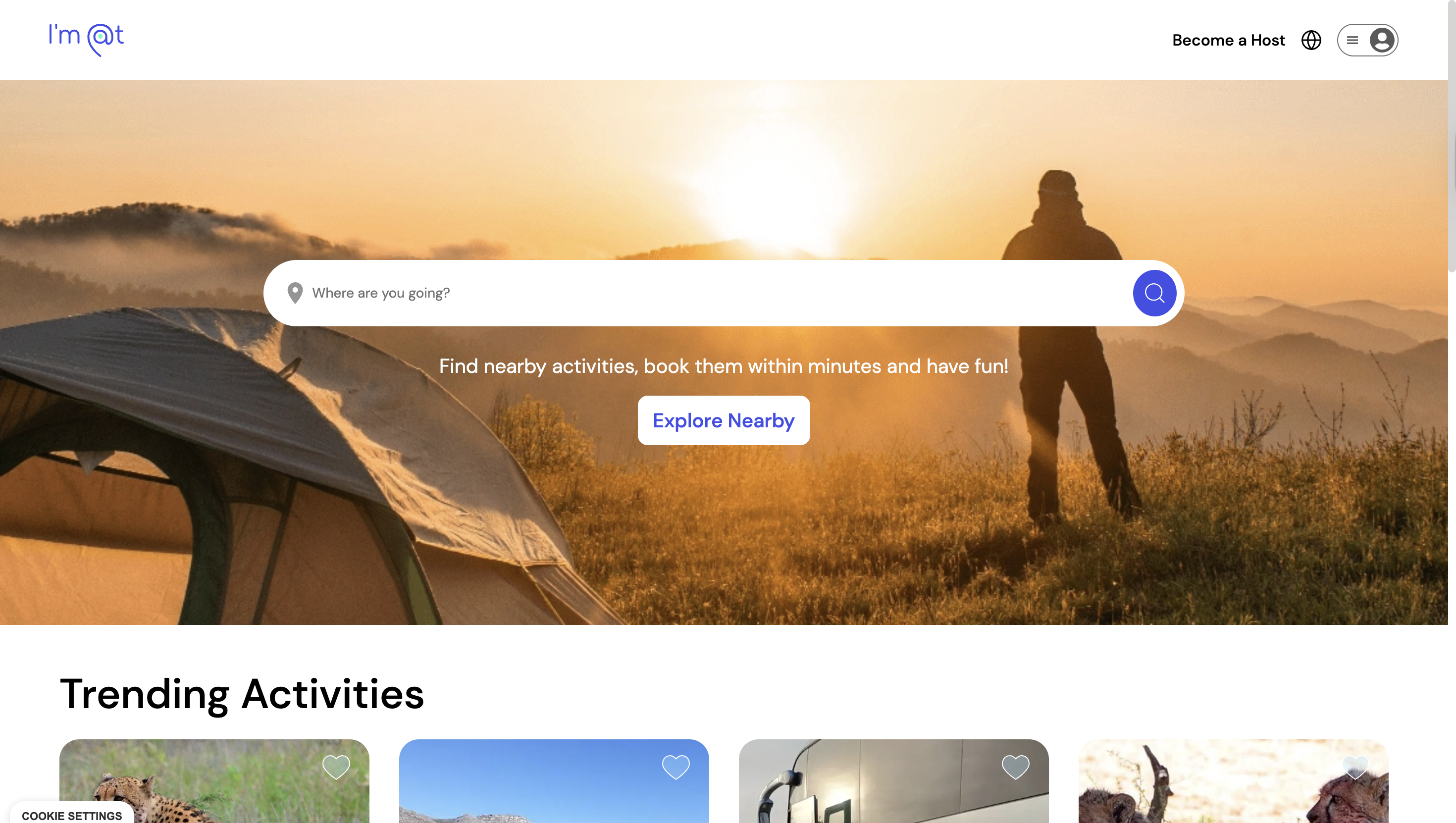
If you want a multi-day experience that covers cultural, natural, and culinary highlights in one package, the Cape Town 3-day attraction on Im-at combines a township tour, Cape Peninsula drive, and wine tasting into a single itinerary. Every listing includes full details, operator information, and a direct booking option. No back-and-forth, no guesswork. Just pick your experience and go. For travelers who want to know how digital reservations work before committing, the process is straightforward and secure.
FAQ
What is the best way to find attractions close to me?
Use a map app with location access enabled and apply category and rating filters to narrow results. Conversational AI tools like Gemini in Google Maps return more precise results when you ask specific, multi-condition questions.
How far should my search radius be for local sightseeing?
Radius presets of 5km cover walkable areas, 50km covers driving distance, and 150km covers full day trips. Match your radius to your available time and transport.
How do I find hidden gems and off-the-beaten-path spots?
Ask conversational AI tools layered questions that include atmosphere, amenities, and location together. Cross-reference results with local editorial guides, which prioritize non-chain and lesser-known spots over algorithm-ranked listings.
How do I know if a local attraction is worth visiting?
Check reviews posted within the last three months and look at user-uploaded photos rather than listing images. A quick Street View check confirms the neighborhood vibe and practical details like parking before you commit to the trip.
Can I plan a full itinerary from local discovery tools?
Yes. Save shortlisted spots to named lists organized by theme, then use a planning tool or travel platform like Im-at to sequence your visits and book activities directly. Thematic grouping keeps routes tight and outings cohesive.