

TL;DR:
- Responsible tourism maximizes benefits for destinations, communities, and ecosystems while minimizing harm.
- It involves making responsible choices in economic, social, and environmental areas to support sustainable travel.
Responsible tourism is defined as travel that maximizes economic, social, and environmental benefits while actively minimizing harm to destinations, communities, and ecosystems. The 2002 Cape Town Declaration on Responsible Tourism established this framework, placing shared accountability on travelers, businesses, and governments alike. Responsible travel is not a niche concept reserved for nature lovers. It applies to every trip, every booking, and every interaction you have with a host community. Understanding what is responsible tourism means recognizing that your choices as a traveler shape whether a destination thrives or deteriorates.
What is responsible tourism, and what are its core principles?
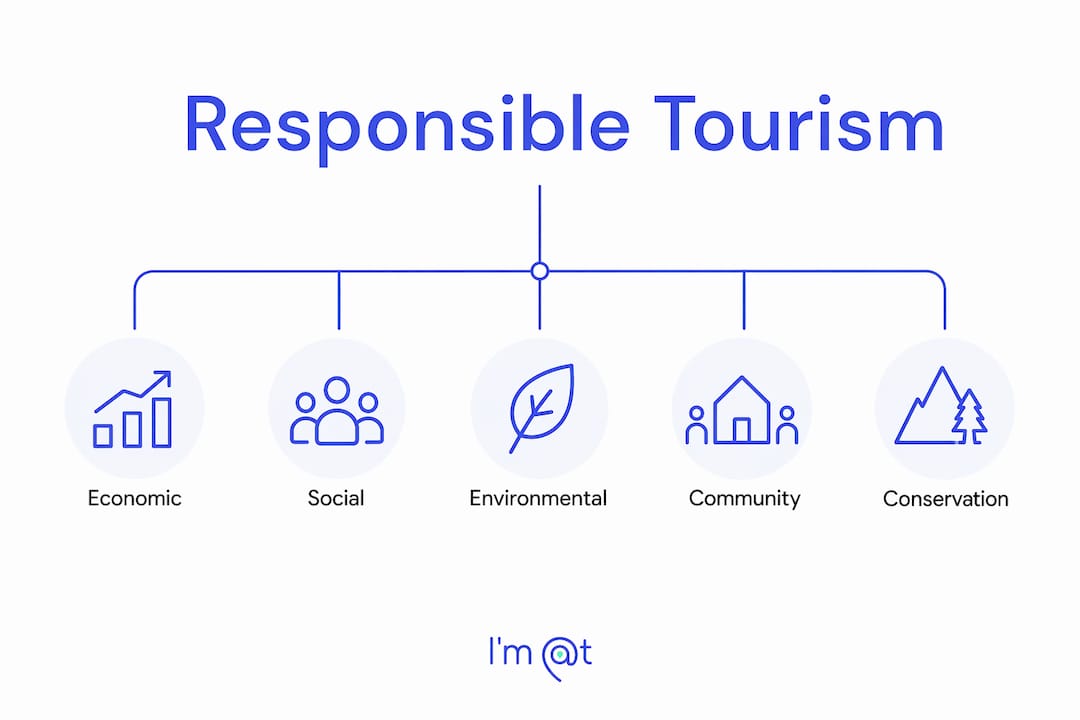
Responsible tourism rests on three pillars: economic responsibility, social responsibility, and environmental responsibility. The 2002 Cape Town Declaration defines each pillar with specific, measurable expectations. This is not abstract philosophy. It is a practical framework that tells operators, governments, and travelers exactly what they are accountable for.
Economic responsibility
Economic responsibility means that tourism money flows to local people, not just to international corporations. This includes paying fair wages, creating local jobs, and sourcing locally from farmers, artisans, and suppliers within the host community. When a tour operator buys produce from a local market instead of a global distributor, that is economic responsibility in action. The goal is to prevent tourism from displacing communities rather than enriching them.
Social responsibility
Social responsibility requires respecting local cultures, traditions, and community decisions. Travelers who ask before photographing people, learn basic greetings in the local language, and follow dress codes at sacred sites are practicing social responsibility. Responsible tourism also means communities have a voice in how tourism develops in their area. Decisions about what gets built, what gets promoted, and who benefits should involve local people, not just outside investors.
Environmental responsibility
Environmental responsibility covers conservation, waste reduction, and biodiversity protection. This means choosing operators who limit group sizes in fragile ecosystems, avoiding single-use plastics, and respecting wildlife viewing guidelines. It also means being honest about your carbon footprint and taking steps to reduce it where possible.

Pro Tip: Ask your tour operator three questions before booking: Do you employ local guides? Do you source food and supplies locally? Can you show me your environmental policy in writing?
The ICRT 2022 Responsible Tourism Charter makes one thing clear: no single business or traveler can solve every problem. Success comes from making intentional, transparent choices focused on specific impact areas like employment or waste reduction. Targeted effort beats vague good intentions every time.
How does responsible tourism differ from sustainable tourism and eco-tourism?
These three terms get used interchangeably, but they mean different things. Confusing them leads to poor decisions and easy manipulation by green marketing.
| Concept | Focus | Scope | Orientation |
|---|---|---|---|
| Sustainable tourism | Long-term viability of destinations | Broad: all tourism types | Aspirational goal |
| Responsible tourism | Present-day actions to reduce harm | All travel contexts: urban, cultural, nature | Action-oriented practice |
| Eco-tourism | Nature conservation and wildlife | Primarily natural environments | Nature-specific |
Sustainable tourism is the destination. Responsible tourism is the actionable process that gets you there. Think of sustainability as the target on the wall and responsible tourism as the steps you take to reach it. Every responsible choice you make today contributes to a sustainable outcome tomorrow.
Eco-tourism is narrower. It focuses primarily on natural environments and wildlife conservation. A safari in Kenya or a rainforest hike in Costa Rica fits the eco-tourism definition. But responsible tourism includes all travel types, including city breaks, cultural tours, and beach holidays. A weekend in a major city can be just as responsible or irresponsible as a wildlife expedition, depending on your choices.
The critical distinction is scope. Responsible tourism requires you to assess your social and economic footprint, not just your environmental one. Buying a souvenir from a local artisan in Marrakech instead of a mass-produced shop is a responsible tourism act. It has nothing to do with nature, but everything to do with who benefits from your spending.
Pro Tip: When a tour is marketed as "eco-friendly," ask specifically what that means. If the answer is vague, that is a red flag. Genuine responsible tourism providers can name specific practices and show results.
Why is responsible tourism important for travelers and host communities?
Responsible tourism protects destinations from the damage that unmanaged mass tourism causes. Overcrowding, environmental degradation, cultural exploitation, and economic leakage are all documented consequences of tourism done without accountability. The definition of responsible tourism exists precisely because these problems are real and growing.
The benefits run in both directions. Responsible tourism improves destinations by creating better places for people to live and visit through stakeholder engagement and local empowerment. That means residents see real improvements in their quality of life, not just an influx of visitors who leave little behind.
For travelers, the benefits are equally concrete:
- Deeper experiences. Travelers who engage respectfully with local communities gain access to authentic interactions that packaged mass tourism cannot replicate. A home-cooked meal with a local family, a guided walk through a neighborhood with a resident guide, or a craft workshop with an artisan all create memories that outlast any hotel pool.
- Cultural integrity. When tourism respects local traditions, those traditions survive. Communities that feel respected are more willing to share their culture openly. The result is richer, more genuine experiences for everyone.
- Environmental preservation. Destinations that practice responsible tourism maintain the natural and cultural assets that attract visitors in the first place. Coral reefs, ancient ruins, and wildlife corridors do not regenerate quickly. Protecting them now keeps them accessible for future travelers.
- Economic fairness. Money spent with local businesses stays in the local economy at a significantly higher rate than money spent with international chains. That spending supports schools, healthcare, and infrastructure in host communities.
"Responsible tourism is a two-way street. It enhances the pride and confidence of host communities while enriching the visitor experience through genuine cultural connections." — responsibletourism.com
Responsible travel also addresses global issues through local action. Choosing low-emission transport, reducing waste, and supporting conservation projects all contribute to broader climate and biodiversity goals. Individual choices aggregate into systemic change.
How can travelers practice responsible tourism in real life?
Practicing responsible tourism does not require perfection. The ICRT Charter is explicit: intentional, transparent efforts focused on specific issues build more credibility and progress than attempting to solve everything at once. Start with what you can control.
- Choose operators with local employment policies. Before booking any tour, check whether the company employs local guides, managers, and staff. Operators who prioritize local cultural experiences and community involvement deliver better trips and better outcomes for residents.
- Spend money where it counts. Eat at locally owned restaurants. Buy crafts directly from makers. Stay at family-run guesthouses instead of international chains. This is the single most direct way to transfer economic benefit to host communities. Exploring community tourism options helps you find experiences built around exactly this principle.
- Respect cultural norms without being asked. Research dress codes, photography etiquette, and local customs before you arrive. Behaving as a respectful guest, not a paying customer who owns the space, changes the entire dynamic of your interactions. Responsible tourists behave as guests, not owners.
- Minimize your environmental footprint. Carry a reusable water bottle. Decline unnecessary plastic packaging. Follow wildlife guidelines strictly. Turn off air conditioning when you leave your room. These are small acts, but they compound across millions of travelers.
- Ask questions and demand transparency. If an operator claims to be responsible or sustainable, ask for specifics. What percentage of staff are local? Where does the food come from? What conservation projects do they support? Providers who cannot answer these questions clearly are likely greenwashing.
Pro Tip: Before any trip, spend 20 minutes reading about the destination's cultural norms and current environmental pressures. That preparation changes how you move through a place and how locals receive you.
Responsible travel is also about authentic local rewards that come from genuine engagement. The traveler who eats street food, takes a local bus, and visits a neighborhood market gets a fundamentally different and richer experience than one who stays inside a resort bubble.
Key Takeaways
Responsible tourism is the most direct tool travelers have to make destinations better for the people who live there and the visitors who follow.
| Point | Details |
|---|---|
| Core definition | Responsible tourism maximizes economic, social, and environmental benefits while minimizing harm to destinations and communities. |
| Three pillars | Economic fairness, cultural respect, and environmental conservation form the foundation of every responsible travel decision. |
| Distinct from eco-tourism | Responsible tourism covers all travel types, including urban and cultural trips, not just nature-based experiences. |
| Transparency matters | Ask operators for specific, auditable evidence of their responsible practices before booking. |
| Action over perfection | Intentional, focused choices in specific impact areas build real progress without requiring travelers to solve everything at once. |
Why responsible tourism changed how I travel
I used to think responsible tourism was a checklist. Offset your flights, buy the fair-trade coffee, done. That thinking is wrong, and I learned it the hard way after a trip to Southeast Asia where I followed every "eco" recommendation but still left feeling like I had taken more than I gave.
The shift happened when I stopped asking "Am I doing this right?" and started asking "Who benefits from this choice?" That reframe, which aligns with what the Cape Town Declaration actually demands, changes everything. You stop looking for a badge and start looking for impact.
The most common pitfall I see is travelers confusing comfort with responsibility. Staying at a luxury eco-lodge with solar panels is not automatically responsible tourism if the staff are all imported from the capital and the food comes from international suppliers. The panels are visible. The supply chain is not. Transparency is the real test, and most travelers never ask for it.
Responsible tourism is also not a fixed state you achieve. It is a continuous process. Every trip offers new decisions, new communities, and new chances to get it more right than last time. The goal is not a perfect trip. The goal is a better one than the last.
— Mikahil
Curated tours that put responsible tourism into practice
Knowing the principles of responsible tourism is one thing. Finding experiences that actually live by them is another.

Im-at connects travelers with tours built around genuine local engagement, cultural respect, and community benefit. The Cape Town 3-Day Attraction combines township visits, Cape Peninsula exploration, and wine tasting in a format that channels spending directly into local communities. For travelers who want flexibility without sacrificing accountability, the Tailor-Made 4x4 Tours offer customized routes with local guides at the center of every experience. Both options reflect what responsible travel looks like when it moves from theory to practice. Browse the full Im-at catalog at im-at.com to find your next intentional adventure.
FAQ
What is the definition of responsible tourism?
Responsible tourism is defined as travel that maximizes economic, social, and environmental benefits while minimizing negative impacts on destinations and communities. The 2002 Cape Town Declaration on Responsible Tourism established this framework as the global standard.
How does responsible tourism differ from eco-tourism?
Eco-tourism focuses primarily on nature and wildlife conservation. Responsible tourism covers all travel types, including urban, cultural, and beach travel, and requires travelers to assess social and economic impacts alongside environmental ones.
What are the main benefits of responsible travel?
Responsible travel generates fair economic returns for local communities, preserves cultural heritage, protects natural environments, and delivers more authentic experiences for travelers. It benefits both host communities and visitors simultaneously.
How can I tell if a tour operator practices responsible tourism?
Ask the operator for specific, auditable evidence: local employment rates, local supply chain sourcing, and named conservation projects. Vague claims about being "eco-friendly" or "sustainable" without supporting data are a sign of greenwashing.
Is responsible tourism the same as sustainable tourism?
No. Sustainable tourism is the long-term goal of keeping destinations viable for future generations. Responsible tourism is the present-day, action-oriented practice that makes sustainability achievable through concrete decisions by travelers, operators, and governments.