

TL;DR:
- Nearly 30-40% of travelers book trips within three weeks, driven by desire for spontaneity and opportunity.
- Last-minute travel offers deals, surprises, and reduces pre-trip anxiety, especially with the right tools.
- Risks include higher flight costs and limited availability; preparation and flexibility can mitigate these issues.
Nearly one in three travelers makes their vacation plans within three weeks of departure, and that number keeps climbing. There's a stubborn myth that spontaneous trips are stressful, expensive, and reserved for reckless thrill-seekers. The truth is almost the opposite. With the right mindset and a few smart tools, last-minute travel can be one of the most rewarding ways to see the world. This article breaks down why people travel spontaneously, what you actually gain from it, where the real risks sit, and exactly how to plan a trip that comes together fast without falling apart.
Table of Contents
- What drives last-minute travel?
- The benefits of planning last-minute trips
- Risks and trade-offs: When last-minute works and when it doesn't
- Strategies and tools for successful last-minute planning
- The unconventional wisdom about last-minute travel
- Take your next adventure with us
- Frequently asked questions
Key Takeaways
| Point | Details |
|---|---|
| Spontaneous travel is common | Millennials and Gen Z are leading the trend with nearly 77% booking last-minute. |
| Flexibility unlocks deals | Being open to dates and destinations can yield major savings on hotels and flights. |
| Risks require savvy planning | Popular spots may fill up, so use price alerts and check passport and insurance in advance. |
| Tools boost last-minute success | Apps like HotelTonight and Hopper help travelers find real-time deals quickly. |
What drives last-minute travel?
Last-minute travel has moved well beyond a niche habit. It's now a documented trend with clear generational patterns and genuine psychological backing. 30 to 40% of travelers book within three weeks of their departure date, with Millennials and Gen Z leading the charge. These groups are more likely to work remotely, carry flexible schedules, and value experiences over rigid itineraries.
But motivation goes much deeper than demographics. Here's what actually pushes people toward spontaneous booking:
- Freedom from over-planning. Many travelers are exhausted by spreadsheets, months-long waitlists, and the mental load of organizing a "perfect" trip. Last-minute travel cuts through that noise.
- The adventure factor. Not knowing exactly where you'll sleep or what you'll discover adds a layer of excitement that no planned trip can fully replicate.
- Stress relief and reset. Sometimes a trip isn't a reward for finishing work. It's the escape valve you need when life gets overwhelming.
- Opportunity response. A cheap flight alert pops up. A long weekend appears on the calendar. Someone cancels and opens a spot. Last-minute travelers are ready to act on these windows.
- FOMO (fear of missing out) on live events. Concerts, local festivals, seasonal natural phenomena. These experiences have fixed dates. If they align with your schedule, you move fast or you miss them.
Modern digital travel guides have lowered the barrier significantly. You no longer need a travel agent or weeks of research to put together a solid itinerary. Information is instant, and booking platforms have made real-time availability visible to everyone.
The psychology is also worth noting. Studies on travel and wellbeing consistently show that anticipation is a major source of happiness. A last-minute trip compresses that anticipation into a sharp, intense burst instead of a slow simmer over months. For many people, that concentrated excitement feels more alive.
The benefits of planning last-minute trips
Now that you know why travelers opt for last-minute plans, let's look at the real-world benefits you can gain by embracing spontaneous travel.
You can unlock deals that planned travelers never see. Hotels with empty rooms would rather fill them at a discount than leave them vacant. Airlines sometimes drop prices sharply in the final hours before departure. Flexibility in dates and destinations is the key lever here. Experts specifically recommend apps like HotelTonight and Hopper to catch these last-second offers before they disappear.
"The traveler who can say yes to Tuesday instead of Saturday often gets the best room in the house at half the price."
Here's how last-minute travel stacks up against traditional planning across several key factors:
| Factor | Planned travel | Last-minute travel |
|---|---|---|
| Cost predictability | High | Variable |
| Deal potential | Moderate | High (hotels especially) |
| Availability | Guaranteed | Uncertain |
| Flexibility | Low | Very high |
| Experience novelty | Planned | Often surprising |
| Stress level | Low pre-trip | Low (short window to worry) |
You spend less time dreading the trip. This sounds counterintuitive, but long planning windows can actually increase anxiety. You have months to imagine everything that might go wrong. Last-minute bookings cut that window to days or hours, leaving little time for second-guessing.
You encounter opportunities that don't exist in guidebooks. A local market that only runs on certain days. A pop-up dining experience. A guided night hike that just became available. These moments show up when you're actually on the ground and paying attention, not when you're sitting at home planning six months ahead. The right travel planning tools can surface these hidden options fast once you're ready to book.
Benefits of booking last-minute specifically for activities and experiences include:
- Access to guided tours with open slots
- Discounted day trips when operators need to fill groups
- Entry into events that opened last-minute availability
- Connecting with local guides who offer spontaneous excursions
For exploring new destinations without months of preparation, the spontaneous approach actually forces a kind of presence. You're not checking items off a predetermined list. You're responding to what's actually there.
Pro Tip: If you're worried about missing out on specific experiences, use a platform that shows real-time activity availability. Many unforgettable travel activities fill up fast, but cancellations and open slots appear constantly throughout the week.
Risks and trade-offs: When last-minute works and when it doesn't
While spontaneous trips have big advantages, it's essential to understand their limitations and how to navigate potential pitfalls.
Flights are the biggest financial wildcard. Last-minute flights often cost more due to dynamic pricing, a system airlines use to extract higher prices from business travelers who have no choice but to fly on specific dates. Prices can spike dramatically in the final week before departure. That said, they can also drop sharply in the very last hours if seats remain unsold. The risk is real and you need to factor it in.
Popular destinations present availability problems. Trying to get a last-minute room in Santorini in August or a safari lodge in peak season? You'll likely find nothing or pay a premium that erases any benefit. Last-minute travel works best for off-peak timing and midweek travel, when availability is loose and hotels are genuinely motivated to negotiate.

Here's a quick breakdown of when last-minute works versus when it struggles:
| Scenario | Last-minute friendly? | Reason |
|---|---|---|
| Midweek city break | Yes | Lower demand, flexible hotels |
| Peak season beach resort | No | High demand, full bookings |
| Off-season European city | Yes | Great deals, open availability |
| Major holiday weekend | No | Everything fills weeks in advance |
| Remote adventure destination | Sometimes | Depends on operator availability |
| Domestic road trip | Yes | No flights needed, flexible pace |
Steps to minimize risk when booking spontaneously:
- Check your passport validity first. Many countries require six months of remaining validity. This is a trip killer that takes five minutes to verify.
- Confirm travel insurance options. Some policies cover spontaneous bookings. Others don't. Know this before you click pay.
- Set a budget ceiling before you search. Excitement can push you into overspending. Decide your maximum before you open any app.
- Search midweek for your travel dates. Tuesday and Wednesday departures consistently show better pricing and availability.
- Have a backup destination. If your first choice is unavailable or too expensive, know where you'd go instead. This keeps the momentum going rather than stalling.
"Spontaneity without a safety net is just chaos. A few quick checks turn an impulsive idea into a genuine adventure."
For booking travel experiences on short notice, the biggest mistake travelers make is skipping the essentials. Insurance and document checks take less than ten minutes total and can save an entire trip.
Pro Tip: If flight prices look high, check whether a train or bus connection makes sense. Many short-haul European or domestic routes are faster and cheaper by rail, and train seats stay available much closer to departure.
Strategies and tools for successful last-minute planning
To overcome the challenges of last-minute planning, here's how you can leverage the latest tools and expert tips for smoother, smarter travel.
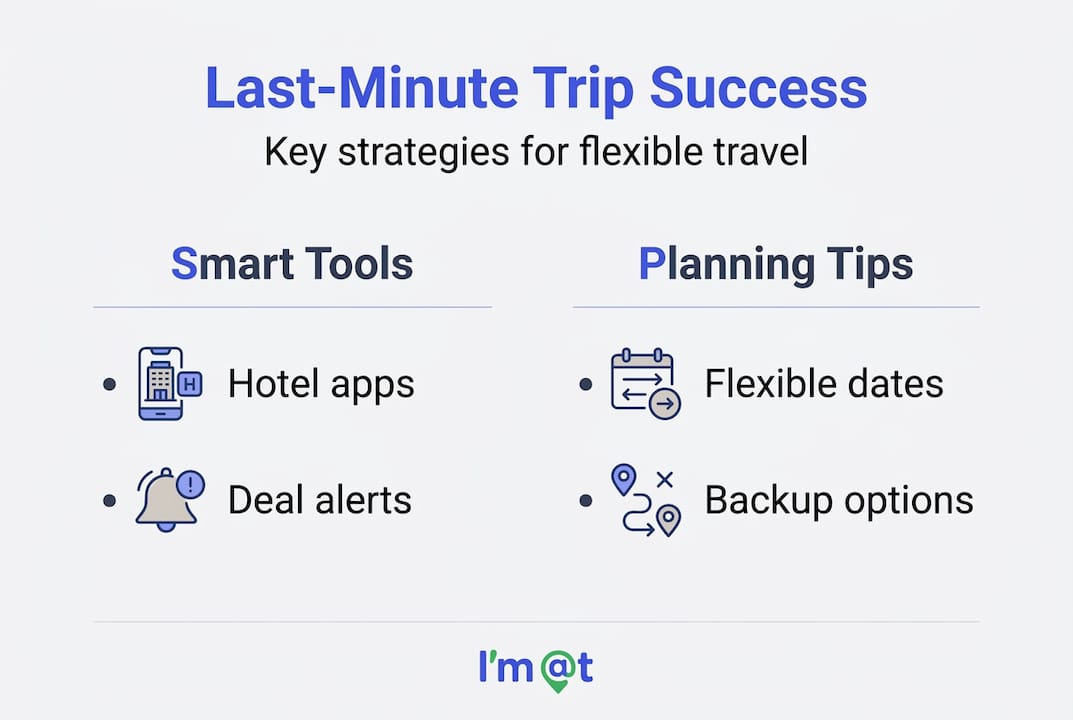
Use the right apps for the right job. Not all booking platforms are built for speed. HotelTonight specializes in same-day and short-notice hotel deals, often offering rooms at significant discounts when properties need to fill inventory. Hopper analyzes price trends and predicts whether to book now or wait, which is genuinely useful when you're watching a flight price move in real time.
While the psychological and fun benefits of spontaneous travel are high, flights can cost more unless you're booking in the very last window before departure. The smart move is to balance that risk with tools like price alerts that notify you the moment a fare drops to your target number.
Here's a step-by-step approach to pulling together a last-minute trip in under two hours:
- Define your priorities. Beach, city, nature, culture. Pick one primary focus so you're not spinning between too many options.
- Search flexible dates. Use the flexible date search features on Google Flights or Skyscanner to see a price calendar across a week or two. The cheapest day is often obvious immediately.
- Set a price alert if you're not ready to book. Apps like Hopper will notify you of price changes in real time so you're not checking manually every hour.
- Book accommodation before the flight. Hotels have more last-minute inventory than flights do. Lock in a room first, then work backward to confirm the flight makes financial sense.
- Use a real-time activity platform. Once travel and accommodation are confirmed, check for available experiences at your destination. Guided tours, cultural events, and outdoor adventures often have last-minute openings.
- Prepare your documents in fifteen minutes. Pack essentials only. Check passport, confirm insurance, download offline maps.
- Build in one unplanned day. Ironically, the best spontaneous trips still leave white space. One full day with no bookings lets you respond to what you find on the ground.
The adventure travel tips that work best for last-minute trips center on flexibility. The more you can say yes to alternatives, the better your chances of finding something remarkable. If you want a step-by-step planning guide for outdoor adventures specifically, there's a lot of practical structure available that works even on a compressed timeline.
Pro Tip: Follow airlines and booking platforms on social media. Flash sales and error fares often appear there first, sometimes hours before they show up on comparison sites.
The unconventional wisdom about last-minute travel
Here's what most travel guides won't tell you: the reason people resist last-minute trips isn't really about money or availability. It's about control. Planned travel feels safe because you've already imagined the outcome. You know what the hotel looks like. You've seen the reviews. You've mapped the itinerary. The uncertainty is gone before you even leave home.
But that certainty comes at a cost. When you pre-script every moment of a trip, you close the door on serendipity. The restaurant that's not in any guide but happens to be next to where you ended up. The local who gives you directions and ends up showing you something you'd never have found otherwise. The sunset from a viewpoint you stumbled onto because your original plan fell through.
Last-minute travel isn't just for adrenaline junkies. It suits anyone who's willing to accept that the best version of a trip might not match the original idea. That's not a compromise. That's actually a higher form of travel intelligence.
We'd argue that spontaneous trips reveal something about your own preferences that planned trips can't. When you're not following a pre-built schedule, you make real-time choices based on what actually interests you in that moment. That's a different kind of travel discovery that planned itineraries simply can't replicate.
The mindset shift is small but significant. Instead of asking "what could go wrong?" ask "what might I find?" That single reframe changes the entire experience from stressful to exciting.
Take your next adventure with us
Ready to put these strategies into action? Whether you're booking a trip three days from now or deciding where to go this weekend, the hardest part is usually choosing what to do once you arrive.
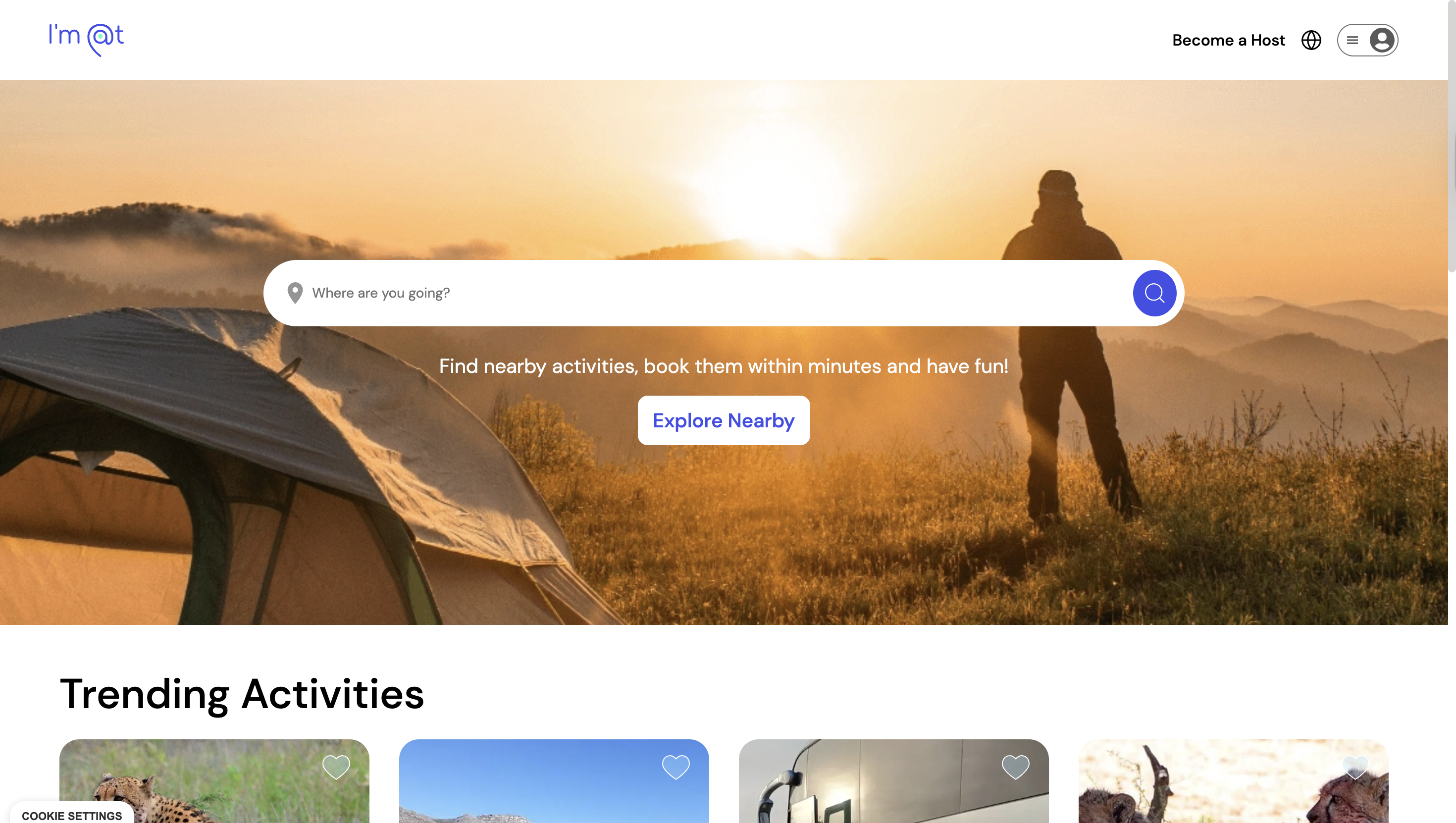
At Im-at, we make that part easy. Our platform connects spontaneous travelers with guided tours, outdoor adventures, cultural experiences, and day trips available for near-instant booking. For something truly flexible and immersive, explore our tailor-made 4x4 tours that adapt to your schedule and pace. Or if you're dreaming of scenic landscapes and local culture, our Douro Valley small-group tours offer wine tasting, lunch, and a river cruise in one unforgettable day. Browse what's available at your destination and book the experience, not just the destination.
Frequently asked questions
Is it cheaper to travel last-minute?
It depends on what you're booking. Last-minute flights often cost more due to dynamic pricing, but hotels frequently offer discounts close to the date to fill empty rooms, especially through apps like HotelTonight.
What are the best apps for last-minute bookings?
HotelTonight and Hopper are top picks for last-minute travel, offering real-time hotel deals and flight price predictions to help you act fast and spend smart.
Are last-minute trips better for certain destinations?
Yes. Off-peak and midweek travel works best for spontaneous trips, while peak-season hotspots like popular beach resorts or major festival cities tend to be fully booked well in advance.
What should I check before booking a last-minute trip?
Always verify your passport validity and confirm you have adequate travel insurance before paying for anything. These two checks take minutes and can prevent major problems once you're already in transit.