

TL;DR:
- Activity platforms help locals and travelers discover, book, and experience authentic local leisure activities.
- They strengthen community bonds by promoting repeated interactions and supporting small providers and guides.
What activity platforms actually do for locals and travelers
Activity platforms are digital tools that let locals and travelers find, compare, and book leisure experiences in their area, from guided city tours and outdoor adventures to cultural workshops and day trips. Think of them as a search engine and booking portal rolled into one, purpose-built for experiential travel rather than flights or hotels.
The role of activity platforms for locals goes well beyond simple convenience. These platforms connect residents and visitors directly with small providers and independent guides who would otherwise struggle to reach new customers. That connection has real economic weight: local entrepreneurs get a storefront without the overhead, and users get access to experiences they would never find through a generic web search.
Key functions these platforms deliver:
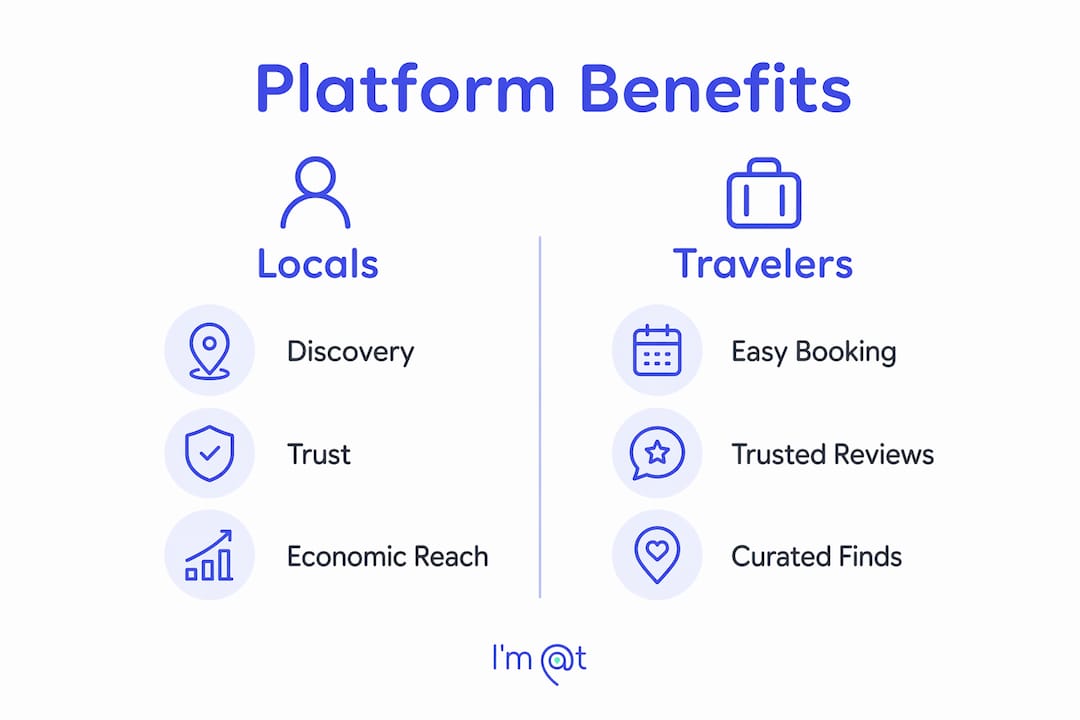
- Discovery: Surface hidden or lesser-known local activities that mainstream search buries
- Booking: Reduce the friction between "I want to do this" and "I'm confirmed"
- Trust signals: Aggregate user reviews so travelers can make informed choices fast
- Provider access: Give small guides and local operators a channel to paying customers
- Community connection: Link residents to activities that build neighborhood identity
Im-at is a strong example of this model in practice, offering curated experiences ranging from cultural tours to outdoor safaris, with a booking process designed to take minutes rather than hours.
Table of Contents
- How activity platforms improve the leisure experience for locals
- How platforms build community trust and real social connections
- What makes meaningful local involvement hard to achieve
- Im-at as a platform built for locals and travelers in the United States
- Im-at connects you to experiences worth having
- Key Takeaways
How activity platforms improve the leisure experience for locals
The most immediate benefit these platforms deliver is visibility. A neighborhood walking tour run by a local historian, a weekend pottery class in a converted warehouse, a kayaking trip on a river most residents have never paddled: none of these show up reliably on Google Maps or in a Facebook feed. Activity platforms are built specifically to surface them.
Discovery and curation
Platforms use location data, category filters, and user behavior to surface relevant options. That curation matters because local event discovery through mainstream social media is notoriously unreliable. Algorithm-driven feeds bury local content, and private messaging apps lack the public searchability needed for community-wide reach. A dedicated activity platform solves both problems by design.
User reviews and trust
Integrated ratings and reviews do something that word-of-mouth alone cannot: they scale trust. A traveler arriving in a new city can read 40 reviews of a kayaking guide before booking, getting a clearer picture than any brochure could provide. For locals, the same system helps them vet weekend activities without relying on a friend who may have different tastes.
Economic reach for small providers
Local guides and micro-entrepreneurs gain access to a customer base they could not build independently. Platforms handle payment processing, scheduling, and marketing exposure, letting providers focus on delivering the experience. The role of activity providers in shaping travel quality is significant, and platforms amplify that by removing the barriers to entry.
| Platform Feature | Benefit to Locals | Benefit to Travelers |
|---|---|---|
| Location-based search | Find nearby activities fast | Discover options in any destination |
| Integrated booking | Confirm plans without back-and-forth | Book in minutes, not hours |
| User reviews | Vet local providers with confidence | Make informed choices on arrival |
| Provider listings | Small guides reach paying customers | Access unique, non-chain experiences |
| Curated collections | Highlight lesser-known community gems | Go beyond tourist traps |
How platforms build community trust and real social connections
Activity platforms do more than move transactions. When they work well, they pull people into face-to-face encounters that strengthen the social fabric of a place. Research on People-Nearby Applications found that community-related app use associates with improved local social capital and a stronger sense of belonging, even when it does not automatically translate into active civic involvement.

That distinction matters. A platform does not need to turn every user into a community organizer to have social value. Embedding someone into a local experience, whether a food tour or a neighborhood art walk, creates the kind of low-stakes, repeated contact that builds trust between strangers. Over time, those encounters compound.
Platforms that prioritize what researchers call "daily loops," small, repeatable local interactions rather than one-off events, tend to embed themselves more deeply into users' lives. The result is sustained engagement rather than a spike of activity followed by silence.
Best practices that support genuine community connection:
- Co-design with local stakeholders: Public health research shows that programs designed collaboratively with communities are more resilient and better targeted than top-down initiatives
- Local partnerships: Platforms that work with neighborhood organizations and local guides create more authentic experiences than those that simply aggregate listings
- Consistent follow-through: Trust erodes when platforms promise community benefits and fail to deliver visible outcomes
- Inclusive access: Meaningful engagement requires reaching residents across income levels and digital literacy levels, not just the most connected users
Pro Tip: When choosing an activity platform, look for one that features locally owned providers prominently, not just large tour operators. That's usually the clearest signal that the platform is genuinely invested in community outcomes rather than just booking volume.
What makes meaningful local involvement hard to achieve
Not every platform that claims to connect communities actually does. The gap between participation and meaningful engagement is wide, and several structural challenges explain why.
Superficial involvement is the most common failure mode. A platform can list hundreds of local activities and still function as a pure transaction engine, with no real connection between users and the communities hosting them. Meaningful engagement requires co-designing and evaluating programs with communities, not just offering them as products.
Key challenges platforms face:
- Commercialization pressure: Revenue models that favor high-volume, high-margin bookings can crowd out smaller, culturally significant local experiences
- Algorithm bias: Discovery tools optimized for clicks tend to surface popular activities over authentic but lesser-known ones
- Digital exclusion: Residents without smartphones or reliable internet access are effectively invisible to platform-based discovery
- Trust decay: If a platform collects community feedback and visibly ignores it, trust in local governance and in the platform itself drops sharply
- Social media dependency: Platforms that rely on Facebook or WhatsApp for promotion inherit those tools' limitations for local event discovery
The platforms that navigate these challenges best tend to treat community involvement as an ongoing relationship, not a feature to be checked off at launch. That requires political commitment from platform leadership and genuine responsiveness to user and provider feedback. Understanding digital reservations as a hospitality tool, rather than just a booking mechanism, is part of that shift in thinking.
Im-at as a platform built for locals and travelers in the United States
Im-at operates as both a search engine and booking portal for leisure activities, designed specifically to make experiential travel accessible without the usual planning friction. For travelers and locals in the United States, that means finding guided tours, cultural experiences, outdoor adventures, and day trips in one place, with booking confirmed in minutes.
What sets Im-at apart from a generic travel aggregator is its focus on the provider side of the equation. The platform allows independent guides and local operators to list their activities directly, which means the catalog reflects what communities actually offer rather than what large tour companies choose to promote. That structure supports local experiences that feel authentic rather than packaged.
Im-at's features for locals and travelers:
- Curated activity catalog: Cultural tours, safaris, city excursions, and outdoor adventures organized by location and category
- Fast booking: The platform is built to get users from discovery to confirmed booking in minutes
- Provider listings: Independent guides can list activities, expanding the range of available experiences
- User-driven trust: Reviews and ratings help users make confident decisions without prior local knowledge
- Experiential focus: The platform prioritizes hands-on, immersive activities over passive sightseeing
For anyone planning a weekend getaway or a longer trip, Im-at functions as a practical starting point for discovering nearby attractions without spending hours across multiple sites.
Im-at connects you to experiences worth having
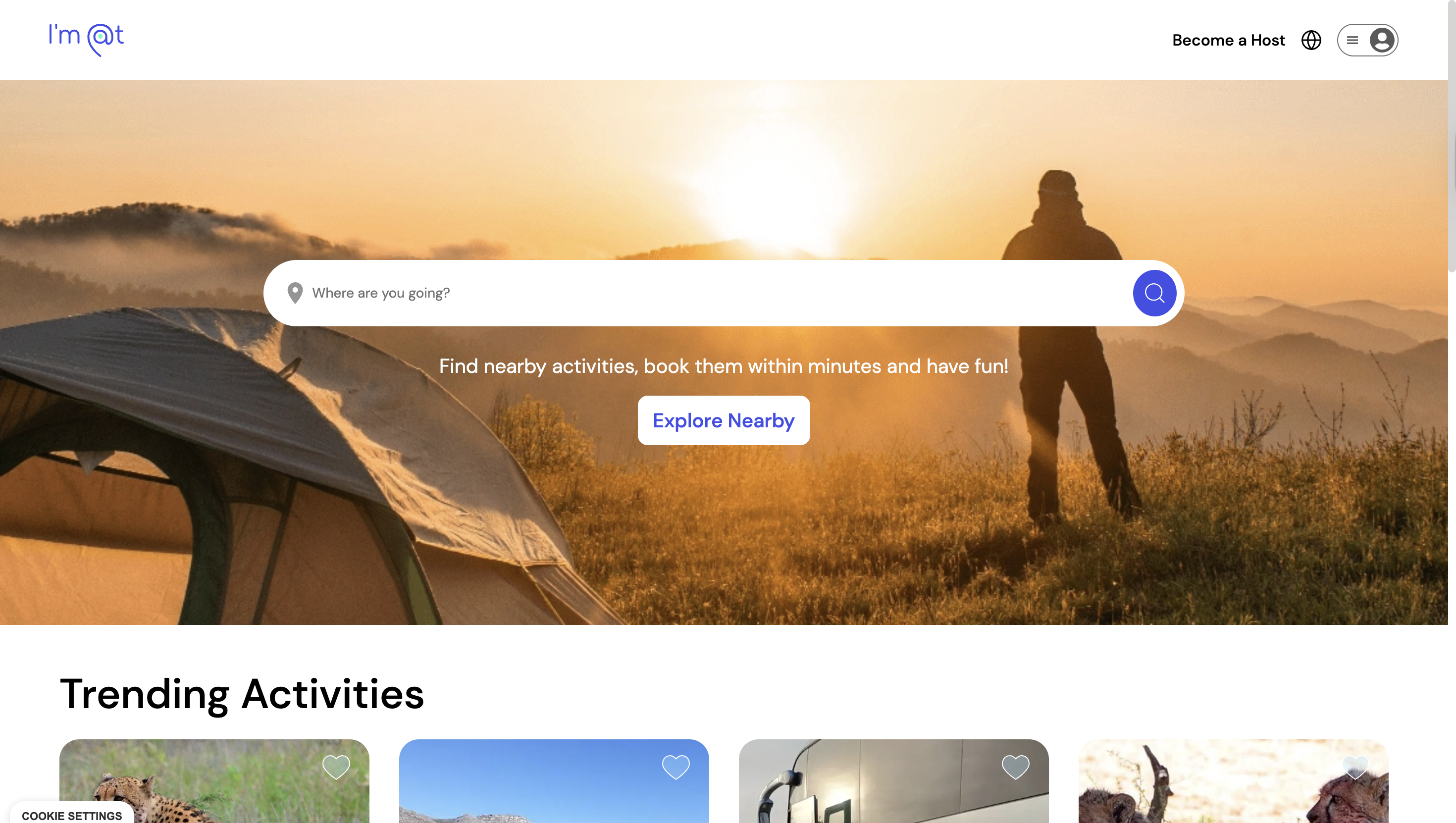
Activity platforms have made local leisure more accessible, but the quality of what you find still depends on the platform's commitment to real, community-rooted experiences. Im-at was built with that in mind: a catalog that includes independent local providers alongside curated adventures, a booking process that respects your time, and a focus on the kind of experiential travel that leaves you with something more than a receipt.
Whether you are a local looking for something new in your own city or a traveler arriving somewhere unfamiliar, Im-at gives you a direct line to the activities that define a place. Browse The Unholy Secrets for a taste of what's on offer, or head to im-at.com to search activities near you and book your next experience today.
Key Takeaways
Activity platforms serve locals and travelers best when they combine easy discovery, authentic provider access, and community-rooted design rather than optimizing purely for booking volume.
| Point | Details |
|---|---|
| Core function | Activity platforms connect locals and travelers to leisure experiences through discovery, booking, and provider access. |
| Community value | Platforms that prioritize repeated local interactions build stronger social capital and sustained user engagement. |
| Meaningful engagement | Co-designing programs with communities, not just listing activities, is what separates authentic platforms from transaction engines. |
| Key challenge | Commercialization pressure and algorithm bias can crowd out smaller, culturally significant local experiences. |
| Im-at's role | Im-at lets independent local guides list activities directly, giving travelers and locals access to authentic, community-rooted experiences. |