
TL;DR:
- Outdoor activities improve mental clarity, reduce stress, and boost mood more effectively than indoor recreation.
- Regular outdoor engagement significantly lowers depression risk and enhances overall mental well-being.
- Participating in outdoor adventures fosters social bonds, community ties, and supports local economies.
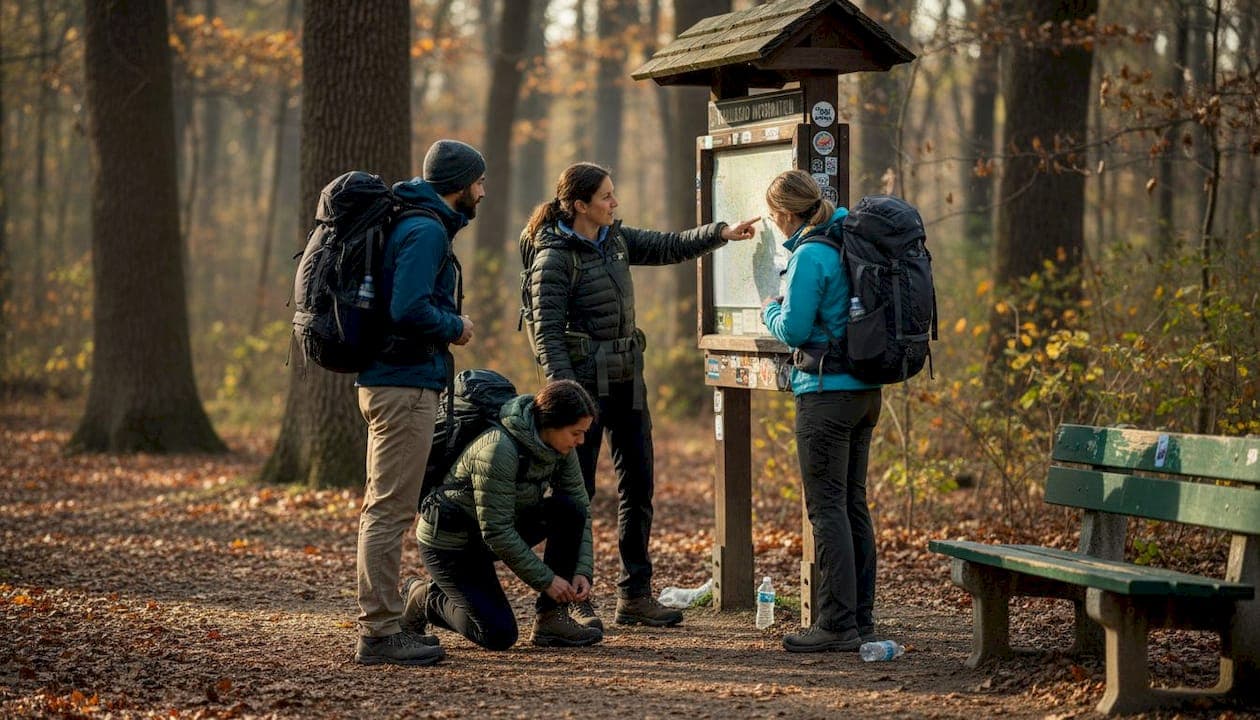
Most people think of outdoor activities as a bonus, something nice to do when the weather cooperates. But research shows that outdoor activities significantly improve attention, concentration, and memory in ways that indoor recreation simply cannot replicate. The gap between a good trip and a truly life-changing one often comes down to whether you stepped outside, not just geographically, but intentionally. This guide breaks down the science, the mental health wins, the social power, and the practical steps to make outdoor experiences a core part of how you travel and live.
Table of Contents
- The science behind nature's impact on your mind and body
- How outdoor adventure powers your mental well-being
- Unlocking social and community bonds outdoors
- Getting started: Practical ways to explore the outdoors
- Our take: Rethinking what exploring the outdoors really means
- Ready to fuel your next adventure?
- Frequently asked questions
Key Takeaways
| Point | Details |
|---|---|
| Mental health boost | Outdoor activities have been proven to lower depression risk, reduce stress, and enhance mood through regular nature exposure. |
| Physical benefits | Active adventures outdoors support heart health, immune function, and overall physical well-being for all ages. |
| Stronger social ties | Exploring outdoors with others builds friendships, teamwork, and strengthens local communities. |
| Easy ways to start | Even simple outdoor habits like walking or joining local tours offer powerful rewards without needing to travel far. |
The science behind nature's impact on your mind and body
Your brain responds to natural environments differently than it does to cities, screens, or indoor spaces. When you step into a forest, a trail, or even a local park, your brain shifts into what researchers call a restorative state. Stress hormones drop, your attention resets, and your nervous system gets a genuine break from the constant demands of modern life. This isn't a feeling. It's measurable biology.
Outdoor exposure improves cognitive functions like attention, concentration, and memory, which means your mind is actually sharper after time in nature. Sunlight exposure also regulates vitamin D production, which plays a direct role in mood regulation and immune function. The combination of movement, fresh air, and natural stimuli creates a cocktail of benefits that no gym can fully replicate.
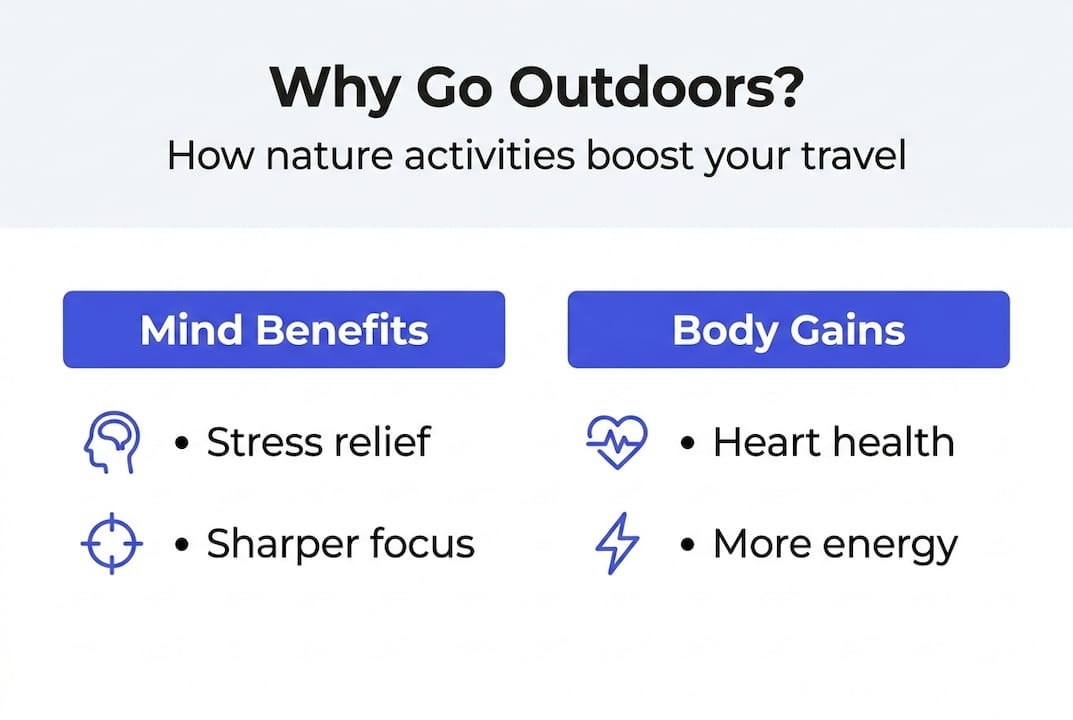
On the physical side, the evidence is just as strong. Outdoor hiking enhances cardiovascular health, boosts immune function, and lowers depression symptoms. Even moderate activity on uneven terrain engages stabilizing muscles and improves balance in ways that treadmill walking doesn't. Your body is doing more work, and enjoying it more, because the environment keeps changing.
| Benefit type | Mental benefits | Physical benefits |
|---|---|---|
| Short-term | Reduced stress, mood lift | Increased energy, better sleep |
| Medium-term | Improved focus, lower anxiety | Stronger cardiovascular health |
| Long-term | Lower depression risk, sharper memory | Immune boost, disease prevention |
If you're exploring adventure activities for thrill seekers or curious about the full range of travel activity types, understanding these benefits helps you choose experiences that do double duty: they're fun and genuinely good for you.
Pro Tip: You don't need to choose between intense and relaxing. Mix strenuous hikes with peaceful nature walks on the same trip. The contrast actually amplifies the restorative effect, giving your brain both stimulation and recovery.
How outdoor adventure powers your mental well-being
The science gives you the foundation. Now let's talk about what it actually feels like, and what the data says about specific mental health outcomes.
The numbers on depression are striking. More outdoor time is associated with a 51% lower depression risk in U.S. adults. That's not a minor effect. That's a dramatic shift in risk, driven largely by regular exposure to natural environments and physical activity outdoors.
"Frequent nature-based recreation lowers all nine symptoms of Major Depressive Disorder," according to recent research published in Nature. Not some symptoms. All nine.
That finding matters because it tells you outdoor recreation isn't just a mood booster. It's a genuine mental health intervention. And unlike many interventions, it's free, accessible, and enjoyable.
Here's what regular outdoor activity delivers for your mental well-being:
- Immediate mood boost within minutes of entering a natural environment
- Deeper, more restorative sleep due to physical exertion and natural light exposure
- Enhanced focus that carries over into work and daily tasks
- Greater resilience to stress built over time through regular outdoor habits
- Reduced rumination, the mental loop of negative thoughts that fuels anxiety
There's also the concept of flow state, that feeling of being completely absorbed in what you're doing. Outdoor activities, especially ones that require skill and attention like kayaking, rock climbing, or navigating a trail, are among the best triggers for flow. Psychologists call this "effortful leisure," and it turns out that challenge and novelty outdoors are especially rewarding for your brain. The effort is the point.
For travelers, this means exploring local activities isn't just about sightseeing. It's about actively engaging with a place in a way that generates real psychological reward. If you want to understand the bigger picture, adventure tourism explained shows how this philosophy is reshaping how people travel worldwide.
Unlocking social and community bonds outdoors
Beyond personal well-being, outdoor experiences have the power to connect you with others and broader communities in ways that are hard to replicate anywhere else.
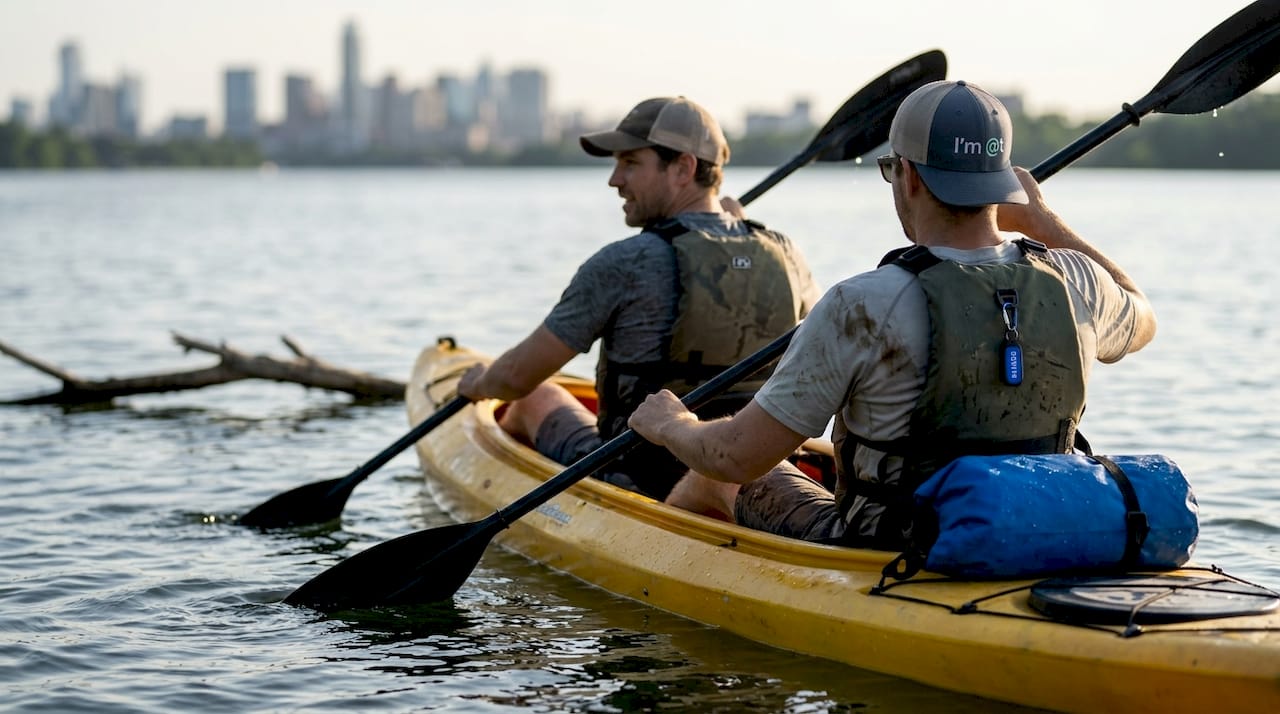
Shared outdoor goals create a unique kind of trust. When you're navigating a trail with someone, managing a kayak together, or pushing through the last mile of a charity hike, you build bonds that casual social settings rarely produce. There's a reason team-building retreats almost always involve some form of outdoor challenge. The shared vulnerability and shared achievement do something to relationships.
Outdoor activities support social interaction, teamwork, and community cohesion, and they carry socioeconomic benefits like tourism stimulation. This means your choice to book a guided kayak tour or join a local hiking group isn't just good for you. It supports local guides, small businesses, and regional economies.
| Activity type | Solo experience | Group experience |
|---|---|---|
| Hiking | Personal reflection, self-pacing | Shared challenge, stronger bonds |
| Kayaking | Focused skill-building | Teamwork, communication |
| Guided tours | Deep personal learning | Community connection, shared stories |
| Stargazing | Quiet contemplation | Collective wonder, conversation |
Here are three concrete ways outdoor adventures strengthen communities:
- Community events and festivals built around outdoor recreation bring locals and visitors together, creating shared identity and economic activity.
- Charity hikes and eco-challenges mobilize groups around causes, turning physical effort into social impact.
- Eco-tourism projects give travelers a role in conservation, creating meaningful exchanges between visitors and local communities.
If you're drawn to this kind of travel, community tourism insights offers a deeper look at how to engage responsibly. You can also explore cultural tour examples to see how outdoor and cultural experiences often overlap in the most rewarding ways.
Getting started: Practical ways to explore the outdoors
Inspired? Here's how you can start or enhance your journey into the outdoors, no matter your location or experience level.
One of the biggest myths about outdoor adventure is that you need to be fit, experienced, or in a remote location to benefit. You don't. Low-barrier outdoor activities suit a wide demographic, including older adults and people new to physical activity. A 20-minute walk through a local park delivers measurable cognitive and mood benefits. You don't need a mountain.
That said, if you want to go further, here's a range of experiences worth exploring:
- Guided hikes with a local expert who knows the terrain, history, and ecology
- Forest bathing (spending slow, mindful time in wooded areas) for stress relief and immune benefits
- Stargazing tours in low-light areas, often paired with astronomy talks
- Kayaking or paddleboarding on rivers, lakes, or coastal waters
- Birdwatching walks that sharpen observation skills and connect you to local ecosystems
- Nature journaling to slow down and notice details most travelers miss
Sustainability matters here too. Choosing activities that respect local ecosystems and support local guides means you can keep coming back, and so can everyone else. The guide to experiential travel covers how to approach this mindfully. You can also check out the benefits of cultural experiences to see how pairing outdoor and cultural activities creates the richest travel memories.
For practical starting points wherever you are, types of local activities gives you a solid framework for finding what's available near you.
Pro Tip: Join a local hiking group, birdwatching club, or guided tour rather than going solo when you're starting out. You'll learn faster, stay safer, and make connections that often turn into lasting friendships or future travel partners.
Our take: Rethinking what exploring the outdoors really means
Most outdoor content focuses on the dramatic: summiting peaks, crossing deserts, booking once-in-a-lifetime expeditions. And while those experiences are real and valid, the latest research tells a different story about where the actual value lives.
The data doesn't reward remoteness. It rewards regularity. A person who takes a 30-minute nature walk three times a week will likely see greater long-term mental health benefits than someone who does one extreme trek per year. That's a genuinely counter-intuitive finding, and it changes how you should think about planning your outdoor time.
The narrative around adventure is shifting toward something more inclusive and sustainable. Everyday engagement with nature, whether that's nearby explorations in your city or a simple guided walk on your next trip, carries compounding value over time. The most transformative outdoor experiences aren't always the most extreme. They're the ones you actually do, consistently, with presence and intention.
Rethink your definition of adventure. It might be smaller, closer, and more powerful than you think.
Ready to fuel your next adventure?
If this has you thinking about your next outdoor experience, we've made it easy to find and book activities that match exactly what you're looking for.
From a hiking and caving adventure on Terceira Island to a scenic Douro Valley river cruise with wine tasting and lunch, Im-at connects you with curated outdoor and cultural experiences around the world. Whether you prefer solo exploration or group adventures, there's something here for every kind of traveler. Browse more outdoor experiences and find your next unforgettable trip in minutes.
Frequently asked questions
What makes outdoor activities so beneficial compared to indoor ones?
Outdoor activities uniquely combine physical effort, nature exposure, and often social interaction, producing well-documented mental and physical benefits. Outdoor activities improve cognitive functions and reduce stress through natural stimuli that indoor environments simply don't provide.
Can outdoor activities help with depression or anxiety?
Yes, and the effect is significant. More outdoor time leads to a 51% lower depression risk in U.S. adults, with frequent nature-based recreation reducing all nine symptoms of Major Depressive Disorder.
Are outdoor activities accessible for all ages and abilities?
Absolutely. Options like walking, birdwatching, and gentle hikes offer real benefits for people of all backgrounds and fitness levels. Low-barrier outdoor activities suit broad demographics, including aging populations and complete beginners.
How do outdoor activities build social connections?
Group adventures and community-based recreation create shared challenges that build trust and lasting bonds faster than most social settings. Outdoor activities increase teamwork, community cohesion, and even local economic benefit through adventure tourism.